If you're researching the cost to charge a Tesla Model 3, you've probably seen conflicting numbers — from "pennies per mile" claims to Supercharger sticker shock. The truth depends on where you charge, when you charge, and which 2026 Model 3 trim you drive. This review covers the full charging-cost picture alongside the specs, range, and ownership economics you need to decide if the Model 3 still earns its spot in the EV sedan segment.
Range Reality Check
EPA Estimated Range: Up to 363 miles (Long Range RWD) / 346 miles (Long Range AWD) / 272 miles (Standard Range RWD).
Real-World Expectation: Plan for ~290–310 miles on highway road trips in the Long Range RWD at 70–75 mph. In freezing temperatures (below 32°F), expect a 20–30% reduction, bringing usable highway range to roughly 220–250 miles. City driving with regenerative braking recovers closer to the EPA sticker.
2026 Tesla Model 3 Quick Specs
| Specification | Standard Range RWD | Long Range RWD | Long Range AWD | Performance AWD |
|---|---|---|---|---|
| EPA Range | 272 mi | 363 mi | 346 mi | 315 mi |
| Battery Capacity (usable) | ~60 kWh (LFP) | ~79 kWh (NMC) | ~79 kWh (NMC) | ~79 kWh (NMC) |
| Efficiency (MPGe) | 132 MPGe | 134 MPGe | 130 MPGe | 121 MPGe |
| Energy Consumption | 25 kWh/100mi | 24 kWh/100mi | 25 kWh/100mi | 27 kWh/100mi |
| 0–60 mph | 5.8 sec | 4.9 sec | 4.2 sec | 2.9 sec |
| Horsepower | 271 hp | 346 hp | 440 hp | 510 hp |
| Drivetrain | RWD | RWD | Dual-Motor AWD | Dual-Motor AWD |
| Peak DC Fast Charge | 170 kW | 250 kW | 250 kW | 250 kW |
| 10–80% DCFC Time | ~25 min | ~22 min | ~22 min | ~22 min |
| Level 2 Home Charge Rate | 11.5 kW (~44 mi/hr) | 11.5 kW (~44 mi/hr) | 11.5 kW (~44 mi/hr) | 11.5 kW (~44 mi/hr) |
| Base MSRP | $38,990 | $42,490 | $47,490 | $52,990 |
| Battery Warranty | 8 yr / 100,000 mi | 8 yr / 120,000 mi | 8 yr / 120,000 mi | 8 yr / 120,000 mi |
How Much Does It Cost to Charge a Tesla Model 3?
The cost to charge a Tesla Model 3 varies dramatically by charging method. Here's the data that matters for your monthly budget, based on the Long Range RWD's ~79 kWh usable battery and national average electricity rates as of early 2026.
| Charging Method | Avg Cost per kWh | Cost for Full 0–100% | Cost per Mile (LR RWD) | Time (0–80%) |
|---|---|---|---|---|
| Home Level 1 (120V, 1.4 kW) | $0.16 (US avg) | $12.64 | $0.035 | ~45+ hours |
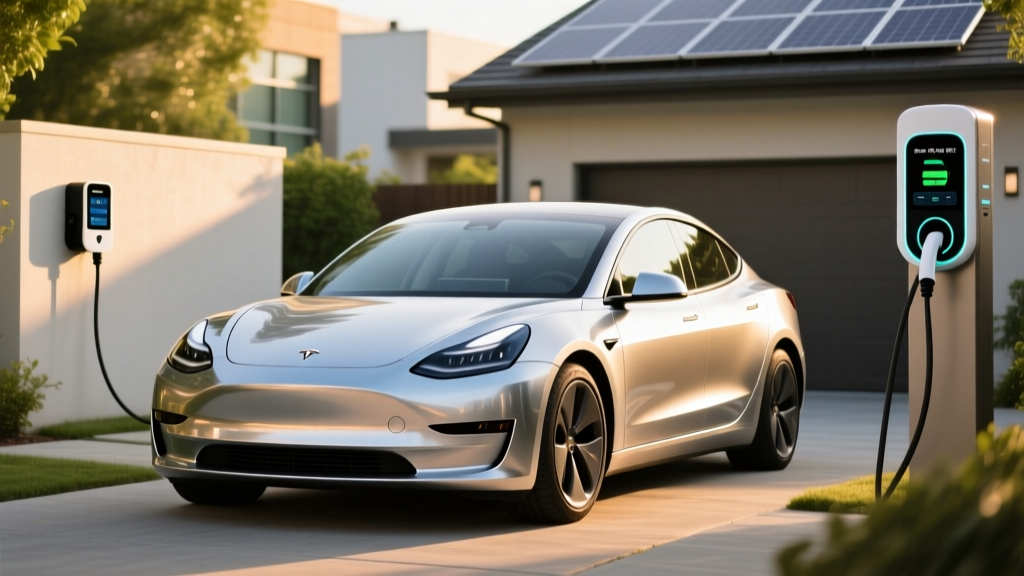
| Home Level 2 (240V, 11.5 kW) | $0.16 (US avg) | $12.64 | $0.035 | ~7 hours |
| Home Level 2 (Time-of-Use off-peak) | $0.08–$0.12 | $6.32–$9.48 | $0.017–$0.026 | ~7 hours |
| Tesla Supercharger V3/V4 | $0.28–$0.36 | $22.12–$28.44 | $0.061–$0.078 | ~22 min |
| Third-Party DCFC (EA, EVgo) | $0.32–$0.48 | $25.28–$37.92 | $0.070–$0.105 | ~25–35 min |
Key insight: Home charging is the economic sweet spot. A Model 3 Long Range owner who charges 90% at home (off-peak TOU rate of $0.10/kWh) and 10% at Superchargers ($0.32/kWh) pays an effective blended rate of ~$0.122/kWh — roughly $0.034 per mile. That compares to $0.12–$0.16 per mile for a 30 MPG gas sedan at $3.50/gallon.
Charging curve reality: The Model 3 Long Range peaks at 250 kW only between roughly 10–30% State of Charge. By 60% SoC, the rate tapers to ~120 kW, and above 80% it drops further to protect battery health. The published "10–80% in 22 minutes" figure reflects this taper. If you regularly charge past 80%, add 15–20 minutes for that final 20%.
Real-World Range: What the EPA Number Doesn't Tell You
The EPA's fueleconomy.gov data shows the 2026 Model 3 Long Range RWD at 363 miles. That's a laboratory composite figure. In our experience and aggregated owner data, here's what to actually expect:
- City/suburban driving (30–50 mph avg): 340–370 miles — regen braking recovers energy efficiently, often matching or exceeding the EPA sticker.
- Highway driving (70–80 mph sustained): 280–310 miles — aerodynamic drag dominates at speed, and the Model 3's efficiency drops to roughly 28–30 kWh/100mi.
- Cold weather (20–32°F): 230–270 miles — battery chemistry slows, cabin heating draws 2–5 kW continuously, and regen braking is limited until the pack warms. Preconditioning via the Tesla app while plugged in mitigates some of this loss.
- Cold + highway (worst case): 200–240 miles — plan road-trip charging stops accordingly in winter. Tesla's navigation automatically routes through Superchargers and accounts for temperature.
The Standard Range RWD with its LFP battery handles cold slightly worse than the NMC Long Range packs in terms of range retention, but LFP chemistry tolerates regular 100% charging without degradation concerns — a meaningful daily-use advantage.
Charging Infrastructure: Home Setup and Public Networks
The Model 3 uses the NACS (North American Charging Standard) connector natively — the Tesla-designed plug now adopted industry-wide. This gives you direct access to the entire Tesla Supercharger network (20,000+ stalls in North America) without an adapter, a significant reliability advantage over CCS-dependent competitors.
Home Charging Installation Costs
| Component | Cost Range |
|---|---|
| Tesla Wall Connector (48A, hardwired) | $420–$475 |
| Electrician labor (240V/60A circuit run) | $800–$2,500 |
| Electrical panel upgrade (if needed, 200A) | $1,500–$3,500 |
| Permit and inspection | $100–$400 |
| Total (no panel upgrade) | $1,320–$3,375 |
| Total (with panel upgrade) | $2,820–$6,875 |
The Model 3's onboard charger accepts up to 11.5 kW on Level 2 (48 amps). To unlock this, you need a hardwired 60-amp circuit. A NEMA 14-50 outlet on a 50-amp circuit delivers up to 9.6 kW (~37 mi/hr) — still adequate for overnight charging but ~15% slower. Most owners find a 14-50 installation simpler and cheaper, and the Mobile Connector included with the car handles it.
Public Charging Reliability
Tesla's Supercharger network consistently posts 99%+ uptime in third-party reliability surveys. With the Model 3's native NACS plug, you pull in, plug in, and charging begins — no app handshake, no adapter fumbling. Third-party networks (Electrify America, EVgo, ChargePoint) now also support NACS natively on newer stalls, but legacy CCS-only stations require Tesla's CCS adapter ($175 accessory).
Pricing, Trims, and Federal Tax Credit Eligibility
| Trim | Base MSRP | As-Tested (typical options) | §30D Credit Eligibility | Effective Price (after credit) |
|---|---|---|---|---|
| Standard Range RWD | $38,990 | $40,490 (w/ FSD, paint) | Eligible — up to $7,500 | ~$31,490–$32,990 |
| Long Range RWD | $42,490 | $44,990 | Eligible — up to $7,500 | ~$34,990–$37,490 |
| Long Range AWD | $47,490 | $49,990 | Eligible — up to $7,500 | ~$39,990–$42,490 |
| Performance AWD | $52,990 | $55,490 | Eligible — up to $7,500 | ~$45,490–$47,990 |
Federal tax credit rules (IRS §30D): The Model 3 qualifies for up to $7,500 in federal clean vehicle credits, split between a $3,750 critical-minerals component and a $3,750 battery-components component. Eligibility depends on:
- Buyer income caps: Modified AGI ≤ $150,000 (single) / $225,000 (head of household) / $300,000 (joint).
- MSRP cap: Vehicle MSRP must not exceed $55,000 for sedans — all Model 3 trims currently clear this threshold.
- Battery sourcing: Required percentages of critical minerals and battery components must be sourced from the US or FTA partners. Tesla's shifting supply chain means the exact credit amount can change — verify current eligibility on the IRS qualified vehicles list before purchase.
- Point-of-sale transfer: As of 2024+, you can transfer the credit to the dealer at purchase, reducing your out-of-pocket cost immediately rather than waiting for a tax refund.
Always consult a tax professional and the latest IRS guidance to confirm your specific eligibility. State and local incentives (California CVRP, Colorado tax credits, utility rebates) may stack on top.
Interior, Tech, and Daily Livability
Space and Cargo
The 2026 Model 3 "Highland" refresh brought meaningful improvements to cabin quietness, material quality, and rear-seat comfort over the pre-2024 version. Interior dimensions:
- Front headroom: 40.3 inches
- Front legroom: 42.7 inches
- Rear headroom: 37.8 inches
- Rear legroom: 35.2 inches — adequate for adults on shorter trips, tight for tall passengers on long hauls
- Trunk: 23 cu ft (rear) + 3.1 cu ft (frunk) — 26.1 cu ft total. The trunk opening is a conventional sedan lid, not a hatchback, which limits bulky-item loading versus the Model Y or Hyundai Ioniq 6.
Tech and Driver Assistance
The Model 3 runs Tesla's latest software on a 15.4-inch center touchscreen with a secondary 8-inch rear passenger display. Navigation, streaming, and over-the-air updates are standard. Autopilot (lane centering + adaptive cruise) is included; Full Self-Driving (Supervised) is a $8,000 option or $99/month subscription.
Important: Tesla Autopilot and FSD (Supervised) are SAE Level 2 driver-assistance systems. They do not make the car self-driving. You must keep your hands on the wheel, eyes on the road, and remain fully responsible for vehicle operation at all times. True driverless operation (SAE Level 4) is currently limited to geofenced robotaxi services like Waymo.
Notable Drawbacks
- No physical instrument cluster — speed and navigation display on the center screen only, which some drivers find distracting.
- Turn-signal stalks removed in the Highland refresh — signals are now steering-wheel-mounted buttons, a learning curve many owners still criticize.
- Sedan trunk opening limits cargo versatility compared to hatchback rivals.
- FSD subscription/purchase price remains high relative to its Level 2 capabilities.
- Ride firmness on the Performance trim can be fatiguing on rough roads.
Pros and Cons
Pros
- Best-in-class Supercharger network access with native NACS plug
- Outstanding efficiency — 24–27 kWh/100mi depending on trim
- Class-leading 363-mile EPA range on Long Range RWD
- 250 kW peak DC fast charging (LR/Perf) — 10–80% in ~22 min
- Strong §30D tax credit eligibility across all trims
- Continuous OTA updates improve the car post-purchase
- LFP battery on Standard Range allows daily 100% charging without degradation worry
Cons
- No rear instrument cluster or HUD
- Steering-wheel turn-signal buttons are polarizing
- Sedan trunk limits cargo vs hatchback competitors
- Rear seat space is tighter than Ioniq 6 or BMW i4
- Cold-weather range loss is significant without preconditioning
- Insurance premiums run 15–30% higher than comparable gas sedans
Who Should Buy the 2026 Tesla Model 3?
Choose the Model 3 Standard Range RWD if: You commute under 60 miles daily, charge at home every night, want the lowest entry price (~$31,500 after credit), and prefer LFP battery longevity for frequent 100% charging.
Choose the Model 3 Long Range RWD if: You take regular road trips, want 363 miles of EPA range for fewer charging stops, and value the best efficiency-to-range ratio in the lineup. This is the value sweet spot.
Choose the Model 3 Long Range AWD if: You live in a region with snow/ice, need dual-motor traction, or carry rear passengers regularly. You sacrifice 17 miles of range for all-weather confidence.
Choose the Model 3 Performance if: You prioritize 2.9-second 0–60 acceleration and track-capable handling, and accept 315 miles of range and a firmer ride as trade-offs.
Look elsewhere if: You need hatchback cargo versatility (consider the Model Y or Hyundai Ioniq 5), prefer a traditional instrument cluster and physical controls (BMW i4, Hyundai Ioniq 6), or tow frequently (the Model 3 is not rated for towing).
How the Model 3 Stacks Up Against Key Competitors
The Model 3's cost-to-charge advantage is strongest when you charge at home. Against the Hyundai Ioniq 6 (360 mi EPA, up to 350 kW DCFC), the Model 3 charges slightly slower on DC but benefits from Supercharger reliability. Against the BMW i4 eDrive40 (307 mi EPA, ~$52,000 base), the Model 3 undercuts on price by over $10,000 after credits while delivering more range. The Chevrolet Equinox EV offers similar range at a lower MSRP but charges at just 150 kW peak and lacks Supercharger network access without an adapter.
On total cost of ownership over 5 years / 60,000 miles, the Model 3 Long Range RWD charged primarily at home costs roughly $2,040 in electricity (at $0.12/kWh blended). A comparable 30 MPG gas sedan at $3.50/gallon would spend $7,000 in fuel — a $4,960 fuel savings before factoring in EV maintenance reductions (no oil changes, fewer brake replacements due to regen).
Frequently Asked Questions
What is the cheapest way to charge a Tesla Model 3?
Home Level 2 charging on an off-peak time-of-use utility plan is the cheapest method, typically $0.08–$0.12 per kWh, translating to $0.02–$0.03 per mile. A full charge costs $6–$10 for the Long Range model. Installing a home charger pays for itself within 12–18 months versus exclusive Supercharger use.
How much does a Tesla Supercharger session cost for the Model 3?
Supercharger pricing varies by location and time of day, typically $0.28–$0.36 per kWh in 2026. A 10–80% session on the Long Range (~55 kWh added) costs roughly $15–$20. In high-cost markets like California or the Northeast, peak pricing can push sessions to $25+.
Does the Tesla Model 3 qualify for the $7,500 federal tax credit?
Yes — all 2026 Model 3 trims currently qualify for up to $7,500 under IRS §30D, subject to buyer income caps ($150K single / $300K joint), the $55,000 sedan MSRP cap, and battery-sourcing requirements. The credit can be transferred to the dealer at point of sale. Verify current eligibility on the IRS qualified vehicles list, as battery-sourcing compliance can shift.
How long does a Tesla Model 3 battery last?
Tesla warranties the Model 3 battery for 8 years / 100,000 miles (Standard Range) or 8 years / 120,000 miles (Long Range/Performance), guaranteeing at least 70% capacity retention. Real-world degradation data from high-mileage owners shows typical loss of 10–15% over 150,000–200,000 miles with proper charging habits (LFP: charge to 100% regularly; NMC: daily limit 80%, occasional 100% for trips).
Is the Tesla Model 3 cheaper to own than a gas car?
Over 5 years, a home-charged Model 3 saves $4,000–$6,000 in fuel versus a 30 MPG gas sedan, plus $1,500–$2,500 in reduced maintenance. However, EV insurance premiums run 15–30% higher, and depreciation varies by market. Total cost of ownership favors the Model 3 most when you charge at home, qualify for the full $7,500 credit, and keep the car 4+ years.
Can I charge a Tesla Model 3 on non-Tesla chargers?
Yes. The Model 3's native NACS connector works at Tesla Superchargers and an expanding number of third-party DC fast chargers (Electrify America, EVgo, ChargePoint) deploying NACS cables. For legacy CCS-only stations, Tesla sells a CCS adapter ($175). J1772 Level 2 adapters are included with the vehicle for public AC charging.