When Tesla launched its Solar Roof, the promise was elegant: solar cells hidden inside glass tiles that look like a premium roof while generating electricity to power your home — and your electric vehicle. But the cost of Tesla shingles has always been the sticking point. In 2026, Tesla's Solar Roof remains one of the most expensive residential solar options on the market, and buyers considering it alongside a home EV charging setup need clear numbers before signing a contract.
This guide breaks down what Tesla's integrated solar roof actually costs, how it compares to conventional solar panels, whether it can realistically offset the electricity demand of charging an EV at home, and what alternatives deliver better value for electrified households.
What Are Tesla Shingles (Solar Roof)?
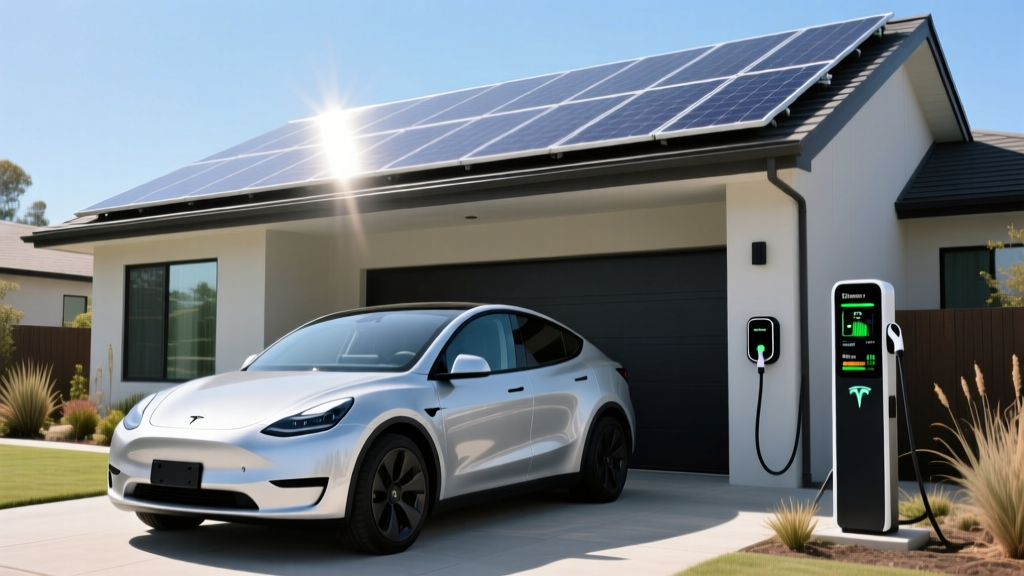
Tesla's Solar Roof — often called "Tesla shingles" — replaces a conventional asphalt or composite roof with tempered glass tiles that contain photovoltaic cells. Unlike traditional rack-mounted solar panels that sit on top of an existing roof, Tesla's system is the roof. Active tiles generate electricity; passive (non-solar) tiles fill in areas where solar exposure is poor or unnecessary, maintaining a uniform aesthetic.
The product targets homeowners who need a roof replacement anyway and want integrated solar without the visual footprint of traditional panels. Tesla also bundles the system with its Powerwall home battery, which stores excess generation for use at night, during outages, or when charging an EV during peak-rate hours.
Cost of Tesla Shingles: 2026 Pricing Breakdown
Pricing for Tesla's Solar Roof varies significantly by roof size, complexity (number of stories, dormers, vents, skylights), and local labor costs. Based on recent Tesla estimates and third-party solar industry data, here is a realistic 2026 cost framework:
| Home Size / Roof Area | System Size (kW) | Estimated Total Cost | Cost per Watt (Before Incentives) |
|---|---|---|---|
| 1,500 sq ft home (~1,000 sq ft roof) | 4–6 kW | $30,000–$42,000 | $6.00–$7.00/W |
| 2,000 sq ft home (~1,500 sq ft roof) | 8–11 kW | $48,000–$66,000 | $5.50–$6.50/W |
| 2,500+ sq ft home (~2,000+ sq ft roof) | 12–16 kW | $65,000–$90,000+ | $5.00–$6.00/W |
These figures typically include the solar and non-solar tiles, installation labor, permitting, and one Powerwall battery. Adding a second Powerwall (recommended for EV-owning households that want to charge overnight from stored solar) adds roughly $10,000–$13,000 to the total.
For comparison, a conventional rack-mounted solar panel system of equivalent capacity typically costs $2.50–$3.50 per watt installed — meaning a 10 kW system runs $25,000–$35,000. The Tesla Solar Roof premium is substantial, often 60–100% more than traditional panels for equivalent generation.
Federal Tax Credits and Incentives for Tesla Solar Roof
The federal Residential Clean Energy Credit (IRC §25D) provides a 30% tax credit on the cost of solar installation, including Tesla's Solar Roof and Powerwall batteries (as of the Inflation Reduction Act provisions). This applies through 2032.
- Credit rate: 30% of total system cost (solar tiles + Powerwall + installation)
- No dollar cap: Unlike the EV tax credit (§30D), the residential solar credit has no maximum dollar limit
- Non-refundable: The credit can reduce your federal tax liability to zero but won't generate a refund beyond that
- Carryforward: Unused credit can roll to subsequent tax years
| System | Gross Cost | 30% Federal Credit | Net Cost |
|---|---|---|---|
| 10 kW Solar Roof + 1 Powerwall | $58,000 | −$17,400 | $40,600 |
| 12 kW Solar Roof + 2 Powerwalls | $82,000 | −$24,600 | $57,400 |
Many states and utilities offer additional incentives — net metering policies, state-level rebates, or property tax exemptions for solar installations. These vary enormously by jurisdiction. Check the DSIRE database (Database of State Incentives for Renewables & Efficiency) for specifics in your area.
Can Tesla Shingles Power Your EV Charging?
This is the question EV owners care about most. The answer depends on your system size, local solar irradiance, driving habits, and whether you add battery storage.
A typical EV uses 25–35 kWh per 100 miles driven. An American driver averaging 37 miles per day (per FHWA data) needs roughly 10–13 kWh daily just for driving. A 10 kW Tesla Solar Roof in a sunny location (say, Arizona or Southern California) might generate 40–50 kWh per day on average — more than enough to cover EV charging plus a portion of household use. In cloudier regions (Pacific Northwest, Northeast), that same system might produce 25–35 kWh/day on average, still potentially sufficient but with less margin.
The critical variable is timing. Most people charge their EVs in the evening or overnight, when solar generation is zero. Without a Powerwall, you'd be exporting solar to the grid during the day and importing (paying for) grid electricity at night. Net metering policies determine whether that swap is cost-neutral — and an increasing number of utilities are reducing or eliminating retail-rate net metering.
With a Powerwall (13.5 kWh usable capacity), you can store daytime solar generation and discharge it into your EV overnight. One Powerwall covers roughly one full charge cycle for a short-range EV or about half a charge for a long-range model like a Tesla Model Y (75 kWh battery) or Ford F-150 Lightning (131 kWh battery). For households with two EVs or longer commutes, two Powerwalls become necessary.
Tesla Solar Roof vs. Conventional Solar Panels: Which Is Better for EV Owners?
For the specific use case of powering an EV, the economics strongly favor conventional solar panels in most scenarios:
| Factor | Tesla Solar Roof | Conventional Solar Panels |
|---|---|---|
| Cost per watt (installed) | $5.00–$7.00/W | $2.50–$3.50/W |
| Aesthetic | Integrated, nearly invisible | Visible rack-mounted panels |
| Roof replacement included | Yes (replaces entire roof) | No (requires existing good roof) |
| Efficiency | ~20–22% cell efficiency | ~20–23% (comparable) |
| Installation timeline | Often 1–3 weeks; long permitting backlog reported | Typically 1–3 days install; faster permitting |
| Payback period (with 30% credit) | 12–20 years (varies by state/utility) | 6–10 years |
| Warranty | 25-year tile, power, and weatherization | 25-year production (panels); 10–25 yr inverter |
| Repairability | Proprietary; limited contractor network | Any solar installer can service |
The math is straightforward: a 10 kW conventional panel system at $3.00/W costs $30,000 gross, $21,000 after the federal credit. That's $19,600–$37,000 less than an equivalent Tesla Solar Roof — and the energy output is functionally identical. The savings from conventional panels could purchase a significant amount of grid electricity for EV charging, or be applied toward the EV itself.
Who Should Consider Tesla Shingles?
The Tesla Solar Roof makes sense for a narrow buyer profile:
- Your roof needs full replacement — you're spending $10,000–$15,000 on a new roof regardless, and the effective premium of the Solar Roof decreases
- Aesthetics are paramount — you're in an HOA with solar restrictions, own a historically styled home, or simply cannot tolerate visible panels
- You value integration — you want a single-vendor ecosystem (Tesla solar + Powerwall + EV + Wall Connector) managed through one app
- Budget is secondary — you're willing to pay a premium for design and are not optimizing purely for financial payback
For most EV owners whose primary goal is reducing charging costs, conventional solar panels deliver the same electrons at roughly half the price. The energy generated is identical; only the form factor differs.
Key Considerations and Drawbacks
Pros
- Integrated look — no visible panels
- Full roof replacement included in one project
- 25-year warranty on tiles, power output, and weatherization
- Seamless Powerwall and Tesla EV integration
- Tempered glass tiles rated for Class F wind (110 mph) and Class 3 hail impact
Cons
- 60–100% more expensive than conventional panels per watt
- Longer and less predictable installation timelines (customer reports of multi-month delays persist)
- Limited certified installer network — repairs and service depend on Tesla availability
- Complex roofs (many valleys, dormers, steep pitch) drive costs up sharply
- System is proprietary — cannot mix components from other manufacturers
Frequently Asked Questions
How long do Tesla shingles last?
Tesla warrants its Solar Roof tiles for 25 years against defects, power degradation, and weatherization failure. The glass tiles themselves are expected to last the lifetime of the home. The Powerwall battery carries a separate 10-year warranty with guaranteed 70% capacity retention.
Does the Tesla Solar Roof qualify for the 30% federal tax credit?
Yes. Under IRC §25D (the Residential Clean Energy Credit), the full installed cost of the Solar Roof and Powerwall qualifies for a 30% federal tax credit through 2032. Unlike the EV purchase credit (§30D), there is no dollar cap on this credit. Consult a tax professional for your specific situation, and review current rules at IRS.gov.
Can I charge my Tesla from the Solar Roof directly?
Yes, though "directly" requires some clarification. During daylight hours, your solar generation feeds your home's electrical panel, from which your Tesla Wall Connector draws power to charge the vehicle. At night, you'd be drawing from Powerwall storage (if equipped) or the grid. Tesla's app allows you to schedule charging to coincide with solar production hours if you want to maximize self-consumption without a battery.
Is Tesla's Solar Roof more expensive than panels plus a new roof?
Usually, yes. A 10 kW conventional solar system ($25,000–$35,000) plus a full asphalt shingle roof replacement ($10,000–$15,000) totals $35,000–$50,000. An equivalent Tesla Solar Roof often runs $55,000–$70,000 before incentives. The gap narrows for high-end roof materials (slate, tile) that the Solar Roof effectively replaces, but for standard asphalt, the premium is real.
What happens if a Tesla shingle breaks?
Individual tiles can be replaced, but service must come through Tesla or a certified installer. Unlike conventional panels (which any solar company can service), the proprietary nature of the system means you're dependent on Tesla's service network and parts availability. Warranty covers defects; physical damage (fallen tree limbs, severe hail beyond Class 3 rating) would go through homeowner's insurance.
How does the cost of Tesla shingles compare to charging an EV on grid power?
At the US average residential electricity rate of roughly $0.16/kWh, charging an EV that uses 30 kWh/100mi costs about $4.80 per 100 miles — already a fraction of gasoline cost. A Tesla Solar Roof system generating the equivalent energy might take 12–20 years to pay for itself versus simply buying grid electricity, depending on local rates and net metering policies. If your utility offers time-of-use rates and you can charge during off-peak hours, grid charging becomes even more economical relative to the Solar Roof premium.
Note: Tesla Solar Roof pricing and availability vary by region and are subject to change. This article references solar products for the context of EV home charging. For specific quotes, request an estimate directly through Tesla's website or consult a local solar installer for comparative bids. Tax credit information reflects rules current as of early 2026; consult a tax professional before making purchasing decisions.