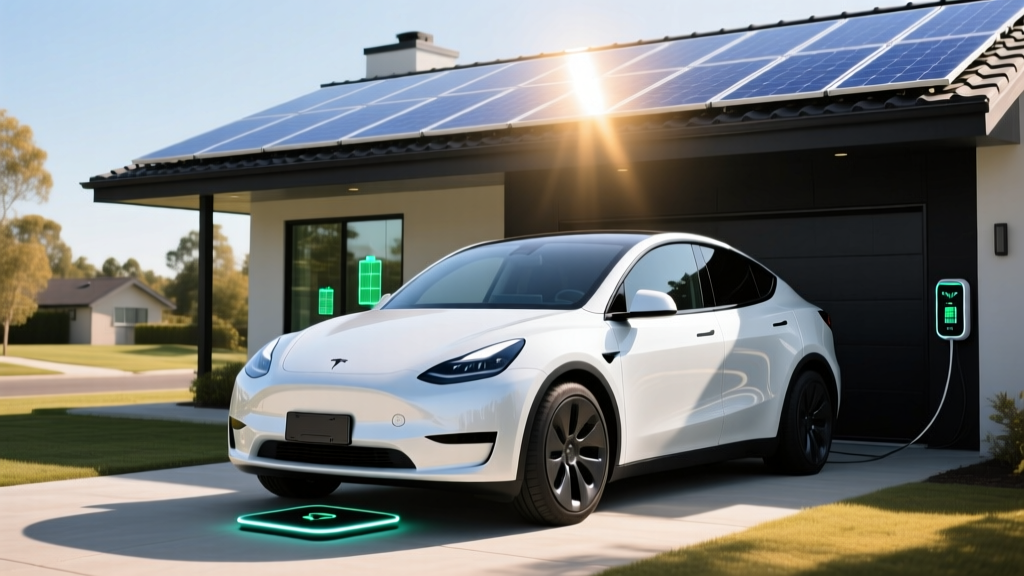
For EV owners, the ultimate efficiency dream is charging their vehicle with power generated directly from their own roof. Tesla has marketed its Solar Roof (often referred to as 'roof tiles' or 'solar shingles') as the premium, integrated solution. However, as we move through 2026, the economics of home solar have shifted, and the 'cost of Tesla roof tiles' remains a significant hurdle for many potential buyers.
While the aesthetic appeal of the Tesla Solar Roof is undeniable, the financial reality requires a deep dive into hardware costs, installation complexity, and the actual return on investment when paired with a high-demand EV charging schedule. This guide breaks down the 2026 pricing, the technical specifications of the tiles, and the long-term ownership outlook for those looking to 'fuel' their cars with the sun.
The 2026 Cost of Tesla Roof Tiles: A Detailed Breakdown
The cost of Tesla roof tiles is rarely a simple sticker price. Unlike traditional rack-mounted solar panels, the Solar Roof is a complete roof replacement. In 2026, the pricing structure remains tiered based on roof complexity and the percentage of 'active' (solar-producing) versus 'inactive' (aesthetic-matching) tiles.
| Component | Cost Estimate (Avg.) | Notes |
|---|---|---|
| Active Solar Tiles | $2.50 - $3.00 / Watt | Varies by system size and incentives |
| Inactive (Dummy) Tiles | $14 - $18 / sq. ft. | Required for aesthetic continuity |
| Powerwall 3 (Required) | $11,500 - $13,000 | Includes installation and gateway |
| Roof Complexity Fee | +$2,000 - $8,000 | Based on number of angles/penetrations |
For a typical 2,000-square-foot home with a 10 kW system, the total cost of Tesla roof tiles often lands between $55,000 and $75,000 before federal incentives. This is significantly higher than a traditional rack-mount system, which typically costs $20,000–$30,000 for the same capacity.
Technical Specs: Efficiency and Power Output
Tesla's 'Version 4' and subsequent 2026 iterations of the Solar Roof tile focus on higher efficiency and easier installation. However, because the tiles are integrated into the roof deck, they can run hotter than elevated rack-mount panels, which slightly impacts performance.
- Tile Efficiency: ~22.5% (Peak cell efficiency)
- System Capacity: Typically 8 kW to 15 kW for residential homes
- Warranty: 25 years for power production and weatherization
- Wind Rating: ASTM D3161 Class F (110 MPH)
- Fire Rating: Class A (Highest rating)
EV Charging Integration: Can It Power Your Car?
The primary question for our readers is whether the cost of Tesla roof tiles is justified by EV fuel savings. A 10 kW system in a sunny climate produces roughly 40–50 kWh per day. An average EV consumes about 3–4 miles per kWh.
The Real-World Charging Reality
Sticker Claim: 'Power your home and car with the sun.'
Real-World Note: In winter months or cloudy climates (PNW, Northeast), production can drop by 50–70%. You will likely still rely on the grid for at least 40% of your annual EV 'fuel' unless you oversize the system and add multiple Powerwall 3 units.
If you drive 40 miles daily, you need roughly 12–14 kWh of energy. A Tesla Solar Roof can easily cover this annualized, but daily production fluctuations mean you must use the grid as a 'battery' via net metering, which is becoming less favorable in states like California (NEM 3.0) and others.
Financial Incentives: The 30% Federal Tax Credit
The cost of Tesla roof tiles is offset by the federal solar tax credit (ITC). Under current IRS rules, 30% of the total system cost—including the tiles, Powerwall, and labor—can be claimed as a credit against your federal tax liability.
- Credit Amount: 30% of total installed cost
- Eligibility: Must have sufficient tax liability to absorb the credit
- Eligible Hardware: Solar tiles, inverters, and battery storage (3 kWh+)
- Expiration: Currently set at 30% through 2032
Tesla Solar Roof vs. Rack-Mount Panels: The Verdict
When comparing the cost of Tesla roof tiles to standard solar, you are paying a 'luxury tax' for aesthetics. The ROI for a Tesla Solar Roof is often 12–18 years, whereas rack-mount panels can achieve ROI in 6–9 years. However, if your roof needs replacing anyway, the 'net' cost of the solar portion becomes more attractive.
Pros
- Seamless, high-end aesthetic
- Integrated warranty for roof and power
- Durable tempered glass construction
Cons
- High upfront cost (2x-3x traditional solar)
- Installation delays and complexity
- Lower efficiency in high-heat climates
Frequently Asked Questions
Are Tesla roof tiles worth the cost in 2026?
Only if you require a new roof and prioritize aesthetics over pure financial ROI. For pure energy savings, traditional panels are far more cost-effective.
How long does installation take?
While the physical installation is fast (5–7 days), the permitting and approval process can take 2–6 months.
Do I need a Powerwall with Tesla tiles?
In most cases, yes. Tesla now requires at least one Powerwall for most Solar Roof installations to ensure system stability and backup power.