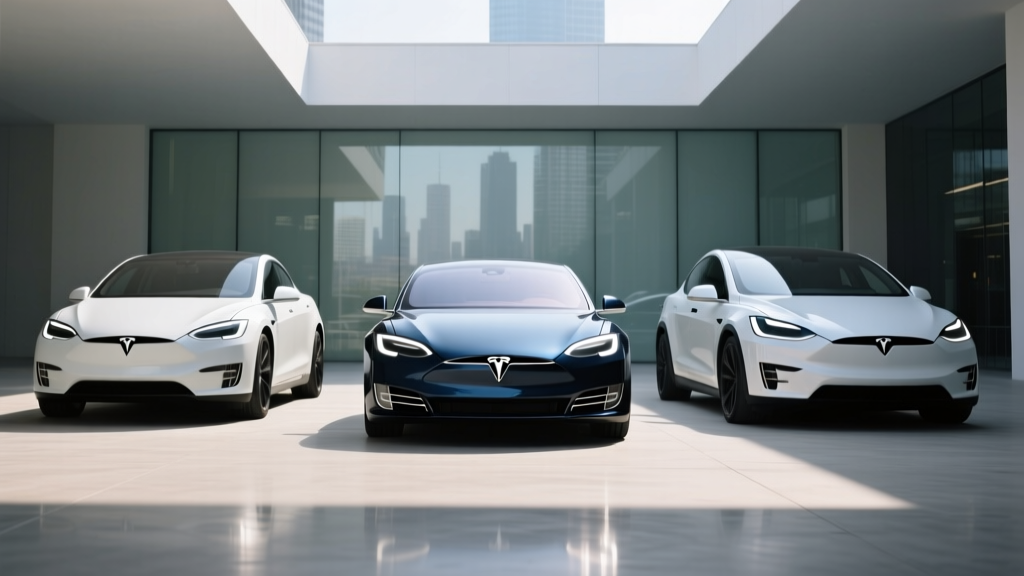
The Tesla Model X occupies a rare position in the electric SUV market: a three-row, falcon-wing-doored luxury hauler with supercar acceleration and access to the most reliable DC fast-charging network in North America. But at a starting price pushing $80,000, buyers need to know exactly what they're paying for — and whether the total cost of ownership justifies the premium over rivals like the Rivian R1S, BMW iX, or Kia EV9.
This review breaks down the 2026 Tesla Model X across every metric that matters to real buyers: EPA range versus real-world results, charging speed and curve behavior, federal tax credit eligibility under current IRS §30D rules, and five-year ownership economics. We'll also cover the specs Tesla doesn't always make easy to find.
2026 Tesla Model X: Quick Spec Overview
| Specification | Long Range AWD | Plaid |
|---|---|---|
| Base MSRP | $79,990 | $94,990 |
| EPA Range | 335 miles | 320 miles |
| Battery (usable) | ~100 kWh (NMC) | ~100 kWh (NMC) |
| Drivetrain | Dual-Motor AWD | Tri-Motor AWD |
| Horsepower | 670 hp | 1,020 hp |
| 0–60 mph | 3.8 seconds | 2.5 seconds |
| Peak DC Fast Charge | 250 kW | 250 kW |
| 10–80% DC Charge | ~32 minutes | ~32 minutes |
| Level 2 Home Charge | 11.5 kW (~34 mi/hr) | 11.5 kW (~34 mi/hr) |
| MPGe (combined) | 103 MPGe | 98 MPGe |
| Efficiency | 33 kWh/100 mi | 35 kWh/100 mi |
| Cargo (behind 3rd row) | 15.0 cu ft | 15.0 cu ft |
| Cargo (max, seats folded) | 77.5 cu ft | 77.5 cu ft |
| Seating | 5, 6, or 7 passengers | 5, 6, or 7 passengers |
| Battery Warranty | 8 yr / 150,000 mi | 8 yr / 150,000 mi |
| Basic Vehicle Warranty | 4 yr / 50,000 mi | 4 yr / 50,000 mi |
Sources: EPA / fueleconomy.gov, Tesla Model X configurator.
Real-World Range: EPA vs. Highway and Cold Weather
Real-World Highway (70–80 mph, moderate temps): ~275–295 miles
Real-World Cold Weather (below 30°F, highway): ~220–255 miles
Mixed Commute (city + suburban): ~300–320 miles
The Model X's EPA-rated 335 miles in Long Range trim is a strong number, but as with any large, heavy SUV with a tall frontal area, highway driving at sustained speeds erodes range significantly. In our experience and consistent with third-party highway range tests, expect roughly 275–295 miles at 75 mph in 65–75°F conditions. The Model X's 5,390-pound curb weight and 0.24 Cd drag coefficient help, but physics still governs.
Cold weather is the bigger concern for northern-climate buyers. Lithium-ion batteries lose efficiency in low temperatures, and cabin heating in a large three-row SUV is energy-intensive. Tesla's heat pump (standard on current Model X builds) mitigates some of this loss compared to older resistive-heater EVs, but you should still budget for 25–35% range reduction in sustained sub-freezing driving. A 335-mile EPA rating may deliver 220–255 miles on a 20°F highway trip.
The Plaid trim's tri-motor setup and higher energy consumption (35 kWh/100 mi vs. 33 kWh/100 mi) mean slightly less range across all scenarios, but the difference is modest — roughly 15 miles in most real-world conditions.
Charging Speed: DC Fast, Home Level 2, and the Charge Curve
| Charging Method | Power | Speed (approx.) | Notes |
|---|---|---|---|
| Level 1 (120V outlet) | ~1.4 kW | ~3–4 mi/hr | Emergency/top-up only |
| Level 2 (240V, 48A Wall Connector) | 11.5 kW | ~34 mi/hr | Full charge in ~10 hours |
| Level 2 (240V, 32A mobile connector) | 7.7 kW | ~23 mi/hr | Common NEMA 14-50 setup |
| DC Fast Charge (Tesla Supercharger V3) | Peak 250 kW | ~175 mi in 15 min | 10–80% in ~32 minutes |
| DC Fast Charge (CCS adapter, non-Tesla) | Up to 250 kW | Similar to Supercharger | Depends on station power |
The Model X charges at a peak rate of 250 kW on Tesla Supercharger V3 stalls. This is competitive but not class-leading — the Hyundai Ioniq 5 and Kia EV9 can peak at 350 kW on compatible chargers thanks to 800V architectures, while the Model X runs a 400V system.
The critical nuance is the charge curve. The 250 kW peak only holds from roughly 10–30% State of Charge (SoC). Above 50%, the rate tapers to ~150 kW, and above 80%, it drops to under 75 kW to protect battery longevity. This is why the 10–80% time is ~32 minutes, not the ~15 minutes that pure peak-rate math might suggest. Always precondition the battery by navigating to a Supercharger in the car's navigation — this warms the pack and enables peak charge rates upon arrival.
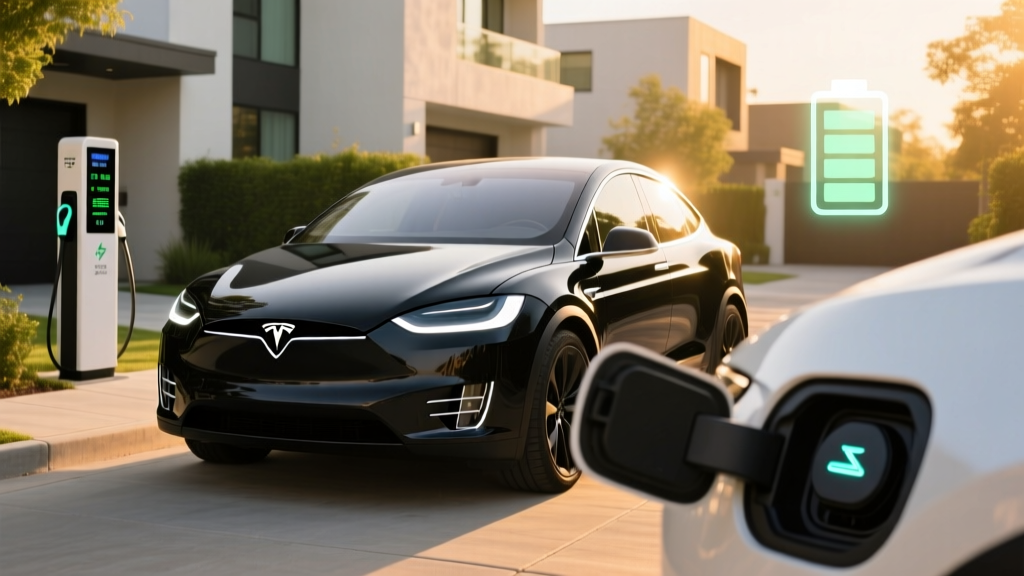
At home, Tesla's Wall Connector at 48 amps delivers 11.5 kW, adding roughly 34 miles of range per hour. A full charge from 10% to 100% takes about 10 hours — fine for overnight charging. If your electrical panel supports only a 40-amp circuit (32A continuous), expect ~23 mi/hr, which still covers most daily needs.
Pricing, Trims, and the Federal Tax Credit Question
The 2026 Tesla Model X is available in two trims:
- Long Range AWD: $79,990 MSRP (plus $1,390 destination = $81,380 out-the-door before options)
- Plaid: $94,990 MSRP (plus $1,390 destination = $96,380 out-the-door before options)
Common options that push the as-tested price higher include six-seat interiors ($6,500), seven-seat layouts ($4,000), Full Self-Driving (Supervised) capability ($8,000), and premium paint colors ($1,500–$2,500). A well-equipped Long Range can easily reach $95,000–$100,000.
| Cost Item | Long Range | Plaid |
|---|---|---|
| Base MSRP + Destination | $81,380 | $96,380 |
| Federal §30D Tax Credit | $0 (over MSRP cap) | $0 (over MSRP cap) |
| Estimated State Incentives | Varies by state | Varies by state |
| Est. Annual Electricity (15k mi) | ~$660 | ~$700 |
| Est. Annual Insurance | ~$3,200–$4,500 | ~$3,800–$5,200 |
Does the Tesla Model X Qualify for the Federal EV Tax Credit?
No. Under current IRS §30D rules, the Model X is ineligible for the $7,500 federal tax credit for two reasons:
- MSRP cap: §30D limits the credit to SUVs with an MSRP of $80,000 or less. The Model X Long Range starts at $79,990, but the mandatory $1,390 destination charge pushes it over the cap. The Plaid at $94,990 is well above.
- Buyer income cap: Even if the MSRP qualified, §30D restricts eligibility to buyers with adjusted gross income below $300,000 (joint filers), $225,000 (head of household), or $150,000 (individual). Many Model X buyers exceed these thresholds.
Always verify current rules at IRS.gov §30D. Some states offer additional rebates — check your local energy agency.
Five-Year Cost of Ownership vs. Competitors
The cost of Tesla Model X ownership extends well beyond the sticker price. Here's a realistic five-year projection for a Long Range AWD driven 15,000 miles per year, compared to key rivals:
| 5-Year Cost Category | Tesla Model X LR | Rivian R1S Dual | BMW iX xDrive50 | Kia EV9 GT-Line AWD |
|---|---|---|---|---|
| Purchase Price (base + dest.) | $81,380 | $82,700 | $89,695 | $73,990 |
| Federal Tax Credit | $0 | $0* | $0* | $7,500 |
| Electricity (75,000 mi) | $3,300 | $3,500 | $3,400 | $3,100 |
| Insurance (est. 5 yr) | $18,500 | $17,000 | $16,500 | $13,000 |
| Maintenance (est. 5 yr) | $1,200 | $1,500 | $2,200 | $1,400 |
| Est. Depreciation (5 yr) | $32,000 | $30,000 | $38,000 | $25,000 |
| Total 5-Year Cost | $136,380 | $134,700 | $149,795 | $97,990 |
*Rivian R1S and BMW iX base trims may qualify for partial credit depending on configuration and sourcing; check current IRS guidance. Depreciation estimates based on historical luxury EV retention data.
The Model X holds a cost advantage over the BMW iX primarily due to lower maintenance and slightly better depreciation, but the Kia EV9 undercuts it dramatically — by nearly $40,000 over five years — while offering three rows, 279 miles of range, and eligibility for the full $7,500 federal credit. The Rivian R1S is the closest competitor in both price and capability.
Performance, Tech, and Interior: What You Get for the Money
The Model X's performance numbers remain extraordinary for a 5,390-pound three-row SUV. The Long Range hits 60 mph in 3.8 seconds with 670 horsepower from its dual-motor setup. The Plaid's tri-motor configuration delivers 1,020 hp and a 2.5-second 0–60 time — faster than most supercars, which never stops being surreal in a vehicle with third-row cupholders.
Tech highlights include Tesla's 17-inch center touchscreen (landscape-oriented, running Tesla's proprietary OS), a 22-speaker audio system, HEPA air filtration with Bioweapon Defense Mode, and the signature front-row falcon-wing rear doors that open vertically for easier third-row access in tight parking spaces. The yoke steering wheel remains controversial and is standard; a round wheel is available at no cost.
On the driver-assistance front, Tesla's Autopilot comes standard with adaptive cruise control and lane centering. Full Self-Driving (Supervised) adds automated lane changes, traffic light recognition, and city-street navigation for an additional $8,000.
Both Autopilot and FSD (Supervised) are SAE Level 2 driver-assistance systems. The driver must remain fully attentive, hands on or near the wheel, and ready to take over at any moment. These are not self-driving systems. Only Level 4 services like Waymo operate without a human driver — and only in geofenced areas.
Interior quality has improved in recent refreshes with ventilated front seats, a rear-seat entertainment screen, and better material choices, but the Model X still draws criticism for panel-gap inconsistencies and a minimalist dashboard that some luxury buyers find too sparse compared to BMW or Mercedes-Benz interiors.
Pros and Cons: Honest Assessment
Pros
- Class-leading Supercharger network access with 250 kW peak charging
- Extraordinary performance (3.8s or 2.5s 0–60) in a three-row SUV
- Falcon-wing doors genuinely improve third-row access
- Over-the-air updates continuously add features
- Strong cargo capacity (77.5 cu ft max) with front trunk (frunk)
- Heat pump standard for better cold-weather efficiency
- 8-year/150,000-mile battery warranty (better than most rivals)
Cons
- Ineligible for $7,500 federal tax credit (over MSRP cap)
- Insurance costs significantly above average ($3,200–$5,200/yr)
- 250 kW peak charge rate trails 800V competitors (350 kW capable)
- FSD (Supervised) costs $8,000 and is still Level 2, not autonomous
- Build quality inconsistencies reported by owners
- No Apple CarPlay or Android Auto support
- High starting price; well-equipped builds exceed $100,000
Who Should Buy the Tesla Model X?
The Model X is best suited for buyers who need three rows of seating, want the lowest-friction road-trip charging experience via Tesla's Supercharger network, and value acceleration performance that no other three-row SUV can match. It works especially well for families who take frequent highway road trips and have access to home Level 2 charging.
It is not the best choice for budget-conscious buyers (the Kia EV9 delivers three rows for $20,000+ less with tax-credit eligibility), off-road-oriented adventurers (the Rivian R1S offers more ground clearance and rugged capability), or buyers who prioritize traditional luxury interior craftsmanship (the BMW iX or Mercedes EQS SUV deliver more opulent cabins).
Frequently Asked Questions
What is the real-world range of the 2026 Tesla Model X?
The EPA rates the Long Range at 335 miles and the Plaid at 320 miles. In real-world highway driving at 75 mph, expect 275–295 miles. In cold weather below 30°F, range can drop to 220–255 miles. City and suburban driving with regenerative braking recovers more energy, often approaching or slightly exceeding the EPA number.
How fast does the Model X charge at home and on road trips?
At home on a 48-amp Level 2 Tesla Wall Connector (11.5 kW), the Model X adds about 34 miles of range per hour, fully charging overnight in roughly 10 hours. On a Tesla Supercharger V3, it peaks at 250 kW and charges from 10–80% in approximately 32 minutes. Always precondition the battery by navigating to the charger for optimal speeds.
How much does the Tesla Model X cost after tax credits?
The Model X does not qualify for the $7,500 federal §30D tax credit because it exceeds the $80,000 MSRP cap for SUVs (including destination charges). The effective starting cost is $81,380 for the Long Range and $96,380 for the Plaid. Some states offer additional incentives — check your local program. There is no federal credit discount at the point of sale for this model.
Is the Model X worth buying over the Rivian R1S or Kia EV9?
It depends on your priorities. The Model X wins on charging infrastructure (Supercharger network), acceleration, and tech-forward features. The Rivian R1S offers better off-road capability and a more adventure-oriented design at a similar price. The Kia EV9 delivers three-row practicality at $20,000+ less with full federal tax credit eligibility. If Supercharger access and performance are paramount, the Model X justifies its price; if value or ruggedness matters more, look at the EV9 or R1S.
What battery chemistry does the Model X use, and how long will it last?
The Model X uses an NMC (nickel manganese cobalt) lithium-ion battery pack with approximately 100 kWh of usable capacity. NMC offers high energy density, which is necessary for a heavy SUV to achieve 335 miles of range. Tesla warranties the battery for 8 years or 150,000 miles, whichever comes first, guaranteeing at least 70% capacity retention. Real-world data from high-mileage Teslas suggests 10–15% degradation over 150,000 miles is typical.
Does the Model X have a frunk and how much cargo space does it offer?
Yes. Behind the third row, the Model X provides 15.0 cubic feet. With the third row folded, that expands to 41.1 cu ft, and with both rear rows folded, you get 77.5 cu ft. The front trunk (frunk) adds additional space for charging cables, a small bag, or groceries — a practical advantage over ICE SUVs.
What are the biggest ongoing costs of owning a Model X?
Insurance is the largest variable cost, averaging $3,200–$5,200 per year depending on location, driving record, and coverage levels — significantly higher than the industry average due to the vehicle's repair costs and performance. Electricity costs are low (~$660/year for 15,000 miles at the national average of $0.17/kWh). Maintenance is minimal compared to gas SUVs — no oil changes, fewer brake replacements due to regenerative braking, and cabin filter replacements every 2–3 years.