The Fisker Karma in 2026: A Collector's PHEV With Real Costs to Consider
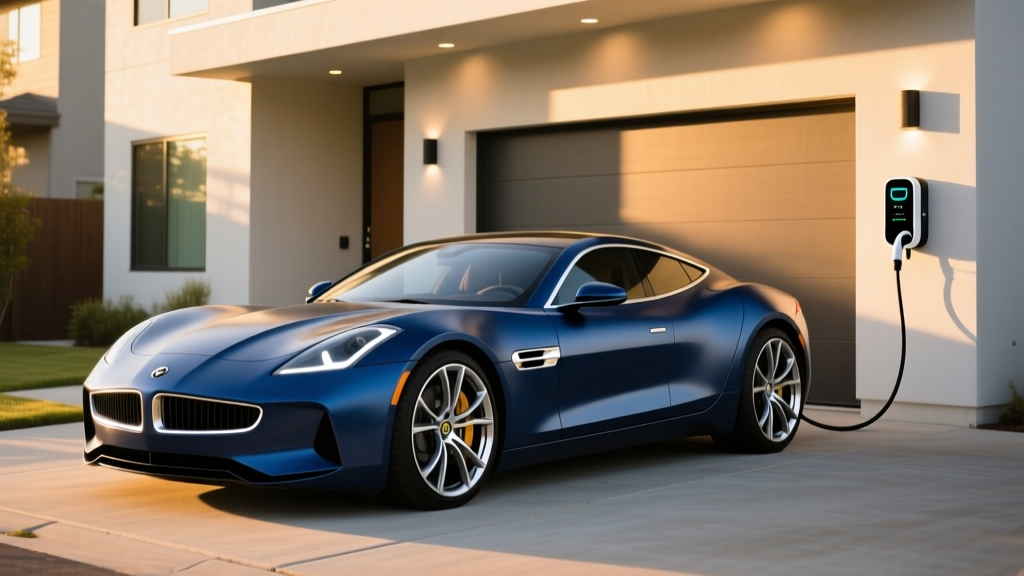
The Fisker Karma is one of the most visually striking plug-in hybrids ever built. Originally sold for the 2012 model year before Fisker Automotive's bankruptcy, the Karma still turns heads with its low-slung, concept-car proportions and solar-panel roof. But for anyone researching the cost of Fisker Karma ownership in 2026, the financial picture extends well beyond the used-car sticker price. Battery degradation, limited service infrastructure, and the realities of a 14-year-old PHEV powertrain all factor into the equation.
This guide breaks down what you'll actually pay to buy, charge, maintain, and insure a Fisker Karma today — and whether it makes sense versus modern PHEV and EV alternatives.
Used Fisker Karma Pricing: What You'll Pay in 2026
The Fisker Karma was originally priced at roughly $96,000 to $110,000 when new. Depreciation has been steep. As of early 2026, used Fisker Karma listings typically fall in the following ranges:
| Condition / Trim | Mileage Range | Typical Asking Price (2026) |
|---|---|---|
| EcoStandard (base) | 60,000–90,000 mi | $22,000–$32,000 |
| EcoSport (mid-trim) | 40,000–70,000 mi | $28,000–$40,000 |
| EcoChic (top trim) | 20,000–50,000 mi | $35,000–$55,000 |
| Low-mile collector example | Under 20,000 mi | $50,000–$75,000+ |
Prices vary significantly based on battery health, service history, and whether the high-voltage battery has been replaced. A Karma with a documented battery swap commands a premium of $5,000–$10,000 over an equivalent car with its original pack.
Fisker Karma Specs: Range, Battery, and Powertrain
The Karma is a series plug-in hybrid — meaning its 2.0L turbocharged GM Ecotec engine acts as a generator, never driving the wheels directly. Twin rear-mounted electric motors provide all propulsion.
| Spec | Fisker Karma (2012) |
|---|---|
| EPA Electric-Only Range | 32 miles |
| Total Range (electric + gas generator) | ~230 miles |
| Battery Capacity | 20.1 kWh (usable ~18 kWh), NMC chemistry |
| Combined Horsepower | 403 hp (electric motors) |
| 0–60 mph | 5.8 seconds (Sport mode, charged battery) |
| Drivetrain | RWD (twin rear electric motors) |
| EPA MPGe (electric mode) | 54 MPGe |
| Fuel Economy (gas generator mode) | ~20 MPG combined |
| Curb Weight | 5,300 lbs |
Charging the Fisker Karma: Speeds and Practicalities
The Karma was designed in an era before DC fast charging was mainstream. It supports Level 2 AC charging only — no DC fast-charge capability.
| Charging Level | Power | Time (Empty to Full) | Miles of EV Range per Hour |
|---|---|---|---|
| Level 1 (120V household) | ~1.4 kW | ~14 hours | ~2 miles/hr |
| Level 2 (240V, J1772) | ~3.3 kW | ~6 hours | ~5 miles/hr |
| DC Fast Charge | Not supported | ||
The 3.3 kW onboard charger is slow by 2026 standards. Most modern PHEVs accept 6.6–7.2 kW on Level 2. For a Karma owner, this means overnight charging on a home Level 2 station is the practical norm — you'll wake up with a full battery every morning, which is sufficient given the car's limited EV range.
The Karma uses a standard J1772 connector for Level 2 charging. No adapter is needed for home or public Level 2 stations.
The Biggest Cost Factor: Battery Replacement
The single most important variable in the cost of Fisker Karma ownership is the high-voltage battery. The original 20.1 kWh NMC pack was manufactured by A123 Systems, which went bankrupt in 2012 — the same event that helped sink Fisker Automotive.
Here's what you need to know about battery replacement:
- Original battery lifespan: Most original Karma batteries have lost 25–45% of their capacity by 2026. Some are significantly worse, especially in cars that sat unused for long periods.
- Replacement cost: A refurbished or aftermarket replacement battery runs $8,000–$15,000 installed, depending on the supplier and condition. A small number of specialized shops (primarily in California and Florida) perform these swaps.
- Aftermarket options: Companies like Hybrid Shop and independent EV specialists have developed replacement packs, some with slightly improved capacity. Availability is limited and wait times can stretch to several months.
- Warranty: The original Fisker battery warranty (5 years/50,000 miles for the basic, 10 years/150,000 miles for the hybrid components) is long expired on every Karma on the road.
Interior, Cargo, and Daily Livability
The Karma's interior was premium for its era, with available reclaimed wood trim, recycled materials, and a distinctive "EcoChic" design language. However, packaging compromises from the battery tunnel and low roofline affect practicality.
| Dimension | Fisker Karma |
|---|---|
| Front Legroom | 42.5 inches |
| Rear Legroom | 29.6 inches (very tight for adults) |
| Cargo Volume (trunk) | 6.9 cu ft |
| Seating Capacity | 4 passengers |
| Infotainment | 10.2-inch touchscreen (no Apple CarPlay/Android Auto) |
The 6.9 cu ft trunk is small — the battery tunnel bisects the rear, creating a narrow, shallow cargo area. You can fit two carry-on bags, not much more. Rear seats are best suited for children or short trips; taller adults will find the legroom and headroom restrictive.
The infotainment system is a 2012-era design: responsive enough but lacking modern connectivity. No Apple CarPlay, no Android Auto, no over-the-air updates. Bluetooth audio and navigation are present.
Driver Assistance and Safety
The Karma predates modern ADAS suites. It includes:
- Stability and traction control
- ABS with brake assist
- Front and side airbags
- Rear parking sensors
- Backup camera
There is no adaptive cruise control, no lane-keeping assist, no automatic emergency braking, and no blind-spot monitoring. By 2026 standards, the Karma's safety technology is minimal. The NHTSA did not crash-test the Karma, and IIHS has no rating on file.
Pros and Cons of Fisker Karma Ownership
Pros
- Head-turning design that still looks futuristic
- Solar panel roof trickle-charges the 12V battery
- 403 hp and 5.8-second 0–60 make it genuinely quick
- Series PHEV means no range anxiety — gas generator extends total range to ~230 miles
- Depreciation has made it accessible at $25K–$40K
- Collector appeal — limited production (~2,400 units built)
Cons
- Battery replacement costs $8,000–$15,000 when degraded
- Only 3.3 kW Level 2 charging — no DC fast charge
- Real-world EV range of 18–26 miles on a used battery
- Tiny 6.9 cu ft trunk and cramped rear seats
- No modern driver-assistance features
- Limited service network — few shops can work on them
- No federal tax credit on most used examples (above $25K cap)
Is the Fisker Karma Worth Buying vs. Modern Alternatives?
The honest answer depends on what you want from a vehicle in 2026.
Decision Framework
Buy the Fisker Karma if: You want a rare, conversation-starting grand tourer for weekend drives and car shows. You have a garage for Level 2 charging. You accept that it's a collector-grade vehicle with real maintenance costs, and you've budgeted for a potential battery replacement.
Skip the Karma and consider a modern PHEV if: You need daily transportation with reliable EV range, modern safety tech, a usable back seat and trunk, and a service network you can count on. A used BMW 330e ($25K–$35K), Toyota RAV4 Prime ($30K–$40K), or Jeep Wrangler 4xe ($28K–$38K) delivers more practical PHEV ownership in 2026.
Consider a full BEV if: You have home charging and want to eliminate gas entirely. A used Tesla Model 3 Long Range or a new Chevrolet Equinox EV ($33,000 base) offers 250+ miles of range, DC fast charging, and modern ADAS — all with lower running costs.
Total Cost of Ownership: 3-Year Estimate
| Cost Category | Estimated 3-Year Cost | Notes |
|---|---|---|
| Purchase Price (EcoSport, avg.) | $34,000 | Mid-range used example |
| Insurance | $6,000–$9,000 | Specialty/collector rates available; standard insurers may charge more |
| Electricity (home charging) | $600–$1,000 | Based on ~8,000 EV miles/year at $0.15/kWh |
| Gasoline (generator mode) | $1,800–$2,500 | Based on ~4,000 gas miles/year at 20 MPG, $3.50/gal |
| Maintenance & Repairs | $3,000–$6,000 | Higher than average — parts scarcity, specialist labor |
| Potential Battery Replacement | $8,000–$15,000 | May be needed within 3 years on original pack |
| Estimated 3-Year Total | $53,400–$67,500 | Highly variable based on battery health |
Frequently Asked Questions
What is the real-world electric range of a used Fisker Karma?
Expect 18–26 miles on a used battery in mixed driving. Highway speeds and cold weather reduce this to as low as 14–18 miles. The original EPA rating was 32 miles when new, but 14-year-old NMC batteries have degraded 25–45% in most cases.
How fast does the Fisker Karma charge?
The Karma maxes out at 3.3 kW on Level 2 (240V), taking about 6 hours from empty to full. On a standard 120V outlet (Level 1), it takes roughly 14 hours. DC fast charging is not supported — this was common for PHEVs of its era.
Does the Fisker Karma qualify for the federal EV tax credit?
No. The §30D new clean vehicle credit only applies to new vehicles, and the Karma hasn't been sold new since 2012. The IRS used EV credit (up to $4,000) requires a dealer sale price under $25,000 and buyer income below $75,000 (single) or $150,000 (joint). Most Karmas sell above $25,000, making them ineligible. Always verify current rules at irs.gov.
Is it worth buying a Fisker Karma in 2026?
As a collector car or weekend cruiser, the Karma has genuine appeal — rare design, quick acceleration, and a story that no other car can match. As a daily driver, it falls short: limited EV range, slow charging, no modern safety tech, and expensive battery replacement risk. If you want practical PHEV transportation, a modern alternative serves you better.
What are the biggest risks of Fisker Karma ownership?
The high-voltage battery is the primary risk — replacement costs $8,000–$15,000. Beyond that, parts availability is a concern since Fisker Automotive folded in 2013. Body panels, the proprietary solar roof, and specific electronic modules can be difficult to source. Find a specialist mechanic before you buy, not after.
How does the Fisker Karma compare to the Karma Revero?
Karma Automotive (the company that bought Fisker's assets) produced the Revero starting in 2017 with updated batteries (21.4 kWh → 28 kWh), more power, and improved range. Reveros sell for $45,000–$70,000 used and offer better battery health. If budget allows, a Revero is a more reliable ownership proposition than the original Karma.