The Short Answer on the Corvette EV
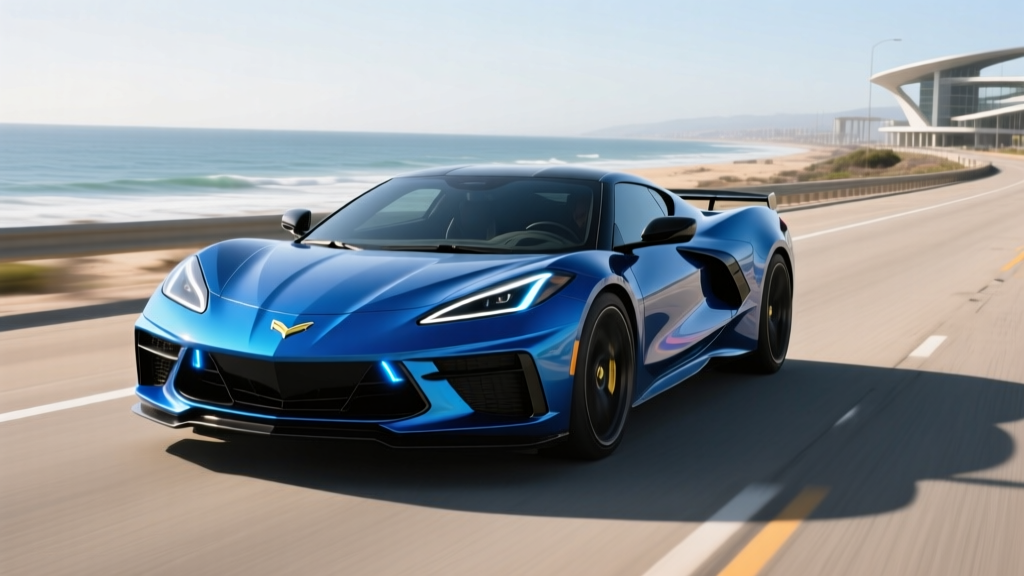
As of early 2026, Chevrolet has not yet released a production Corvette EV. GM has confirmed that an electric Corvette is in development, with concept previews and executive statements pointing toward a vehicle that will sit alongside — not immediately replace — the current mid-engine C8 Corvette. No official EPA range, battery capacity, pricing, or on-sale date has been published. What follows is a synthesis of confirmed GM statements, industry analysis of the Ultium platform, and realistic projections based on comparable electric performance vehicles. If you're researching a "Corvette EV" purchase, you cannot buy one today — but you can prepare for what's likely coming and understand how an electric Corvette would reshape the ownership calculus.
What GM Has Actually Confirmed
General Motors has signaled its intent to electrify the Corvette nameplate through several channels. The Corvette E-Ray, introduced for the 2024 model year, added an electric front axle to the C8's 6.2L V8, producing a combined 655 hp and all-wheel drive — a clear bridge technology. GM President Mark Reuss has publicly stated that a fully electric Corvette is part of the brand's future, though he has stopped short of committing to a specific model year.
The E-Ray itself offers useful data points for what a full EV might look like:
- Front electric motor: ~160 hp, powered by a 1.9 kWh battery pack
- Combined output: 655 hp (V8 + electric)
- 0-60 mph: 2.5 seconds (AWD launch)
- Electric-only mode: Limited low-speed, short-distance capability
This hybrid system proves GM's engineering team has already solved the packaging challenge of fitting electric drive hardware into the Corvette's mid-engine architecture. A full BEV would replace the V8 entirely with one or more electric motors and a substantially larger battery pack — likely drawing from GM's Ultium platform technology.
Projected Specs: What an Electric Corvette Could Look Like
Based on Ultium platform capabilities, the performance envelope of rival electric sports cars, and GM's stated goals, here are realistic projections for a production Corvette EV. These are estimates, not confirmed specifications.
| Specification | Estimated / Projected | Basis for Estimate |
|---|---|---|
| Battery capacity | 85–110 kWh (usable) | Ultium large-platform modules; performance EV norms |
| Battery chemistry | NMC (nickel manganese cobalt) | Energy density priority for sports car packaging |
| EPA range | 250–320 miles | High-power motors + heavy battery vs. aero efficiency |
| Horsepower | 600–850+ hp | Dual/tri-motor Ultium configurations |
| 0-60 mph | 2.0–3.0 seconds | Instant torque, AWD capability, E-Ray benchmark |
| Peak DC fast charge rate | 200–350 kW | Ultium 800V architecture capability |
| 10-80% DC charge time | ~18–28 minutes | Comparable to Cadillac Lyriq, Hummer EV data |
| Level 2 home charging | 11.5–19.2 kW (AC) | Standard Ultium onboard charger |
| Base MSRP | $90,000–$130,000+ | C8 pricing + EV premium + performance positioning |
| Drivetrain | AWD (dual or tri motor) | E-Ray precedent; performance requirement |
A critical trade-off: the battery pack needed for 300+ miles of range in a high-horsepower vehicle will likely weigh 1,200–1,600 lbs. The current C8 Stingray has a curb weight around 3,600 lbs. A Corvette EV could push past 4,800 lbs, fundamentally changing the car's handling dynamics. GM's engineering challenge is managing that mass through chassis tuning, torque vectoring, and advanced suspension — something Porsche has tackled with the Taycan (curb weight ~5,100 lbs) to critical acclaim.
Corvette EV vs. Gas C8 Corvette: Ownership Cost Comparison
While we wait for confirmed pricing, we can model the ownership economics using the current C8 Corvette as a baseline and projecting EV equivalents. This comparison uses a gas C8 1LT Stingray (MSRP ~$69,995) against a hypothetical Corvette EV at ~$110,000.
| Cost Category | C8 Stingray (Gas) | Corvette EV (Projected) | Notes |
|---|---|---|---|
| Purchase price (MSRP) | $69,995 | $110,000 | EV premium reflects battery + platform cost |
| Federal tax credit (§30D) | $0 | $0–$7,500 | MSRP cap for sedans/coupes is $55,000 — Corvette EV likely exceeds the cap, making it ineligible. Source: IRS §30D |
| Fuel/energy (5 yrs, 60k mi) | $12,500–$15,000 | $3,500–$5,500 | Gas at $3.50/gal, 18 mpg combined vs. electricity at $0.14/kWh, 3 mi/kWh |
| Maintenance (5 yrs) | $3,000–$4,500 | $1,000–$2,000 | No oil changes, fewer brake replacements (regen), no exhaust service |
| Insurance (5 yrs) | $12,000–$16,000 | $14,000–$20,000 | EV insurance typically 15-25% higher; high-performance EV premium |
| Estimated 5-yr total | $97,500–$105,500 | $128,500–$137,500 | EV saves on fuel/maintenance but costs more upfront |
The honest math: A Corvette EV will almost certainly cost more to own over five years than a gas C8, primarily because the purchase price premium dwarfs the fuel and maintenance savings. This is not an economy play — it's a performance and technology statement. Buyers motivated by operating cost savings should look at mainstream EVs, not electric sports cars.
EV vs. Gas Corvette: Performance and Driving Reality
| Attribute | C8 Stingray (Gas) | Corvette EV (Projected) |
|---|---|---|
| 0-60 mph | 2.9 sec (Z51) | 2.0–3.0 sec (instant torque advantage) |
| Power delivery | Linear, builds with RPM; V8 sound | Instant, flat torque curve; silent or synthetic audio |
| Weight | ~3,640 lbs | ~4,800+ lbs (estimated) |
| Weight distribution | Mid-engine, rear-biased | Skateboard or modified mid-platform; lower CG |
| Handling character | Agile, communicative, lightweight feel | Higher mass requires advanced chassis tuning; may feel planted but less nimble |
| Sound | 6.2L V8 exhaust note — core identity | Silent or synthetic; emotional disconnect for enthusiasts |
| Track endurance | Can run hot laps with cooling management | Battery thermal management critical; sustained high-power laps may trigger power limiting |
| Refueling/recharging | ~10 min at gas station; 350+ mi range | 20-30 min DC fast charge; ~250-320 mi range (projected) |
| Daily drivability | Firm ride, loud, low clearance | Potentially smoother, quieter, one-pedal driving in traffic |
The fundamental tension: electric motors deliver objective performance advantages (instant torque, AWD launch, lower center of gravity), but the Corvette's identity is deeply tied to its V8 sound, lightweight agility, and mechanical engagement. GM knows that a Corvette EV must deliver an emotional experience — not just a spec-sheet win — or it will alienate the enthusiast core.
Real-World Ownership Considerations for a Corvette EV
If and when a Corvette EV reaches production, prospective buyers should weigh these practical factors:
Home Charging Is Non-Negotiable
A performance EV with a ~100 kWh battery needs Level 2 home charging to be practical. On a standard 120V outlet (Level 1), you'd add roughly 3–5 miles of range per hour — meaning a full charge could take 24+ hours. A Level 2 home charger (240V, 48A circuit) delivers roughly 30–40 miles of range per hour, allowing overnight replenishment. Expect to spend $800–$2,500 on a home Level 2 installation, including the charger unit, electrical panel assessment, and permitting. If your home has a 100A electrical panel, a panel upgrade to 200A could add $1,500–$3,500.
Cold-Weather Range Loss
All EVs lose range in cold temperatures. Based on testing data from comparable performance EVs, expect a Corvette EV to lose 15–30% of its EPA-rated range in freezing conditions, depending on whether the vehicle uses a heat pump for cabin heating. A 300-mile EPA rating could drop to 210–255 miles in winter. For a weekend canyon carver, this may be acceptable. For a road trip vehicle, it requires planning.
Track Use and Battery Thermals
Sustained high-speed track driving generates enormous heat in battery cells. The Porsche Taycan and Tesla Model S Plaid have both demonstrated that thermal management is the limiting factor for EV track performance — power gets reduced ("throttled") when battery temperatures exceed safe thresholds. GM will need to engineer aggressive active cooling for any Corvette EV marketed to enthusiasts. Watch for confirmed data on sustained lap capability before assuming track readiness.
Public Charging Network Compatibility
GM has committed to NACS (North American Charging Standard) for its future EVs, meaning a Corvette EV would natively access Tesla Supercharger stations in addition to Electrify America, EVgo, and other networks. This is a significant practical advantage over CCS-only vehicles, as the Supercharger network remains the most reliable DC fast-charging infrastructure in the US.
Common Misconceptions About an Electric Corvette
| Myth | Fact |
|---|---|
| "The Corvette EV is available to order now." | False. No production Corvette EV exists as of 2026. The Corvette E-Ray is a hybrid (V8 + electric motor), not a full EV. |
| "An electric Corvette will be cheaper to own than a gas one." | Unlikely. The purchase price will be substantially higher, and the §30D tax credit has a $55,000 MSRP cap for coupes/sedans — a Corvette EV will almost certainly exceed this. Fuel and maintenance savings are real but won't offset the premium over 5 years. |
| "EVs can't match a V8 Corvette's soul." | Subjective, but worth taking seriously. Instant torque and 2-second 0-60 times are thrilling, but the sound, mechanical feedback, and lightweight feel of a V8 are part of the Corvette experience. GM will need to solve the emotional equation, not just the performance one. |
| "The battery will need replacing in a few years." | Extremely unlikely. Modern NMC and LFP battery packs are designed for 1,000–2,000+ charge cycles before significant degradation. GM's Ultium batteries carry an 8-year/100,000-mile warranty (minimum 70% capacity retention). Real-world data from Chevy Bolts shows ~5-8% degradation over 100,000 miles. |
| "It will qualify for the $7,500 federal tax credit." | Almost certainly not. The IRS §30D credit caps eligibility at $55,000 MSRP for coupes and sedans. Even the base C8 Stingray starts near $70,000. A Corvette EV will be priced well above this threshold. Always verify current rules at irs.gov. |
Competitive Landscape: What an Electric Corvette Would Face
A production Corvette EV wouldn't exist in a vacuum. Several electric performance vehicles already define the segment:
- Porsche Taycan Turbo GT: ~1,019 hp, EPA range ~269 mi, 0-60 in 2.1 sec, MSRP ~$230,000. The benchmark for electric sports car handling.
- Tesla Model S Plaid: 1,020 hp, EPA range ~396 mi, 0-60 in 1.99 sec, MSRP ~$89,990. Unmatched straight-line value, but sedan form factor.
- Lotus Eletre R: 905 hp, estimated range ~300 mi, 0-60 in ~2.95 sec, MSRP ~$120,000+. SUV, but Lotus dynamics.
- Lucid Air Sapphire: 1,234 hp, EPA range ~427 mi, 0-60 in 1.89 sec, MSRP ~$249,000. Extreme performance sedan.
The Corvette EV's likely positioning: undercut the Taycan and Lucid on price while matching or exceeding their straight-line performance, leveraging the Corvette brand's American performance heritage. A sub-$120,000 starting price with sub-2.5-second 0-60 would be a compelling — and disruptive — value proposition in the electric performance segment.
Decision Framework: Should You Wait or Buy Now?
Choose Your Path
Buy a gas C8 Corvette now if:
- You want a Corvette today and value the V8 sound and mechanical engagement
- Track days are part of your ownership plan (proven cooling, established aftermarket)
- You don't have reliable home Level 2 charging access
- You prefer a lighter car (~3,640 lbs) with communicative handling
- You plan to keep the car 3-5 years and want proven depreciation data
Buy a Corvette E-Ray (hybrid) now if:
- You want electric AWD performance (2.5 sec 0-60) with V8 range and sound
- You want a bridge technology that's available today at ~$104,900 MSRP
- You want to experience electric torque in a Corvette without range anxiety
Wait for the Corvette EV if:
- You have home Level 2 charging and drive in a region with robust DC fast-charging infrastructure
- Instant torque, silent cruising, and daily-drivable EV performance appeal to you
- You're willing to wait 1-3+ years for confirmed specs, pricing, and availability
- You want to evaluate real-world range, track thermal performance, and ownership costs based on actual data — not projections
Frequently Asked Questions
When will the Corvette EV be available?
GM has not announced an official release date. Industry analysts project a reveal no earlier than late 2026 or 2027, with customer deliveries potentially starting in the 2028 model year. These are estimates, and GM could adjust timing based on market conditions, battery supply, and platform readiness.
Will the Corvette EV replace the gas Corvette?
Not immediately. GM has indicated that the electric Corvette will likely coexist with internal-combustion variants for a transition period, similar to how the E-Ray hybrid sits alongside the Stingray and Z06 today. A full phase-out of gas Corvettes would depend on market demand, emissions regulations, and GM's broader EV transition timeline.
How much will a Corvette EV cost?
No official pricing exists. Based on Ultium platform costs, the performance segment positioning, and the current C8 pricing ladder ($69,995–$115,000+), a reasonable estimate is $90,000–$130,000+ for base to high-performance trims. This would position it below the Porsche Taycan Turbo GT and Lucid Air Sapphire but above the Tesla Model S Plaid.
Will it qualify for the federal EV tax credit?
Almost certainly not. The IRS §30D credit imposes a $55,000 MSRP cap for coupes and sedans (and $80,000 for SUVs/trucks/vans). A Corvette EV will be priced well above $55,000, making it ineligible regardless of battery sourcing or buyer income. Additionally, buyer income caps ($150,000 single / $300,000 joint) and critical mineral sourcing requirements further limit eligibility. Always consult a tax professional and verify current rules at irs.gov.
What about the Corvette E-Ray — is that an EV?
No. The Corvette E-Ray is a hybrid that pairs a 6.2L V8 with a front-axle electric motor and a small 1.9 kWh battery. It cannot be plugged in to charge, has no meaningful electric-only range, and is classified as a hybrid — not a BEV or PHEV. It does not qualify for the federal EV tax credit.
What should a first-time EV buyer know before considering a performance EV?
Three essentials: (1) Install Level 2 home charging — it's the backbone of EV ownership and costs $800–$2,500 including equipment and electrical work. (2) Understand the difference between kW (charge rate/power) and kWh (battery capacity/energy) — a 100 kWh battery charged at 200 kW (peak) will not charge in 30 minutes because the charge curve tapers significantly above 80% state of charge. (3) Budget for higher insurance — performance EVs typically cost 15–25% more to insure than their gas equivalents due to higher repair costs, battery replacement risk, and greater purchase prices.