Quick Answer: Is the Electric Blue Corvette E-Ray Actually Electric?
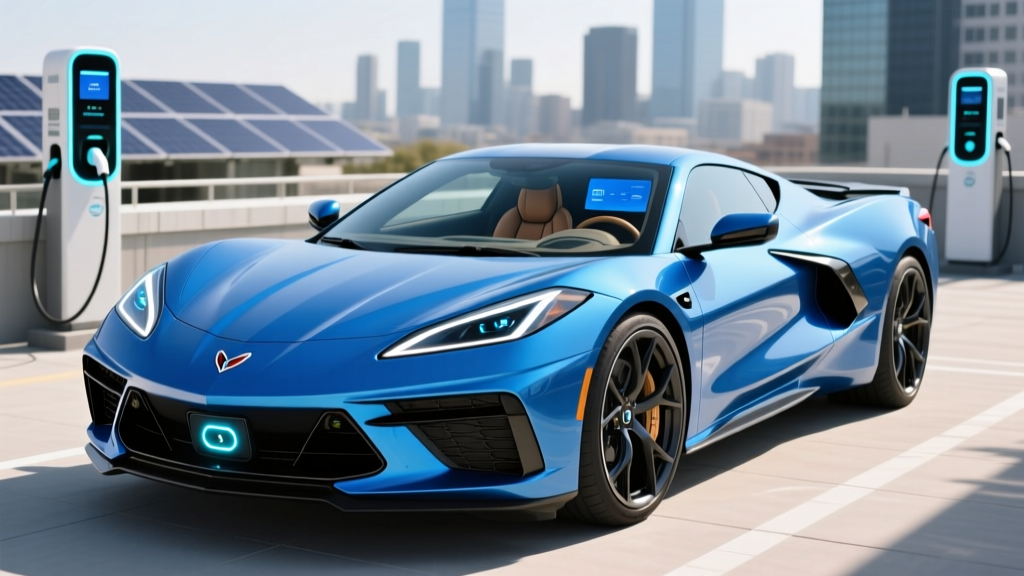
The "electric blue Corvette" most buyers are searching for is the 2026 Chevrolet Corvette E-Ray — a performance hybrid (HEV), not a battery-electric vehicle. It pairs a 6.2L V8 with a front-mounted electric motor for 655 combined HP and a 3.6-second 0-60 mph time. However, it offers no plug-in capability and no EV-only driving range beyond brief low-speed electric assist. If you want a true plug-in electric Corvette experience, you'll need to look at upcoming GM EV platforms or consider alternatives like the Tesla Model S Plaid or Porsche Taycan. The E-Ray's starting MSRP sits around $73,300 (1LZ coupe) before destination, and it does not qualify for the federal §30D EV tax credit because it is not a plug-in vehicle.
What the Corvette E-Ray Actually Is (and Isn't)
The Corvette E-Ray, now in its third model year for 2026, remains Chevrolet's electrified halo sports car — but "electrified" requires clarification. The E-Ray uses a 1.1 kWh lithium-ion battery pack mounted in the center tunnel, powering a front-axle electric motor that produces 160 HP and 125 lb-ft of torque. Combined with the rear-mounted 6.2L LT2 V8 (495 HP, 465 lb-ft), total system output reaches 655 HP.
That small battery recharges exclusively through regenerative braking and the gasoline engine. There is no charge port. You cannot plug it in. The electric motor provides torque-fill at launch and enables a limited "Stealth Mode" for brief electric-only driving at low speeds — Chevrolet estimates roughly 3-4 miles at under 45 mph before the V8 fires up.
If your search for an "electric blue Corvette" means you want a silent, zero-emission daily driver, this isn't it. If you want electrified performance enhancement wrapped in a traditional sports car, the E-Ray delivers.
E-Ray Specs: The Numbers That Matter
| Specification | 2026 Corvette E-Ray (1LZ Coupe) |
|---|---|
| Combined System Output | 655 HP / 590 lb-ft (est.) |
| V8 Engine | 6.2L LT2, 495 HP / 465 lb-ft |
| Front Electric Motor | 160 HP / 125 lb-ft |
| Battery Capacity | 1.1 kWh (lithium-ion) |
| 0-60 mph | 3.6 seconds |
| Top Speed | ~180 mph (with ZER package) |
| EPA Fuel Economy (combined) | ~19 MPG (est. based on prior-year data) |
| Drivetrain | eAWD (V8 rear, electric front) |
| Starting MSRP | $73,300 (1LZ coupe, before destination) |
| Federal EV Tax Credit (§30D) | Not eligible — not a plug-in vehicle |
| Powertrain Warranty | 5 years / 60,000 miles |
| Hybrid Component Warranty | 8 years / 100,000 miles |
Sources: Chevrolet Corvette E-Ray Configurator, fueleconomy.gov
E-Ray vs. True EVs: Cost and Performance Comparison
Buyers eyeing the electric blue Corvette are often cross-shopping performance EVs. Here's how the E-Ray stacks up against popular alternatives on the metrics that matter.
| Metric | 2026 Corvette E-Ray | 2026 Tesla Model S Plaid | 2026 Porsche Taycan 4S |
|---|---|---|---|
| Base MSRP | $73,300 | $89,990 | $106,300 |
| System HP | 655 HP | 1,020 HP | 562 HP (launch control) |
| 0-60 mph | 3.6 sec | 1.99 sec | 3.8 sec |
| EPA Range | N/A (gasoline) | 396 mi | 288 mi |
| Fuel/Energy Cost (15K mi/yr) | ~$2,400 (gas) | ~$540 (electric, US avg) | ~$580 (electric, US avg) |
| Federal Tax Credit | None | Up to $7,500* | None (over MSRP cap) |
| Annual Maintenance (est.) | ~$800 | ~$300 | ~$500 |
| 5-Year Fuel/Energy Total | ~$12,000 | ~$2,700 | ~$2,900 |
*Model S Plaid eligibility for the §30D credit depends on battery sourcing requirements, buyer income caps ($150K single / $300K joint), and the vehicle's MSRP falling under the $55,000 sedan cap — which it does not as of 2026 rules. Verify current eligibility at irs.gov.
Annual Running Costs: E-Ray vs. Battery-Electric Alternatives
| Cost Category | Corvette E-Ray (HEV) | Battery EV (avg. 300-mi range) |
|---|---|---|
| Fuel / Energy (15,000 mi/yr) | $2,400 (premium gas) | $540 (home charging, $0.14/kWh) |
| Oil Changes | $150–$250/yr | $0 |
| Brake Wear (regen extends life) | $300–$500 every 30K mi | $200–$400 every 60K+ mi |
| Insurance (avg. annual) | $2,800–$3,400 | $2,200–$2,900 |
| Estimated 5-Year Total Running | ~$20,000 | ~$9,000 |
The E-Ray costs roughly $11,000 more to operate over five years than a comparable battery-electric sports sedan, driven primarily by premium fuel and more frequent maintenance. That gap widens if gas prices rise.
Real-World Ownership: What Corvette E-Ray Buyers Should Know
The E-Ray occupies a unique ownership position. Here's what you'll encounter in practice.
Home Charging: Not Applicable
Because the E-Ray has no charge port, there's no home charging to install — no Level 2 charger, no panel upgrade, no electrician visit. You fuel it like any gasoline sports car. The hybrid system manages its own battery state automatically.
Fuel Economy Reality
Chevrolet does not publish an official EPA combined figure for the E-Ray at this writing, but based on the standard Stingray's 19 MPG combined and the E-Ray's added weight (~3,774 lbs), expect 17-20 MPG combined in mixed driving. Highway cruising can push toward 24-25 MPG. Aggressive track or canyon driving will drop that to 12-14 MPG. The electric motor's contribution to fuel economy is marginal — it's a performance enhancer, not an efficiency play.
Cold-Weather Performance
The eAWD system gives the E-Ray a genuine traction advantage over rear-wheel-drive Stingrays in rain and light snow. However, the 1.1 kWh battery's performance contribution diminishes in extreme cold (below 20°F), as lithium-ion cells reduce discharge capability. You won't lose V8 power, but the electric torque-fill may feel less responsive until the pack warms.
Insurance and Depreciation
Corvette insurance runs high — expect $2,800-$3,400 annually for a $73K+ sports car depending on your age, location, and driving record. The E-Ray has held value well since its 2024 introduction, with 2-year depreciation around 12-18%, significantly better than most luxury EVs (which can lose 30-40% over the same period).
Common Misconceptions About the Electric Corvette
| Myth | Fact |
|---|---|
| "The E-Ray is a fully electric Corvette." | It's a hybrid (HEV). No plug, no EV-only range beyond ~3-4 low-speed miles. |
| "It qualifies for the $7,500 federal EV tax credit." | Not eligible. The §30D credit requires a plug-in vehicle with ≥7 kWh battery capacity. The E-Ray has 1.1 kWh. (IRS §30D rules) |
| "The electric motor replaces the V8." | No. The electric motor supplements the V8. Both run simultaneously under hard acceleration. |
| "It can drive on electric power only for long distances." | Stealth Mode provides ~3-4 miles at speeds under 45 mph before the V8 engages. |
| "There will be a fully electric Corvette soon." | GM has hinted at an electric Corvette variant, but as of early 2026, nothing has been officially announced with specs, pricing, or a release date. |
Decision Framework: Should You Buy the E-Ray or a True EV?
Choose the Corvette E-Ray If:
- You want a V8 sports car first — the sound, feel, and mechanical engagement of a mid-engine Corvette matter more to you than silent electric propulsion.
- You want all-weather capability — the eAWD system makes the E-Ray more practical year-round than a standard RWD Stingray.
- You don't have home charging access — no plug means no charging infrastructure required.
- Track days and canyon drives are priorities — 655 HP with instant electric torque-fill makes the E-Ray a legitimate performance machine.
- You plan to keep the car 7+ years — Corvettes depreciate slower than most EVs, and the proven LT2 V8 has decades of service history.
Choose a Battery-Electric Performance Car If:
- Running costs matter — an EV saves $11,000+ over five years in fuel and maintenance versus the E-Ray.
- You have reliable home Level 2 charging — a 48-amp, 11.5 kW home charger adds ~35-40 miles of range per hour of charging, covering daily needs effortlessly.
- You want instant, silent acceleration — EVs like the Model S Plaid (1.99 sec 0-60) or Lucid Air Sapphire (1.89 sec) outperform the E-Ray in a straight line.
- Daily commuting is your primary use — an EV's lower per-mile cost and one-pedal driving make it superior for stop-and-go traffic.
- You want zero tailpipe emissions — the E-Ray still burns premium gasoline; a BEV produces no direct emissions.
First-Time EV Buyer? Here's What to Know Before Choosing
If the E-Ray search led you to consider electrified vehicles for the first time, here are the practical realities that apply whether you choose a hybrid like the E-Ray or a full BEV:
- kW vs. kWh: kW measures power (charge speed or motor output); kWh measures energy (battery capacity). A 1.1 kWh battery (E-Ray) is a hybrid pack. A 100 kWh battery (Model S) is a full EV pack.
- Home charging is the biggest ownership variable: If you can install a Level 2 charger at home (typical cost: $500-$2,000 for equipment plus $800-$2,500 for electrician installation), EV ownership is seamless. Without it, you rely on public DC fast charging, which costs 2-4x more per kWh and requires planning.
- Cold weather reduces EV range 20-35%: The E-Ray doesn't have this problem (it's a gas car), but if you cross-shop a Taycan or Model S in a northern climate, plan for reduced winter range.
- Federal tax credits are complex: The §30D credit offers up to $7,500 for qualifying new plug-in vehicles, but income caps ($150K single / $300K joint), MSRP caps ($55K sedans / $80K SUVs/trucks), and battery sourcing requirements all apply. Always verify at irs.gov and consult a tax professional.
- Insurance costs vary widely: Performance EVs and sports cars like the E-Ray carry higher premiums. Get quotes before committing to a purchase.
FAQ: Electric Blue Corvette Questions Answered
Is there a fully electric Corvette coming?
As of early 2026, GM has not officially announced a battery-electric Corvette with confirmed specs, pricing, or a release date. Former GM executives have publicly discussed the possibility, and GM's Ultium battery platform could support a high-performance EV sports car, but nothing is confirmed. The E-Ray remains the only electrified Corvette available.
Can I paint a standard Corvette electric blue?
Chevrolet's current Corvette color palette for 2026 does not include a shade called "Electric Blue." However, the closest factory options include Rapid Blue and Riptide Blue Metallic. Aftermarket wraps or custom paint can achieve any shade, typically costing $3,000-$6,000 for a quality wrap or $5,000-$10,000+ for custom paint.
How much does it cost to fuel a Corvette E-Ray per year?
At 15,000 miles per year and 19 MPG combined, using premium fuel at approximately $4.00/gallon, expect annual fuel costs around $3,150. Aggressive driving or frequent track use will increase this substantially. By comparison, a battery-electric sports sedan charged primarily at home costs roughly $540 annually for the same mileage.
Does the E-Ray's hybrid system require special maintenance?
The electric motor and 1.1 kWh battery are covered under GM's hybrid component warranty (8 years / 100,000 miles). The system is largely maintenance-free — there are no hybrid-specific fluids to change. The regenerative braking system actually reduces brake pad wear compared to the standard Stingray. Standard V8 maintenance (oil changes, spark plugs, coolant) still applies.
Is the E-Ray faster than the standard Corvette Stingray?
Yes. The E-Ray's 655 combined HP and eAWD launch capability produce a 3.6-second 0-60 mph time, compared to the Stingray Z51's 2.9-second time with the V8 alone but less traction off the line. In quarter-mile and rolling acceleration tests, the E-Ray's electric torque-fill gives it a measurable advantage, particularly from a standstill and in all-weather conditions.
Why doesn't the E-Ray qualify for the EV tax credit?
The federal §30D Clean Vehicle Credit requires a vehicle to have a battery capacity of at least 7 kWh and to be capable of being recharged from an external power source (i.e., it must have a charge port). The E-Ray's 1.1 kWh battery recharges only through regenerative braking and the gasoline engine, making it a conventional hybrid (HEV), not a plug-in hybrid (PHEV) or battery-electric vehicle (BEV). The credit's full eligibility rules are available on IRS.gov.