The Short Answer
The convertible electric vehicle market in 2026 remains extremely niche. The only mainstream battery-electric convertible currently available new in the U.S. is the MG Cyberster (limited import markets) and the Fiat 500e Cabrio (if available in your region). For most American buyers, the practical choices are the MINI Cooper SE Convertible (announced for select markets), the used-market BMW i8 Roadster (plug-in hybrid, not a full BEV), or waiting for upcoming models like the next-generation electric Porsche Boxster. Expect to pay $40,000–$110,000+, accept 150–230 miles of real-world range, and plan for home Level 2 charging as a near-requirement given sparse public infrastructure near scenic driving routes.
Why the Convertible Electric Vehicle Segment Is So Small
Combining a retractable roof mechanism with a heavy battery pack creates engineering challenges that have kept most automakers away. Convertibles require structural reinforcement to compensate for the missing roof, adding weight. Battery packs already add 800–1,200 lbs to a vehicle. The result: a convertible electric vehicle tends to be heavier than its hardtop equivalent, which reduces range and efficiency — the two metrics EV buyers care about most.
Additionally, the convertible market itself is shrinking. Automakers have deprioritized low-volume body styles in favor of crossovers and SUVs. When you intersect "convertible buyers" (a small, enthusiast-driven segment) with "EV early adopters" (a growing but still cost-conscious group), the addressable market becomes difficult to justify for mass production.
That said, a handful of options exist, and several announced models suggest the segment will grow through 2027–2028.
Current Convertible Electric Vehicle Options: Specs & Pricing
Here's what's actually available or announced for U.S. buyers as of early 2026:
| Model | Powertrain | Battery (kWh) | EPA Range (mi) | Peak DC Charge (kW) | 10–80% Time | 0–60 mph | Base MSRP |
|---|---|---|---|---|---|---|---|
| MINI Cooper SE Convertible (2025–2026) | BEV | 54.2 (usable ~49) | ~160 est. | 95 kW | ~30 min | 7.3 sec | ~$42,000 |
| Fiat 500e La Prima Cabrio | BEV | 42 (usable ~37.3) | ~149 (WLTP ~195) | 85 kW | ~35 min | 9.0 sec | ~$38,000 (EU/limited US) |
| MG Cyberster | BEV | 77 (NMC) | ~230 est. (WLTP ~316) | ~120 kW | ~34 min | 3.2 sec (AWD) | ~$55,000 (markets vary) |
| BMW i8 Roadster (used, PHEV) | PHEV | 11.6 (usable ~9.4) | 18 EV mi + 320 total | N/A (no DC fast) | N/A | 4.4 sec | $60,000–$85,000 (used) |
| Porsche Boxster EV (announced ~2027) | BEV | ~80 (est., NMC) | ~250 (est.) | ~270 kW (est.) | ~18 min (est.) | ~4.0 sec (est.) | ~$85,000+ (est.) |
Note: WLTP range figures (used in Europe) are typically 15–25% higher than EPA estimates. We've adjusted where possible. Models marked "est." are announced but not yet on sale in the U.S. — specs are preliminary. Source: manufacturer press sites and fueleconomy.gov.
Real-World Range Reality Check
MINI Cooper SE Convertible: EPA est. ~160 mi. Expect 120–135 mi on highway road trips at 70+ mph, and as low as 100–110 mi in freezing temperatures with the heater running. This is strictly a city-and-weekend-cruiser vehicle.
MG Cyberster: EPA est. ~230 mi. Expect 185–200 mi highway, less in cold weather. Adequate for day trips but requires route planning for longer drives.
Open-top driving increases aerodynamic drag slightly (turbulence in the cabin at speed), which can reduce efficiency by 3–7% compared to roof-up driving at highway speeds.
EV vs Gas Convertible: Cost & Driving Experience Comparison
The most common alternative to a convertible electric vehicle is a gas-powered convertible like the Mazda MX-5 Miata, Ford Mustang EcoBoost Convertible, or BMW Z4. Here's how the economics and experience stack up:
| Factor | MINI Cooper SE Convertible (EV) | Mazda MX-5 Miata (Gas) |
|---|---|---|
| Base MSRP | ~$42,000 | ~$30,000 |
| Fuel/Energy Cost per Mile | $0.04–$0.06 (home charging at $0.14/kWh) | $0.12–$0.15 (at $3.50/gal, 30 MPG) |
| Annual Fuel/Energy (10,000 mi) | $400–$600 | $1,200–$1,500 |
| Annual Maintenance | $200–$400 (no oil changes, fewer brake replacements) | $500–$800 (oil, filters, brake pads) |
| Federal Tax Credit (§30D) | Up to $7,500 (if eligible — see IRS rules) | $0 |
| 5-Year Energy + Maintenance | ~$3,000–$5,000 | ~$8,500–$11,500 |
| Real-World Range | 120–160 mi | 350+ mi (11.9-gal tank) |
| Driving Feel | Instant torque, quiet, heavier (~3,600 lbs) | Lightweight (~2,400 lbs), engaging, manual option |
The EV wins on operating costs by a significant margin — roughly $1,000–$1,500 saved annually on fuel and maintenance. Over five years, that's $5,000–$7,500 in savings. But the gas Miata costs $12,000 less upfront, meaning the EV doesn't reach cost parity unless you keep it 8+ years or qualify for the full federal tax credit.
Real Costs of Convertible EV Ownership
Let's model a realistic five-year total cost of ownership (TCO) for the MINI Cooper SE Convertible versus a comparable gas convertible:
| Cost Category | MINI Cooper SE Convertible (EV) | Mazda MX-5 Miata (Gas) |
|---|---|---|
| Purchase Price (base) | $42,000 | $30,000 |
| Federal Tax Credit (§30D) | –$3,750 to –$7,500* | $0 |
| Home Level 2 Charger Install | $800–$2,000 | $0 |
| Energy/Fuel (5 yr, 10k mi/yr) | $2,000–$3,000 | $6,000–$7,500 |
| Maintenance (5 yr) | $1,000–$2,000 | $2,500–$4,000 |
| Insurance (5 yr avg.) | $7,500–$10,000 | $5,500–$7,500 |
| Depreciation (5 yr est.) | $18,000–$22,000 | $10,000–$14,000 |
| 5-Year TCO (approx.) | $48,000–$60,000 | $44,000–$52,000 |
*§30D credit eligibility depends on your modified adjusted gross income, the vehicle's MSRP, battery component sourcing, and critical mineral requirements per IRS guidelines. The MINI Cooper SE's credit eligibility is partial or uncertain depending on battery sourcing — consult a tax professional and verify on the IRS clean vehicle credit page before purchasing.
Key takeaway: The convertible electric vehicle costs more over five years in most scenarios, primarily due to higher upfront cost, steeper depreciation on a niche model, and higher insurance premiums. The savings come from dramatically lower energy and maintenance costs. If you keep the car 8–10 years, the TCO gap narrows significantly.
First-Time EV Buyer: What You Must Know Before Buying a Convertible EV
Buying a convertible electric vehicle involves the same fundamentals as any EV purchase, but with amplified considerations due to the limited model selection and lower range.
Home Charging Is Nearly Mandatory
With EPA ranges of 150–230 miles, you cannot rely on public DC fast charging alone. Most scenic coastal and mountain routes — the natural habitat of a convertible — have sparse charging infrastructure. You need a Level 2 home charger (240V, 32–48 amps) delivering 7.7–11.5 kW to wake up to a full battery every morning.
Level 2 installation costs $800–$2,000 if your electrical panel has capacity. If you need a panel upgrade (from 100A to 200A service), add $1,500–$3,500. Get a quote from a licensed electrician before committing to the car.
Cold Weather Cuts Range Hard
At 20°F with the cabin heater running, expect a 25–40% range reduction. A 160-mile EPA convertible becomes a 100–120-mile car in January. Seat heaters and a heated steering wheel help — they use far less energy than cabin air heating. If you live in the northern U.S., a garage is strongly recommended.
Charging Speed Matters More Than You Think
The MINI Cooper SE Convertible peaks at ~95 kW on DC fast charging. That's modest by 2026 standards — a Hyundai Ioniq 5 charges at up to 240 kW. On a road trip, you'll spend 30–35 minutes charging from 10–80%, versus 18 minutes in a faster-charging EV. For a car with 160 miles of range, that means stopping every 100–120 real-world miles on the highway.
Battery Warranty & Longevity
Federal law mandates a minimum 8-year/100,000-mile battery warranty. MINI, Fiat, and MG all meet or exceed this. The warranty typically guarantees the battery retains at least 70% of original capacity. NMC batteries (used in most of these models) degrade roughly 2–3% per year under normal use. After 8 years, expect ~80–85% state of health if you avoid frequent DC fast charging and don't regularly charge to 100%.
Common Misconceptions About Convertible EVs
| Myth | Fact |
|---|---|
| "There are dozens of electric convertibles to choose from." | As of 2026, only 2–3 BEV convertibles are available globally, and U.S. availability is more limited. The segment is still tiny. |
| "An electric convertible is just as practical as an electric sedan." | Convertible EVs sacrifice range, cargo space, and rear-seat usability for open-air driving. They are enthusiast/fun vehicles, not daily commuters for most buyers. |
| "I'll save money buying electric." | Operating costs are lower, but the total cost of ownership may be higher due to purchase price, depreciation, and insurance. Savings depend on your mileage, electricity rate, and how long you keep the car. |
| "I can road-trip anywhere in a convertible EV." | With 120–200 miles of real-world range and 30-minute charge stops, long road trips require careful route planning. Charging deserts exist on scenic routes. |
| "The battery will need replacing in a few years." | Modern NMC and LFP batteries are engineered for 200,000+ miles. Degradation is gradual (~2–3%/year), and the 8-year warranty provides a safety net. Full replacements are rare and typically cost $8,000–$15,000 if out of warranty. |
| "All convertibles with plugs are fully electric." | The BMW i8 Roadster is a plug-in hybrid (PHEV), not a BEV. It has only ~18 miles of electric range before the gas engine engages. Know the difference before shopping. |
Decision Framework: Should You Buy a Convertible Electric Vehicle?
Choose a Convertible EV If:
- You have reliable home Level 2 charging — a garage or dedicated driveway outlet is essential given the 120–200 mile real-world range.
- This is a second or third car — you have another vehicle for long trips, commuting in bad weather, or hauling cargo.
- You drive mostly in mild climates — coastal California, the Southeast, or similar regions where cold-weather range loss is minimal.
- Your typical daily drive is under 80 miles round-trip — leaving a comfortable buffer even with range degradation.
- You value instant torque and quiet cruising — the EV driving experience is fundamentally different from a rev-happy gas roadster.
- You plan to keep the car 6+ years — allowing operating-cost savings to offset the higher purchase price.
Choose a Gas or Hybrid Convertible Instead If:
- You want one car that does everything — road trips, commuting, winter driving — without range planning. A Mazda MX-5 or BMW Z4 gives you 350+ miles of range and 3-minute refueling.
- You live in a cold climate without a garage — winter range loss and cabin-heating energy draw make short-range EVs frustrating in sub-freezing temperatures.
- You can't install a home charger — apartment dwellers or those without dedicated parking should wait for longer-range options or consider a PHEV like a used BMW i8 Roadster.
- Budget is a primary concern — gas convertibles start $10,000–$15,000 lower and depreciate less steeply on niche models.
- You want a manual transmission and lightweight handling — no current convertible EV offers a manual, and they're all 600–1,200 lbs heavier than a Miata.
What's Coming: Announced Convertible EVs Worth Waiting For
If none of the current options fit, several announced models suggest the segment will expand:
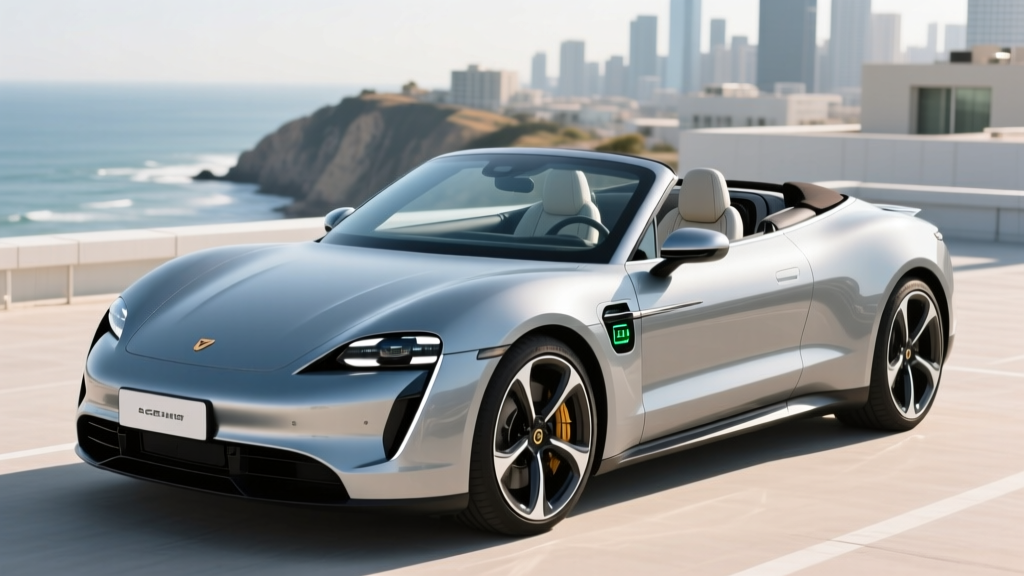
- Porsche 718 Boxster EV (announced, expected ~2027): Built on Porsche's PPE platform. Estimated 250+ mile range, 800V architecture enabling ~270 kW DC charging. Expected MSRP $85,000+. This is the most anticipated convertible electric vehicle in the pipeline.
- Fisker Project Ronin (announced, status uncertain): A four-door convertible GT concept with a claimed 600-mile range target. Fisker's financial instability makes this a high-risk wait — do not count on this vehicle reaching production.
- Next-gen MINI Cooper Electric variants: BMW has indicated the electric MINI lineup will expand. A longer-range convertible variant with a ~60 kWh battery and 200+ mile range is plausible by 2027–2028.
All specs for announced/unreleased models are preliminary estimates and subject to change. Verify with manufacturer sources before making purchasing decisions based on future products.
Frequently Asked Questions
Are there any fully electric convertibles available in the U.S. right now?
Availability is extremely limited. The MINI Cooper SE Convertible is the closest to mainstream U.S. availability, though distribution varies by market. The Fiat 500e Cabrio and MG Cyberster have limited or no official U.S. presence. Check with local dealers for current availability, as model-year allocations shift.
How much does it cost to charge a convertible EV at home?
Charging a ~50 kWh battery from 10% to 100% at the U.S. average residential rate of ~$0.16/kWh costs roughly $7–$8. That gives you approximately 130–150 real-world miles — about $0.05 per mile. Compare that to $0.12–$0.15 per mile in a gas convertible getting 28–32 MPG at $3.50/gallon.
Do I qualify for the $7,500 federal tax credit on a convertible EV?
Maybe, but it depends on multiple factors under IRS §30D rules: your modified adjusted gross income (capped at $150,000 single / $300,000 joint), the vehicle's MSRP (must be under $55,000 for cars), battery component manufacturing origin, and critical mineral sourcing. Many imported convertible EVs may only qualify for a partial credit ($3,750) or none at all. Always verify current eligibility on the fueleconomy.gov tax credit page and consult a tax professional before purchasing.
Is a plug-in hybrid convertible like the BMW i8 Roadster a good alternative?
It depends on your priorities. The i8 Roadster offers ~18 miles of electric-only range (enough for short city errands) plus a gas engine for longer trips, eliminating range anxiety. However, it's out of production, used examples cost $60,000–$85,000, and the electric range is too short to meaningfully reduce fuel costs. It's a collector's car, not an efficiency play.
Will driving with the top down reduce my EV's range?
Yes, but modestly. Open-top driving creates cabin turbulence that increases aerodynamic drag by roughly 3–7% at highway speeds. On a 160-mile EPA vehicle, that translates to losing 5–11 miles of range with the top down on a highway drive. The effect is negligible at city speeds under 45 mph.
What's the best convertible electric vehicle for warm-climate driving?
If you live in Southern California, Florida, or Arizona and can charge at home, the MG Cyberster (where available) offers the best combination of range (~230 mi EPA est.), performance (3.2 sec 0–60 in AWD), and open-air experience. For budget-conscious buyers in urban areas, the MINI Cooper SE Convertible works well as a city cruiser with its ~160-mile range covering most daily needs.