Quick Answer: What Is a Converted EV and Is It Worth It?
A converted EV is a gasoline-powered vehicle that has been retrofitted with an electric motor, battery pack, and power electronics to run purely on electricity. Professional conversions in 2026 typically cost $15,000 to $40,000+ on top of the donor vehicle price, yielding 60 to 200 miles of real-world range depending on battery capacity (usually 20–60 kWh). Most conversions use salvaged Tesla or Nissan LEAF modules, charge at Level 2 speeds (3.3–7.2 kW), and lack DC fast charging entirely.
A converted EV makes sense for classic-car enthusiasts, hobbyists, and drivers who want a zero-emission vintage daily driver. For everyone else seeking reliable, warranty-backed transportation with fast charging and 250+ miles of range, a purpose-built production EV or PHEV delivers better value, safety, and convenience per dollar.
How EV Conversions Work: The Basics
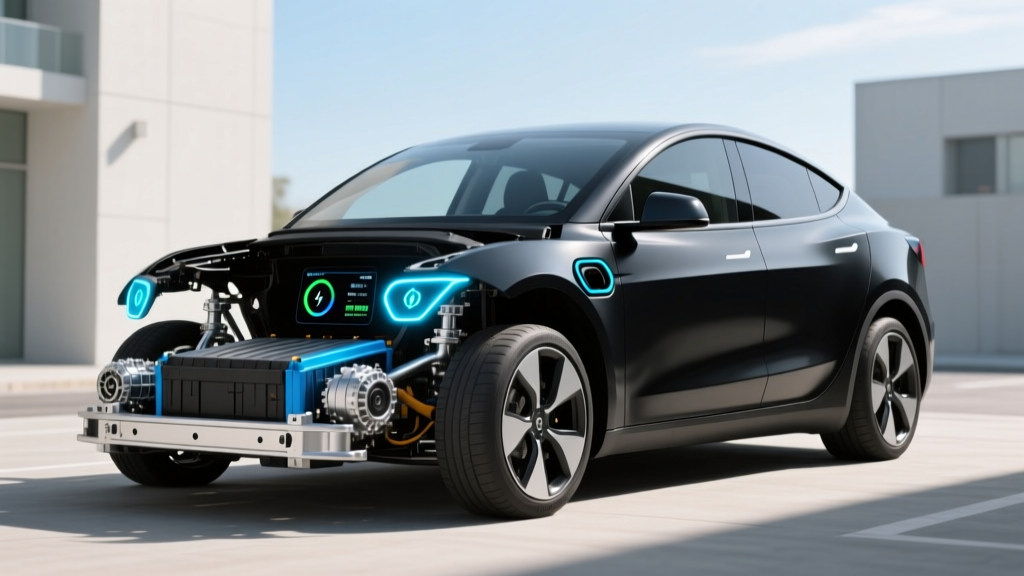
An EV conversion strips the internal combustion engine, fuel tank, exhaust system, and related components from a donor vehicle and replaces them with:
- Electric motor — typically a salvaged Tesla drive unit, NetGain Hyper9, or similar AC induction/permanent magnet motor (75–200 kW output)
- Battery pack — assembled from salvaged OEM modules (Tesla Model S, Nissan LEAF, Chevy Bolt) or new LFP prismatic cells, usually 20–60 kWh usable capacity
- Motor controller / inverter — manages power delivery between battery and motor
- Charger — onboard Level 2 charger (typically 3.3 kW or 6.6 kW; rarely supports DC fast charging)
- BMS (Battery Management System) — monitors cell voltage, temperature, and balancing
- DC-DC converter — steps down high-voltage pack to 12V for lights, wipers, infotainment
- Throttle interface — adapts the original pedal to send electronic signals to the controller
Most conversions retain the donor car's original transmission (locked in a single gear or 2-speed) or use a direct-drive setup. Power steering, braking, and HVAC must be converted to electric operation since the engine no longer drives accessory belts.
Converted EV Cost Breakdown: Parts, Labor, and the Donor Car
The total investment for a converted EV depends heavily on whether you do the work yourself or hire a professional shop. Here's what the numbers look like in 2026:
| Component | Budget DIY | Professional Build |
|---|---|---|
| Donor vehicle | $2,000–$8,000 | $5,000–$25,000 |
| Battery pack (salvaged modules) | $3,000–$8,000 | $6,000–$15,000 |
| Motor + controller | $2,500–$5,000 | $4,000–$8,000 |
| Charger + BMS + DC-DC | $1,500–$3,000 | $2,500–$5,000 |
| Fabrication, wiring, cooling | $1,000–$3,000 | $5,000–$12,000 |
| Labor (if professional) | $0 | $8,000–$20,000 |
| Registration / inspection | $200–$800 | $200–$800 |
| Total | $10,200–$27,800 | $30,700–$85,800 |
For context, a new production EV like the 2026 Chevrolet Equinox EV starts around $33,000 (before incentives) with a 315-mile EPA range, DC fast charging at 150+ kW, full ADAS, and an 8-year/100,000-mile battery warranty. A converted classic rarely matches any of those benchmarks.
Range, Charging, and Performance: What to Expect
Range in a converted EV is a direct function of battery capacity and vehicle weight/aerodynamics. Unlike production EVs, conversions rarely benefit from heat pumps, advanced thermal management, or optimized regen braking — all of which significantly affect real-world efficiency.
| Metric | Typical Converted EV | 2026 Chevy Equinox EV (3LT) | 2026 Toyota Camry (Gas) |
|---|---|---|---|
| Range / Tank | 60–200 mi (real-world) | 315 mi (EPA) | ~510 mi (13.2 gal × 39 mpg hwy) |
| Battery / Fuel Capacity | 20–60 kWh | 85 kWh usable (NMC) | 13.2 gal gasoline |
| Level 2 Charging (full) | 4–12 hours (3.3–6.6 kW) | ~9.5 hours (11.5 kW) | N/A |
| DC Fast Charging | Rarely available | 150 kW peak, 10–80% ~25 min | N/A |
| 0–60 mph | 8–14 sec (varies widely) | 7.9 sec | 7.2 sec |
| Horsepower | 100–250 HP | 213 HP (FWD) / 288 HP (AWD) | 203 HP |
| Warranty | None (or shop-limited) | 8 yr / 100,000 mi battery | 5 yr / 60,000 mi powertrain |
| Base Cost | $15,000–$50,000+ total | $33,000 MSRP | $28,700 MSRP |
Charging Realities
Most converted EVs charge exclusively via Level 2 (240V AC) at 3.3 kW or 6.6 kW. That means a 40 kWh pack takes roughly 6–12 hours for a full charge — fine for overnight home charging but impractical for road trips. DC fast charging requires high-voltage architecture (typically 400V+), compatible CCS or NACS inlet hardware, and communication protocols with the charging station — complexity that most conversion shops avoid.
Level 1 (120V) trickle charging at ~1.3 kW is technically possible but adds only about 4–5 miles of range per hour, making it useful only for topping off.
Real-World Range vs. Sticker Claims
Conversion shops sometimes advertise optimistic range figures based on ideal conditions (flat terrain, 25 mph, mild weather). In practice:
- Highway driving (65–75 mph) reduces range by 20–35% due to aerodynamic drag on non-aero donor bodies
- Cold weather (below 32°F) can cut range by 25–40% — conversions rarely have battery preconditioning or heat pumps
- Hilly terrain disproportionately affects heavier conversions (a 3,500-lb car with a 500-lb battery pack climbing grades)
A conversion advertised at "150 miles of range" may realistically deliver 90–110 miles on the highway in winter.
Federal Tax Credits and Incentives: The Bad News
Under current IRS §30D rules, the federal Clean Vehicle Credit of up to $7,500 applies only to new qualified plug-in electric vehicles purchased from a manufacturer. Converted EVs do not qualify — they are not produced by a qualified manufacturer, and the battery/motor components are not certified under the credit's critical-mineral and battery-sourcing requirements.
The Used Clean Vehicle Credit (up to $4,000 or 30% of sale price, whichever is less) under §25E also requires the vehicle to be sold by a licensed dealer and meet specific model-year and MSRP caps. A home-built or shop-converted EV will not appear on the IRS qualified-vehicle list.
Some states offer additional incentives for EV purchases or conversions — check your state energy office or Alternative Fuels Data Center for local programs. A few states have offered rebates for EV conversions in the past, but these are rare and frequently oversubscribed.
Common Converted EV Misconceptions
| Myth | Fact |
|---|---|
| "Converting my car saves money vs buying a new EV" | Most professional conversions total $30,000–$60,000+ including the donor. A new Equinox EV or Nissan LEAF starts at $30,000–$33,000 with warranty, fast charging, and 200–315 mi range. |
| "Any car can be converted easily" | Lighter, simpler vehicles (1970s–90s VW Beetles, Porsche 914s, old pickups) convert more cleanly. Modern cars with CAN-bus systems, electric power steering tied to the ECU, and complex safety systems are extremely difficult to convert without losing functionality. |
| "A converted EV is just as reliable as a factory EV" | Conversions use mismatched components from different manufacturers, custom wiring, and fabricated mounts. Reliability depends entirely on builder skill. There's no dealership service network or OBD-II diagnostic support. |
| "I'll save a fortune on fuel" | Electricity costs ~$0.04–$0.16 per mile depending on local rates; gas costs ~$0.10–$0.15/mi at 30 MPG. Annual fuel savings for a 12,000-mile driver might be $200–$600 — not enough to offset the conversion premium for years. |
| "Converted EVs are street-legal everywhere" | Registration requirements vary by state. Some states require special inspections, smog-exempt reclassification, or refuse to register heavily modified vehicles. Check your state DMV before starting a project. |
Real-World Ownership Considerations
Home Charging Access
A converted EV essentially requires home Level 2 charging to be practical. Without it, you're relying on 3.3–6.6 kW public chargers (if your conversion has a J1772 inlet) and waiting hours for a partial charge. If you live in an apartment or lack a garage with 240V access, a converted EV becomes extremely difficult to own. Budget $500–$2,000 for a Level 2 home charging station installation (equipment + electrician), assuming your electrical panel has capacity.
Insurance
Insuring a converted EV can be challenging. Mainstream insurers may not cover the conversion value, leaving you insured only for the donor car's original value. Specialty insurers like Hagerty or Grundy (which cover modified and classic cars) are often the best route — expect premiums 15–30% higher than a comparable stock classic.
Maintenance and Repairs
The good news: no oil changes, no spark plugs, no exhaust repairs. The bad news: when something goes wrong with the motor controller, BMS, or custom wiring harness, there's no dealer service department. You're dependent on your conversion shop (if they're still in business) or your own diagnostic skills. Battery module replacement, if a cell group degrades unevenly, can cost $2,000–$6,000.
Resale Value
Converted EVs occupy a niche market. A well-executed conversion on a desirable classic (e.g., a 1970s Porsche 911 or vintage VW Bus) can command premium prices among enthusiasts. A conversion on a common donor (e.g., a 2005 Honda Civic) will likely not recoup the investment. Production EVs depreciate on a predictable curve; converted EVs depreciate based on buyer taste and build quality.
Decision Framework: Should You Convert or Buy?
Choose a Converted EV If:
- You own a classic or vintage car you love and want to drive emission-free without losing its character
- You have a garage with 240V charging and a daily commute under 60 miles round-trip
- You enjoy hands-on mechanical/electrical projects or have a trusted conversion shop nearby
- You understand the investment is driven by passion, not financial optimization
- You accept no warranty, limited service options, and no DC fast charging
Choose a Production EV If:
- You need reliable daily transportation with a warranty and dealer service network
- You want 250+ miles of range and DC fast charging for road trips
- You want to qualify for the federal §30D tax credit (up to $7,500 point-of-sale)
- You value ADAS features (automatic emergency braking, lane keeping, adaptive cruise)
- You want predictable insurance, financing, and resale value
Choose a PHEV If:
- You want some electric driving (25–45 mi EV range) without range anxiety
- You lack reliable home charging or frequently drive 300+ miles in a day
- You want a single vehicle that covers both short electric commutes and long gas road trips
Converted EV FAQ
How long does an EV conversion take?
A professional shop typically takes 3–6 months from start to finish, depending on complexity and parts availability. A DIY conversion by an experienced builder can take 6–18 months of evenings and weekends.
What's the best donor car for an EV conversion?
Light, simple vehicles with manual steering and minimal electronics work best: classic VW Beetles, Porsche 914s, 1980s–90s pickups (Ford Ranger, Chevy S-10), and older Jeep CJs are popular choices. Heavy modern vehicles with complex CAN-bus networks are poor candidates.
Can I add DC fast charging to a converted EV?
Technically possible but extremely rare and expensive. It requires a 400V+ pack architecture, a CCS or NACS charge port with proper communication protocols, high-voltage contactors, and a BMS that can handle fast-charge profiles. Expect $5,000–$10,000+ in additional parts and engineering — most conversion shops don't offer it.
Do converted EVs need to pass emissions testing?
Once reclassified as an electric vehicle, converted EVs are exempt from emissions testing in most states. However, the reclassification process itself varies — some states require a special inspection, a DMV affidavit, or a referee station visit (California, for example, uses the BAR referee program).
What happens to the battery after 10 years?
Salvaged lithium-ion modules degrade based on age, cycle count, and thermal history. Expect 10–25% capacity loss over 10 years depending on chemistry and usage. Unlike production EVs, there's no 8-year/100,000-mile warranty backing the pack. Replacement modules or a full repower could cost $4,000–$12,000.
Is a converted EV safer than a gas car?
Not necessarily. The donor car's original crash structure was designed around an engine block and fuel tank — removing and replacing these with batteries in non-crash-tested locations can alter crash behavior. Production EVs undergo full NHTSA and IIHS crash testing; converted EVs do not. High-voltage wiring in a collision also poses risks if not properly fused and isolated.
Bottom Line
A converted EV is a passion project, not a cost-saving transportation hack. If you want to electrify a beloved classic and accept the range, charging, and reliability trade-offs, a well-executed conversion can be deeply rewarding. If your goal is dependable, efficient, warranty-backed electric transportation, a 2026 production EV or PHEV will serve you better at a comparable or lower total cost. Know your motivation, budget honestly, and go in with eyes open about what a conversion can and cannot deliver.