The Short Answer on Converting a Van to Electric
A professional convert van to electric project typically costs $25,000 to $80,000+ on top of the donor vehicle price, yielding 80–180 miles of real-world range depending on battery size (60–150 kWh), vehicle weight, and driving conditions. Most conversions use salvaged or new lithium-ion packs, take 3–8 months to complete, and result in a vehicle with no factory warranty on the powertrain. For many buyers, a factory-built electric van like the Ford E-Transit (126 miles EPA, ~$55,000 MSRP) or the upcoming Ram ProMaster EV offers more reliability, warranty coverage, and charging infrastructure compatibility at a comparable or lower total cost. Conversion makes sense primarily for specialized use cases — classic van restoration, custom camper builds, or specific commercial fleet needs where no factory option exists.
What Does an Electric Van Conversion Actually Involve?
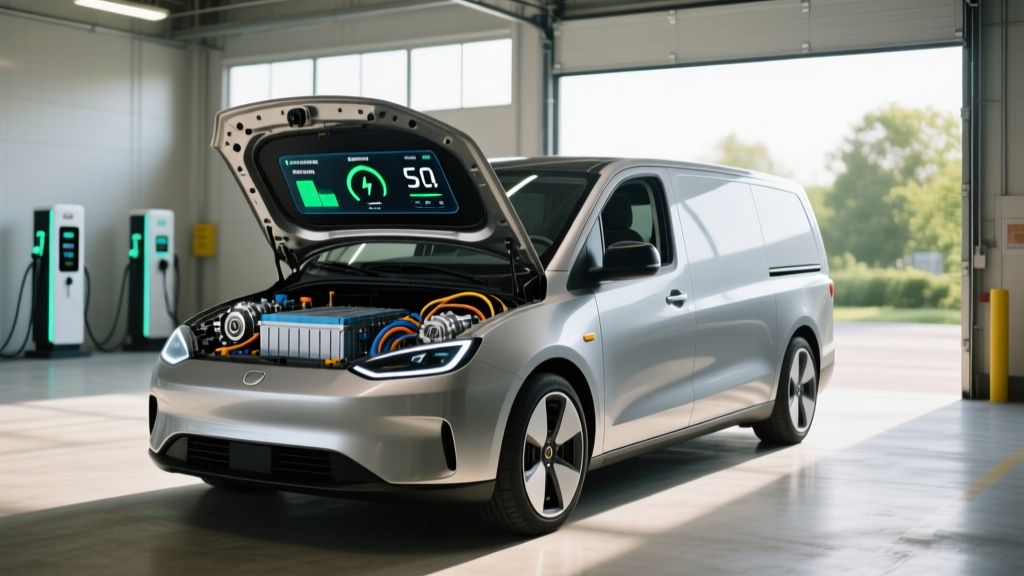
An EV conversion replaces the internal combustion engine, fuel tank, exhaust system, and transmission with an electric motor, motor controller, battery pack, and charging system. The donor vehicle — typically a Ford Transit, Mercedes Sprinter, Ram ProMaster, or older Chevy Express — retains its chassis, body, brakes, and suspension, but everything that makes it move changes fundamentally.
A typical conversion includes these major components:
- Electric motor: Usually 80–200 kW (107–268 HP), either an AC induction or permanent magnet synchronous motor sourced from salvaged EVs (Tesla, Nissan Leaf, Chevrolet Bolt) or specialty suppliers like NetGain or HPEVS
- Motor controller/inverter: Manages power delivery from DC battery to AC motor — 100–400+ amp units from companies like Sevcon, Curtis, or AEM
- Battery pack: The single most expensive component — typically 60–150 kWh of usable capacity using salvaged Tesla modules, Nissan Leaf packs, or new LFP (lithium iron phosphate) cells from EVE or CATL
- Battery management system (BMS): Monitors cell voltage, temperature, and state of charge across every module — critical for safety and longevity
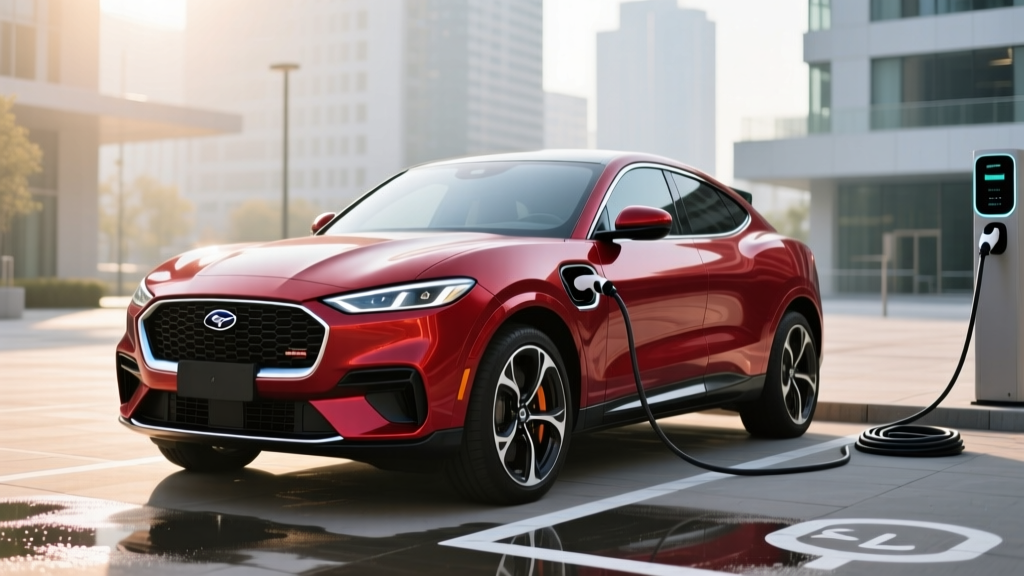
- Onboard charger: Level 2 AC charging capability, typically 6.6–19.2 kW depending on the setup
- DC-DC converter: Steps down high-voltage pack to 12V for lights, accessories, and vehicle electronics
- Thermal management: Battery heating and cooling — often the weakest point in aftermarket conversions compared to factory systems
The complexity varies enormously. A basic conversion using a salvaged Nissan Leaf drivetrain might cost $25,000 in parts and yield 80 miles of range. A high-end camper van conversion with a 150 kWh LFP pack, liquid thermal management, and DC fast charging capability can exceed $80,000 in components alone, before labor.
Cost Breakdown: EV Conversion vs. Factory Electric Van
The numbers tell a complicated story. Here's how a typical conversion compares to purchasing a factory-built electric commercial van in 2026:
| Cost Category | DIY Conversion (Used Transit) | Professional Conversion (Sprinter) | Ford E-Transit (Factory) |
|---|---|---|---|
| Donor vehicle / base MSRP | $15,000–$25,000 | $30,000–$50,000 | $55,000–$62,000 |
| Conversion parts / powertrain | $18,000–$30,000 | $40,000–$65,000 | Included |
| Labor (if professional) | $0 (DIY) | $15,000–$35,000 | N/A |
| Engineering/fabrication | $2,000–$5,000 | $5,000–$15,000 | N/A |
| Registration/inspection/certification | $500–$2,500 | $1,000–$3,000 | Standard fees |
| Federal tax credit (§30D) | Not eligible* | Not eligible* | Up to $7,500** |
| Estimated total | $35,500–$67,500 | $91,000–$168,000 | $47,500–$62,000 |
* IRS §30D clean vehicle credit applies only to new vehicles purchased from a licensed dealer with qualifying VINs and battery sourcing. Custom conversions do not qualify. Some states offer separate incentives for EV conversions — check your local DMV and energy office.
** Federal credit eligibility depends on MSRP caps ($80,000 for vans/trucks), buyer income limits ($300K joint / $150K single), and critical mineral/battery component sourcing requirements per current IRS rules. Consult a tax professional.
Range, Charging & Performance: What to Actually Expect
This is where conversion reality diverges sharply from expectations. A van is heavy, boxy, and aerodynamically poor — all factors that crush efficiency compared to a sedan or crossover.
Real-World Range Reality for Converted Vans
EPA-equivalent estimate: A 100 kWh battery pack in a full-size van (Ford Transit or Sprinter) typically delivers 1.8–2.5 miles per kWh, yielding roughly 180–250 miles in ideal conditions (city driving, 55 mph, 70°F, flat terrain).
Real-world highway: At 70 mph on the interstate, expect 1.2–1.8 mi/kWh — that same 100 kWh pack drops to 120–180 miles.
Cold weather (below 32°F): Without factory-grade heat pump and battery preconditioning, range can drop 30–45%, giving you as little as 70–120 miles from a 100 kWh pack.
Factory electric vans have the advantage of integrated thermal management. The Ford E-Transit, for example, is EPA-rated at 126 miles with a 68 kWh usable battery — modest, but consistent and backed by Ford's warranty. Its liquid-cooled battery and heat pump maintain more predictable performance across temperatures.
Charging Speed Comparison
| Charging Level | Typical Conversion | Ford E-Transit (Factory) |
|---|---|---|
| Level 1 (120V, 1.4 kW) | ~3–5 mi/hr | ~3 mi/hr |
| Level 2 (240V, 11.5 kW) | ~20–30 mi/hr (if equipped) | ~25 mi/hr |
| DC Fast Charge (peak kW) | Usually not available* | 115 kW peak (15–80% in ~45 min) |
* Most aftermarket conversions lack DC fast charging capability. Adding CCS or NACS DC charging requires additional hardware ($3,000–$8,000) and sophisticated BMS integration. This is one of the biggest practical limitations of converted EVs.
EV Conversion vs. Gas Van: Operating Cost Comparison
Where conversions can shine — if you have affordable electricity and home charging — is in operating costs. Here's a 5-year comparison assuming 15,000 miles driven annually:
| Category | Converted EV Van (100 kWh) | Gas Ford Transit (3.5L EcoBoost) |
|---|---|---|
| Fuel/energy cost (15K mi/yr × 5 yrs) | $5,625 (at $0.15/kWh, 2.0 mi/kWh) | $18,750 (at $3.75/gal, 15 MPG combined) |
| Maintenance (5 years) | $1,500–$2,500 (tires, cabin filter, brake fluid) | $4,500–$6,500 (oil, filters, plugs, belts, transmission) |
| Insurance (average annual premium) | $1,800–$2,800 (specialty insurer, higher premiums common) | $1,400–$2,000 |
| Estimated repairs (years 3–5) | $500–$5,000 (BMS issues, contactor failure, charger replacement — high variance) | $1,500–$3,500 (water pump, turbo, sensors) |
| 5-year operating total | $9,425–$16,925 | $26,150–$30,750 |
The energy savings are substantial — roughly $13,000 over five years at typical residential electricity rates. But conversion-specific insurance, the lack of warranty coverage, and unpredictable repair costs can erode those savings. A single BMS failure or battery module replacement can cost $3,000–$10,000 with no dealer network to fall back on.
Common Misconceptions About EV Van Conversions
| Myth | Fact |
|---|---|
| "Converting saves money compared to buying a factory EV van." | Rarely true in 2026. A professionally converted Sprinter often exceeds $100,000 total. A Ford E-Transit starts at ~$55,000 with warranty, DC fast charging, and potential §30D tax credit eligibility. |
| "I'll get 300 miles of range from a big battery pack." | Vans consume 400–600 Wh/mile at highway speeds. Even a massive 150 kWh pack yields ~250 miles highway in warm weather, far less in cold. Aerodynamics and weight are the enemy. |
| "Any mechanic can service my conversion." | Most shops won't touch a custom high-voltage system. You need an EV-specialty shop or must troubleshoot yourself. Diagnostic tools, wiring diagrams, and replacement parts are not standardized. |
| "I can use Tesla Superchargers." | Supercharger access requires NACS connector hardware, Tesla communication protocol emulation, and a Tesla account linked to the vehicle VIN. Most conversions cannot access the Supercharger network, though the expanding NACS-open network from other providers is slowly improving access. |
| "My state will register it without issues." | Registration requirements for converted EVs vary wildly. Some states require special inspections, high-voltage system certifications, or weigh-station verification. California, Oregon, and Washington are relatively friendly; other states may require significant paperwork or refuse registration entirely. |
Who Should (and Shouldn't) Convert a Van to Electric
Decision Framework: Is an EV Van Conversion Right for You?
Choose a conversion IF:
- You're building a custom camper van and want off-grid solar integration with a large house battery that doubles as traction storage
- You're restoring a classic van (VW Bus, Chevy Sportvan, Ford Econoline) and want modern drivability without emissions
- You have electrical engineering or fabrication skills and enjoy the project aspect as much as the result
- Your use case involves predictable short routes (under 80 miles daily) with overnight Level 2 charging at a depot or home
- No factory electric van meets your specific body configuration, payload, or upfitting requirement
Choose a factory EV van IF:
- You need reliable daily transportation with warranty coverage and dealer service
- You require DC fast charging for routes exceeding your battery range
- You want to qualify for the federal §30D tax credit (up to $7,500 for qualifying commercial vehicles)
- You're financing the vehicle — most lenders will not finance a custom conversion, and insurance underwriting is difficult
- You need predictable total cost of ownership for business planning or fleet operations
- You live in a region with extreme cold where factory thermal management is essential for range preservation
Real-World Ownership Considerations
Before committing to a conversion, honestly assess these practical factors:
Home charging access: A converted van with a 100 kWh battery needs a dedicated 240V/60A circuit (14.4 kW Level 2) to charge overnight in 7–8 hours. If you're renting, live in an apartment, or street-park, charging a large converted van becomes a significant daily burden. Public DC fast charging — the fallback for many EV owners — is typically unavailable to conversions lacking CCS or NACS hardware.
Climate impact: If you live where winter temperatures regularly drop below freezing, a conversion without liquid battery heating will suffer severe range loss and potential cell damage if charged below 32°F. LFP chemistry, popular in conversions for its safety and cycle life, is particularly vulnerable to cold-temperature charging damage. Factory EVs address this with integrated thermal preconditioning — a system that's difficult and expensive to replicate in a conversion.
Driving patterns: Conversions excel in stop-and-go urban delivery routes where regenerative braking recovers energy and speeds stay below 45 mph. Highway-heavy driving at 70+ mph exposes the van's poor aerodynamics, cutting range by 30–40% compared to city figures.
Resale value: Factory EVs have established (if still evolving) depreciation curves. A custom conversion has essentially no established resale market — your buyer pool is limited to enthusiasts willing to trust someone else's engineering. Expect to recover 30–50% of conversion costs at resale, compared to 45–60% for a factory E-Transit over three years.
Safety and crashworthiness: Factory EVs undergo NHTSA crash testing and have engineered crumple zones that account for battery placement. A conversion moves weight distribution and places high-voltage components in spaces never designed for them. No aftermarket conversion carries an NHTSA crash rating.
Frequently Asked Questions
How long does an electric van conversion take?
A professional shop typically quotes 3–8 months for a full conversion, depending on complexity, parts sourcing, and fabrication requirements. A skilled DIY builder working evenings and weekends should plan for 6–18 months. Delays from backordered components — especially battery modules and motor controllers — are common.
Can I get insurance on a converted electric van?
Yes, but options are limited. Specialty insurers like Hagerty, Grundy, or certain Lloyd's of London syndicates will underwrite converted EVs, often at premiums 30–60% higher than equivalent factory vehicles. You'll need detailed documentation of the conversion, component specifications, and sometimes an independent engineering inspection. Standard insurers like GEICO or Progressive may decline coverage entirely.
What battery chemistry is best for a van conversion?
LFP (lithium iron phosphate) is the most popular choice for conversions in 2026 due to its superior thermal stability, longer cycle life (3,000–5,000 cycles vs. 1,000–2,000 for NMC), and lower cost per kWh (~$100–$130/kWh at the cell level). The trade-off is lower energy density (meaning a heavier, bulkier pack for the same range) and poor cold-weather charging performance. NMC (nickel manganese cobalt) offers better energy density but requires more sophisticated thermal management and carries higher fire risk if damaged.
Is it legal to convert a van to electric in all 50 states?
It's legal in most states, but registration processes vary significantly. Some states (California, Washington, Oregon, Colorado) have established procedures for registering converted EVs. Others require special inspections, affidavits from licensed electricians, or emissions-system removal documentation. A few states have no clear pathway, requiring you to work directly with the DMV on a case-by-case basis. Check with your state's DMV before starting a project.
How does a converted van compare to the Ford E-Transit or Mercedes eSprinter?
Factory vans offer warranty coverage (Ford: 8 years/100,000 miles on battery), DC fast charging, integrated thermal management, dealer service networks, crash-test ratings, and financing/insurance compatibility. Conversions offer customization freedom, potentially larger battery packs, and the satisfaction of a personal project. For daily commercial use or full-time van life, a factory EV van is the more pragmatic choice in 2026.
What's the biggest mistake people make with EV van conversions?
Undersizing the battery and overestimating range. Van aerodynamics and weight mean real-world highway efficiency of 1.5–2.0 mi/kWh at best. A 60 kWh pack that sounds large on paper delivers just 90–120 highway miles — often not enough for real use. The second biggest mistake is skipping proper thermal management, which leads to accelerated battery degradation and cold-weather charging limitations that make the van impractical for months of the year.