Quick Answer: Who Converts Cars to Electric and What Does It Cost?
Several specialized shops convert classic and modern internal-combustion vehicles to battery-electric powertrains. The most prominent companies that convert cars to electric include EV West (Vista, CA), Zero Labs (Hawthorne, CA), Icon (Chatsworth, CA), Electric GT (Chatsworth, CA), Zelectric Motors (San Diego, CA), Fellten Racing (UK), and Electrogenic (UK). In the US, a basic conversion typically runs $25,000–$50,000 on top of the donor car's price, while a fully engineered "restomod" conversion from shops like Zero Labs or Icon can cost $150,000–$350,000+ for the completed vehicle. Expect 80–200 miles of real-world range, Level 2 AC charging at 6.6–19.2 kW, and DC fast charging only on higher-end builds.
What an Electric Conversion Actually Involves
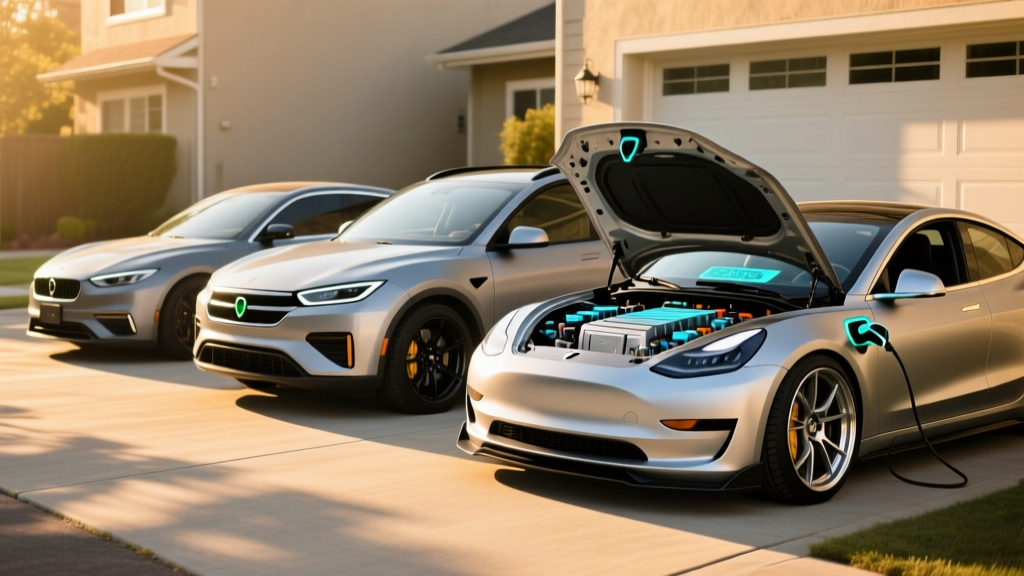
An EV conversion replaces the internal combustion engine, fuel tank, exhaust, and often the transmission with an electric motor, inverter, battery pack, and onboard charger. The donor car's chassis, body, and interior are typically retained or restored. The process is closer to a bespoke engineering project than a dealer service — each build is tailored to the donor vehicle's weight, space, and intended use.
The core components in a typical conversion include:
- Electric motor: Commonly a salvaged Tesla drive unit (e.g., from a Model S or Model 3), a NetGain Hyper9, or a Cascadia Motion unit. Output ranges from 100 kW (~134 HP) in budget builds to 300+ kW (~400+ HP) in performance conversions.
- Battery pack: Usually repurposed Tesla modules, LG Chem cells, or custom-built packs. Usable capacity typically falls between 30 kWh and 85 kWh, depending on available space and budget.
- Onboard charger: Most conversions use a 6.6 kW or 19.2 kW AC charger (Level 2). DC fast charging (CCS or NACS) is available on premium builds but adds $5,000–$15,000 to the cost.
- BMS (Battery Management System): Essential for cell balancing, thermal monitoring, and safe charging. Quality BMS integration is what separates a reliable conversion from a fire risk.
- Thermal management: Higher-end builds include active battery cooling/heating; budget builds often rely on passive air cooling, which limits fast-charge capability and cold-weather performance.
Leading Companies That Convert Cars to Electric
Not all conversion shops operate at the same level. Here is a breakdown of the most established players and what they specialize in:
| Company | Location | Specialty | Typical Price Range | DC Fast Charge? |
|---|---|---|---|---|
| EV West | Vista, CA | Air-cooled VW (Porsche 914, VW Bus, Beetle), kits and turnkey builds | $25,000–$75,000 (conversion only) | Optional on premium builds |
| Zero Labs | Hawthorne, CA | Classic Broncos, Mustangs, Land Rovers — full carbon-fiber restomods | $250,000–$350,000+ (completed vehicle) | Yes (CCS/NACS) |
| Icon | Chatsworth, CA | Derelict series — vintage Toyota FJ, Bronco, Chevy pickups with EV swaps | $150,000–$250,000 (completed vehicle) | Yes on most builds |
| Electric GT | Chatsworth, CA | Toyota FJ62 Land Cruisers, classic trucks — "crate motor" EV kits | $35,000–$90,000 (conversion) | Available |
| Zelectric Motors | San Diego, CA | Air-cooled Porsche 911 and VW Beetle conversions | $65,000–$120,000 (conversion) | Limited (mostly Level 2) |
| Electrogenic | Oxfordshire, UK | Classic Jaguars, Land Rovers, Triumphs — "drop-in" kits for restorers | £40,000–£90,000 (~$50K–$115K) | Optional |
| Fellten Racing | Devon, UK | Performance conversions — Porsche 944, VW Golf Mk1, hillclimb specials | £30,000–£80,000 (~$38K–$100K) | Yes on race builds |
EV Conversion vs. Buying a New EV: The Real Cost Breakdown
The most common question from buyers researching companies that convert cars to electric is whether a conversion makes financial sense compared to purchasing a factory EV. The honest answer: for daily transportation, it almost never does. For a passion project or classic-car preservation, it can.
| Cost Category | Budget EV Conversion (e.g., VW Beetle via EV West) | Premium Restomod (e.g., Icon Bronco) | New 2026 Tesla Model Y Long Range |
|---|---|---|---|
| Vehicle / donor car | $10,000–$25,000 | $40,000–$80,000 (classic donor) | $0 (new purchase) |
| Conversion / purchase price | $30,000–$50,000 | $150,000–$250,000 | $44,990 MSRP |
| Total upfront cost | $40,000–$75,000 | $190,000–$330,000 | $44,990 |
| Federal §30D tax credit | $0 (not eligible) | $0 (not eligible) | Up to $7,500 (subject to IRS income, MSRP, and battery-sourcing rules) |
| Effective cost after credit | $40,000–$75,000 | $190,000–$330,000 | ~$37,490–$44,990 |
| EPA range | Not EPA-rated; est. 80–120 mi real-world | Not EPA-rated; est. 150–200 mi real-world | 320 mi (EPA) |
| Charging (DC fast) | Often none; Level 2 at 6.6 kW | CCS/NACS, ~150 kW peak | NACS, 250 kW peak, 10–80% in ~25 min |
| Warranty (powertrain) | Shop-dependent, typically 1–2 years | Shop-dependent, typically 2–3 years | 8 years / 120,000 miles (battery & drive unit) |
| ADAS / driver assist | None (original vehicle safety) | None or minimal | Autopilot (SAE Level 2), FSD Supervised available |
| Insurance (annual est.) | $2,000–$4,000 (specialty classic) | $3,500–$6,000 (agreed-value) | $1,800–$2,800 |
Key takeaway: A budget conversion costs roughly what a new Model Y costs after the tax credit — but delivers a fraction of the range, no fast charging, no warranty safety net, and zero modern safety features. The conversion only makes sense if the donor car's character, style, or sentimental value is the primary goal.
Range, Charging, and Real-World Performance: What to Expect
Conversion shops don't submit vehicles to the EPA for range testing, so there are no official EPA estimates. Based on published build data and owner reports, here is what real-world performance looks like:
Range Expectations
A conversion with a 40 kWh usable battery in a lightweight car (e.g., Porsche 914, VW Beetle) typically delivers 80–120 miles in mixed driving. Heavier vehicles (Ford Bronco, Chevy C10 pickup) with 60–85 kWh packs can achieve 140–200 miles. Cold weather (below 32°F / 0°C) reduces range by 20–35% in conversions lacking active battery heating — a significant limitation in northern climates.
Charging Speeds
Most conversions rely exclusively on Level 2 AC charging. At 6.6 kW (240V, 28A), a 40 kWh pack charges from 10% to 100% in roughly 5.5 hours. At 19.2 kW (240V, 80A — requires a hardwired 100A circuit), the same pack fills in about 2 hours. DC fast charging, when equipped, typically peaks at 50–150 kW depending on the BMS and pack configuration, but sustained charge rates are often much lower due to passive cooling limitations. Expect a 10–80% DC charge in 35–60 minutes on equipped builds — considerably slower than a modern factory EV.
Home Charging Requirements
You will need at minimum a 240V / 50A circuit (NEMA 14-50 outlet) for practical daily charging. Installation costs range from $800–$2,500 if your electrical panel has capacity, or $3,000–$5,000+ if a panel upgrade to 200A is required. Always have a licensed electrician assess your panel before committing to a conversion.
Common Misconceptions About EV Conversions
| Myth | Fact |
|---|---|
| "Conversions qualify for the $7,500 federal EV tax credit." | Under IRS §30D rules, the credit applies only to new qualifying vehicles from OEMs. Converted vehicles are not eligible. Some states offer separate incentives for conversions — check your local energy office. |
| "I can convert my car for under $10,000." | While bare-bones DIY kits exist (EV West sells parts starting around $8,000), a safe, road-legal, insured conversion with a quality BMS, proper wiring, and crash-safe battery mounting realistically starts at $25,000+ for parts and labor. |
| "Converted EVs charge at Tesla Superchargers." | Only conversions equipped with a NACS connector and the correct communication protocol can access Superchargers. Most conversions use J1772 (AC) or CCS (DC), and even NACS-equipped conversions may be blocked by Tesla's software authentication unless the shop has integrated the required handshake protocol. |
| "Conversions are faster and more reliable than the original car." | They can be quicker in a straight line (instant torque), but reliability depends entirely on build quality. Poorly integrated conversions suffer from BMS faults, connector overheating, and coolant leaks. Choose a shop with a proven track record and documented build processes. |
| "Any mechanic can do an EV conversion." | High-voltage EV systems (typically 300–400V DC) require specialized training. Improper work can cause fires, electrocution, or battery thermal runaway. Only work with shops experienced in high-voltage EV powertrains. |
Who Should (and Shouldn't) Consider an EV Conversion
Decision Framework: Is a Conversion Right for You?
Choose an EV conversion if:
- You own a classic or collector car you want to drive more often without the maintenance headaches of a 40-year-old engine.
- Your daily driving is under 80 miles round-trip and you have reliable Level 2 home charging.
- You value the aesthetic, heritage, or emotional connection to a specific vehicle and are willing to pay a premium for it.
- You understand the conversion will not have modern crash safety (airbags, crumple zones, ADAS) and accept that trade-off.
- You have a budget of at least $40,000–$75,000 for a quality conversion (or $150K+ for a full restomod).
Buy a new factory EV instead if:
- You need 250+ miles of EPA-rated range for road trips or long commutes.
- You rely on DC fast charging for travel beyond your home area.
- You want a factory powertrain warranty (8 years / 100,000+ miles is standard on most new EVs).
- You want modern safety features: automatic emergency braking, lane-keeping, blind-spot monitoring.
- You want to take advantage of the federal §30D tax credit (up to $7,500 for qualifying new EVs, subject to MSRP caps, buyer income limits, and battery-sourcing requirements) or the used EV credit (up to $4,000 for qualifying pre-owned EVs).
- Your total budget is under $40,000 — a new Chevrolet Equinox EV or used Tesla Model 3 will serve you far better as daily transportation.
Registration, Insurance, and Legal Considerations
Registering a converted vehicle varies significantly by state. In California, a converted vehicle must pass a BAR (Bureau of Automotive Repair) referee inspection to verify the electric drivetrain is safely installed and that emissions equipment removal was properly documented. Other states have simpler processes, while a few make registration difficult. Before committing to a conversion, confirm your state's process with the DMV or a local EV-conversion community.
Insurance for converted vehicles typically requires a specialty classic-car policy (Hagerty, Grundy, or similar) with an agreed-value appraisal. Annual premiums of $2,000–$6,000 are common, and some insurers require documentation of the conversion shop's credentials. Standard insurers like GEICO or Progressive may decline to cover a conversion or offer only liability coverage.
The Bottom Line: Conversion vs. New EV
Companies that convert cars to electric serve a real and growing niche: enthusiasts who want to preserve automotive history while eliminating tailpipe emissions and the maintenance burden of aging engines. The technology has matured — Tesla drive units, modular battery packs, and sophisticated BMS platforms make conversions more capable than ever.
But a conversion is fundamentally a passion project, not a cost-saving strategy. A $50,000 conversion on a $15,000 VW Bus yields a unique, fun vehicle with 100 miles of range and no fast charging. That same $65,000 budget buys a new Hyundai Ioniq 5 (EPA 318 miles, 240 kW DC fast charging, 10–80% in 18 minutes, full factory warranty, and potential $7,500 tax credit) with money left over for a home Level 2 charger installation.
If your goal is reliable, efficient daily electric transportation, buy a factory EV. If your goal is to breathe new life into a car you love — and you understand the costs, limitations, and trade-offs — a conversion from a reputable shop can be deeply rewarding.
How long does an EV conversion take?
Turnaround times vary widely. Budget conversions at shops like EV West typically take 3–6 months. Full restomod builds from Icon or Zero Labs can take 12–24 months due to body restoration, custom fabrication, and waitlists.
Can I do an EV conversion myself?
DIY conversions are possible for those with electrical engineering and fabrication skills. Companies like EV West and Electric GT sell parts and kits. However, working with 300–400V DC battery systems carries serious electrocution and fire risk. If you lack high-voltage experience, hire a professional.
Will a conversion increase my car's value?
It depends on the vehicle and the quality of the conversion. A well-executed conversion on a desirable classic (Porsche 911, Ford Bronco, Toyota FJ40) by a reputable shop can increase value. A poorly documented conversion on a common car will likely decrease it. Check auction results on Bring a Trailer and Hemmings for comparable sales.
Do converted EVs need smog checks?
In most states, once a vehicle is converted to full electric and the conversion is properly documented with the DMV, it is exempt from emissions testing. California's BAR referee process formally certifies the conversion and updates the vehicle's status.
What battery chemistry do conversions use?
Most conversions use NMC (nickel manganese cobalt) cells, often salvaged from Tesla battery packs, because of their high energy density. Some budget builds use LFP (lithium iron phosphate) cells, which are heavier but offer longer cycle life and greater thermal stability. LFP is preferable if weight is less of a concern (e.g., a heavy truck conversion).