The Compact Luxury EV Segment in 2026: Where the EX30 Fits
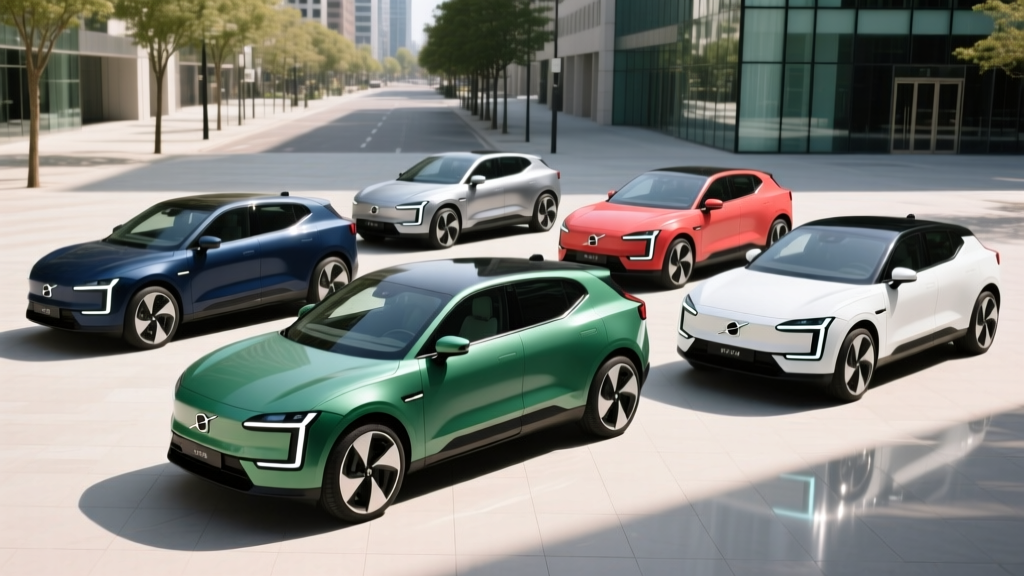
The 2026 Volvo EX30 occupies a specific niche: a subcompact luxury crossover built on the SEA (Sustainable Experience Architecture) platform shared with the smart #1 and Zeekr X. With an EPA-estimated 265 miles of range (Extended Range Single Motor), a 69 kWh usable NMC battery, and a starting MSRP near $36,145, it targets urban professionals who want Scandinavian design in a city-friendly footprint. But for shoppers researching electric cars similar to Volvo EX30 2026 models, the competitive set is wider than Volvo's badge might suggest. Five alternatives match or beat the EX30 on range, charging speed, interior tech, or price—sometimes all three.
This comparison profiles the EX30 against the Hyundai Kona Electric, Kia EV6 (Light/Standard Range), Mini Cooper SE (2025+ J01 platform), BMW iX1, and the Smart #1 (where available). We'll break down EPA data, real-world range expectations, DC fast-charge curves, battery chemistry trade-offs, and the messy reality of §30D federal tax credit eligibility in 2026.
2026 Volvo EX30: Quick Profile
| Spec | Value |
|---|---|
| EPA Range | 265 mi (est.) |
| Battery (usable) | 69 kWh, NMC |
| Drivetrain | RWD, single motor |
| Horsepower | 272 hp |
| 0-60 mph | ~5.1 sec |
| Peak DC Charge | 153 kW |
| 10-80% DC Time | ~28 min |
| Level 2 (AC) | 11 kW onboard |
| MPGe (combined) | ~108 MPGe (est.) |
| Cargo (rear seats up) | 11.0 cu ft |
| Base MSRP | ~$36,145 (Core trim) |
| Battery Warranty | 8 yr / 100,000 mi |
The EX30's standout is its minimalist interior and Google-based infotainment (built-in Google Maps, Assistant, and Play Store). The drawback: rear legroom is tight at ~34 inches, and the all-touchscreen climate/media controls frustrate some drivers. Cargo space at 11.0 cu ft trails rivals like the Kona Electric (25.5 cu ft).
Five Electric Cars Similar to Volvo EX30 2026 Models
1. Hyundai Kona Electric (2024+ refresh, SEL/SE trims)
The redesigned Kona Electric is the value benchmark. EPA-rated at 261 miles (SEL with 17-inch wheels), its 64.8 kWh NMC battery and front-wheel-drive layout prioritize efficiency over performance. Peak DC charging is 100 kW (10-80% in ~43 min)—slower than the EX30. But the Kona's 25.5 cu ft cargo volume, physical HVAC buttons, and ~$33,000 base MSRP undercut the Volvo on practicality and price. The Kona is listed on fueleconomy.gov with official EPA data.
2. Kia EV6 (Light RWD / Standard Range)
On the same E-GMP platform as the Ioniq 5, the EV6 Light RWD delivers 232 miles EPA (77.4 kWh battery, ~72 kWh usable) but charges at up to 240 kW on 350 kW DC hardware—10-80% in ~18 minutes. That's roughly 10 minutes faster than the EX30 on a road trip. The EV6 starts near $42,000, but its 800V architecture and 271 hp make it a road-trip weapon. Interior space (24.4 cu ft cargo) also beats the EX30.
3. Mini Cooper SE (J01 platform, 2025+)
The new-generation electric Mini finally sheds its first-gen range anxiety. The Cooper SE (40 kWh battery, FWD) is EPA-rated at ~180-200 miles, which sounds low until you price it: ~$30,900 base. For city-only commuters who charge nightly at home, it's compelling. DC fast charging tops out at 95 kW (10-80% in ~30 min). The trade-off: highway range drops to ~140-150 mi in winter, and it's a 3-door hatchback, not a crossover.
4. BMW iX1 (xDrive30, where sold)
BMW's subcompact electric SUV shares the FAAR platform with the X1. EPA estimates land around 230-240 miles from a ~64.7 kWh NMC battery. The iX1 is AWD (dual motor, 313 hp), hits 0-60 in ~5.6 sec, and peaks at 130 kW DC (10-80% ~29 min). Pricing starts near $39,000, and the cabin materials and iDrive 9 system feel more premium than the EX30. Availability in the US is limited—confirm with local dealers.
5. Smart #1 (Brabus / Premium trims)
Geely's joint venture with Mercedes-Benz produces the Smart #1 on the same SEA platform as the EX30. Where sold (Europe, parts of Asia), it offers 66 kWh NMC, ~265-mile WLTP range (EPA would be lower, ~230-240 mi est.), and 150 kW DC peak. US availability as of 2026 remains extremely limited—this one is a "watch list" mention, not a current US buyer option.
Side-by-Side Spec Comparison
| Model | EPA Range | Battery (kWh) | Peak DC kW | 10-80% DC | 0-60 (sec) | Base MSRP |
|---|---|---|---|---|---|---|
| Volvo EX30 ER SM | 265 mi | 69 NMC | 153 | ~28 min | 5.1 | $36,145 |
| Hyundai Kona Electric SEL | 261 mi | 64.8 NMC | 100 | ~43 min | 7.8 | $32,975 |
| Kia EV6 Light RWD | 232 mi | 77.4 NMC | 240 | ~18 min | 7.3 | $41,900 |
| Mini Cooper SE | ~190 mi | 40 NMC | 95 | ~30 min | 7.3 | $30,900 |
| BMW iX1 xDrive30 | ~235 mi | 64.7 NMC | 130 | ~29 min | 5.6 | $39,000 |
Charging Speed and Real-World Curve Behavior
Peak DC kW numbers are marketing-friendly but misleading without the charge curve. The Kia EV6's 800V architecture sustains ~220+ kW through 55% SoC before tapering; the EX30's 400V system peaks at 153 kW but drops below 80 kW by 65% SoC. On a 300-mile road trip, the EV6 saves you 20-30 minutes cumulatively over two charge stops.
| Model | DC Peak kW | Sustained 10-60% | Level 2 AC kW | Mi/hr L2 |
|---|---|---|---|---|
| Volvo EX30 | 153 | ~110 avg | 11 | ~35 |
| Kona Electric | 100 | ~75 avg | 10.9 | ~33 |
| Kia EV6 | 240 | ~180 avg | 10.9 | ~30 |
| Mini Cooper SE | 95 | ~70 avg | 11 | ~30 |
| BMW iX1 | 130 | ~95 avg | 11 | ~32 |
Home Level 2 charging on a 48-amp circuit (11.5 kW) will refill the EX30's 69 kWh pack from 10-100% in roughly 6.5 hours. Most owners charging overnight will never notice.
Federal Tax Credit Eligibility (2026 IRS §30D Rules)
The §30D clean vehicle credit—up to $7,500—is not automatic. Per IRS guidance, eligibility hinges on three moving targets:
- MSRP cap: SUVs/crossovers must be under $80,000; sedans/hatchbacks under $55,000. All five models here qualify on sticker.
- Buyer income cap: AGI ≤ $150,000 (single), $225,000 (head of household), $300,000 (joint).
- Battery sourcing: ≥ 60% of critical minerals and ≥ 75% of battery components must be sourced from US/FTA partners (2026 thresholds). This rules out many China-sourced packs.
As of early 2026, the Volvo EX30 (assembled in China, moving to Belgium) and Smart #1 face sourcing-rule uncertainty. The Hyundai Kona Electric (Korea-built) and Kia EV6 (Korea/Georgia) have historically qualified for the full $7,500, but verify on fueleconomy.gov's credit lookup before purchase. Point-of-sale transfer is available at participating dealers, reducing the purchase price directly.
Pros and Cons: Who Each Compact EV Suits
Volvo EX30 — Pros
- 265-mi range in a sub-170-inch footprint
- Strong 272 hp single-motor performance
- Google Automotive infotainment
- Scandinavian interior design
Volvo EX30 — Cons
- Tiny 11 cu ft cargo area
- Touchscreen-only climate controls
- China/BEU assembly complicates §30D credit
- Rear legroom ~34 in, tight for adults
Hyundai Kona Electric — Pros
- 261 mi range at ~$33k base
- 25.5 cu ft cargo (class-leading)
- Physical buttons, strong ADAS suite
- Generally qualifies for full §30D credit
Hyundai Kona Electric — Cons
- 100 kW peak DC — slow on road trips
- FWD only, no AWD option
- 7.8-sec 0-60 feels leisurely
Choose the Kona Electric if: Cargo space, price, and tax-credit certainty matter more than badge prestige.
Choose the EV6 if: Road-trip charging speed is a priority and you can stretch to $42k.
Choose the Mini Cooper SE if: You're a city commuter with home charging and want the lowest entry price.
Choose the iX1 if: You want AWD and BMW's iDrive system, and can find US inventory.
Ownership Costs: 5-Year TCO Snapshot
| Model | Purchase (after credit) | Electricity | Insurance | Estimated TCO |
|---|---|---|---|---|
| Volvo EX30 | ~$33,145* | $3,900 | $8,500 | ~$45,545 |
| Kona Electric | ~$25,475 | $4,000 | $7,200 | ~$36,675 |
| Kia EV6 Light | ~$34,400 | $4,100 | $8,000 | ~$46,500 |
| Mini Cooper SE | ~$23,400 | $2,800 | $6,500 | ~$32,700 |
| BMW iX1 | ~$31,500* | $3,950 | $8,800 | ~$44,250 |
*Assumes $7,500 §30D credit; verify eligibility before purchase. Insurance varies widely by ZIP code and driving record.
FAQ: Electric Cars Similar to Volvo EX30 2026
What is the real-world highway range of the Volvo EX30?
Expect 220-235 miles at 70 mph in mild weather, dropping to 170-190 miles in sub-freezing conditions. The 69 kWh NMC battery is efficient but small; highway driving at high speeds is the worst-case scenario for any EV.
Does the Volvo EX30 qualify for the $7,500 federal EV tax credit?
Possibly, but not guaranteed. §30D rules require battery component and critical-mineral sourcing from US/FTA countries. Volvo's supply chain is shifting, so confirm eligibility on fueleconomy.gov or with your dealer at purchase. The Kona Electric and EV6 have more predictable credit eligibility.
Which compact EV charges fastest on road trips?
The Kia EV6, by a wide margin. Its 800V E-GMP platform sustains ~180 kW average from 10-60%, completing 10-80% in ~18 minutes on a 350 kW charger. The EX30 takes ~28 minutes on comparable hardware.
Is the Volvo EX30 too small for a family?
For two adults and a child, it works. For two car seats plus cargo, the 11 cu ft trunk and ~34-inch rear legroom become limiting. Families needing more space should look at the Kona Electric (25.5 cu ft) or EV6 (24.4 cu ft).
What's the difference between NMC and LFP batteries in compact EVs?
NMC (nickel manganese cobalt) offers higher energy density, meaning more range in a smaller pack—critical in subcompact EVs like the EX30. LFP (lithium iron phosphate) is heavier but more durable over thousands of cycles and can be charged to 100% daily without degradation concerns. None of the five models profiled here use LFP in their US-spec long-range trims.
Which of these EVs is best for cold climates?
All suffer 20-35% range loss in sustained sub-30°F weather. The EX30 and iX1 have heat pumps (standard or available) that mitigate cabin heating drain. Preconditioning the battery while plugged in is the single best cold-weather habit regardless of model.
Are these compact EVs good for towing?
None are strong tow vehicles. The EX30 is rated for ~2,000 lbs (braked), the Kona Electric ~1,500 lbs, and the Mini Cooper SE is not rated for towing. If towing matters, look to larger platforms like the Ioniq 5 or EV6 GT-Line.