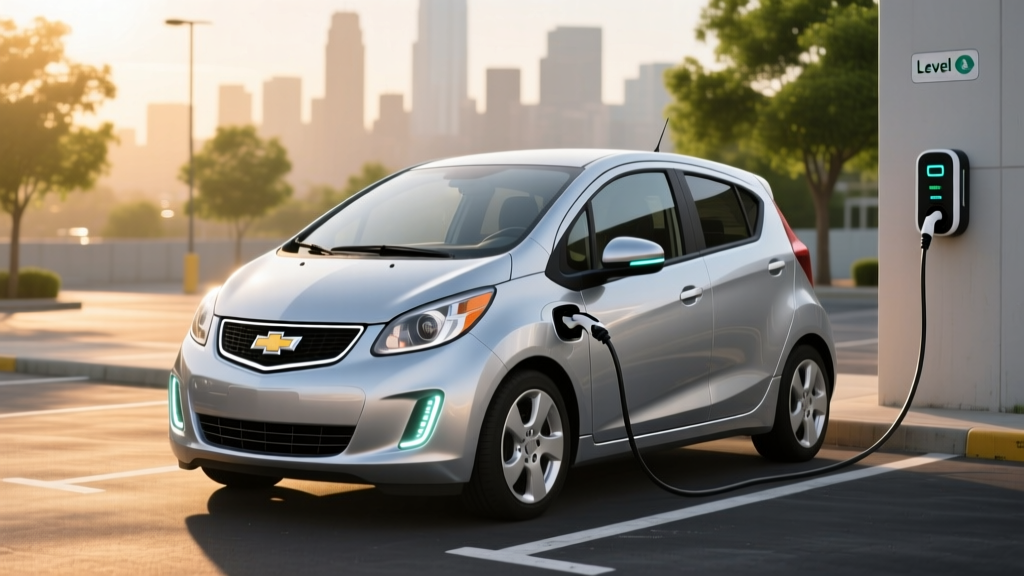
If you're shopping for compact electric vehicles in 2026, here's what matters most: expect 230–330 miles of EPA-rated range, base prices between $29,000 and $42,000, and fuel savings of $800–$1,500 per year compared to a gas equivalent — provided you can charge at home. The top contenders — the Chevrolet Equinox EV, Hyundai Kona Electric, Nissan Leaf, and Volvo EX30 — each trade off range, charging speed, and interior space differently. Your best pick depends on whether you prioritize maximum range, fastest DC charging, lowest entry price, or cargo versatility. Below, we break down every number that matters, compare real ownership costs against gas and hybrid alternatives, and give you a decision framework that actually works.
Quick Answer: Should You Buy a Compact EV in 2026?
Yes, if: You have access to Level 2 home charging, drive under 300 miles daily, and want lower operating costs with zero tailpipe emissions.
Think twice if: You rely solely on public charging, frequently drive in extreme cold (below 10°F), or regularly tow — compact EVs typically max out at 1,500 lbs towing capacity.
The Compact EV Landscape: 2026 Models Compared
The compact EV segment has matured significantly. Most models now use either NMC (nickel manganese cobalt) or LFP (lithium iron phosphate) battery chemistries, each with distinct trade-offs. NMC offers higher energy density — meaning more range in a smaller, lighter pack — while LFP provides longer cycle life, better thermal stability, and a lower cost per kWh, though at the expense of some range and cold-weather performance.
| Model | EPA Range | Battery (usable kWh) | Chemistry | Peak DC Charge (kW) | 10–80% Time | 0–60 mph | Base MSRP |
|---|---|---|---|---|---|---|---|
| Chevrolet Equinox EV 3RS | 319 mi | 85 kWh | NMC | 150 kW | ~30 min | 7.9 sec | $34,900 |
| Hyundai Kona Electric SEL | 261 mi | 64.8 kWh | NMC | 100 kW | ~43 min | 7.6 sec | $32,975 |
| Volvo EX30 Single Motor | 265 mi | 69 kWh | LFP | 134 kW | ~28 min | 7.1 sec | $36,950 |
| Nissan Leaf S+ | 212 mi | 60 kWh | NMC | 100 kW | ~40 min | 7.9 sec | $29,590 |
| Kia Niro EV Wind | 239 mi | 64.8 kWh | NMC | 85 kW | ~45 min | 7.8 sec | $34,690 |
Sources: EPA fueleconomy.gov, manufacturer press sites. All figures for base or lowest-available long-range trims. MSRP excludes destination charges.
Real-World Range Reality Check
EPA range is a combined-cycle estimate. In real-world highway driving at 70 mph, expect to lose 10–15% from the sticker number. In cold weather (below 30°F), range can drop 20–35% depending on whether the vehicle uses a heat pump for cabin heating. The Equinox EV's 319-mile EPA rating translates to roughly 270–285 miles on a summer road trip and 210–255 miles in freezing conditions. The LFP-equipped Volvo EX30 may see slightly steeper cold-weather losses — LFP cells are less efficient at low temperatures, though preconditioning mitigates this.
Compact EV vs Gas vs Hybrid: The Numbers
The most common question from first-time EV buyers is whether a compact electric vehicle actually saves money compared to a gas car or hybrid. The answer depends heavily on your local electricity rates, driving volume, and how long you keep the vehicle.
| Category | Compact EV (Equinox EV 3RS) | Gas Compact SUV (EPA 29 MPG combined) | Compact Hybrid (EPA 42 MPG combined) |
|---|---|---|---|
| Purchase Price (MSRP) | $34,900 | $30,500 | $32,200 |
| Federal Tax Credit (§30D) | Up to $7,500* | $0 | $0 |
| Net Purchase After Credit | $27,400 | $30,500 | $32,200 |
| Fuel/Energy Cost (5 years) | $3,750 (home charging at $0.14/kWh) | $9,615 ($3.35/gal avg) | $6,640 ($3.35/gal avg) |
| Maintenance (5 years) | $1,200 | $3,100 | $2,600 |
| Insurance (5-year avg) | $8,200 | $6,800 | $7,100 |
| Total 5-Year Cost | $40,550 | $50,015 | $48,540 |
*§30D credit eligibility depends on MSRP caps, buyer income limits, battery sourcing requirements, and point-of-sale transfer availability. See IRS guidance. Credit amount varies — not all buyers qualify for the full $7,500.
The EV wins on total cost over five years, primarily through fuel and maintenance savings. EVs eliminate oil changes, have fewer moving parts, and use regenerative braking to extend brake pad life. However, insurance premiums for EVs run 15–25% higher on average due to repair complexity and battery replacement costs in collision claims.
Charging: What Compact EV Owners Actually Experience
Charging infrastructure access is the single biggest determinant of EV satisfaction. Here's what the numbers look like across the three charging levels you'll encounter:
| Level | Power (kW) | Miles Added per Hour | Typical Use Case | Full Charge Time (60 kWh pack) |
|---|---|---|---|---|
| Level 1 (120V household) | 1.4 kW | 3–5 mi/hr | Overnight top-up, low daily mileage | 40+ hours |
| Level 2 (240V home/public) | 7.2–11.5 kW | 25–40 mi/hr | Daily home charging, workplace | 6–9 hours |
| DC Fast Charge | 85–150 kW (peak) | 150–350 mi/hr (at peak) | Road trips, quick top-ups | 30–45 min (10–80%) |
A critical concept new EV buyers must understand: kW (kilowatts) measures power — the rate of charging — while kWh (kilowatt-hours) measures energy, or battery capacity. A 150 kW charger doesn't deliver 150 kW continuously. Every EV follows a charge curve: power peaks at low state of charge (SoC), then tapers significantly above 80% to protect battery health. That's why manufacturers quote 10–80% times rather than 0–100%. Charging from 80% to 100% on DC fast charge can take as long as the 10–80% portion.
For home Level 2 installation, budget $500–$800 for the charger hardware (e.g., ChargePoint Home Flex, Emporia Level 2) and $600–$2,000 for electrician labor, depending on whether your electrical panel needs an upgrade. A 200-amp panel typically supports a 48-amp (11.5 kW) Level 2 circuit. Older homes with 100-amp panels may need a $1,500–$3,000 panel upgrade. Always get a licensed electrician's assessment before purchasing equipment.
Tax Credits and Incentives: What You Can Actually Claim
The federal §30D clean vehicle credit offers up to $7,500 for qualifying new EVs, but eligibility is far from universal. Here's the checklist for 2026:
- MSRP cap: Vans, SUVs, and pickup trucks capped at $80,000; sedans and other vehicles at $55,000. Most compact EVs clear this easily.
- Buyer income limits: Modified AGI must not exceed $150,000 (single), $225,000 (head of household), or $300,000 (joint filers).
- Battery sourcing: Up to $3,750 requires critical minerals sourced from the US or FTA partners; up to $3,750 requires battery components manufactured or assembled in North America. Both halves must be met for the full $7,500.
- Point-of-sale transfer: You can transfer the credit to the dealer at purchase, reducing your out-of-pocket cost immediately — even if you have no tax liability, since it functions as a down payment reduction.
- FEOC restriction: Vehicles with battery components from a "foreign entity of concern" (primarily Chinese-sourced components) are disqualified.
Because sourcing requirements shift annually, always verify current eligibility on fueleconomy.gov's tax credit page and consult a tax professional for your specific situation. Some states offer additional rebates — check your state energy office or DMV for details.
Common Misconceptions About Compact EVs
| Myth | Fact (with data) |
|---|---|
| "EV batteries need replacing every few years." | Federal law mandates battery warranties of at least 8 years/100,000 miles. Real-world degradation data shows most EV batteries retain 85–92% capacity after 100,000 miles. Replacement costs $5,000–$15,000 if needed out of warranty, but full replacements remain rare. |
| "Compact EVs can't handle road trips." | A 260-mile range plus 30-minute DC fast-charge stops every 200 miles makes a 600-mile trip feasible in roughly 10 hours. Apps like A Better Routeplanner optimize stops around actual charging speeds. |
| "EVs are worse for the environment because of electricity generation." | Even on coal-heavy grids, EVs produce fewer lifecycle emissions than gas cars after ~15,000 miles of driving. On the US average grid mix, the break-even point is under 20,000 miles, per EPA analysis. |
| "You'll be stranded if you run out of charge." | Modern EVs provide 20–30 miles of low-charge buffer warnings. Roadside assistance programs (AAA, manufacturer programs) now offer mobile charging in most metro areas. |
| "Home charging is too expensive to install." | Level 2 installation averages $1,200–$2,800 total (equipment + labor). Federal and utility rebates can offset 30–50% of this cost in many regions. |
Real-World Ownership: What First-Time EV Buyers Must Know
Owning a compact EV involves daily habits that differ meaningfully from gas vehicles. Here are the practical realities based on aggregated owner experience:
Home charging is non-negotiable for most owners. Public-only charging is feasible but adds 2–4 hours per week of dedicated charging time and costs 2–3× more per mile than home electricity. If you live in an apartment without charging access, advocate for building-level installations or rely on workplace charging before committing to an EV purchase.
Cold weather requires planning. Preconditioning your battery — warming it while still plugged in — preserves range and enables faster DC charging in cold conditions. Most compact EVs offer scheduled preconditioning via their companion apps. Without it, expect slower charge speeds and 20–30% range loss below freezing.
Tire costs are higher. EVs are heavier than equivalent gas cars (the Equinox EV weighs ~4,700 lbs vs. ~3,400 lbs for a gas Equinox) and deliver instant torque, which accelerates tire wear. Budget $200–$400 more per tire set replacement cycle, and look for EV-specific tire compounds (e.g., Michelin e·Primacy, Hankook iON).
Maintenance is minimal but not zero. You'll still need cabin air filter replacements ($30–$60 every 20,000 miles), brake fluid checks, windshield washer fluid, and wiper blades. The 12V auxiliary battery still requires eventual replacement (every 3–5 years, ~$200–$350). However, you'll never pay for an oil change, spark plugs, timing belt, or transmission fluid.
Decision Framework: Which Compact EV Fits You?
Choose Based on Your Priority
Choose the Chevrolet Equinox EV if: You want maximum range (319 mi EPA) for road trips, need the most cargo space in the segment (26.4 cu ft rear seats up), and qualify for the full §30D credit, bringing effective price near $27,400.
Choose the Hyundai Kona Electric if: You want a proven platform with strong dealer support, value the 10-year/100,000-mile powertrain warranty, and your daily commute is under 200 miles round-trip.
Choose the Volvo EX30 if: You prioritize premium interior materials, the fastest DC charging in the segment (134 kW peak, 10–80% in ~28 min), and don't mind a smaller rear seat and 265-mile range.
Choose the Nissan Leaf if: You want the lowest entry price ($29,590), drive primarily in urban environments with short commutes, and can accept 212 miles of range and the CHAdeMO connector (less common at newer DC fast-charge stations).
Choose a compact hybrid (e.g., Toyota Corolla Hybrid, 50 MPG) instead if: You cannot install home charging, regularly drive in sub-zero temperatures, take frequent 500+ mile road trips through rural areas with sparse charging infrastructure, or need the lowest possible upfront cost without waiting for tax credit processing.
Frequently Asked Questions
What is the cheapest compact electric vehicle available in 2026?
The Nissan Leaf S+ starts at $29,590 MSRP before incentives. After a potential $7,500 §30D point-of-sale credit (if eligible), the effective price drops to approximately $22,090. However, the Leaf's 212-mile range and CHAdeMO connector are meaningful trade-offs. The Chevrolet Equinox EV at $34,900 MSRP offers significantly more range and uses the more widely adopted CCS/NACS connector ecosystem.
How long do compact EV batteries last before needing replacement?
Battery degradation in modern compact EVs averages 1.5–2.5% per year under normal use. After 8 years and 100,000 miles — the federally mandated warranty period — most batteries retain 85–92% of original capacity. The warranty typically covers replacement if capacity falls below 60–70% (varies by manufacturer). Full battery replacements outside warranty are uncommon but cost $5,000–$15,000 depending on pack size. LFP chemistry (used in the Volvo EX30) generally shows slower degradation but may lose more capacity in extreme cold.
Can I charge a compact EV on a standard household outlet?
Yes, but slowly. Level 1 charging on a 120V outlet delivers roughly 1.4 kW, adding 3–5 miles of range per hour. For a 60 kWh battery, a full charge from empty takes over 40 hours. Level 1 works if your daily driving is under 30–40 miles and you can plug in overnight consistently. For anything beyond that, a 240V Level 2 installation is strongly recommended.
Do compact electric vehicles qualify for the $7,500 federal tax credit?
Several do, but eligibility is complex. The credit depends on battery component sourcing (North American manufacturing/assembly), critical mineral sourcing (US or FTA partners), buyer income caps, and MSRP limits. As of 2026, the Equinox EV and select trims of other models qualify for at least partial credit. Sourcing requirements tighten annually. Always check the current eligibility list on IRS.gov and verify with your dealer before purchase.
How does insurance cost for a compact EV compare to a gas car?
Compact EV insurance premiums typically run 15–25% higher than comparable gas vehicles. For a compact EV, expect annual premiums of $1,500–$2,000 depending on your state, driving record, and coverage level — compared to $1,200–$1,600 for a gas equivalent. The higher cost reflects more expensive collision repairs (battery protection, specialized body panels) and higher vehicle values. Shop multiple insurers; some (like Progressive and State Farm) now offer EV-specific discounts.
Is a compact EV practical for a family with children?
For a family of three or a single-child household, yes — models like the Equinox EV offer 26.4 cu ft of cargo space behind the rear seats and can accommodate rear-facing car seats. For families needing more space, consider stepping up to a midsize electric SUV. Compact EVs work best as primary commuter vehicles or second cars in two-vehicle households.