The Short Answer
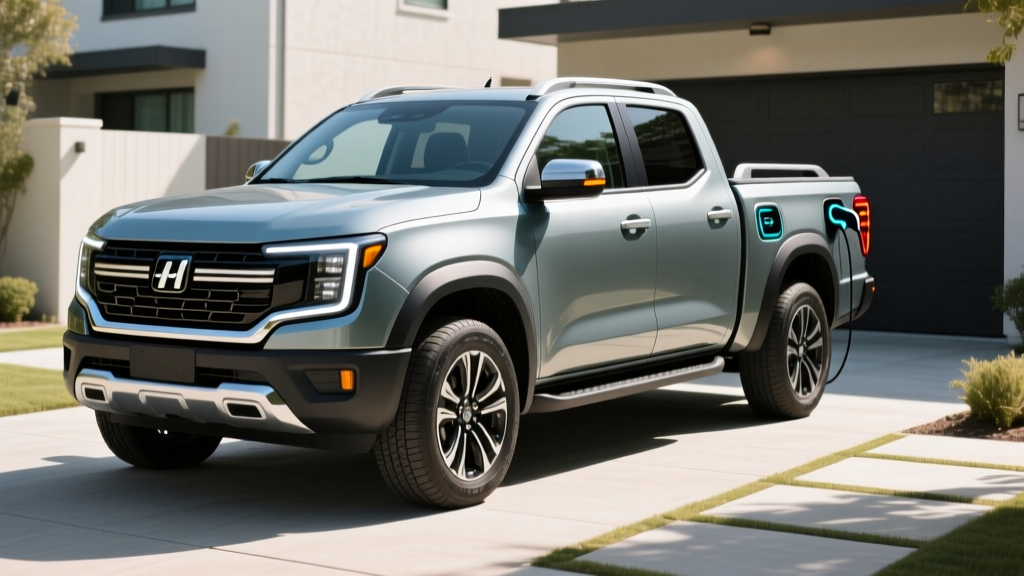
As of the 2026 model year, the compact electric pickup truck market is dominated by the Ford Maverick EV (announced, expected late 2025/2026) and the Hyundai Santa Cruz EV (rumored), with no widely available battery-electric compact pickups currently on sale in the U.S. The closest production options are the midsize Rivian R1T (EPA 270–420 mi, ~$70,000+) and the Chevrolet Colorado-based Silverado EV variants. If you need a true compact electric pickup truck today, your best strategy is to monitor announcements, consider a used Rivian R1T with the Standard battery, or evaluate a plug-in hybrid compact truck like the Maverick Hybrid (42 MPG combined) as a bridge vehicle.
What Is a Compact Electric Pickup Truck — And What's Actually Available?
The compact pickup segment (think Ford Ranger, Hyundai Santa Cruz, Ford Maverick in gas form) has resisted full electrification longer than sedans or SUVs. The engineering challenge is real: buyers demand payload, towing, and range, all while keeping the base price under $40,000. Batteries large enough to deliver 250+ miles of EPA range while towing add weight and cost that clash with the compact truck value proposition.
Here's where things stand for the 2026 model year:
| Model | Status | EPA Range | Battery (kWh) | Est. Base MSRP | Notes |
|---|---|---|---|---|---|
| Ford Maverick EV | Announced (2025–2026) | ~250 mi (est.) | ~70–80 kWh (est.) | ~$35,000–$42,000 (est.) | Based on Maverick platform; specs preliminary |
| Rivian R1T (Standard) | Available | 270 mi | 95 kWh usable (LFP) | $69,900 | Midsize, not compact; closest production EV truck |
| Chevrolet Silverado EV 4WT | Available | 270–400 mi (trim-dependent) | ~100–200 kWh | $55,000+ | Full-size; Work Truck trim closest in price |
| Ford Maverick Hybrid | Available (PHEV/HEV bridge) | N/A (42 MPG combined) | 1.1 kWh (HEV) | $28,000 | Gas-electric hybrid, not a BEV |
The Maverick EV, if it arrives with pricing near $35,000 and 250+ miles of range, would be the first true compact electric pickup truck at a mass-market price. Until then, buyers weighing this segment are making a strategic choice: wait, stretch up to a midsize EV truck, or bridge with a hybrid.
EV Pickup vs Gas Compact Truck: The Numbers
Let's compare what a projected compact electric pickup truck (using the Maverick EV estimates and comparable midsize EV truck data) looks like against today's best-selling gas compact trucks. We'll use the Ford Maverick EcoBoost AWD and Maverick Hybrid FWD as baselines, since they define the segment.
| Metric | Compact EV Truck (Projected) | Ford Maverick EcoBoost AWD | Ford Maverick Hybrid FWD |
|---|---|---|---|
| EPA Range / Fuel Economy | ~250 mi / ~95 MPGe | 23 MPG combined | 42 MPG combined |
| Energy/Fuel Cost per Mile | $0.04–$0.06 (home charging) | $0.15–$0.17 | $0.08–$0.09 |
| Annual Fuel/Energy (12,000 mi) | $480–$720 | $1,800–$2,040 | $960–$1,080 |
| 0–60 mph | ~6.0–7.0 sec (est.) | ~8.5 sec | ~9.2 sec |
| Max Towing | ~2,000–3,500 lb (est.) | 4,000 lb (w/ tow pkg) | 2,000 lb |
| Maintenance (annual avg) | ~$300–$400 | ~$700–$900 | ~$600–$800 |
| Base MSRP (2026) | ~$35,000–$42,000 (est.) | ~$28,000 | ~$28,000 |
Key takeaway: An electric compact pickup would cut per-mile energy costs by 60–70% versus gas and 30–40% versus hybrid — but only if you charge primarily at home. The upfront price premium of $7,000–$14,000 takes 4–7 years to recoup through fuel savings alone at 12,000 miles/year. Tax credits can compress that payback significantly (more below).
Performance is the electric truck's quiet advantage: instant torque from electric motors means a compact EV pickup will likely out-accelerate any gas four-cylinder in the segment, even while loaded.
Real-World Range: What the EPA Sticker Won't Tell You
If a compact electric pickup truck arrives with a ~250-mile EPA rating, plan for real-world variability that can shave 15–40% off that number depending on conditions:
- Highway driving (70+ mph): Expect ~200–215 miles. Aerodynamic drag hits trucks harder than sedans due to the open bed and boxy profile.
- Cold weather (below 30°F): Expect ~175–200 miles. Battery chemistry slows in cold, and cabin heating draws significant energy. An LFP battery (likely in a cost-optimized compact truck) is more cold-sensitive than NMC.
- Towing or heavy payload: Expect ~140–170 miles. Towing a 2,000 lb trailer can cut range nearly in half — this is the single biggest range killer for any EV truck.
- Combined real-world (mixed driving, moderate climate): Expect ~220–235 miles day-to-day.
For context, the EPA's fueleconomy.gov lists real-world efficiency data that consistently shows highway-heavy driving patterns reduce EV range by 10–20% below sticker.
Practical implication: A 250-mile EPA compact electric pickup is a confident daily driver and weekend warrior for trips under 180 miles round-trip. For longer hauls, you'll need to plan DC fast charging stops. For towing to a job site or campsite 150+ miles away, a gas or hybrid truck remains more practical today.
Charging: Speed, Cost, and Home Setup
A compact electric pickup truck will likely support DC fast charging at 100–150 kW peak, with Level 2 AC charging at 11.5 kW (48A). Here's what that means in practice:
| Charging Level | Power (kW) | Miles Added per Hour | Typical Use Case |
|---|---|---|---|
| Level 1 (120V household) | 1.4 kW | ~4–5 mi/hr | Overnight trickle; not practical as primary |
| Level 2 (240V home) | 7.7–11.5 kW | ~25–38 mi/hr | Daily charging; full battery in 7–10 hours |
| DC Fast Charge | 100–150 kW peak | ~250–400 mi/hr (at peak) | Road trips; 10–80% in ~30–40 min |
Charging curve reality: Peak kW is not sustained. A truck rated at 150 kW peak will typically sustain 120–140 kW from 10–50% SoC, then taper to 60–80 kW through 70%, and drop below 30 kW above 85%. A realistic 10–80% session takes 30–40 minutes at a capable 150+ kW station.
Home charging cost: At the U.S. average residential rate of ~$0.16/kWh (per EIA data), fully charging a 75 kWh battery costs ~$12. Over 12,000 miles/year, that's roughly $500–$600 in electricity — versus $1,800+ in gasoline for the EcoBoost Maverick.
Home installation: A Level 2 charger requires a 240V circuit (NEMA 14-50 or hardwired). Expect $800–$2,000 for a licensed electrician to install a dedicated 50A circuit if your panel has capacity. If you need a panel upgrade (100A → 200A), add $1,500–$3,000. The charger hardware itself (e.g., ChargePoint Home Flex, Emporia Vue) runs $400–$700.
Apartment/no-garage buyers: If you can't charge at home, public DC fast charging costs $0.30–$0.50/kWh at networks like Electrify America or EVgo, pushing your per-mile cost to $0.10–$0.14 — erasing much of the savings advantage over a hybrid. Reliable home charging access is the single biggest factor in EV truck satisfaction.
Total Cost of Ownership: 5-Year Breakdown
Let's model a realistic 5-year/60,000-mile ownership scenario comparing a projected compact electric pickup truck against the Maverick EcoBoost and Maverick Hybrid. We assume home charging at $0.16/kWh, $3.50/gallon gas, and 12,000 miles/year.
| Cost Category | Compact EV Truck (Est.) | Maverick EcoBoost | Maverick Hybrid |
|---|---|---|---|
| Purchase Price (MSRP) | $38,000 | $28,000 | $28,000 |
| Federal Tax Credit (§30D) | –$3,750 to –$7,500* | $0 | $0 |
| Effective Purchase Price | $30,500–$34,250 | $28,000 | $28,000 |
| Energy/Fuel (5 yr) | $2,400–$3,600 | $9,000–$10,200 | $4,800–$5,400 |
| Maintenance (5 yr) | $1,500–$2,000 | $3,500–$4,500 | $3,000–$4,000 |
| Insurance (5 yr avg) | $7,500–$9,000 | $5,500–$7,000 | $5,500–$7,000 |
| Home Charger Install | $1,200–$2,000 | $0 | $0 |
| Total 5-Year Cost | $43,100–$50,850 | $46,000–$49,700 | $41,300–$44,400 |
*Federal §30D tax credit eligibility depends on MSRP caps ($80,000 for trucks), buyer income limits ($150K single / $300K joint), and battery critical-mineral sourcing requirements that tighten annually. A compact EV truck in the $35K–$42K range clears the MSRP cap, but income and sourcing rules vary. Check IRS §30D guidance for current-year eligibility. The credit can now be transferred to the dealer as a point-of-sale discount.
The honest math: With a full $7,500 credit, a compact EV truck can reach cost parity with a gas Maverick over 5 years, primarily through fuel and maintenance savings. Without the credit (due to income or sourcing rules), the EV truck costs $4,000–$6,000 more over 5 years. The Maverick Hybrid remains the lowest total-cost option in nearly every scenario unless gas prices rise substantially above $4/gallon.
Insurance note: EVs typically cost 15–25% more to insure than equivalent gas vehicles due to higher repair costs and battery replacement risk. Get quotes before committing.
Common Misconceptions About Electric Pickup Trucks
| Myth | Fact |
|---|---|
| "EV trucks can't tow anything." | A compact EV truck will likely tow 2,000–3,500 lbs — adequate for small trailers, jet skis, and light utility. Range drops significantly while towing, though. |
| "The battery will need replacing in 5 years." | Federal law mandates EV battery warranties of at least 8 years/100,000 miles. Real-world data from Tesla, Hyundai, and Nissan shows most packs retain 85–90% capacity at 100,000 miles. |
| "I'll be stranded without charging stations." | There are over 200,000 public charging ports in the U.S. (per AFDC). The real concern is reliability and wait times on road trips — not total absence. Home charging eliminates daily range anxiety. |
| "Cold weather makes EV trucks useless." | Range drops 15–30% in freezing temps, but preconditioning (warming the battery while plugged in) recovers much of that loss. Northern-climate EV owners manage this daily. |
| "EV trucks are all $70,000+." | Currently true for the Rivian R1T and GMC Hummer EV. But the compact electric pickup truck segment targets $35,000–$42,000 — a different market tier entirely. |
Decision Framework: Should You Buy, Wait, or Bridge?
If X, Then Y
- If you need a truck NOW for work/towing and drive 200+ miles daily: Buy the Ford Maverick Hybrid (42 MPG, $28K, available today). It's the most cost-effective compact truck until EVs match its price and availability.
- If you have home charging, drive under 150 miles/day, and can wait 12–18 months: Wait for the Ford Maverick EV or equivalent compact EV truck. The $35K–$42K price point with potential tax credits makes it the most compelling future option.
- If you want an EV truck today and budget allows $70K+: The Rivian R1T Standard (270 mi EPA, LFP battery, NACS charging) is the best available electric truck, though it's midsize, not compact.
- If you can't charge at home (apartment, street parking): Stick with the Maverick Hybrid or gas truck. Public-only charging erases cost savings and adds friction. Revisit EVs when your housing situation changes.
- If you tow heavy (5,000+ lbs) regularly: No compact electric truck (current or announced) is suited for this. Consider a full-size EV truck (Silverado EV, F-150 Lightning) or stay with diesel/gas.
- If you're in a cold climate (frequent sub-20°F winters): An EV truck is still viable, but budget for 20–30% range loss in winter and prioritize a heat pump (expected in most 2026+ models). The Maverick Hybrid avoids this concern entirely.
What First-Time EV Truck Buyers Must Know
If you're considering an electric pickup as your first EV, these realities shape ownership more than any spec sheet:
1. Home charging is non-negotiable for satisfaction. Over 80% of EV charging happens at home. Without a garage or dedicated parking spot with 240V access, daily EV truck life becomes a chore of public charger hunting. Confirm your electrical panel has room for a 50A breaker before purchasing.
2. Payload and range are a tradeoff. A fully loaded bed (1,000+ lbs) will reduce range by 10–15%. If you regularly haul heavy loads, factor this into your route planning. Gas trucks don't face this penalty as acutely.
3. Regenerative braking changes how you drive. Most EV trucks offer adjustable regen, including one-pedal driving modes. This recovers energy on deceleration and extends brake life (many EV owners report 80,000+ miles on original brake pads). Expect a 1–2 week adaptation period.
4. Software updates can improve your truck over time. Unlike gas vehicles, EV trucks receive over-the-air (OTA) updates that can add range, improve charging speed, or unlock new features. This is a genuine ownership advantage.
5. Resale value is uncertain. EV depreciation has been volatile. The IIHS and industry analysts note that early EV trucks may depreciate faster than proven gas models until long-term battery durability data matures. Lease if you're risk-averse.
Frequently Asked Questions
Does any compact electric pickup truck exist for sale in 2026?
Not as a mass-market, widely available product. The Ford Maverick EV has been announced with expected availability in the 2025–2026 timeframe, but final specs and pricing are preliminary. The Rivian R1T is available but is a midsize truck at $69,900+. The compact electric truck segment is still emerging.
How much will a compact electric pickup truck cost to charge per month?
At the U.S. average electricity rate of $0.16/kWh and 1,000 miles/month of driving, expect $40–$60/month for home charging. This compares to $150–$170/month in gasoline for a 23 MPG compact gas truck. Public DC fast charging at $0.35–$0.50/kWh would push costs to $90–$130/month.
Can I get the $7,500 federal tax credit on a compact electric pickup?
Possibly. Under current IRS §30D rules, trucks have an $80,000 MSRP cap (easily met), but you must also fall under income limits ($150K single / $300K joint) and the vehicle must meet battery critical-mineral and component sourcing thresholds that tighten each year. The credit can be applied as a point-of-sale discount through the dealer. Always verify eligibility with a tax professional before relying on the credit in your budget.
Will a compact EV truck handle a job site and light construction work?
For light-duty work — carrying lumber, tools, and equipment under the payload limit (~1,500 lbs estimated) — yes. The instant torque is excellent for low-speed maneuvering with a load. For heavy construction, frequent towing, or remote job sites without charging access, a gas or diesel truck remains more practical.
What's the battery warranty on a compact electric pickup?
Federal law requires a minimum 8-year/100,000-mile battery warranty for EVs. Most manufacturers cover capacity loss below 70% of original. Ford, Hyundai, and GM have historically offered 8yr/100Kmi coverage on their EV batteries. Expect similar terms on any compact EV truck that reaches market.
How does cold weather affect an electric pickup truck?
In temperatures below 30°F, expect 15–30% range reduction due to battery chemistry slowdown and cabin heating demands. Preconditioning (warming the battery and cabin while still plugged in) recovers much of this loss. A heat pump, expected in most 2026+ EV trucks, reduces heating energy draw by 30–50% versus resistive heaters. Cold-weather EV truck ownership is manageable but requires planning.