The Short Answer on Commercial EVs
A commercial EV makes financial sense for fleets with predictable daily routes under 150 miles, depot-based overnight charging, and vehicles that idle frequently (delivery vans, shuttle buses, service trucks). Expect 40–60% lower fuel and maintenance costs versus gas equivalents, but higher upfront purchase prices ($5,000–$20,000 more per vehicle) and mandatory investment in depot charging infrastructure. The IRS §45W Commercial Clean Vehicle Credit can offset up to $7,500 (under 14,000 lb GVWR) or $40,000 (over 14,000 lb) per vehicle, fundamentally changing the payback math.
What Defines a Commercial EV in 2026?
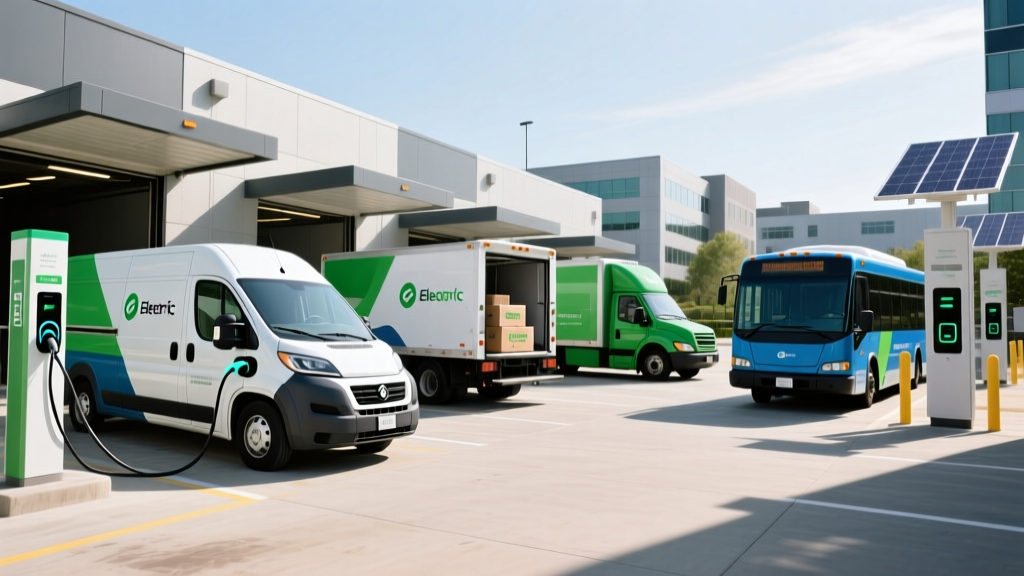
The term "commercial EV" covers a wide spectrum — from compact cargo vans like the BrightDrop Zevo 400 and Ford E-Transit to Class 8 semi-trucks like the Freightliner eCascadia and heavy-duty pickups like the Ford F-150 Lightning Pro and Chevrolet Silverado EV Work Truck. What unites them is use-case: these are work vehicles optimized for payload, upfitting, fleet telematics, and total cost of ownership rather than 0-60 times or luxury interiors.
Fleet managers evaluating a commercial EV need to think in terms of cost per mile, vehicle uptime, and depot charging logistics — not consumer-EV metrics like Supercharger access or frunk space.
Commercial EV vs Gas Fleet Vehicle: The Numbers
Here's a side-by-side look at popular light-duty commercial EV options versus their ICE counterparts, using EPA and manufacturer data:
| Spec | Ford E-Transit (2026) | Ford Transit 250 Cargo (Gas) | BrightDrop Zevo 400 | Chevrolet Silverado EV WT |
|---|---|---|---|---|
| Powertrain | BEV, 68 kWh usable (NMC) | 3.5L EcoBoost V6 | BEV, 85 kWh usable (NMC) | BEV, ~100 kWh usable (NMC) |
| EPA Range | 126 mi | ~310 mi (16-gal tank) | ~160 mi | ~400 mi |
| Real-World Range (loaded, mixed) | ~95–110 mi | ~250–280 mi | ~120–140 mi | ~300–340 mi |
| Payload Capacity | 3,880 lb | 4,030 lb | ~2,500 lb | ~1,800 lb |
| Max DC Fast Charge | 115 kW (10–80% in ~45 min) | N/A | 120 kW (~50 min) | 350 kW (10–80% in ~20 min) |
| Level 2 Charge Rate | 10.5 kW | N/A | 11.5 kW | 19.2 kW |
| Base MSRP | ~$46,000 | ~$44,500 | ~$52,000 | ~$55,000 |
| Fuel/Energy Cost per Mile | ~$0.10–$0.14 | ~$0.22–$0.28 | ~$0.10–$0.14 | ~$0.08–$0.12 |
| Estimated Annual Maintenance | ~$500–$700 | ~$1,200–$1,800 | ~$500–$700 | ~$600–$800 |
Sources: fueleconomy.gov, manufacturer spec sheets. Real-world range assumes 75% payload, mixed city/highway, moderate climate. Cold climates (below 20°F) can reduce BEV range 20–35%.
Total Cost of Ownership: 5-Year Commercial Fleet Breakdown
Upfront sticker price is only part of the equation. Here's a realistic 5-year TCO comparison for a single light-duty cargo van driven 25,000 miles/year with depot charging at $0.12/kWh:
| Cost Category | Ford E-Transit (BEV) | Ford Transit 250 (Gas) | 5-Year Difference |
|---|---|---|---|
| Purchase Price (base) | $46,000 | $44,500 | +$1,500 (BEV) |
| §45W Federal Tax Credit | −$7,500 | $0 | −$7,500 (BEV) |
| Depot Charger Install (Level 2, per stall) | $3,500–$8,000 | $0 | +$3,500–$8,000 (BEV) |
| Fuel/Energy (5 years, 125K mi) | $13,750 | $31,250 | −$17,500 (BEV saves) |
| Maintenance (5 years) | $3,000 | $7,500 | −$4,500 (BEV saves) |
| Insurance (5 years, fleet avg) | $12,500 | $11,000 | +$1,500 (BEV) |
| Estimated Resale (Year 5) | $12,000 | $14,000 | −$2,000 (BEV) |
| Net 5-Year Cost | ~$59,250–$63,750 | ~$80,250 | BEV saves ~$16,500–$21,000 |
Key takeaway: Even with depot charger installation and slightly higher insurance, the commercial EV saves $16,500–$21,000 per vehicle over five years in this scenario. The payback period typically falls between 1.5 and 3 years depending on route mileage and local electricity rates.
For heavier vehicles (Class 4–8), the §45W credit jumps to $40,000 per vehicle for those over 14,000 lb GVWR, dramatically improving the business case for electric box trucks and semis.
Charging Infrastructure: What Fleet Buyers Actually Need
Unlike consumer EV owners who rely on public charging networks, commercial fleets typically charge at a depot overnight. Here's what that requires:
Level 2 Depot Charging (Most Common): A 10–19 kW Level 2 charger adds roughly 25–50 miles of range per hour. For a van with a 68 kWh battery, a full 0–100% charge takes 4–7 hours — ideal for overnight turnaround. Per-stall installed cost ranges from $3,500 to $8,000 including the EVSE unit, electrical conduit, and labor. Fleets with 10+ vehicles should budget for a panel upgrade (potentially $10,000–$30,000) and consider managed charging software to stagger charge cycles and avoid demand-charge spikes from the utility.
DC Fast Charging (Supplemental): If your routes require mid-day top-ups, a 50–150 kW DC fast charger at the depot costs $40,000–$120,000 installed. Most fleets use DCFC sparingly due to cost and battery wear — it's a supplement, not a primary strategy.
Utility Demand Charges: Commercial electricity rates often include demand charges based on peak kW draw. Charging 10 vans simultaneously at 10 kW each creates a 100 kW peak that can trigger significant demand fees. Smart charge management systems (e.g., Ford Pro Charging, ChargePoint Fleet) distribute power dynamically to keep demand below costly thresholds.
Real-World Ownership Considerations
Route Suitability
A commercial EV excels when daily routes are predictable and under the vehicle's real-world range. The Ford E-Transit's EPA range is 126 miles, but loaded with cargo in stop-and-go urban delivery, expect 95–110 miles. In winter conditions (below 20°F), plan for 75–90 miles. If your routes exceed these distances, you need mid-day charging access or a longer-range platform like the Silverado EV.
Cold-Weather Impact
Battery chemistry matters. NMC batteries (used in most current commercial EVs) lose 20–35% range in sub-freezing temperatures. Fleets operating in Minnesota, Montana, or New England should spec vehicles with 30–40% range buffer above their longest daily route, or consider vehicles with heat pumps (which reduce cabin-heating energy draw by ~30%).
Regenerative Braking Advantage
Stop-and-go delivery routes actually favor EVs. Regenerative braking recaptures energy during deceleration and extends brake pad life significantly — some fleet operators report brake service intervals stretching from 30,000 miles (gas) to 80,000+ miles (EV).
Battery Degradation and Warranty
Commercial EV batteries typically carry an 8-year/100,000-mile warranty guaranteeing 70% or greater capacity retention. Real-world degradation data from early fleet adopters shows NMC batteries losing roughly 2–3% capacity per year under normal use. For a 10-year fleet lifecycle, plan for ~80% end-of-life capacity — which still supports most urban routes if you spec'd adequate range initially.
Common Misconceptions About Commercial EVs
| Myth | Fact |
|---|---|
| "EVs can't handle heavy payloads." | The E-Transit carries 3,880 lb — within 4% of the gas Transit 250. The Silverado EV tows up to 10,000 lb. Payload parity exists in most light/medium-duty segments. |
| "Charging infrastructure is too expensive." | Level 2 depot chargers run $3,500–$8,000 per stall installed. The §30C Alternative Fuel Refueling Property Credit covers up to 30% of charging equipment and installation costs (max $100,000 per item for commercial property). |
| "Electric vans don't have enough range." | For last-mile delivery averaging 60–80 miles/day, even the 126-mile E-Transit provides adequate buffer. The issue is route mismatch, not absolute range deficiency. |
| "Battery replacement will bankrupt the fleet." | Under warranty (8yr/100K mi), the manufacturer covers replacement. Out-of-warranty, a 68 kWh pack replacement runs ~$8,000–$14,000 in 2026 — but most fleet vehicles are cycled out before this becomes relevant. |
| "EVs cost more to insure." | Slightly true — fleet EV premiums run 5–15% higher due to repair costs and higher vehicle values. However, lower accident rates (instant torque for merging, lower center of gravity) partially offset this over time. |
Decision Framework: Is a Commercial EV Right for Your Fleet?
Choose a commercial EV if:
- Daily routes are under 120 miles (loaded, worst-case weather)
- Vehicles return to a depot nightly for 8+ hours of charging downtime
- Your fleet includes frequent stop-and-go or idling (delivery, service calls, shuttles)
- You own or lease your depot and can install charging infrastructure
- Your vehicles fall under 14,000 lb GVWR (qualify for $7,500 credit) or above ($40,000 credit)
- You plan to hold vehicles 4+ years to capture fuel/maintenance savings
Stick with gas or hybrid for now if:
- Daily routes regularly exceed 180+ miles with no mid-day charging option
- Vehicles park on public streets overnight with no charging access
- Your fleet operates in extreme cold (−20°F or below) with long rural routes
- You cycle vehicles every 2–3 years (won't capture TCO savings)
- You need heavy towing (15,000+ lb) — current commercial EV options are limited here
Consider a PHEV (plug-in hybrid) if:
- Routes are mixed: short urban days and occasional 200+ mile highway runs
- You want some electric savings without range limitation
- Depot charging is available but not yet scalable to full fleet
Federal Incentives for Commercial EV Buyers (2026)
The commercial EV incentive landscape differs from consumer credits. Here's what fleet buyers can claim:
- §45W Commercial Clean Vehicle Credit: Up to $7,500 for vehicles under 14,000 lb GVWR; up to $40,000 for heavier vehicles. Unlike the consumer §30D credit, there are no buyer income caps and no MSRP caps. The vehicle must be purchased for business use and meet the same battery-sourcing and critical-mineral requirements outlined on irs.gov.
- §30C Alternative Fuel Refueling Property Credit: 30% of charging equipment and installation costs, up to $100,000 per item for commercial property. This covers Level 2 chargers, DC fast chargers, and associated electrical work.
- State and utility incentives: Many states and utilities offer additional rebates for commercial EV purchases and depot charging. California's CEC and HVIP program, New York's NYSERDA, and utility demand-management rebates can stack with federal credits. Always check current state and local programs as these vary by jurisdiction.
Frequently Asked Questions
How long does it take to charge a commercial EV overnight?
At a 10 kW Level 2 charger, a 68 kWh battery (Ford E-Transit) charges from 10% to 100% in approximately 6.5 hours. At 19.2 kW (Silverado EV capable), a 100 kWh battery takes roughly 5 hours. Most fleet vehicles are fully charged well before morning dispatch.
Can I use public DC fast chargers for my commercial fleet?
Yes, but it's not cost-effective as a primary strategy. Public DCFC rates range from $0.30–$0.60/kWh versus $0.08–$0.15/kWh for depot Level 2. Public chargers also add downtime (30–50 minutes per session) and driver inconvenience. Use DCFC for route emergencies or supplemental mid-day top-ups only.
What happens if a commercial EV battery fails out of warranty?
Out-of-warranty battery replacement for light-duty commercial EVs costs approximately $8,000–$14,000 in 2026 depending on pack size and chemistry. However, NMC batteries rarely fail catastrophically — they degrade gradually. A battery at 70% capacity still supports most urban delivery routes. Many fleets retire or sell vehicles before reaching this point.
Do commercial EVs qualify for the same $7,500 tax credit as consumer EVs?
Not exactly. Commercial vehicles use the §45W credit, not the consumer §30D credit. The dollar amounts are similar ($7,500 for light-duty), but §45W has no income caps or MSRP caps — making it more accessible for fleet purchases. Vehicles over 14,000 lb GVWR can qualify for up to $40,000. Consult a tax professional for eligibility specifics.
What's the difference between kW and kWh for fleet charging?
kW (kilowatts) measures charging power — how fast energy flows into the vehicle. A 10 kW Level 2 charger delivers energy at a rate of 10 kW. kWh (kilowatt-hours) measures energy capacity — the size of the battery. A 68 kWh battery stores 68 kWh of energy. Think of kW as the "speed of the hose" and kWh as the "size of the tank." Charging a 68 kWh battery at 10 kW takes roughly 6.8 hours (minus efficiency losses).
Should I install managed charging software for my fleet depot?
If you're deploying 5+ vehicles at one location, yes. Managed charging software (Ford Pro Charging, ChargePoint Fleet, AmpUp) distributes available power across vehicles, avoids utility demand-charge spikes, schedules charging during off-peak rate windows, and provides fleet energy analytics. The software subscription ($5–$15/vehicle/month) typically pays for itself through utility savings alone.