If you charge an electric vehicle at home in northern Illinois, ComEd's Residential Real-Time Pricing (RRTP) or the EV-RTS (Electric Vehicle Rate — Time of Use) plan can cut your home-charging electricity cost to roughly 3–5 cents per kWh during off-peak overnight hours, compared to the standard residential rate of approximately 11–13 cents per kWh (supply + delivery combined, varying by month). For a typical EV driver covering 1,000 miles per month in a vehicle averaging 3.5 mi/kWh, that translates to a monthly home-charging bill between $8.50 and $14.30 on an EV-specific time-of-use plan — versus $35–$46 on the standard fixed rate, and roughly $100–$140 fueling a comparable 28-MPG gas car at $3.20/gallon.
The catch? You must shift the bulk of your charging to off-peak windows (typically 10 PM – 6 AM on weekdays, with extended off-peak hours on weekends and holidays), and you need access to a Level 2 home charger to take full advantage. Below is a complete breakdown of what ComEd offers EV owners in 2026, how the math actually works, and a framework to decide whether switching plans is worth it for your situation.
How ComEd's EV Rate Plans Work in 2026
ComEd, the primary electric utility serving Chicago and much of northern Illinois, offers rate structures that can significantly benefit EV owners who charge at home. The key concept is time-of-use (TOU) pricing: electricity costs less when overall grid demand is low (overnight) and more during peak afternoon and early-evening hours.
As of 2026, ComEd's rate landscape for EV owners includes:
- Standard Fixed Rate (default): A blended supply + delivery rate that stays constant regardless of when you use electricity. In 2026, the all-in residential rate fluctuates seasonally but averages approximately 11–13¢/kWh.
- Residential Real-Time Pricing (RRTP): Your supply charge tracks the real-time wholesale market price hourly. Off-peak hours can drop to 2–4¢/kWh for supply, but peak hours can spike above 20¢/kWh. Delivery charges remain fixed.
- EV-specific TOU options: ComEd has piloted and expanded EV-targeted rate structures that designate super-off-peak windows (typically overnight) with the lowest possible rates. These may be offered as add-ons or distinct plans depending on your meter type and enrollment status.
The critical detail: kWh is energy (what your battery stores and what you pay for), while kW is power (how fast your charger delivers it). Your ComEd bill charges per kWh consumed, not per kW of charger capacity. A 48-amp Level 2 charger pulling 11.5 kW and a standard 120V outlet pulling 1.4 kW both pay the same per-kWh rate — the Level 2 just fills your battery faster.
Real Charging Costs: ComEd EV Rates vs. Gasoline
Let's run the numbers for a realistic Illinois EV owner. We'll use a 2026 Hyundai Ioniq 5 (Long Range RWD, 84 kWh usable battery, EPA-estimated 310 miles of range, ~3.6 mi/kWh combined efficiency per fueleconomy.gov) as our baseline, compared against a popular gas crossover averaging 28 MPG combined.
| Scenario | Cost per kWh / Gallon | Monthly Cost | Annual Cost |
|---|---|---|---|
| ComEd Standard Rate (Ioniq 5) | ~12¢/kWh | $33.60 | $403 |
| ComEd EV-RTS Off-Peak (Ioniq 5) | ~4¢/kWh | $11.20 | $134 |
| ComEd RRTP Avg Off-Peak (Ioniq 5) | ~5¢/kWh | $14.00 | $168 |
| Gasoline (28 MPG crossover) | $3.20/gal | $114.30 | $1,371 |
The bottom line: On ComEd's best off-peak EV rates, you're paying the gasoline equivalent of roughly $0.37 per gallon. Even on the standard fixed rate, home charging costs about $1.12 per gallon-equivalent. The annual savings versus gasoline range from approximately $970 (standard rate) to $1,240 (off-peak TOU rate).
These savings compound over ownership. Over five years and 60,000 miles, the fuel-cost gap between the Ioniq 5 on ComEd's EV rate and a 28-MPG gas car can exceed $6,000 — enough to offset a meaningful chunk of the EV's typically higher purchase price.
What You Need to Actually Capture These Savings
Low ComEd EV rates only translate to real savings if your charging setup and habits align. Here's what's required:
Home Charging Access
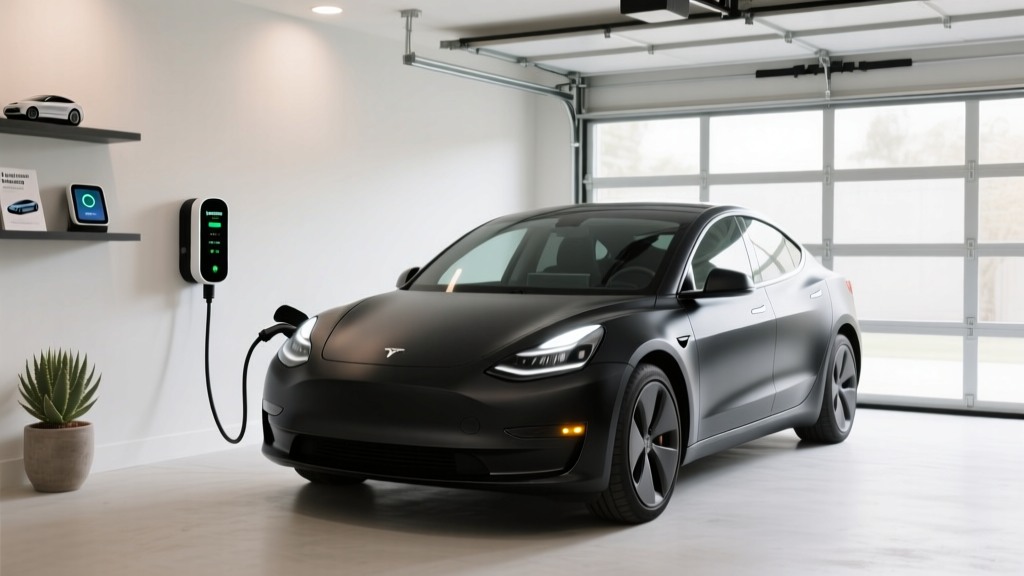
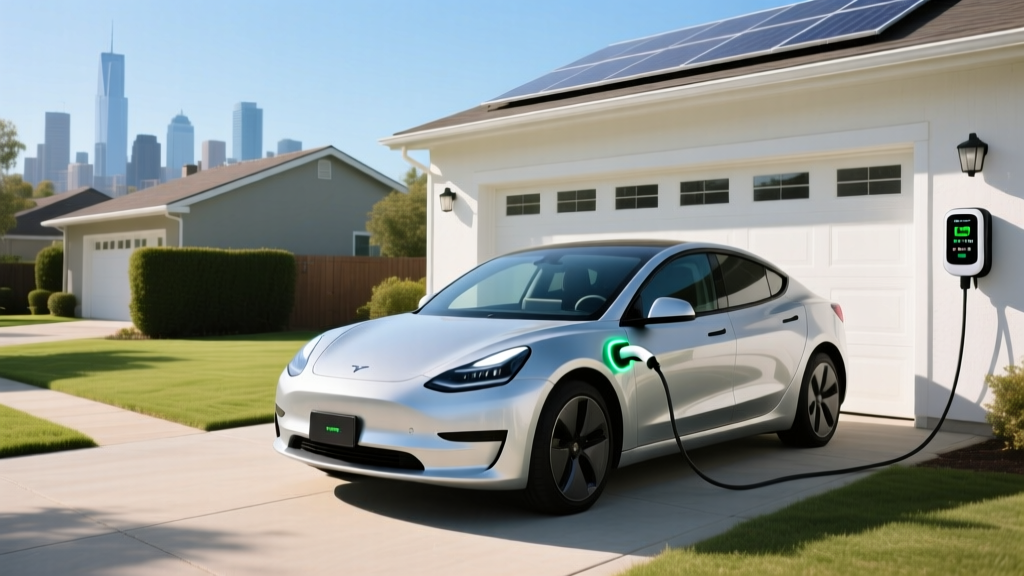
This is the single biggest variable. To exploit overnight off-peak rates, you need to charge where you park at night. For homeowners with a garage or dedicated parking spot near an electrical panel, a Level 2 home charger (240V, typically 32–48 amps / 7.7–11.5 kW) is the standard solution. Installation costs in the Chicago metro area typically run:
| Component | Low Estimate | High Estimate |
|---|---|---|
| Level 2 charger hardware (e.g., ChargePoint Home Flex, Emporia Vue) | $400 | $700 |
| Electrician labor (240V circuit, 50-amp breaker, NEMA 14-50 or hardwired) | $500 | $1,500 |
| Permit and inspection | $50 | $200 |
| Panel upgrade (if 100-amp service needs upgrade to 200-amp) | $1,500 | $3,500 |
| Total (no panel upgrade) | $950 | $2,400 |
| Total (with panel upgrade) | $2,450 | $5,900 |
At $1,240/year in fuel savings (off-peak rate vs. gas), a basic $1,500 installation pays for itself in roughly 15 months. If you need a panel upgrade, the payback extends to 3–5 years — still favorable, but a meaningful upfront investment. Always get a quote from a licensed electrician before committing; older Chicago-area homes with 60- or 100-amp panels may need upgrades.
Renters and condo dwellers: If you lack dedicated home charging access, ComEd's off-peak rates won't help you directly. You'll rely on workplace charging or public DC fast chargers, where rates typically run 25–48¢/kWh — still cheaper than gas per mile, but the advantage narrows considerably. Some ComEd programs offer rebates for multi-unit dwelling (MUD) charging installations; check ComEd's current EV programs for availability.
Smart Charging Scheduling
Most modern EVs and Level 2 chargers let you schedule charging to start at a specific time. Set your vehicle or charger to begin charging at 10 PM or later to land squarely in the off-peak window. Many EVs (Teslas, Hyundai/Kia E-GMP vehicles, Ford Mustang Mach-E, BMW i4) have built-in scheduled charging in their infotainment or app settings. If your charger supports it (ChargePoint, Emporia, EnelX JuiceBox), you can also set schedules from the charger's app — useful if you drive multiple EVs.
Winter Efficiency Loss
Illinois winters are no joke for EV range. In sub-freezing temperatures (common December–February in Chicagoland), expect your EV's efficiency to drop 20–35% depending on whether the vehicle has a heat pump. The Ioniq 5, which uses a heat pump on most trims, might see efficiency fall from 3.6 mi/kWh to roughly 2.5–2.8 mi/kWh in sustained 20°F weather. This means you'll consume more kWh per mile in winter, raising your monthly charging cost. On the EV-RTS plan at 4¢/kWh, a January bill might climb from $11 to $16–$18 — still dramatically cheaper than the gas car's winter fuel bill (cold engines and winter-blend fuel drop MPG too).
ComEd EV Rates vs. Public Charging: The Cost Gap
Understanding the full charging-cost picture requires comparing home rates to public options available in the Chicago area:
| Charging Source | Typical ¢/kWh | Cost for ~85 kWh (300 mi) |
|---|---|---|
| ComEd EV-RTS off-peak (home) | 3–5¢ | $2.55–$4.25 |
| ComEd standard rate (home) | 11–13¢ | $9.35–$11.05 |
| Public Level 2 (ChargePoint, etc.) | 18–30¢ | $15.30–$25.50 |
| DC Fast Charging (Electrify America, EVgo) | 32–48¢ | $27.20–$40.80 |
| Tesla Supercharger (NACS, non-Tesla access varies) | 28–42¢ | $23.80–$35.70 |
| Gasoline (28 MPG, $3.20/gal) | — | $34.29 |
Notice that exclusive reliance on DC fast charging erases most of the EV cost advantage over gasoline. This is why home charging access is the single most important factor in EV ownership economics in the ComEd service territory. Public fast charging is best treated as a road-trip supplement, not a daily strategy.
Illinois EV Incentives and How They Stack Up
Beyond favorable electricity rates, Illinois EV buyers in 2026 can layer several incentives:
- Federal §30D Clean Vehicle Credit: Up to $7,500 for qualifying new EVs (or $4,000 for qualifying used EVs), subject to MSRP caps ($55,000 for cars, $80,000 for SUVs/trucks), buyer income limits ($150K single / $300K joint AGI), and battery critical-mineral and component sourcing requirements. As of 2026, the credit can be transferred to the dealer at point of sale as an immediate price reduction. Verify current eligibility at IRS.gov — sourcing rules tighten annually.
- Illinois EV Rebate Program: Illinois has offered a $4,000 rebate for new EV purchases (funded periodically through the CEJA — Climate and Equitable Jobs Act). Funding availability varies by fiscal year and application window. Check the Illinois EPA clean transportation page for current status.
- ComEd EV rebates: ComEd has periodically offered rebates for Level 2 charger purchases and installations, as well as special enrollment incentives for EV-RTS or RRTP plans. These are typically $250–$1,000 and rotate by program year.
Stacked together, a buyer could potentially reduce the effective purchase price of a qualifying EV by $11,500–$12,500 (federal + state + utility), on top of the ongoing fuel savings from ComEd's off-peak rates.
Common Misconceptions About ComEd EV Rates
| Myth | Fact |
|---|---|
| "Charging an EV will double my ComEd bill." | Adding ~280 kWh/month for 1,000 miles of driving increases a standard-rate bill by roughly $34/month. On the EV-RTS off-peak rate, the increase is $8–$14. Either way, it replaces $100+ in monthly gasoline spending. |
| "I need a special meter to get EV rates." | ComEd has deployed smart meters (advanced metering infrastructure) across its service territory. Most customers already have interval-capable meters. Plan enrollment may require contacting ComEd, but a new physical meter is rarely needed. |
| "If everyone charges EVs, the grid will crash." | Overnight off-peak charging uses existing excess grid capacity. ComEd's TOU rates are specifically designed to incentivize charging when demand is low, smoothing the load curve rather than adding to peak stress. |
| "I can charge on a regular 120V outlet and it's fine." | Level 1 (120V) charging delivers roughly 1.4 kW, adding about 4–5 miles of range per hour. For a 30-mile daily commute, this works — but it takes 20+ hours to fully recharge an 84-kWh battery. A Level 2 (240V) charger at 11.5 kW adds ~40 miles per hour, filling the same battery in ~7 hours and letting you fully exploit off-peak windows. |
Decision Framework: Should You Switch to ComEd's EV Rate?
Choose the EV-RTS / Off-Peak TOU Plan If:
- You have (or can install) a Level 2 home charger on a 240V circuit.
- You drive more than 600 miles per month — the savings scale with mileage.
- You can reliably schedule charging to start after 10 PM.
- Your daily commute is predictable and fits within your battery's real-world range (accounting for 20–30% winter loss).
- You're willing to avoid running high-draw appliances (dryer, oven, dishwasher) during peak afternoon hours if the plan includes whole-house TOU pricing.
Stay on the Standard Fixed Rate If:
- You primarily rely on public or workplace charging (your home electricity use won't change much).
- You can't install a Level 2 charger (rental, condo without EV infrastructure, no garage).
- You drive fewer than 300 miles/month and the absolute savings are negligible ($5–$10/month difference).
- You work from home and run significant air conditioning or electric heating during peak hours — a whole-house TOU plan could raise costs on non-EV usage.
Consider RRTP (Real-Time Pricing) If:
- You're comfortable monitoring hourly prices and actively shifting usage.
- You have home battery storage or can automate load-shifting via smart-home integration.
- You want the absolute lowest possible off-peak supply rate and accept occasional price spikes.
Frequently Asked Questions
How do I enroll in ComEd's EV rate plan?
Contact ComEd directly via their website or customer service line. You'll typically need to confirm your meter type (most ComEd customers now have smart meters capable of TOU tracking), select the plan, and set up your charging schedule. Enrollment is usually free, and you can switch back to the standard rate if the plan doesn't work for your lifestyle — though some plans may have minimum enrollment periods.
Does ComEd offer any rebates for buying a Level 2 charger?
ComEd has periodically offered rebates of $250–$500 for qualifying Level 2 chargers and installation, often tied to enrolling in an EV rate program. Availability varies by program year. Check ComEd's EV programs page for current offers before purchasing your charger.
Will charging my EV trip my home's electrical panel?
A 48-amp Level 2 charger draws about 11.5 kW continuously. On a 200-amp panel, this represents roughly 50 amps of the panel's continuous capacity (using the 80% rule for continuous loads on a 60-amp breaker). Most modern 200-amp panels handle this without issue, but if you're also running electric heat, a dryer, and an electric oven simultaneously, you may approach limits. A licensed electrician can perform a load calculation to confirm your panel's headroom.
How does ComEd's EV rate compare to other utilities in Illinois?
Ameren Illinois, which serves central and southern Illinois, also offers TOU rates and EV-specific programs, though exact pricing structures differ. The general principle is the same: overnight off-peak rates are dramatically cheaper than standard rates. If you're in Ameren territory, check their EV program page for comparable savings potential.
What happens if I charge during peak hours on the EV-RTS plan?
Peak-hour rates on TOU plans can be 2–3× the standard rate (roughly 20–35¢/kWh depending on the plan and season). Occasional peak charging won't destroy your savings, but habitual peak charging could make your EV electricity cost comparable to or slightly higher than the standard fixed rate. The scheduling feature on your EV or charger is your best tool to avoid this accidentally.
Is the federal tax credit still available for EVs in 2026?
Yes, the §30D Clean Vehicle Credit remains available, but qualifying vehicles and buyers must meet strict criteria including MSRP caps, buyer income limits, and battery-component/critical-mineral sourcing thresholds that tighten each year. The credit can be transferred to the dealer at point of sale as an instant discount. Always verify eligibility on IRS.gov and consult a tax professional before relying on the credit in your purchase decision.