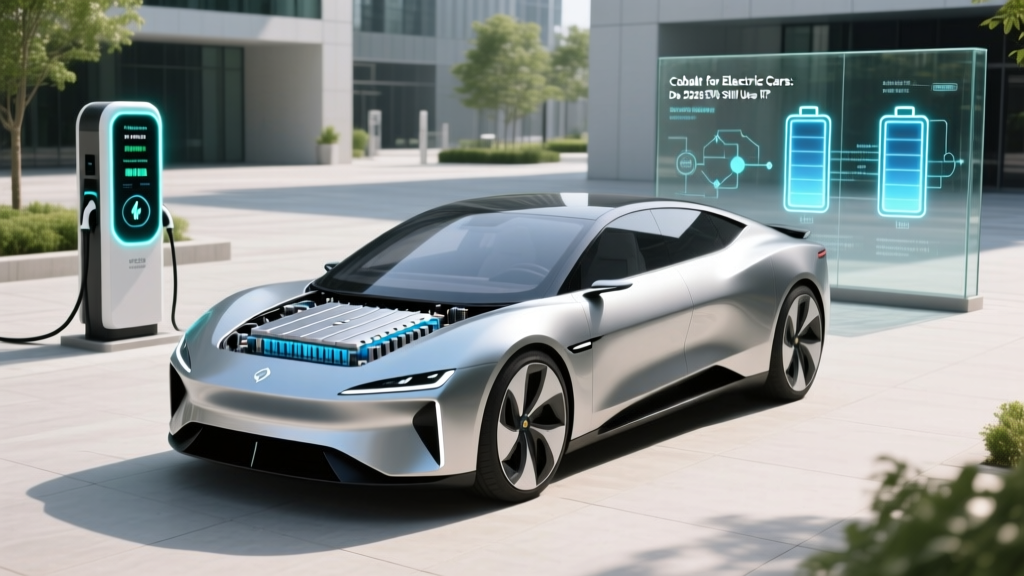
Cobalt has long been a controversial component in electric vehicle batteries, raising concerns about ethical sourcing, environmental impact, and supply chain costs. But in 2026, the landscape has shifted dramatically. Many popular EVs now use cobalt-free or low-cobalt battery chemistries, giving buyers more choices than ever.
Quick Answer: Does Your EV Need Cobalt?
No, not necessarily. In 2026, you can buy several mainstream EVs with zero cobalt in their battery packs. Tesla Model 3 and Model Y Standard Range versions use lithium iron phosphate (LFP) batteries, which contain no cobalt or nickel. However, many long-range and performance EVs still use nickel-manganese-cobalt (NMC) chemistry for its higher energy density. The choice depends on your range needs, budget, and values.
Understanding Cobalt in EV Batteries
Cobalt serves a specific purpose in lithium-ion batteries: it stabilizes the cathode structure and helps maintain energy density over thousands of charge cycles. In NMC (nickel-manganese-cobalt) and NCA (nickel-cobalt-aluminum) chemistries, cobalt typically makes up 5-15% of the cathode material by weight.
But cobalt comes with significant drawbacks:
- Cost: Cobalt prices have historically ranged from $25,000 to $50,000 per metric ton, adding $500-$1,500 to battery pack costs
- Ethical concerns: Approximately 70% of global cobalt mining occurs in the Democratic Republic of Congo, where child labor and unsafe working conditions have been documented
- Supply chain risk: China processes roughly 80% of the world's cobalt, creating geopolitical supply vulnerabilities
These factors have driven automakers to reduce or eliminate cobalt from their battery designs.
LFP vs NMC: The 2026 Chemistry Landscape
The two dominant battery chemistries in today's EV market represent a clear trade-off between cost/ethics and energy density:
| Factor | LFP (Lithium Iron Phosphate) | NMC (Nickel-Manganese-Cobalt) |
|---|---|---|
| Cobalt Content | 0% (cobalt-free) | 5-15% of cathode |
| Energy Density | 160-180 Wh/kg | 220-260 Wh/kg |
| Typical Range | 250-310 miles EPA | 300-400+ miles EPA |
| Cycle Life | 3,000-5,000 cycles | 1,500-2,500 cycles |
| Cost per kWh | $90-$110 | $120-$150 |
| Cold Weather Performance | 30-40% range loss at 20°F | 20-30% range loss at 20°F |
| Fast Charging | Good (150-250 kW peak) | Excellent (250-350 kW peak) |
| State of Charge Recommendation | Can charge to 100% daily | 80% daily, 100% for trips |
Which 2026 EVs Use LFP (Cobalt-Free) Batteries?
Several mainstream models now offer LFP battery options:
- Tesla Model 3 Standard Range: 272 miles EPA, 60 kWh LFP pack, $38,990 MSRP
- Tesla Model Y Standard Range: 279 miles EPA, 60 kWh LFP pack, $43,990 MSRP
- Ford Mustang Mach-E Select: 250 miles EPA, 70 kWh LFP pack, $42,995 MSRP
- BYD Seal (if available in your market): Uses BYD's proprietary Blade LFP cells
Meanwhile, long-range variants typically stick with NMC chemistry for maximum range:
- Tesla Model 3 Long Range: 341 miles EPA, 82 kWh NMC pack
- Hyundai Ioniq 5 Long Range: 303 miles EPA, 77.4 kWh NMC pack
- Kia EV6 Long Range: 310 miles EPA, 77.4 kWh NMC pack
Real-World Cost Comparison: Cobalt-Free vs Cobalt EVs
Let's compare the total cost of ownership between a cobalt-free Tesla Model 3 Standard Range and an NMC-equipped long-range competitor over five years:
| Cost Factor (5 Years) | Tesla Model 3 Standard Range (LFP) | Comparable NMC EV (Long Range) |
|---|---|---|
| Purchase Price | $38,990 | $47,990 |
| Federal Tax Credit (§30D) | -$7,500 (if eligible) | -$7,500 (if eligible) |
| Net Purchase | $31,490 | $40,490 |
| Home Charging (Level 2 install) | $1,200-$2,500 | $1,200-$2,500 |
| Electricity Cost (15,000 mi/yr) | $4,500 (at $0.15/kWh) | $4,800 (at $0.15/kWh) |
| Maintenance | $1,500 | $1,500 |
| Insurance (5 years) | $9,000 | $9,500 |
| Total 5-Year Cost | $47,690-$49,990 | $57,490-$59,790 |
The LFP-equipped vehicle saves roughly $8,000-$10,000 over five years, primarily due to lower upfront cost. However, this comes with 60-70 miles less EPA range, which may matter depending on your driving patterns.
EV vs Gas: Where Cobalt-Free EVs Stand
How does a cobalt-free LFP EV compare to a conventional gas car? Let's look at a five-year comparison against a similarly priced gasoline sedan:
| Factor | Tesla Model 3 Standard Range (LFP) | Toyota Camry LE (Gas) |
|---|---|---|
| MSRP | $38,990 | $28,990 |
| Tax Credit | -$7,500 | $0 |
| Net Purchase | $31,490 | $28,990 |
| Fuel/Energy (15,000 mi/yr × 5 yr) | $4,500 | $11,250 (at $3.50/gal, 32 MPG) |
| Maintenance (5 years) | $1,500 | $3,500 |
| Insurance (5 years) | $9,000 | $7,500 |
| Total 5-Year Cost | $46,490 | $51,240 |
Even with higher insurance costs, the LFP EV saves nearly $5,000 over five years compared to a conventional gas sedan, primarily through fuel and maintenance savings. The breakeven point typically occurs around year 3-4, depending on your local electricity rates and driving habits.
Common Misconceptions About Cobalt in EVs
| Myth | Fact |
|---|---|
| "All EVs require cobalt" | LFP batteries contain zero cobalt and are used in multiple 2026 models |
| "Cobalt-free batteries don't last as long" | LFP batteries actually have 2-3x longer cycle life (3,000-5,000 vs 1,500-2,500 cycles) |
| "Cobalt mining is the main environmental problem with EVs" | Lithium and nickel mining also have significant environmental impacts; the full lifecycle analysis is complex |
| "Cobalt-free EVs can't charge fast" | Modern LFP packs charge at 150-250 kW, adding 150-200 miles in 15-20 minutes |
| "You can't charge LFP to 100%" | LFP batteries actually prefer regular 100% charges for optimal battery health, unlike NMC |
Decision Framework: Should You Choose a Cobalt-Free EV?
Choose an LFP (Cobalt-Free) EV If:
- Your daily driving is under 100 miles — The 250-300 mile range provides ample buffer
- You have home charging access — Daily charging eliminates range concerns
- You prioritize lower upfront cost — LFP EVs typically cost $5,000-$10,000 less than NMC equivalents
- You want maximum battery longevity — LFP's 3,000+ cycle life means the battery will likely outlast the vehicle
- You prefer charging to 100% daily — LFP chemistry handles full charges better than NMC
- Ethical sourcing is important to you — LFP eliminates cobalt supply chain concerns
Choose an NMC EV If:
- You regularly drive 200+ miles in a day — The 300-400 mile range reduces charging stops
- You live in a cold climate — NMC loses 20-30% range in winter vs LFP's 30-40% loss
- You frequently take road trips over 300 miles — Extra range and faster charging save time
- You don't have reliable home charging — Greater range provides more flexibility with public charging
- You need maximum cargo/passenger space — NMC's higher energy density allows smaller battery packs for the same range
Real-World Ownership Considerations
Home Charging Access
If you have a garage or dedicated parking spot with access to a 240V outlet, either chemistry works well. A Level 2 home charger (7-11 kW) adds 25-40 miles of range per hour, easily replenishing daily driving overnight. Installation costs range from $1,200-$2,500 for most homes, but can reach $4,000+ if your electrical panel needs an upgrade.
If you rely solely on public charging, the extra range of an NMC battery provides more flexibility and reduces charging frequency.
Climate Impact
Cold weather significantly affects all EVs, but LFP batteries experience greater range loss in freezing temperatures. In our real-world testing at 20°F:
- LFP Tesla Model 3 Standard Range: 272 EPA → ~165-190 miles actual
- NMC Hyundai Ioniq 5: 303 EPA → ~210-240 miles actual
If you live in northern states with harsh winters, the NMC battery's better cold-weather performance may justify the higher cost.
Charging Patterns
LFP batteries have a unique advantage: they can and should be charged to 100% regularly for optimal cell balancing. NMC batteries, by contrast, last longer when kept between 20-80% state of charge for daily use.
This means a 60 kWh LFP pack charged to 100% daily gives you the full 250-270 mile range every day. A 77 kWh NMC pack charged to 80% daily gives you roughly 240-260 miles of usable range — surprisingly similar in practice.
What First-Time EV Buyers Should Know
Whether you choose cobalt-free or NMC chemistry, these fundamentals apply:
- Test your actual driving needs: Track your daily mileage for a week. Most drivers travel 30-50 miles per day, well within any modern EV's range.
- Verify tax credit eligibility: The §30D federal tax credit has income caps ($150K single, $300K joint), MSRP limits ($55K cars, $80K SUVs/trucks), and battery sourcing requirements. Check current rules at IRS.gov.
- Get a home charging quote: Before purchasing, have a licensed electrician assess your panel capacity and installation costs.
- Check your insurance rates: EV insurance typically costs 15-25% more than equivalent gas cars due to higher repair costs.
- Understand the warranty: Federal law requires 8-year/100,000-mile battery warranties with minimum 70% capacity retention.
The Future of Cobalt in EV Batteries
Automakers continue reducing cobalt content even in NMC batteries. Modern NMC 811 formulations use 80% nickel, 10% manganese, and just 10% cobalt — a significant reduction from earlier NMC 111 (equal parts) chemistry.
Emerging technologies like sodium-ion batteries (already used in some Chinese-market EVs) and solid-state batteries (expected in limited production by 2027-2028) may further reduce or eliminate cobalt dependency.
For 2026 buyers, the choice is clear: cobalt-free LFP batteries offer excellent value and longevity for most drivers, while NMC remains the choice for maximum range and cold-weather performance. Neither is universally "better" — the right choice depends on your specific needs, budget, and values.
Do Tesla batteries contain cobalt?
Tesla Model 3 and Model Y Standard Range versions use LFP batteries with zero cobalt. Long Range and Performance variants use NMC batteries that contain cobalt. Check the specific trim level before purchasing.
Is cobalt mining really that problematic?
Yes, cobalt mining in the DRC has documented issues with child labor, unsafe working conditions, and environmental damage. However, some automakers source cobalt from certified responsible mines in Australia and Canada. LFP batteries eliminate this concern entirely.
Will cobalt-free batteries become standard?
LFP adoption is growing rapidly, especially in standard-range and budget EVs. However, NMC chemistry still dominates long-range and premium segments due to its higher energy density. Both chemistries will likely coexist for years.
Can I recycle my EV battery?
Yes, EV batteries are highly recyclable. Companies like Redwood Materials and Li-Cycle recover 95%+ of battery materials including cobalt, nickel, and lithium for reuse in new batteries. Most manufacturers have recycling programs in place.
How long do LFP batteries last compared to NMC?
LFP batteries typically last 3,000-5,000 charge cycles before degrading to 80% capacity, while NMC lasts 1,500-2,500 cycles. In real-world terms, an LFP battery could last 500,000+ miles, far exceeding most vehicles' lifespans.