The Short Answer on Cobalt in Electric Cars
If you're searching for a cobalt electric car — either to avoid cobalt or understand what's in your battery — here's the practical truth for 2026: LFP (lithium iron phosphate) batteries contain zero cobalt, and they now power a growing share of new EVs including the Tesla Model 3 RWD ($38,990), standard-range Model Y ($44,990), and Ford Mustang Mach-E Select ($42,995). NMC (nickel manganese cobalt) batteries still appear in long-range and performance trims where energy density matters most. LFP costs less, lasts longer (3,000+ cycles vs ~1,500), but delivers 10-15% less range per kWh and charges slightly slower in cold weather. Your choice depends on whether you prioritize maximum range or lower cost and longer battery life.
Why Cobalt Matters in EV Batteries — and Why Buyers Care
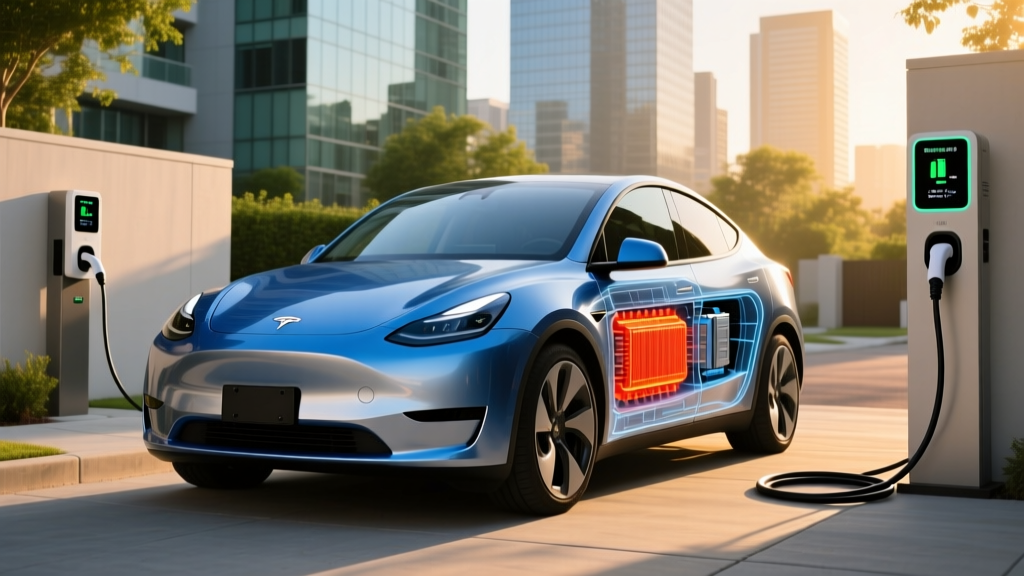
Cobalt is a metal used in the cathode of NMC and NCA lithium-ion batteries — the same chemistry that powers most smartphones and laptops. In electric vehicles, NMC cells typically contain 5-12% cobalt by weight in the cathode. The concerns driving buyer interest in cobalt-free EVs fall into three categories:
- Ethical sourcing: Approximately 70% of global cobalt mining occurs in the Democratic Republic of Congo, where Amnesty International has documented child labor and hazardous working conditions in artisanal mines.
- Supply chain risk: Cobalt prices have swung from $30,000/ton to $80,000/ton and back, creating cost unpredictability for automakers.
- Cost: Cobalt is one of the most expensive battery raw materials. Removing it lowers cell cost by $8-15 per kWh.
The industry response has been twofold: reduce cobalt content in NMC cells (moving from NMC 111 to NMC 811, which uses 80% nickel, 10% manganese, 10% cobalt) and shift to LFP chemistry, which eliminates cobalt entirely.
LFP vs NMC: The Chemistry Comparison That Matters
Here's the side-by-side breakdown that determines which battery type fits your driving pattern. These figures reflect 2026 cell-level data from major suppliers including CATL, BYD, and Panasonic.
| Attribute | LFP (Lithium Iron Phosphate) | NMC (Nickel Manganese Cobalt) |
|---|---|---|
| Cobalt content | 0% (cobalt-free) | 5-12% of cathode weight |
| Energy density | 160-180 Wh/kg | 220-280 Wh/kg |
| Cycle life | 3,000-6,000 cycles | 1,000-2,000 cycles |
| Cost per kWh (cell level) | $85-$100 | $110-$135 |
| Cold-weather performance | Moderate (15-25% range loss at 20°F) | Better (10-20% range loss at 20°F) |
| Fast-charge tolerance | Good to 80%, slower taper above | Excellent, sustained peak longer |
| State-of-charge accuracy | Flat voltage curve — harder for BMS to estimate | Linear voltage curve — accurate SoC |
| Recommended daily charge | 100% (no degradation penalty) | 80% (prolongs life) |
| Thermal stability | Superior (270°C+ onset) | Good (210°C onset) |
What this means in practice: An LFP battery will outlast most ownership periods with minimal degradation, but you'll carry a heavier, slightly bulkier pack for the same range. NMC gives you more miles in a lighter package — critical for long-range trims — but degrades faster if routinely charged to 100%.
2026 EVs With Zero-Cobalt LFP Batteries
The cobalt-free lineup has expanded significantly. Here are the confirmed 2026 models shipping with LFP packs, with exact specs:
| Model | Trim | Battery (kWh usable) | EPA Range | Peak DC Charge | 10-80% | Base MSRP |
|---|---|---|---|---|---|---|
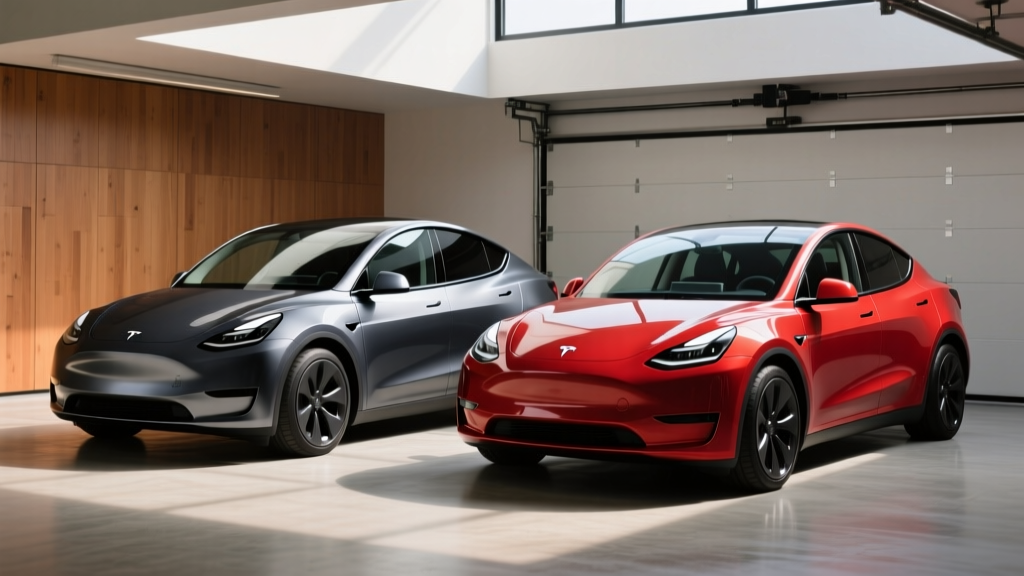
| Tesla Model 3 | RWD | 60 kWh (LFP) | 272 mi | 170 kW | ~25 min | $38,990 |
| Tesla Model Y | RWD (Standard) | 60 kWh (LFP) | 260 mi (est.) | 170 kW | ~25 min | $44,990 |
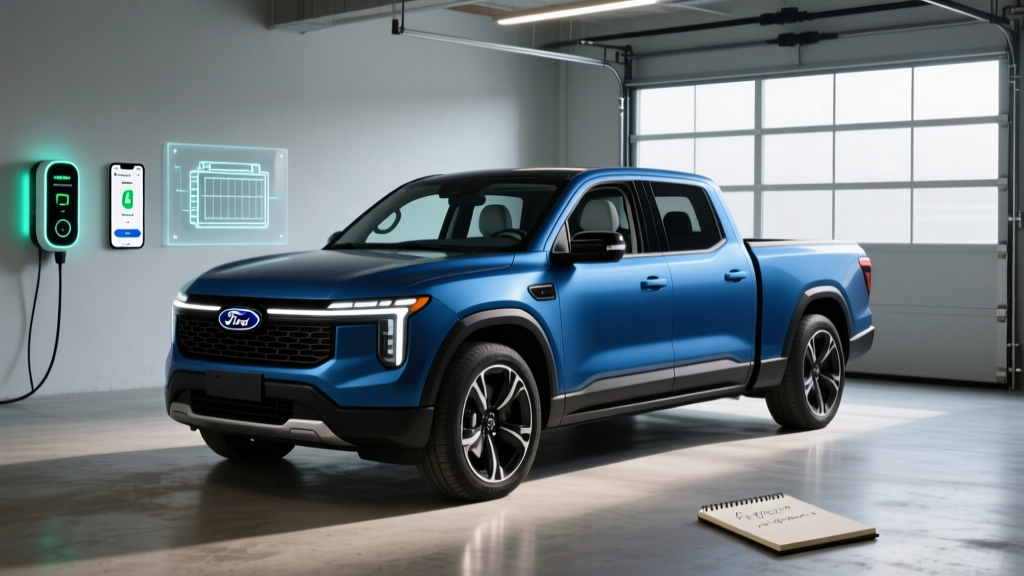
| Ford Mustang Mach-E | Select RWD | 72 kWh (LFP) | 250 mi | 150 kW | ~30 min | $42,995 |
| BYD Atto 3 (if US avail.) | Standard | 58.56 kWh (Blade LFP) | ~260 mi (WLTP adj.) | 88 kW | ~35 min | N/A (not US) |
| Rivian R2 | Standard (announced) | ~75 kWh (LFP) | ~275 mi (prelim.) | TBD | TBD | ~$45,000 (est.) |
Real-world range note: LFP packs suffer a steeper range penalty in sustained cold (below 30°F). A Tesla Model 3 RWD rated at 272 miles EPA may deliver 200-220 miles in winter highway driving at 70 mph. Preconditioning the battery before DC fast charging is essential — without it, peak charge rates drop by 40-60%.
Models Still Using Cobalt-Containing NMC Batteries
If you want maximum range or performance, you'll likely encounter NMC. These 2026 models use cobalt-containing chemistries:
- Tesla Model 3 Long Range: 82 kWh NMC, 341 mi EPA, $43,990 — Panasonic 2170 cells
- Hyundai Ioniq 5 Long Range: 77.4 kWh NMC, 305 mi EPA, $47,500 — SK On cells
- Chevrolet Equinox EV 3RS: 85 kWh NMC, 319 mi EPA, $43,900 — Ultium (LG Energy Solution)
- BMW i4 eDrive40: 83.9 kWh NMC, 301 mi EPA, $57,900 — Samsung SDI
- Ford F-150 Lightning Extended: 131 kWh NMC, 320 mi EPA, $69,995 — SK On
Automakers have reduced cobalt content substantially — modern NMC 811 cells use roughly one-third the cobalt of older NMC 111 formulations — but haven't eliminated it from high-density packs.
Cost of Ownership: Cobalt-Free LFP vs NMC EVs
Does going cobalt-free save money beyond the purchase price? Here's a five-year comparison using a Tesla Model 3 RWD (LFP) versus a Model 3 Long Range (NMC), assuming 15,000 miles/year and $0.14/kWh home charging.
| Cost Category | Model 3 RWD (LFP, $38,990) | Model 3 LR (NMC, $43,990) |
|---|---|---|
| Purchase price (after est. §30D credit) | $31,490* | $36,490* |
| 5-year electricity (75,000 mi) | $3,675 | $3,510 |
| Insurance (5-yr avg.) | $9,500 | $10,250 |
| Maintenance (5 yr) | $1,200 | $1,200 |
| Projected battery degradation at 5 yr | ~3-5% | ~7-10% |
| Estimated resale value (5 yr) | $18,000 | $22,000 |
| Net 5-year cost | $27,865 | $29,450 |
*§30D credit eligibility depends on MSRP caps ($55,000 sedans), buyer income limits ($150K single / $300K joint), and battery sourcing requirements. Verify at IRS.gov. Credit can now be transferred at point of sale as a down-payment reduction.
The LFP variant saves roughly $1,500-$2,000 over five years despite slightly higher energy consumption, primarily through a lower purchase price. The NMC variant holds resale value better thanks to its range premium.
Common Misconceptions About Cobalt in EVs
| Myth | Fact |
|---|---|
| "All electric cars use cobalt" | LFP batteries (Tesla RWD, Ford Mach-E Select, many Chinese-market EVs) contain zero cobalt. Roughly 40% of global EV battery capacity in 2025-2026 is LFP. |
| "Cobalt-free means lower quality" | LFP offers superior cycle life (3,000-6,000 cycles) and thermal stability. It's the preferred chemistry for grid storage and commercial fleets. |
| "I can't get a long-range EV without cobalt" | True today for 300+ mile packs. But the Rivian R2 Standard (announced, ~275 mi on LFP) and next-gen CATL Shenxing cells are closing the gap. |
| "Cobalt mining is entirely unregulated" | The Responsible Business Alliance and industry audits have improved traceability, though artisanal mining risks persist. The EU Battery Regulation (2027 enforcement) mandates supply-chain due diligence. |
| "LFP batteries don't work in cold climates" | They work, but with 15-25% range loss at 20°F vs 10-20% for NMC. Preconditioning and heat-pump equipped vehicles mitigate this significantly. |
Decision Framework: Should You Choose a Cobalt-Free EV?
Choose an LFP (cobalt-free) EV if:
- Your daily commute is under 100 miles round-trip and you charge at home
- You plan to keep the vehicle 7+ years (LFP's cycle life advantage pays off)
- You want to charge to 100% daily without degradation anxiety
- You live in a mild climate (above 30°F most of the year) or have garage parking
- Price sensitivity matters more than maximum range
- Ethical supply-chain sourcing is a priority in your purchase decision
Choose an NMC (cobalt-containing) EV if:
- You regularly drive 200+ miles between charges or take frequent road trips
- You live in a cold climate (Minnesota, Montana, New England) and need every mile of range
- You need the fastest possible DC charging (NMC sustains peak kW longer)
- You're buying a large vehicle (truck, 3-row SUV) where energy density is critical to avoid excessive weight
- You plan to sell within 3-4 years (higher range = better resale in current market)
What First-Time EV Buyers Should Know About Battery Chemistry
The cobalt question is ultimately one part of a larger EV purchase decision. Here are the ownership realities that matter regardless of chemistry:
Home charging is the foundation. A Level 2 home charger (240V, 32-48 amps, 7.7-11.5 kW) adds 25-40 miles per hour of charging. Installation costs $800-$2,500 depending on panel capacity and run length. Without home charging, EV ownership becomes significantly less convenient — public DC fast charging costs $0.30-$0.50/kWh versus $0.10-$0.18/kWh at home.
Battery warranties protect you. Federal law mandates 8 years/100,000 miles minimum for battery capacity retention. Most manufacturers warrant 70% capacity at that threshold. In practice, EPA data and fleet studies show most EV batteries lose only 5-12% capacity in the first 100,000 miles — LFP packs typically lose even less.
Tax credits are chemistry-agnostic. The §30D federal credit does not distinguish between LFP and NMC. Eligibility hinges on MSRP caps, buyer income, final assembly in North America, and critical-mineral/battery-component sourcing thresholds that tighten annually. Always verify current-year rules at IRS.gov before purchasing.
Frequently Asked Questions
Does Tesla still use cobalt in its batteries?
Tesla uses both chemistries. The Model 3 RWD and Model Y RWD use CATL-sourced LFP cells with zero cobalt. Long Range and Performance variants use NMC cells containing cobalt. Check the specific trim before purchasing — the window sticker and Tesla's spec page list battery type.
Are LFP batteries safe?
LFP is considered the safest lithium-ion chemistry in production. Its thermal runaway onset temperature (~270°C) is significantly higher than NMC (~210°C), making it more resistant to fire under abuse conditions. This is why LFP dominates grid-scale energy storage.
Will cobalt-free batteries eventually match NMC range?
The gap is narrowing. CATL's second-generation Shenxing LFP cells achieve ~190 Wh/kg (vs ~250 for NMC), and structural pack innovations like cell-to-chassis designs reduce inactive weight. By 2028-2030, LFP variants reaching 300+ miles EPA in midsize sedans are plausible, but NMC will likely retain a density edge for large trucks and performance vehicles.
Can I check what battery chemistry a used EV has?
Yes. The vehicle's window sticker (Monroney label), owner's manual, or manufacturer spec page lists battery type. Third-party tools like the NHTSA VIN decoder may also show battery details. For Tesla, the battery type appears in the vehicle settings menu under Software → Additional Vehicle Information.
Is cobalt recycling making NMC batteries more ethical?
Recycling is growing but still early. Companies like Redwood Materials and Li-Cycle recover 95%+ of cobalt from end-of-life cells, but the current EV fleet hasn't reached end-of-life at scale yet. Recycled cobalt won't meaningfully offset mining demand until the late 2020s-2030s when first-generation EVs retire in volume.