Quick Answer: Is a Club Car NEV Right for You?
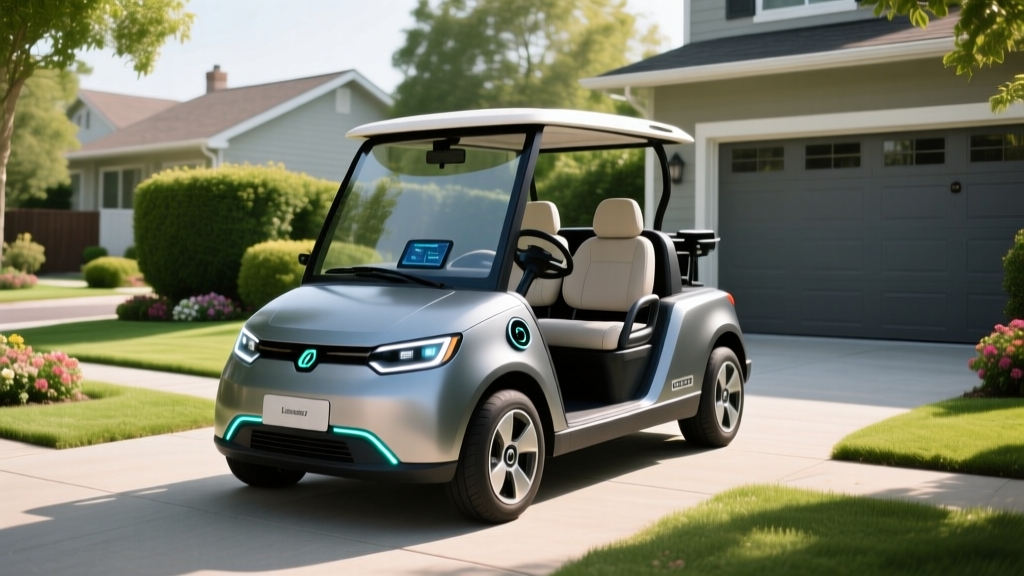
A Club Car neighborhood electric vehicle (NEV) is a street-legal, low-speed electric vehicle designed for short trips in residential areas, gated communities, and small towns. Most 2026 Club Car NEVs — including the popular Villager and Onward LSV models — offer an EPA-estimated range of 30–50 miles on a full charge, top speeds of 20–25 mph (to comply with federal LSV/NEV regulations), and base pricing between $11,000 and $22,000 depending on configuration. They charge on a standard 120V household outlet in roughly 6–8 hours, making dedicated home charging infrastructure unnecessary for most owners. NEVs are ideal if your daily driving stays under 20 miles, you live in a community with 25–35 mph speed-limit roads, and you want to eliminate fuel and maintenance costs for local errands. They are not a replacement for a full-size EV or gas car for highway commuting.
What Exactly Is a Club Car Neighborhood Electric Vehicle?
Club Car, a brand now owned by Ingersoll Rand, has been manufacturing golf carts and personal transportation vehicles for decades. Their neighborhood electric vehicles (sometimes called low-speed vehicles or LSVs) are a street-legal category distinct from golf carts. Under federal motor vehicle safety standards (FMVSS No. 500), an LSV must have four wheels, a top speed between 20 and 25 mph, and specific safety equipment: headlamps, turn signals, tail lamps, stop lamps, reflex reflectors, exterior mirrors, parking brakes, windshields (AS-1 or AS-5 glazing), VIN numbers, and seat belts.
This is critical: a standard golf cart is not street-legal in most jurisdictions. A Club Car LSV/NEV is, but only on roads with posted speed limits of 35 mph or lower (state laws vary — some states allow crossing higher-speed roads at intersections). The distinction matters enormously for insurance, registration, and where you can legally drive.
Club Car's 2026 LSV lineup includes several configurations:
- Club Car Villager LSV — A 4-passenger, road-oriented model with an enclosed or open body, designed for community use
- Club Car Onward LSV — A sportier, customizable 4- or 6-passenger platform with more accessory options
- Club Car Urban
Utility models — Cargo-oriented LSVs for campus, resort, and light commercial use
All current models use lithium-ion battery packs (a significant upgrade from the lead-acid batteries of older models), which reduce weight by roughly 300 lbs, eliminate watering and corrosion maintenance, and offer substantially longer cycle life — typically 1,500–2,000+ charge cycles before significant degradation, translating to 8–12 years of typical residential use.
Club Car NEV Specs: Range, Battery, Charging & Performance
| Specification | Typical Value |
|---|---|
| Battery chemistry | Lithium-ion (NMC) |
| Battery capacity (usable) | ~10–12 kWh (varies by config) |
| EPA-estimated range | 30–50 miles (model-dependent) |
| Real-world range (mixed use) | 25–40 miles |
| Top speed | 25 mph (LSV federal limit) |
| Motor output | ~4–6 kW continuous |
| Charge time (120V Level 1) | 6–8 hours (0–100%) |
| Onboard charger | ~1.5 kW integrated |
| Seating | 4 or 6 passengers |
| Curb weight | ~1,100–1,400 lbs |
| Turning radius | ~14–16 ft |
| Battery warranty | 5 years (limited, varies by model) |
Real-World Range Note: The 30–50 mile EPA range assumes moderate speeds, flat terrain, and mild temperatures. In practice, expect 25–40 miles with typical neighborhood use (stop-and-go, hills, accessory load from lights and a stereo). In cold weather (below 40°F), lithium-ion chemistry loses efficiency — plan for 15–25% range reduction, bringing usable range down to roughly 20–30 miles. For most NEV owners doing 5–10 mile daily loops, this is still more than sufficient.
EV vs Gas: How Does a Club Car NEV Compare to a Gas Golf Cart or Compact Car?
The most common cross-shop for NEV buyers is between an electric LSV and either a gas-powered golf cart (like a Club Car gas Onward or a Yamaha Drive) or a used compact car. Here's how the numbers stack up:
| Factor | Club Car Electric LSV | Gas Golf Cart (street-modified) | Used Compact Car (e.g., 2020 Corolla) |
|---|---|---|---|
| Purchase price | $11,000–$22,000 | $8,000–$14,000 | $15,000–$22,000 |
| Fuel/energy cost (5,000 mi/yr) | ~$75–$120/yr (electricity) | ~$450–$650/yr (gasoline) | ~$750–$1,100/yr (gasoline) |
| Annual maintenance | $50–$150/yr | $300–$600/yr | $500–$1,200/yr |
| Insurance (annual avg) | $200–$500/yr | $150–$400/yr (if insurable) | $900–$1,800/yr |
| Oil changes | None | 2–3 per year | 2–4 per year |
| Emissions | Zero tailpipe | Significant (small engines are unregulated) | Moderate |
| Noise level | Near-silent | Loud (single-cylinder engine) | Standard |
| 5-year total cost of ownership | ~$15,000–$27,000 | ~$14,000–$24,000 | ~$25,000–$40,000 |
The electric LSV's advantage is in operating costs. Electricity at the national average of $0.16/kWh means a full 12 kWh charge costs roughly $1.92. Over 5,000 miles per year at an efficiency of ~250 Wh/mile, that's approximately $100 in annual electricity costs. A gas golf cart burning 0.5–0.75 gallons per hour of use at $3.50/gallon runs $450–$650 annually for equivalent use. The electric model pays back its higher purchase price within 3–5 years for most owners.
Real Ownership Costs: The Full Breakdown
| Cost Category | Year 1 | Years 2–5 (Annual) | 5-Year Total |
|---|---|---|---|
| Vehicle purchase (MSRP) | $15,500 | — | $15,500 |
| Sales tax (~7%) | $1,085 | — | $1,085 |
| Registration/title | $100 | $75/yr | $400 |
| Insurance | $350 | $350/yr | $1,750 |
| Electricity (charging) | $100 | $100/yr | $500 |
| Maintenance & tires | $75 | $100/yr | $475 |
| Battery replacement reserve | — | — | $0 (under warranty) |
| Total | $17,210 | $625/yr | $19,710 |
For comparison, a used 2020 Toyota Corolla driven 5,000 miles per year in the same conditions would total roughly $28,000–$35,000 over five years including purchase, fuel, insurance, maintenance, and depreciation. The NEV saves $8,000–$15,000 over five years — but only if you don't need highway capability.
Charging Costs & Setup
One of the biggest advantages of a Club Car NEV: you almost certainly don't need a dedicated charging installation. The onboard charger draws roughly 1.5 kW from a standard 120V/15A outlet — the same as a space heater or a window AC unit. Plug it into a garage outlet overnight, and it's fully charged by morning.
However, consider these practicalities:
- Don't use an extension cord for regular charging — voltage drop over long cords reduces charging efficiency and creates a fire hazard. If your parking spot is far from an outlet, have an electrician install a dedicated 120V receptacle near where you park ($150–$400 for a simple run).
- Dedicated circuit recommended — If you're charging on a circuit shared with other high-draw appliances, you risk tripping the breaker. A dedicated 15A or 20A circuit is the cleanest solution.
- No Level 2 needed — Unlike full-size EVs that benefit from 240V Level 2 chargers, NEVs charge fully overnight on 120V. A Level 2 installation ($800–$2,500) would be overkill and is not supported by most NEV onboard chargers.
Federal Tax Credits & Incentives: Does a Club Car NEV Qualify?
This is where many buyers get confused. Under the IRS §30D Clean Vehicle Credit, the federal tax credit of up to $7,500 applies to new qualified plug-in electric vehicles — but the vehicle must meet specific criteria:
- Vehicle classification: The vehicle must be a four-wheeled vehicle with a gross vehicle weight rating (GVWR) under 14,000 lbs — NEVs/LSVs generally qualify on this point
- Battery capacity: Must have at least 7 kWh of battery capacity — some smaller NEV configurations may fall below this threshold, so verify with your dealer
- MSRP cap: Vans/SUVs/trucks capped at $80,000; other vehicles at $55,000 — NEVs easily pass this
- Buyer income cap: AGI must not exceed $300,000 (joint), $225,000 (head of household), or $150,000 (single)
- Battery sourcing requirements: Critical minerals and battery components must meet escalating domestic-content thresholds — this is where many smaller manufacturers struggle, and Club Car's supply chain compliance should be verified at point of sale
- Point-of-sale transfer: As of 2024+, the credit can be transferred to the dealer at purchase, reducing your out-of-pocket cost immediately
Bottom line: Some Club Car LSV configurations may qualify for a partial or full federal tax credit, but eligibility is not guaranteed and depends on battery capacity, sourcing compliance, and your personal tax situation. Always verify with the dealer and consult a tax professional. Additionally, many states and local utilities offer their own EV incentives — check the DOE's Alternative Fuels Data Center for state-specific programs.
Common Misconceptions About NEVs — Myth vs. Fact
| Myth | Fact |
|---|---|
| "NEVs are just golf carts" | NEVs/LSVs are federally regulated motor vehicles with VINs, safety equipment, and street-legal registration. Golf carts are off-road vehicles that may or may not be street-legal depending on local ordinance. |
| "You can drive them anywhere" | Federal law limits LSVs to roads with posted speed limits of 35 mph or lower. Some states allow crossing higher-speed roads at signalized intersections, but you cannot travel on a 45+ mph road. |
| "The batteries only last 2–3 years" | That was true for old lead-acid batteries. Modern Club Car lithium-ion packs are rated for 1,500+ cycles and typically last 8–12 years with normal use. The 5-year battery warranty backs this up. |
| "You need a special charger installed" | Club Car NEVs charge on a standard 120V household outlet. No Level 2 charger, no 240V circuit, no special equipment needed. |
| "They're not safe" | LSVs must meet FMVSS No. 500, which mandates seat belts, lighting, mirrors, and windshield standards. They lack airbags and crumple zones of full-size cars, so they're safest on low-speed roads — but they are regulated vehicles, not toys. |
| "They're exempt from insurance" | Most states require LSVs to carry minimum liability insurance and be registered/titled. Don't skip this — driving an unregistered, uninsured LSV on public roads can result in fines and liability exposure. |
Real-World Ownership: What First-Time NEV Buyers Should Know
If you've never owned an NEV, here are the practical realities that spec sheets don't capture:
Where You Can (and Can't) Drive
The 35-mph speed-limit restriction is the single biggest ownership constraint. Before buying, map your typical routes: grocery store, school drop-off, post office, community pool. If any of these require traveling on a road posted above 35 mph, the NEV won't work for that trip. Many planned communities (The Villages in Florida, Peachtree City in Georgia, Sun City in Arizona) are purpose-built for NEV use with extensive path networks and low-speed roads. Rural areas and conventional suburbs with arterials are less accommodating.
Weather & Climate Considerations
Most Club Car NEVs are open-air or have soft enclosures. They're best suited to Sun Belt states and mild climates. If you live in the Midwest or Northeast:
- Cold weather reduces lithium-ion battery range by 15–25% below 40°F
- Rain and snow are manageable with a full enclosure option ($1,500–$3,000 add-on), but NEVs lack heating systems comparable to a car — you'll be cold in winter
- Wind at 25 mph in an open vehicle is noticeable; a windshield is essential
- Storage — you need a garage or covered parking. Leaving an NEV outdoors year-round accelerates cosmetic wear and can reduce battery lifespan
Maintenance Is Minimal — But Not Zero
Unlike gas golf carts, there's no engine oil, spark plugs, air filters, or fuel system to maintain. Your maintenance checklist is:
- Tire pressure — check monthly (underinflated tires reduce range)
- Brake inspection — annually; NEV brakes last longer than car brakes due to low speeds, but still require periodic pad/shoe replacement
- Battery care — avoid storing at 0% or 100% state of charge for extended periods; the BMS handles most balancing automatically
- Windshield and lighting — keep clean and functional for legal compliance
- Wheel alignment — every 1–2 years, especially if you hit curbs or drive on uneven paths
Decision Framework: Should You Buy a Club Car NEV?
Buy a Club Car NEV if:
- Your daily driving is under 20 miles round-trip
- You live in a community with low-speed roads (25–35 mph limits) or dedicated NEV paths
- You want to eliminate gas costs and minimize maintenance for local errands
- You have access to a standard 120V outlet near where you park (garage or carport)
- You already own a full-size vehicle for highway trips and longer commutes
- You live in a mild climate or are willing to add a full enclosure
Do NOT buy a Club Car NEV if:
- You need to travel on roads posted above 35 mph for daily trips
- This would be your only vehicle and you need highway capability
- You live in a cold/snowy climate and need year-round daily transportation
- You need to carry more than 4–6 people or significant cargo
- You don't have access to any electrical outlet near your parking spot
- Your state or municipality doesn't permit LSV/NEV registration on your typical routes
Frequently Asked Questions
How fast does a Club Car neighborhood electric vehicle go?
Federal LSV regulations cap top speed at 25 mph. Club Car's 2026 LSV models are governed to this limit. This is intentional — it's what makes them legal for low-speed roads without meeting full passenger-car crash standards (FMVSS 200-series). You will not keep up with traffic on anything faster than a 35 mph road.
How far can a Club Car NEV go on a single charge?
EPA-estimated range varies by model and configuration but generally falls in the 30–50 mile range. Real-world usage with hills, stops, passengers, and accessories typically yields 25–40 miles. In cold weather, expect a further 15–25% reduction. For most NEV use cases — 5–15 mile daily loops — this is more than adequate with nightly charging.
Do I need a driver's license to operate a Club Car NEV?
Yes, in most states. Because an LSV is a registered motor vehicle, most states require a valid driver's license, vehicle registration, and minimum liability insurance. A few states have exceptions for certain age groups or private-property use, but for public-road operation, plan on needing a license. Check your state's DMV for specific LSV registration requirements.
How long does it take to charge a Club Car NEV?
Using the included onboard charger on a standard 120V household outlet, a full charge from empty takes approximately 6–8 hours. Most owners plug in overnight and wake up to a full battery. The onboard charger draws about 1.5 kW — roughly the same as a hair dryer — so it won't strain your electrical panel.
What happens when the battery needs replacing?
Club Car's lithium-ion battery packs carry a 5-year limited warranty and are designed for 1,500+ charge cycles, which typically translates to 8–12 years of normal residential use. When replacement is eventually needed, expect a cost of approximately $2,000–$4,000 for the battery pack plus installation, depending on the model and configuration. This is a significant expense, but spread over a decade of ownership, it adds roughly $200–$400 per year — still far less than the fuel and maintenance costs of a gas alternative.
Can I drive a Club Car NEV on the highway or cross a busy road?
You cannot travel along a road with a posted speed limit above 35 mph. However, most states allow LSVs to cross higher-speed roads at intersections or marked crosswalks. Check your specific state statutes — the NHTSA provides federal guidance, but state and local laws govern where LSVs can operate.
Is a Club Car NEV eligible for the federal EV tax credit?
Possibly, but not automatically. The IRS §30D Clean Vehicle Credit requires the vehicle to have at least 7 kWh of battery capacity, meet MSRP caps (easily met), and satisfy battery sourcing and critical-mineral requirements. Some Club Car LSV configurations may meet these criteria; others may not. Verify eligibility with your dealer at the time of purchase and consult a tax professional. The credit can be transferred at point of sale, reducing your purchase price directly if eligible.