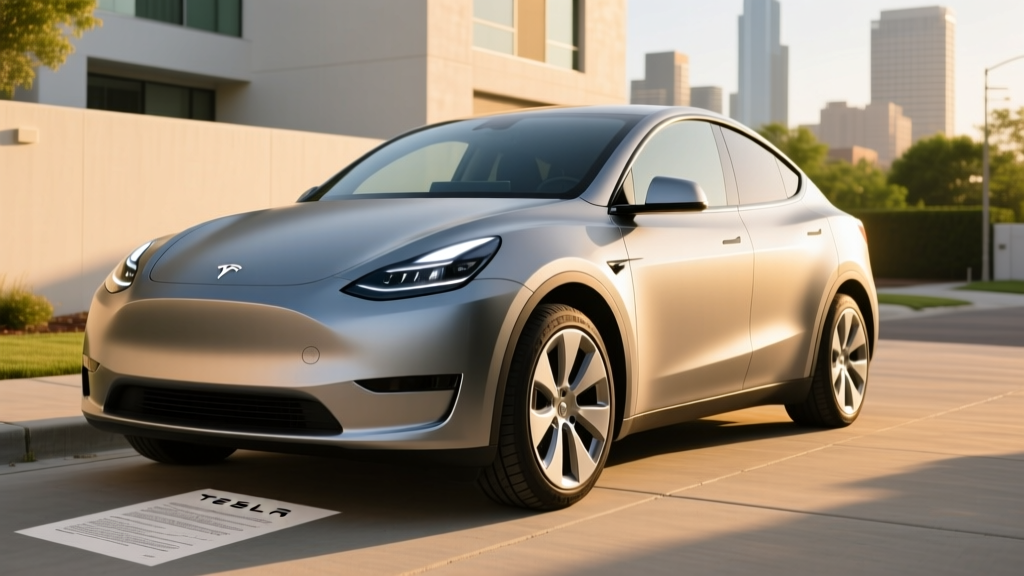
If you have been searching for information about a class action Tesla lawsuit while researching your next EV purchase, you are not alone. Over the past several years, Tesla has faced multiple class action claims ranging from alleged range overstatement to Autopilot marketing disputes and phantom braking complaints. Yet the Model Y remains the best-selling electric vehicle in the United States for good reason: compelling efficiency, access to the Supercharger network, and continuous over-the-air improvements.
This review examines the 2026 Tesla Model Y on its engineering merits — range, charging, performance, pricing, and tax credit eligibility — while also addressing the legal landscape prospective buyers should understand before signing a purchase agreement.
2026 Tesla Model Y: Core Specifications at a Glance
| Specification | Long Range RWD | Long Range AWD | Performance |
|---|---|---|---|
| EPA Range | 320 mi | 305 mi | 285 mi |
| Battery Capacity (usable) | ~75 kWh (NMC) | ||
| Drivetrain | RWD (single motor) | AWD (dual motor) | AWD (dual motor) |
| Horsepower | 295 hp | 384 hp | 456 hp |
| 0-60 mph | 5.8 sec | 4.8 sec | 3.5 sec |
| MPGe (combined) | 123 MPGe | 117 MPGe | 111 MPGe |
| Efficiency (kWh/100 mi) | 27 kWh | 29 kWh | 30 kWh |
| Max DC Fast Charge | 250 kW peak | ||
| 10-80% DC Charge Time | ~25 minutes | ||
| Level 2 Home Charge Rate | 11.5 kW (~44 mi/hr) | ||
| Cargo Volume (rear seats up) | 34 cu ft | ||
| Cargo Volume (rear seats folded) | 72 cu ft | ||
| Front Trunk (Frunk) | 4.1 cu ft | ||
| Rear Legroom | 38.1 in | ||
| Base MSRP (before incentives) | $44,990 | $47,990 | $52,990 |
| Battery/Drive Unit Warranty | 8 years / 120,000 miles | ||
Note: Specifications reflect Tesla's published figures for the 2026 model year as of early 2026. Tesla occasionally adjusts specs mid-production. Always confirm with Tesla's configurator before ordering.
Range Reality Check: EPA Sticker vs. Real-World Miles
Real-World Expectation: Expect 260–290 miles on mixed highway driving at 70 mph. In freezing temperatures (below 32°F), plan for 20–30% range reduction, dropping effective range to roughly 210–240 miles on the AWD trim. City driving with regenerative braking recovers closer to EPA figures.
The Model Y's efficiency remains a class benchmark. According to fueleconomy.gov, the Long Range RWD achieves 123 MPGe combined — a figure few competing electric crossovers match. The heat pump, standard across all trims, reduces cold-weather energy draw for cabin heating compared to resistive systems.
However, the range overstatement question is relevant to the class action Tesla conversation. In 2023, a Reuters investigation revealed that Tesla had allegedly created a diversion team to cancel service appointments from owners complaining about range shorter than advertised. A class action suit filed in the Northern District of California alleged that Tesla's projected range estimates displayed in-vehicle were artificially inflated. Tesla has denied wrongdoing, and as of early 2026, litigation remains ongoing.
For buyers, the practical takeaway is straightforward: the EPA estimate is a standardized laboratory number. Your actual range depends on speed, elevation, temperature, tire condition, and HVAC use. The Model Y's in-dash range estimator (which adjusts based on recent driving patterns) is generally more accurate than the EPA sticker for trip planning.
Charging Speed and Infrastructure
| Charging Level | Power / Rate | Miles Added Per Hour | Typical Use Case |
|---|---|---|---|
| Level 1 (120V household) | ~1.4 kW | ~4–5 mi/hr | Overnight trickle, emergency top-up |
| Level 2 (240V home) | 11.5 kW (48A) | ~44 mi/hr | Daily home charging (full charge in ~7 hours) |
| DC Fast Charge (V3 Supercharger) | 250 kW peak | Up to ~1,000 mi/hr (peak) | Road trips; 10-80% in ~25 min |
| DC Fast Charge (V4 Supercharger) | Up to 325 kW* | Varies by session | Next-gen stations rolling out through 2026 |
*V4 Supercharger peak rates depend on vehicle architecture. The current Model Y (400V architecture) cannot fully utilize V4's maximum throughput — it will still peak near 250 kW.
The Model Y charges via the NACS (North American Charging Standard) connector, which Tesla pioneered and which has now been adopted by Ford, GM, Rivian, Hyundai, and most other major automakers. This means Model Y owners benefit from the largest and most reliable DC fast-charging network in North America, with over 6,500 Supercharger stations as of 2026.
On a V3 Supercharger, the Model Y's charge curve peaks at 250 kW around 10–20% state of charge (SoC) and tapers progressively. Expect the 10–80% session to take approximately 25 minutes under ideal conditions (battery preconditioned via on-route navigation). Above 80%, charging slows significantly — a 80–100% top-up can add another 20+ minutes. For road trips, plan stops around the 10–80% window for maximum time efficiency.
Home charging on a Level 2 Wall Connector (48 amps, 240V) adds roughly 44 miles of range per hour, meaning a depleted battery reaches full overnight in about 7 hours. Installation costs for a home Level 2 setup typically run $500–$2,000 depending on panel capacity and conduit distance — consult a licensed electrician for a site-specific quote.
Performance, Handling, and Daily Driving
Even the base Long Range RWD Model Y delivers 295 horsepower and a 5.8-second 0–60 mph time — quicker than most gas-powered compact SUVs. The dual-motor AWD variant drops that to 4.8 seconds with improved traction in rain and snow. The Performance trim, at 3.5 seconds, enters sports-car territory, though its firmer suspension trades some ride comfort for cornering composure.
Regenerative braking in the Model Y is strong enough for one-pedal driving in most scenarios. Tesla removed the user-adjustable regen setting several model years ago, so the car always operates in maximum regen mode. Most owners adapt within a week, but if you prefer coasting, this is worth a test drive.
Ride quality has improved with the 2025 "Juniper" refresh, which brought revised suspension tuning, acoustic glass, ventilated front seats, and ambient lighting. The 2026 Model Y carries these improvements forward, making it noticeably quieter and more composed on rough pavement than pre-2025 models.
Autopilot, FSD, and the Legal Context
Autopilot (standard) includes adaptive cruise control, lane centering, and automatic emergency braking. Full Self-Driving (Supervised), available as a $8,000 one-time purchase or $99/month subscription in 2026, adds automated lane changes, traffic light and stop sign recognition, and city street navigation assistance.
This is where the class action Tesla discussion becomes most pointed. Multiple lawsuits and a NHTSA investigation have scrutinized Tesla's marketing of Autopilot and FSD, particularly whether the naming conventions imply more capability than these Level 2 systems deliver. NHTSA opened investigations into numerous crashes involving Tesla vehicles operating with Autopilot engaged. In late 2023, Tesla issued a recall (via OTA update) to add additional driver-monitoring safeguards after NHTSA determined that Tesla's system did not sufficiently ensure driver engagement.
Additionally, phantom braking — where the vehicle unexpectedly decelerates on the highway with no obstacle present — has been the subject of a separate class action claim and NHTSA petition. Tesla has addressed aspects of this through software updates, but some owners continue to report intermittent occurrences.
- It does not make the Model Y autonomous. You are legally and physically the driver.
- It does not reliably handle construction zones, unmapped roads, or severe weather.
- It does not eliminate liability — you are responsible for all driving actions.
- It is not a "set and forget" system despite the aspirational name.
Pricing, Tax Credits, and Total Cost
| Trim | Base MSRP | Federal Credit (§30D) | Effective Price (if eligible) |
|---|---|---|---|
| Long Range RWD | $44,990 | Up to $7,500 | ~$37,490 |
| Long Range AWD | $47,990 | Up to $7,500 | ~$40,490 |
| Performance | $52,990 | Up to $7,500 | ~$45,490 |
Federal tax credit eligibility under IRS §30D involves multiple requirements that change periodically:
- MSRP Cap: SUVs (including Model Y) must have an MSRP at or below $80,000. All Model Y trims qualify.
- Buyer Income Cap: Modified adjusted gross income must not exceed $150,000 (single), $225,000 (head of household), or $300,000 (joint). Exceed these thresholds and the credit phases out to $0.
- Battery Sourcing: The $7,500 credit splits into two halves — $3,750 for critical minerals and $3,750 for battery component sourcing. Sourcing requirements tighten annually. Check Tesla's website and the IRS qualified vehicle list for current Model Y eligibility, as battery supply chains shift.
- Point-of-Sale Transfer: Since 2024, eligible buyers can transfer the credit to the dealer at purchase, receiving it as a price reduction rather than waiting to claim it on their tax return.
Important: Battery sourcing requirements have become stricter each year since the Inflation Reduction Act passed. A vehicle that qualified for the full $7,500 in 2024 may qualify for only $3,750 or $0 in 2026 depending on where its battery minerals and components are sourced. Always verify current eligibility on fueleconomy.gov and consult a tax professional before relying on the credit in your purchase decision.
Class Action Tesla Lawsuits: What Buyers Should Know
As of early 2026, several notable class action cases involving Tesla are either ongoing or have been recently resolved:
Range Overstatement Litigation
Filed in 2023 in the Northern District of California, this suit alleges Tesla's in-vehicle range estimates and EPA submissions overstated achievable range, and that Tesla diverted service complaints about range rather than addressing them. Tesla denies these allegations. As of 2026, the case has not reached a final verdict or settlement. If you purchased a Tesla based on advertised range figures, you may be a class member — check legal notices for claim deadlines.
Autopilot/FSD Marketing Claims
Multiple suits and regulatory actions have challenged whether Tesla's naming and marketing of Autopilot and FSD constituted deceptive advertising. NHTSA's Office of Defects Investigation has conducted parallel inquiries. These matters remain active, and outcomes could affect future software features, marketing language, or owner compensation.
Phantom Braking
A class action filed in 2022 alleged that certain Tesla vehicles (including Model Y) equipped with Tesla Vision (camera-only, post-radar removal) exhibited unexpected deceleration events. Tesla has issued OTA updates addressing aspects of the behavior, but the litigation continues.
Practical Buyer Guidance
Purchasing a vehicle subject to class action litigation does not inherently mean the product is defective — it means legal claims have been filed that have not yet been adjudicated. The Model Y continues to earn strong safety ratings from NHTSA (5-star overall) and top marks from IIHS. Many owners are highly satisfied. However, prospective buyers should:
- Research current litigation status before purchasing
- Preserve all advertising materials and purchase communications
- Understand that class membership may entitle you to future compensation or remedies
- Test drive thoroughly, paying attention to range estimation accuracy and Autopilot behavior
Pros, Cons, and the Competition
Pros
- Best-in-class efficiency (123 MPGe combined, RWD)
- Access to 6,500+ Supercharger stations — the most reliable DC network
- Strong performance across all trims (3.5–5.8 sec 0-60)
- Excellent cargo versatility (72 cu ft with seats folded + frunk)
- Continuous OTA improvements add features post-purchase
- 5-star NHTSA safety rating
- Heat pump standard for cold-weather efficiency
Cons
- Ongoing class action litigation (range, Autopilot, phantom braking)
- FSD naming overstates actual Level 2 capability
- Minimalist interior lacks physical controls (no turn signal stalk in Juniper)
- No Apple CarPlay or Android Auto integration
- Rear visibility is limited; relies heavily on cameras
- 400V architecture limits peak charge speed vs. 800V rivals (Hyundai Ioniq 5, Kia EV6)
- Insurance premiums tend to run 15–30% higher than comparable non-Tesla EVs
Should You Buy the 2026 Model Y?
Choose the Model Y if: You prioritize Supercharger access, efficiency, cargo space, and Tesla's software ecosystem — and you are comfortable with the ongoing legal landscape and Level 2 Autopilot limitations.
Consider competitors if: You want 800V ultra-fast charging (Hyundai Ioniq 5, Kia EV6), physical interior controls, Apple CarPlay, or prefer to avoid a brand currently facing multiple class action claims (Ford Mustang Mach-E, Chevrolet Equinox EV).
Frequently Asked Questions
What is the real-world range of the 2026 Tesla Model Y?
The EPA rates the Long Range RWD at 320 miles and the Long Range AWD at 305 miles. In real-world highway driving at 70 mph, expect 260–290 miles. In freezing weather, plan for 20–30% less — roughly 210–240 miles on the AWD model. Use the in-dash range estimator (which adjusts for recent driving) for more accurate trip planning than the EPA sticker alone.
How fast does the Model Y charge at home and on the road?
On a Level 2 home charger (11.5 kW / 48A), the Model Y adds about 44 miles of range per hour, reaching a full charge in roughly 7 hours. On a V3 Supercharger (250 kW peak DC), a 10–80% session takes approximately 25 minutes with a preconditioned battery. Charging above 80% slows dramatically — plan road trip stops around the 10–80% window.
How much does the 2026 Model Y cost after federal tax credits?
The Long Range RWD starts at $44,990 and can drop to approximately $37,490 if you qualify for the full $7,500 federal credit. Eligibility depends on your income (under $150K single / $300K joint), the vehicle's battery sourcing compliance, and MSRP caps (all Model Y trims are under the $80K SUV cap). Verify current eligibility on fueleconomy.gov and consult a tax professional, as sourcing rules tighten annually.
Is the Model Y worth buying despite class action lawsuits?
This is a personal risk-tolerance decision. The Model Y is objectively one of the most efficient, practical, and well-supported EVs on the market, with top safety ratings and Supercharger access. However, multiple unresolved class action suits (range, Autopilot, phantom braking) represent real legal and reputational risks. If the litigation concerns you, competitors like the Hyundai Ioniq 5, Ford Mustang Mach-E, or Chevrolet Equinox EV offer strong alternatives without the same legal exposure.
Does the 2026 Tesla Model Y qualify for the $7,500 federal EV tax credit?
All Model Y trims fall under the $80,000 MSRP cap for SUVs. However, the full $7,500 credit depends on (1) your income falling below IRS thresholds, and (2) Tesla's battery meeting 2026 critical minerals and component sourcing requirements. The credit can be transferred at point of sale as an upfront price reduction. Always check the IRS qualified vehicle list and fueleconomy.gov for the latest eligibility status before purchasing.
What are the biggest pros and cons of the 2026 Model Y?
The biggest pros are class-leading efficiency, Supercharger network access, strong performance, generous cargo space, and top safety ratings. The biggest cons are ongoing class action litigation, FSD marketing that overpromises relative to Level 2 capability, a minimalist interior with no physical controls, no smartphone integration (CarPlay/Android Auto), higher insurance costs, and a 400V charging architecture that lags behind 800V competitors in peak charge speed.