Quick Answer: Citroën's 2026 electric lineup spans the budget-friendly ë-C3 (starting around €23,300 / ~$25,500, EPA-est. ~195 mi range), the compact ë-C4 (~€35,500 / ~$38,800, ~210 mi), and the utilitarian ë-Berlingo (~€33,000 / ~$36,000, ~170 mi). All use NMC lithium-ion batteries ranging from 44 to 54 kWh usable capacity, support DC fast charging up to 100 kW (10–80% in roughly 26–30 minutes), and qualify for various European purchase incentives. For US buyers, Citroën does not sell vehicles stateside — these models are relevant for European, UK, and select international markets. If you're cross-shopping, the Renault Zoe, Peugeot e-208, and MG4 are the closest competitors.
What Is Citroën Electric? The 2026 Lineup Explained
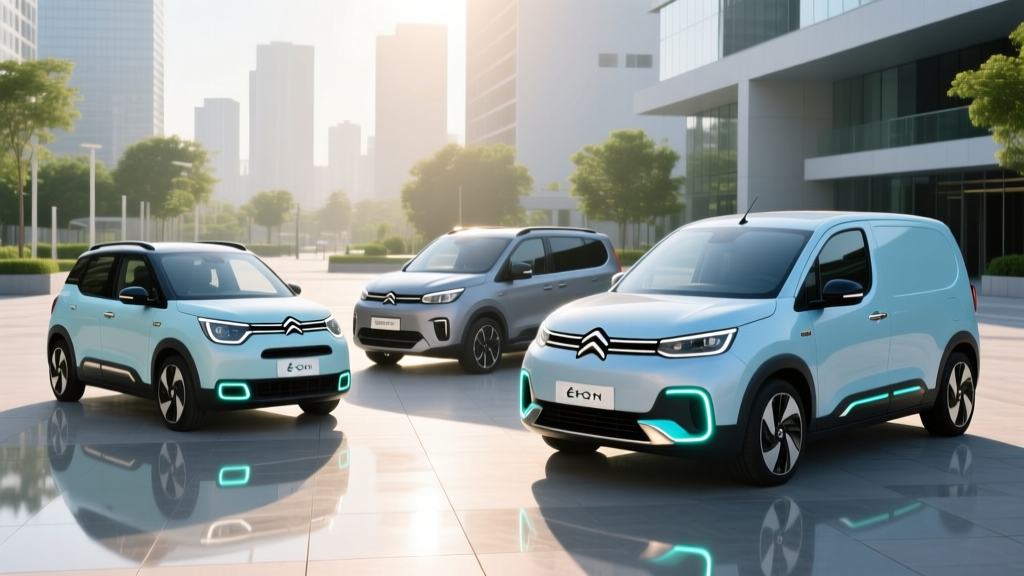
Citroën, a Stellantis brand, has electrified its core lineup under the "ë" sub-brand. As of the 2026 model year, three fully electric passenger vehicles are available across European and UK markets, all built on the Stellantis CMP/e-CMP platform with shared powertrain architecture:
- Citroën ë-C3: Subcompact hatchback — the brand's volume EV, aimed at city and suburban buyers.
- Citroën ë-C4: Compact crossover — more range, more power, aimed at small families.
- Citroën ë-Berlingo: Compact van/MPV — practical cargo hauler for trades and large families.
Citroën has also announced the ë-C3 Aircross (a subcompact SUV variant) for late 2026 delivery, with a preliminary 54 kWh battery and ~260 km WLTP range. Specs remain estimated until production vehicles are tested.
Spec Comparison: ë-C3 vs ë-C4 vs ë-Berlingo
| Spec | ë-C3 (2026) | ë-C4 (2026) | ë-Berlingo (2026) |
|---|---|---|---|
| Base Price (EUR / approx. USD) | €23,300 / $25,500 | €35,500 / $38,800 | €33,000 / $36,000 |
| Battery (usable kWh) | 44 kWh (NMC) | 54 kWh (NMC) | 50 kWh (NMC) |
| WLTP Range | ~300 km (186 mi) | ~360 km (224 mi) | ~280 km (174 mi) |
| EPA-Est. Range (US equiv.) | ~195 mi | ~210 mi | ~170 mi |
| Motor Output | 83 kW (111 hp) | 115 kW (154 hp) | 100 kW (134 hp) |
| 0–100 km/h (0–62 mph) | ~11.0 sec | ~9.5 sec | ~11.5 sec |
| DC Fast Charge (peak kW) | 100 kW | 100 kW | 100 kW |
| 10–80% DC Charge Time | ~26 min | ~30 min | ~28 min |
| AC Level 2 Charge (kW) | 7.4 kW (single-phase) / 11 kW (3-phase) | 11 kW (3-phase) | 7.4 kW / 11 kW |
| Battery Warranty | 8 yr / 160,000 km (70% SoH) | 8 yr / 160,000 km (70% SoH) | 8 yr / 160,000 km (70% SoH) |
Sources: Citroën UK ë-C3 specs, Citroën UK ë-C4 specs, Stellantis press materials. WLTP figures are European-standard; EPA equivalents are estimated at ~85% of WLTP for real-world US comparison.
Charging Speeds & What the Curve Actually Looks Like
All three 2026 Citroën electric models peak at 100 kW DC fast charging. That's competitive for the price segment but below the 150–250 kW peaks of premium rivals like the Hyundai Ioniq 5 or Tesla Model 3. Here's what matters in practice:
| Charging Level | Power (kW) | Approx. Range Added per Hour | Use Case |
|---|---|---|---|
| Level 1 (Domestic 120V/230V) | 1.8–2.3 kW | ~10–14 km/h (6–9 mi/h) | Overnight trickle; emergencies |
| Level 2 (Home/Public AC, 7.4 kW) | 7.4 kW | ~40–50 km/h (25–31 mi/h) | Overnight full charge (6–8 hours) |
| Level 2 (3-Phase AC, 11 kW) | 11 kW | ~60–70 km/h (37–43 mi/h) | Fast home/destination charging |
| DC Fast Charge | Up to 100 kW | ~500 km/h at peak (310 mi/h) | Road trips; 10–80% in 26–30 min |
Charge curve reality: The 100 kW peak holds from roughly 10–40% state of charge (SoC), then tapers to ~65 kW through 60%, and drops further to ~35 kW above 80%. If you're road-tripping, plan to charge from 10–80% and move on — the last 20% takes nearly as long as the first 70%.
kW vs kWh reminder: kW (kilowatts) measures charging power — how fast energy flows. kWh (kilowatt-hours) measures battery capacity — how much energy is stored. A 54 kWh battery charging at 100 kW doesn't fill in 32 minutes because the rate tapers as the battery fills.
EV vs Gas: Real Cost Comparison
How does a Citroën ë-C4 stack up against its gasoline sibling, the C4 PureTech 130? Here's a 5-year, 75,000 km ownership comparison based on European averages:
| Cost Category | ë-C4 (Electric) | C4 PureTech 130 (Gas) |
|---|---|---|
| Purchase Price (before incentives) | €35,500 | €27,200 |
| Government Incentive (France bonus écologique, 2026) | –€4,000 (income-dependent) | €0 |
| Effective Purchase Price | €31,500 | €27,200 |
| Fuel/Energy (75,000 km) | €2,250 (home charging, €0.18/kWh avg) | €7,875 (6.2 L/100 km, €1.70/L avg) |
| Maintenance (5 years) | €600 (cabin filter, brake fluid, tires) | €2,800 (oil, filters, brakes, belts) |
| Insurance (5 years, avg) | €4,500 | €3,750 |
| 5-Year Total Cost | €38,850 | €41,625 |
The verdict: The ë-C4 costs ~€4,300 more upfront (after incentives) but saves ~€5,625 on fuel and €2,200 on maintenance over 5 years. Net savings: roughly €2,775 over 5 years, with the crossover point around year 3–4. If you charge primarily at home at off-peak rates, savings increase. If you rely entirely on public DC fast charging (€0.45–0.60/kWh in many European markets), the fuel savings shrink to ~€2,500 and the break-even extends to year 5+.
For the ë-C3 vs a comparable gasoline C3 (1.2 PureTech 83), the gap is tighter because the purchase price delta is smaller and the C3 is already economical. Expect ~€1,500 net savings over 5 years with home charging.
Real-World Ownership: What First-Time Buyers Need to Know
Before committing to any Citroën electric model, honestly assess these factors:
Home Charging Access
If you can install a 7.4 kW wallbox at home (€600–€1,200 including installation, depending on electrical panel condition and cable run length), overnight charging covers 90%+ of daily needs. A full 0–100% charge on the ë-C3's 44 kWh battery takes ~6 hours at 7.4 kW. Without home charging, you'll depend on public AC/DC infrastructure — viable but more expensive and less convenient.
Climate Impact
All three models use NMC chemistry, which is more cold-sensitive than LFP. In sustained sub-zero temperatures, expect 25–35% range reduction due to battery heating demands and cabin climate use. Citroën includes a heat pump on higher trims (standard on ë-C4 Shine, optional on ë-C3) that recovers ~10–15% of that loss. If you live in Scandinavia or alpine regions, factor this into route planning.
Driving Patterns
The ë-C3's 195 mi (EPA-est.) range suits commutes under 80 km/day with home charging. For regular 200+ km highway trips, the ë-C4's extra 54 kWh battery and 210 mi range reduce charging-stop frequency. The ë-Berlingo, with its boxy aerodynamics, loses range fastest at highway speeds — plan for ~140 mi real-world on motorways.
Charging Network Compatibility
All 2026 Citroën electric models use the CCS2 connector (Type 2 AC + CCS DC combo) standard across Europe. No adapter needed for Ionity, Fastned, Allego, or most public networks. UK models use the identical CCS2 standard.
Common Misconceptions — Myth vs Fact
| Myth | Fact |
|---|---|
| "The battery will need replacing in 5 years." | Stellantis warranties the battery for 8 years / 160,000 km at 70% state of health. Real-world degradation data from shared e-CMP platform vehicles (Peugeot e-208, Opel Corsa-e) shows ~8–12% loss over 5 years / 80,000 km — well within warranty. |
| "100 kW charging is too slow for road trips." | 10–80% in 26–30 minutes is adequate for a meal or restroom break. On a 500 km trip, you'll add one ~25-minute stop. Premium 250 kW chargers save ~10 minutes per stop but are less common outside major corridors. |
| "EVs cost more to insure." | Partially true — EV insurance premiums run 10–20% higher on average due to repair costs and parts pricing. But the gap is narrowing as body shops gain EV experience. Get quotes before buying. |
| "Regenerative braking replaces brake pads entirely." | Regen handles ~85–90% of deceleration, so pads last much longer (often 150,000+ km), but they still require periodic inspection and eventual replacement. Brake fluid still needs flushing every 2 years. |
| "Citroën EVs aren't available with incentives." | In France (2026), the ë-C3 and ë-C4 qualify for the bonus écologique (up to €4,000, income-dependent). In Germany, the Umweltbonus ended in 2023, but company-car tax benefits (0.25% vs 1% monthly) remain significant. Check your country's current rules via official government portals. |
Decision Framework: Which Citroën Electric Model Is Right for You?
Choose the ë-C3 if:
- Your daily driving is under 80 km (50 mi) round-trip
- You have home charging and rarely take trips over 200 km
- Budget is the top priority — you want the lowest entry price
- You primarily drive in cities and suburbs under 100 km/h
Choose the ë-C4 if:
- You need 200+ km real-world range for regular longer commutes or weekend trips
- You want more power (154 hp vs 111 hp) for highway merging and hills
- You value a more refined ride (Citroën's Progressive Hydraulic Cushions suspension)
- You'll take 2–3 road trips per year of 400+ km
Choose the ë-Berlingo if:
- You need cargo volume (up to 3,300 L with seats folded in the XL version)
- You're a tradesperson or large family needing van practicality with zero tailpipe emissions
- Most trips are local deliveries or school runs under 100 km
- Highway range is less important than load capacity
Consider a PHEV or hybrid instead if:
- You lack home charging access and public infrastructure is sparse in your area
- You regularly drive 300+ km in a single trip and don't want to plan charging stops
- You live in extreme cold (below –15°C regularly) where EV range loss is severe
FAQ: Citroën Electric Ownership
Can I buy a Citroën electric car in the United States?
No. Citroën does not sell vehicles in the US market. Stellantis sells Peugeot and Citroën in Europe, and Jeep, Dodge, Chrysler, and Ram in North America. If you're US-based and want a Stellantis EV, the closest equivalents are the Jeep Avenger EV (Europe only) or upcoming Dodge Charger EV. For a similar compact EV in the US, look at the Chevrolet Equinox EV, Hyundai Kona Electric, or Nissan LEAF.
What is the real-world range of the ë-C3 in winter?
Expect roughly 140–155 km (87–96 mi) in sustained freezing temperatures with cabin heating active, compared to the WLTP-rated 300 km. A heat pump (optional on base trims, standard on higher trims) recovers roughly 20–30 km of that loss. Preconditioning the battery and cabin while still plugged in at home significantly reduces the impact.
How long does a full home charge take?
At 7.4 kW (single-phase wallbox): ë-C3 ~6 hours, ë-Berlingo ~7 hours, ë-C4 ~7.5 hours. At 11 kW (three-phase, if your home has it): roughly 4–5.5 hours. A standard domestic outlet (2.3 kW) takes 19–24 hours — fine for topping up, not practical for regular full charges.
Does the Citroën electric lineup support vehicle-to-load (V2L)?
As of the 2026 model year, no. The e-CMP platform does not currently offer V2L, V2H, or V2G functionality. If you need to power tools or appliances from your EV, the Hyundai Ioniq 5 and Ford F-150 Lightning offer V2L capability.
What happens if the battery degrades past 70% within the warranty period?
Under Stellantis' 8-year / 160,000 km battery warranty, if the battery's state of health (SoH) drops below 70% of original capacity, the manufacturer will repair or replace modules to restore it above that threshold. This is standard across the industry. Real-world data from early e-CMP vehicles (2020–2021 Peugeot e-208, Corsa-e) suggests most batteries retain 88–92% SoH at 80,000 km — well above the warranty floor.
Is the ë-C3 the cheapest electric car in Europe?
At €23,300, the ë-C3 is among the most affordable new EVs in Europe, competing with the Renault Twingo E-Tech (~€22,000), Dacia Spring (~€20,000 but significantly less range and power), and the upcoming Volkswagen ID.2all (announced, expected ~€25,000, deliveries from late 2026). The ë-C3 offers a strong balance of range (300 km WLTP), interior quality, and brand support at this price point.