Citroen Electric Cars: The Quick Answer
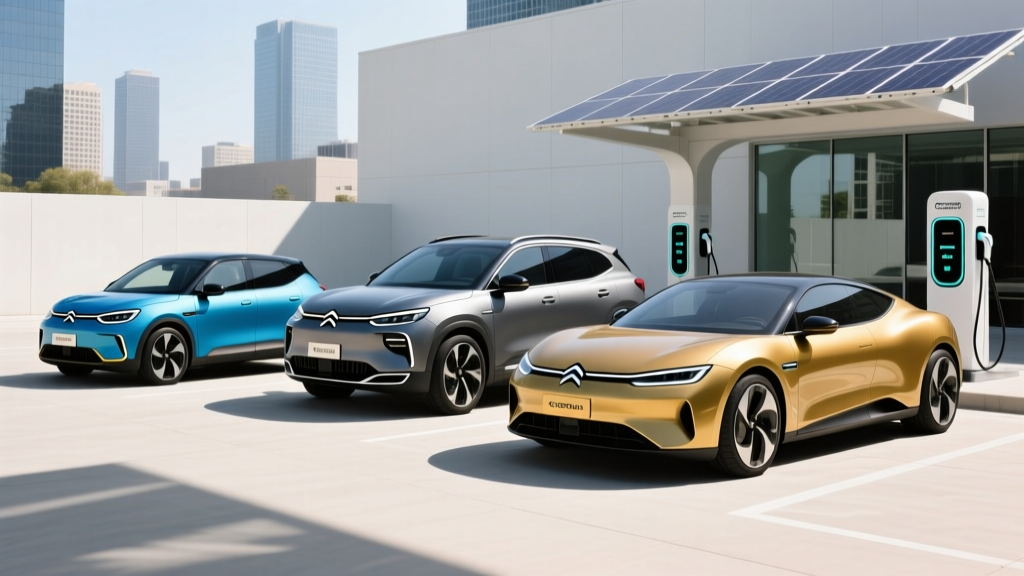
Citroen currently sells four fully electric models in Europe — the ë-C4 (compact crossover, ~260 mi WLTP range), ë-C4 X (fastback sedan variant), ë-Berlingo (compact van, ~174 mi WLTP), and the Ami (quadricycle micro-car, ~47 mi range). None are sold in the United States through official dealerships. If you're a US-based buyer, owning a Citroen EV means either importing a European-spec vehicle (costly, complex, and restricted to models 25+ years old under NHTSA rules) or living abroad. For American shoppers drawn to Citroen's comfort-focused philosophy and affordable pricing, equivalent alternatives like the Chevrolet Equinox EV, Hyundai Kona Electric, or Nissan LEAF offer similar utility with full US warranty coverage, EPA certification, and federal tax credit eligibility.
Why Citroen EVs Aren't Sold in the US
Stellantis — the parent company of Citroen, Peugeot, Fiat, and Chrysler — made a strategic decision decades ago to withdraw the Citroen brand from the North American market. The last Citroens sold in the US were in the 1970s. Bringing a modern EV to American roads requires EPA emissions certification, NHTSA crash-test compliance, and dealer network infrastructure — investments Stellantis has directed toward its US-market brands like Jeep, Dodge, and Chrysler instead.
This means every Citroen electric car you see reviewed online carries WLTP range figures (the European testing standard), not EPA estimates. WLTP tends to be 10–15% more optimistic than EPA testing, so a Citroen ë-C4 rated at 260 miles WLTP would likely achieve roughly 220–235 miles EPA-equivalent if it were certified for US sale. Real-world highway driving at 70+ mph would push that closer to 185–200 miles, and cold-weather conditions could drop it another 20–30%.
The 2026 Citroen EV Lineup: Specs & Pricing (European Market)
Here's a detailed look at what Citroen currently offers European buyers. All prices reflect approximate European MSRPs converted to USD; US import costs would add substantially to these figures.
| Model | Battery (usable kWh) | WLTP Range | Est. EPA Equiv. | Peak DC Charge | 10–80% DCFC | HP | 0–60 mph | EU MSRP (~USD) |
|---|---|---|---|---|---|---|---|---|
| ë-C4 | 50 kWh (NMC) | 260 mi | ~225 mi | 100 kW | ~30 min | 136 hp | 9.7 sec | €37,000 (~$40,500) |
| ë-C4 (77 kWh) | 77 kWh (NMC) | 380 mi | ~330 mi | 130 kW | ~28 min | 213 hp | 7.4 sec | €43,500 (~$47,600) |
| ë-C4 X | 50 kWh (NMC) | 260 mi | ~225 mi | 100 kW | ~30 min | 136 hp | 9.7 sec | €38,000 (~$41,600) |
| ë-Berlingo | 50 kWh (NMC) | 174 mi | ~150 mi | 100 kW | ~30 min | 136 hp | 11.5 sec | €35,000 (~$38,300) |
| Ami | 5.5 kWh (LFP) | 47 mi | ~40 mi | N/A (AC only) | ~3 hr (AC) | 8 hp | N/A (28 mph top) | €8,000 (~$8,800) |
Key takeaway: The 50 kWh battery pack shared across the ë-C4, ë-C4 X, and ë-Berlingo is a carryover from Stellantis' previous-generation e-CMP platform. Charging peaks at 100 kW — competitive in 2022 but falling behind rivals like the Hyundai Kona Electric (which peaks at 100+ kW on a smaller pack) and the Chevrolet Equinox EV (which supports 150+ kW DC fast charging on the Ultium platform). The larger 77 kWh option in the ë-C4 is a welcome 2025 addition that makes it genuinely road-trip viable in Europe.
Importing a Citroen EV to the US: What It Actually Costs
US import law under NHTSA regulations requires that vehicles not originally manufactured to US Federal Motor Vehicle Safety Standards (FMVSS) must be at least 25 years old to be legally imported without modification. Since no modern Citroen EV meets this threshold, legal importation for road use is essentially impossible for the current lineup.
There are narrow exceptions — the "Show or Display" exemption allows limited-mileage imports of historically or technologically significant vehicles, and registered importers (RIs) can theoretically federalize a vehicle, but the cost runs $50,000–$150,000+ in crash testing and modifications. For a $40,000 ë-C4, this is financially nonsensical.
Cost Reality: Citroen ë-C4 vs. US-Market Alternatives
| Factor | Citroen ë-C4 (EU) | Chevy Equinox EV (US) | Hyundai Kona Electric (US) |
|---|---|---|---|
| Base MSRP | ~$40,500 (EU) | $33,600 | $32,975 |
| US Import Cost | Not legally importable | $0 | $0 |
| Federal Tax Credit (§30D) | $0 (not US-certified) | Up to $7,500* | Up to $7,500* |
| Effective Price | $40,500+ (if imported) | ~$26,100 | ~$25,475 |
| EPA Range | Not EPA-certified | 319 mi | 261 mi |
| US Warranty | None | 3 yr/36k mi + 8 yr/100k mi battery | 5 yr/60k mi + 10 yr/100k mi battery |
| Service Network | None in US | Nationwide Chevy dealers | Nationwide Hyundai dealers |
*§30D tax credit eligibility depends on buyer income, vehicle MSRP caps, and battery component/critical mineral sourcing requirements. Verify current-year rules at IRS.gov. Point-of-sale transfer available at participating dealers.
Citroen vs. Gas and Hybrid: Efficiency & Running Costs
For European buyers or US expats considering a Citroen EV, here's how the ë-C4 stacks up against comparable internal combustion vehicles on running costs. European electricity and fuel prices differ from US rates, so we've included both contexts.
| Metric | ë-C4 (50 kWh) | Citroen C4 (1.2L Gas) | Citroen C4 (Hybrid 136) |
|---|---|---|---|
| Energy/Fuel Consumption | 15.5 kWh/100 km (WLTP) | 5.8 L/100 km (WLTP) | 4.8 L/100 km (WLTP) |
| Cost per 100 mi (EU avg) | ~€5.00 (home charge) | ~€10.50 | ~€8.70 |
| Cost per 100 mi (US equiv) | ~$4.65 (US avg $0.17/kWh) | ~$10.50 (US avg $3.50/gal) | ~$8.50 |
| Annual fuel/energy (12k mi) | $558 (US home) | $1,260 | $1,020 |
| Maintenance (annual est.) | ~$200 | ~$500 | ~$450 |
Even in the US market where gasoline is cheaper than Europe, the EV running-cost advantage is substantial — roughly $700/year in fuel savings and an additional $250–$300 in maintenance savings (no oil changes, fewer brake replacements due to regenerative braking, no spark plugs or timing belts). Over a 5-year ownership period, that's $4,750–$5,000 in operational savings for the electric model.
Real-World Ownership Considerations
If you're a European-based buyer or US expat evaluating a Citroen EV, several practical factors shape the ownership experience:
Charging Infrastructure Access
The ë-C4's 100 kW peak DC charging rate means you'll add roughly 120–140 miles of range in 20 minutes at a compatible fast charger — adequate for highway breaks but noticeably slower than competitors like the Kia EV6 (239 kW peak) or the Tesla Model Y (~250 kW peak). For home Level 2 charging on the standard 7.4 kW onboard charger, a full 0–100% charge takes approximately 7 hours, which suits overnight charging perfectly.
Climate Impact on Range
The 50 kWh battery in the ë-C4 lacks a heat pump in base trims (available as an option on higher trims). Without a heat pump, cold-weather cabin heating draws directly from the traction battery, reducing winter range by 25–40% depending on severity. A 260-mile WLTP ë-C4 could realistically deliver just 150–170 miles on a freezing January highway drive. The 77 kWh model's larger buffer absorbs this loss more gracefully.
Driving Patterns
For urban and suburban commuters driving under 60 miles per day, even the 50 kWh ë-C4 provides ample daily range with overnight home charging. The Ami, with its 47-mile range and 28 mph top speed, is strictly a city runabout — legally classified as a heavy quadricycle in Europe, not a full passenger vehicle.
Common Citroen EV Misconceptions
| Myth | Fact |
|---|---|
| "Citroen EVs can be bought and registered in the US." | Current-production Citroens do not meet FMVSS standards and cannot be legally imported or registered for US road use. The 25-year import exemption does not apply to any modern EV. |
| "WLTP range is the same as real-world range." | WLTP is ~10–15% more optimistic than EPA testing. Highway driving at sustained speeds above 65 mph further reduces range by 15–25% from WLTP figures. |
| "The ë-C4 charges as fast as a Tesla or Hyundai." | At 100 kW peak (50 kWh) or 130 kW peak (77 kWh), the ë-C4 charges significantly slower than the Tesla Model Y (~250 kW) or Hyundai Ioniq 5 (~240 kW on 800V architecture). |
| "Citroen is coming to the US soon." | Stellantis has made no official announcement about reintroducing Citroen to the US market. The company focuses US EV investment on Jeep, Chrysler, Dodge, and Ram. |
| "The Ami is a real car you can drive on highways." | The Ami is a heavy quadricycle limited to 28 mph (45 km/h). It's legal on low-speed roads in many European countries but unsuitable for highways or high-speed roads. |
Decision Framework: Should You Consider a Citroen EV?
If You Live in Europe:
- Choose the ë-C4 (77 kWh) if you want a comfortable, style-forward compact EV with genuine 300+ mile real-world range and don't need ultra-fast DC charging. The Citroen Advanced Comfort seats and suspension tuning make it one of the most comfortable EVs in its class.
- Choose the ë-C4 (50 kWh) if your daily commute is under 80 miles, you have reliable home charging, and you want to minimize purchase price.
- Choose the ë-Berlingo if you need van-like cargo space (up to 77.6 cu ft with seats folded) for a small business or active family, and your routes are predictable.
- Choose the Ami if you need a low-cost, ultra-compact city vehicle for short errands and have access to a standard household outlet for charging.
- Look elsewhere (Peugeot e-2008, MG4, Tesla Model Y) if you prioritize fast DC charging, cutting-edge driver assistance, or long highway road-trip capability.
If You Live in the US:
- Choose the Chevrolet Equinox EV if you want Citroen ë-C4-level utility with 319 miles EPA range, 150+ kW DC charging, US warranty, and up to $7,500 in federal tax credits.
- Choose the Hyundai Kona Electric if you want an affordable compact EV crossover with strong reliability data, 261 miles EPA range, and an industry-leading 10-year battery warranty.
- Choose the Nissan LEAF if budget is paramount — starting under $29,000, it's the most affordable new EV in the US, though its CHAdeMO connector limits DC fast-charging options.
Frequently Asked Questions
Will Citroen ever sell EVs in the United States?
There is no confirmed plan from Stellantis to reintroduce the Citroen brand to the US market. Stellantis has focused its American EV strategy on Jeep (Wagoneer S, Recon), Chrysler, Dodge (Charger Daytona EV), and Ram (1500 REV). If Citroen does arrive, it would more likely be a future model built on the STLA Medium or STLA Large platform rather than the current e-CMP-based lineup.
Can I import a used Citroen EV from Europe?
Under current NHTSA regulations, vehicles not originally built to comply with US Federal Motor Vehicle Safety Standards cannot be imported for road use unless they are at least 25 years old. Since the first Citroen ë-C4 was produced in 2020, legal importation won't be possible until at least 2045. The "Show or Display" exemption is extremely limited (under 2,500 miles/year) and requires a petition process.
How does the Citroen ë-C4 compare to the Tesla Model Y?
These vehicles compete in different segments. The Model Y is a mid-size SUV with 310+ miles EPA range, ~250 kW DC fast charging, access to the Supercharger network, and a starting price around $44,990. The ë-C4 is a smaller compact crossover with lower estimated range (~225 mi EPA equiv.), half the charging speed, and no US availability. The Model Y offers significantly more range, performance, and charging infrastructure — but costs more and lacks Citroen's signature comfort-tuned ride.
What battery chemistry does Citroen use?
The ë-C4 and ë-Berlingo (50 kWh models) use NMC (nickel manganese cobalt) lithium-ion cells supplied primarily by CATL. The 77 kWh extended-range ë-C4 also uses NMC chemistry. The Ami uses a smaller LFP (lithium iron phosphate) battery. NMC offers higher energy density but is more sensitive to sustained high state-of-charge storage; LFP is heavier but more tolerant of daily 100% charging and offers longer cycle life.
What is the warranty coverage on Citroen EVs?
In Europe, Citroen provides a standard 8-year/100,000-mile (160,000 km) warranty on the traction battery, guaranteeing it will retain at least 70% of its original capacity during that period. This is comparable to most competitors but below Hyundai/Kia's 10-year coverage. US buyers have no access to this warranty since Citroen has no American dealer network.
Sources: Citroen UK specifications, fueleconomy.gov for US-market comparison data, NHTSA vehicle import regulations.