Quick Answer: What Is the Citroën Ami EV?
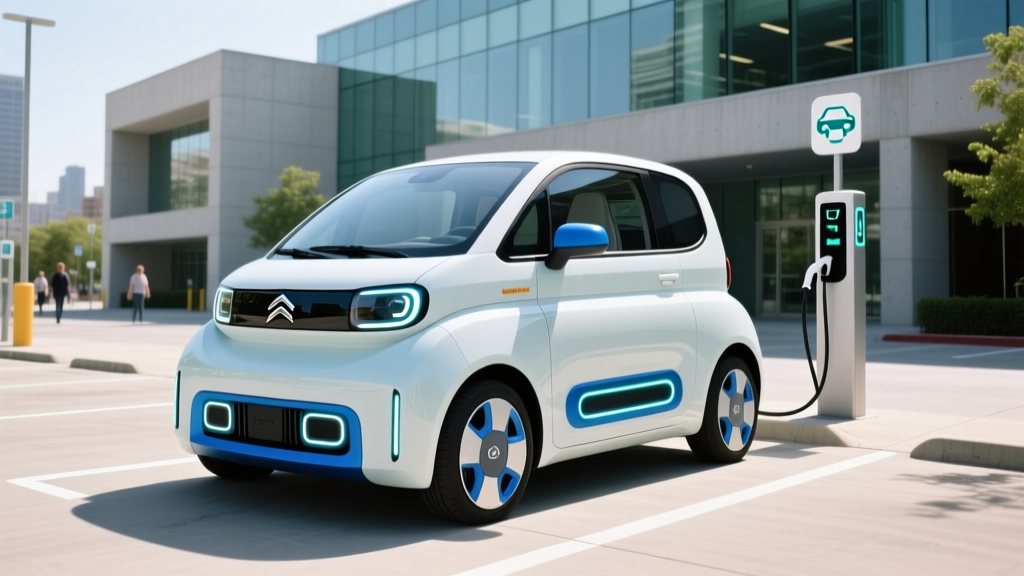
The Citroën Ami is a compact two-seat quadricycle electric vehicle sold primarily in Europe and select international markets. It features a 5.5 kWh lithium-ion battery, an EPA-equivalent range of approximately 46 miles (75 km WLTP), a top speed of 28 mph (45 km/h), and a starting price around €7,990 (~$8,700 USD) in France. The Citroën Ami is not officially sold in the United States and does not meet US Federal Motor Vehicle Safety Standards (FMVSS) for highway-legal passenger vehicles. Importing one for road use requires navigating significant regulatory hurdles, and it cannot be registered as a standard passenger car in most states. For US buyers seeking a similar micro-mobility EV, Neighborhood Electric Vehicles (NEVs) or compact EVs like the upcoming next-gen models from other manufacturers are the realistic alternatives.
Citroën Ami EV Specifications at a Glance
Before evaluating whether the Ami fits your needs, here are the exact figures that define this vehicle. Note that Citroën rates range on the WLTP cycle, which tends to be more generous than EPA estimates used in the US.
| Specification | Value |
|---|---|
| Battery Capacity | 5.5 kWh (lithium-ion, NMC) |
| WLTP Range | 75 km (~46 miles) |
| Real-World Range (estimated) | 35–42 miles (varies with temperature and terrain) |
| Top Speed | 28 mph (45 km/h) |
| Motor Output | 6 kW (~8 hp) |
| Charging (Level 1 – 230V household) | ~3 hours from 0–100% |
| DC Fast Charging | Not supported |
| Length × Width × Height | 2.41m × 1.39m × 1.52m (95" × 55" × 60") |
| Curb Weight | 485 kg (~1,069 lbs) |
| Seating | 2 (side by side) |
| Starting Price (France) | €7,990 (~$8,700 USD) |
| Vehicle Classification | EU L6e quadricycle (not a full passenger car) |
Why the Citroën Ami Can't Be Sold in the US
The Ami is classified under European regulations as a light quadricycle (L6e category), not a full passenger vehicle. This classification exempts it from many EU crash-safety mandates that apply to standard cars — but it also means the Ami fails to meet US requirements under FMVSS. Key gaps include:
- No airbags: US passenger vehicles must have frontal airbags; the Ami has none.
- Crash-test non-compliance: The Ami has not been tested by NHTSA or the IIHS and does not meet US crashworthiness standards.
- Lighting and bumper standards: US DOT lighting and bumper requirements differ from EU standards.
- Speed limitations: At 28 mph, it falls into a regulatory gray area — too fast for some low-speed vehicle exemptions, too slow for highway use.
Under the 25-year import rule, a non-conforming vehicle generally cannot be imported for road use unless it is at least 25 years old or undergoes an expensive federalization process. For a vehicle introduced in 2020, neither path is viable in 2026.
Could It Qualify as a Low-Speed Vehicle (LSV)?
US federal law defines a Low-Speed Vehicle (LSV) under FMVSS 500 as a four-wheeled vehicle with a top speed between 20–25 mph. The Ami's 28 mph top speed actually exceeds the LSV ceiling, which paradoxically disqualifies it from that easier registration pathway. Some owners in Europe have explored aftermarket speed limiters, but this approach carries legal and insurance risks in the US.
Citroën Ami vs. Gas Car: Operating Cost Comparison
For readers in markets where the Ami is available (or those considering a comparable micro-EV), the operating economics are compelling. Below is a cost comparison based on European pricing and a US-equivalent scenario using a subcompact gas car (e.g., Mitsubishi Mirage) as a baseline.
| Cost Factor | Citroën Ami EV | Gas Subcompact (e.g., Mirage) |
|---|---|---|
| Purchase Price | ~$8,700 (€7,990) | ~$18,000 |
| Fuel/Energy Cost per Mile | ~$0.02–0.03 (EU electricity rates) | ~$0.12–0.14 (at $3.50/gal, 36 MPG) |
| Annual Fuel/Energy (6,000 mi/yr) | ~$150 | ~$780 |
| Annual Maintenance | ~$100 (minimal — no oil, filters) | ~$500 (oil changes, brakes, filters) |
| 5-Year Total Fuel + Maintenance | ~$1,250 | ~$6,400 |
| Insurance (estimated annual) | ~$400–600 (EU quadricycle rates) | ~$1,200–1,800 (US subcompact) |
The Ami's per-mile energy cost is roughly one-fifth that of a gasoline subcompact. Over five years and 30,000 miles, the combined fuel and maintenance savings can exceed $5,000 — nearly recovering the Ami's entire purchase price. However, this comparison assumes the Ami is legal to register and insure in your jurisdiction, which for US buyers it generally is not.
Real-World Range and Charging: What the Numbers Actually Mean
The Ami's 5.5 kWh battery is tiny by modern EV standards — for comparison, a Tesla Model 3 Long Range carries roughly 75 kWh. This small capacity defines everything about the ownership experience.
Range Reality Check
WLTP Rating: 75 km (46 miles)
Expected Real-World Range: 35–42 miles in mild weather, city driving
Cold-Weather Range (below 40°F / 4°C): 25–32 miles — the Ami lacks active battery thermal management, so cold temperatures reduce available capacity by 25–35%
Highway Use: Not applicable — the 28 mph top speed limits the Ami to urban and suburban roads
Charging Details
The Ami charges exclusively via a standard household plug (230V in Europe, equivalent to a 120V Level 1 charger in the US). There is no DC fast-charging capability and no Level 2 (240V) onboard charger option.
- 0–100% charge time: approximately 3 hours on a 230V household outlet
- Charge rate: ~1.8 kW (very low — the small battery makes this acceptable)
- Public charging: The Ami can plug into standard outlets at cafés or workplaces, but cannot use Type 2 or CCS public charging stations without an adapter (and even then, only AC outlets are compatible)
The lack of fast charging isn't a practical limitation given the battery size — a full charge in three hours from any wall outlet is adequate for the Ami's urban mission. But it does mean you cannot top up quickly on the go.
Myths vs. Facts About the Citroën Ami
| Myth | Fact |
|---|---|
| "You can import the Ami to the US and drive it legally." | False. The Ami does not meet FMVSS standards and cannot be federally registered for road use. State-level LSV registration is also blocked by its 28 mph top speed. |
| "The Ami has 46 miles of range in all conditions." | The 46-mile figure is a WLTP estimate. In cold weather, expect 25–32 miles. Aggressive acceleration and hilly terrain further reduce range. |
| "It's basically a golf cart." | The Ami is more refined than a golf cart — it has a fully enclosed cabin, heater, digital instrument cluster, and smartphone integration. But it lacks air conditioning (only ventilation), airbags, and highway capability. |
| "The battery will need expensive replacement soon." | Citroën offers an 8-year/100,000 km battery warranty covering capacity below 70%. The small NMC pack experiences less stress than larger EV batteries due to lower power demands. |
| "It qualifies for the US $7,500 federal EV tax credit." | Not applicable. The Ami is not sold in the US, and even if imported, it would not qualify under IRS §30D rules, which require new vehicles sold by licensed dealers meeting battery-sourcing and MSRP requirements. |
Ownership Costs Breakdown: 5-Year Projection
For buyers in a market where the Ami is available and legal, here is a realistic five-year cost projection. Figures are converted to USD for comparison.
| Cost Category | Year 1 | Years 2–5 (annual avg.) | 5-Year Total |
|---|---|---|---|
| Purchase Price | $8,700 | — | $8,700 |
| Insurance | $550 | $550 | $2,750 |
| Electricity (6,000 mi/yr) | $150 | $150 | $750 |
| Maintenance & Repairs | $50 | $120 | $530 |
| Registration/Taxes | $100 | $100 | $500 |
| Total | $9,550 | $920/yr | $13,230 |
Compare this to a used gas-powered subcompact at a similar price point (~$8,700 purchase). The gas car's five-year fuel and maintenance costs alone would likely exceed $6,000, making the Ami's total cost of ownership roughly 35–40% lower over five years — assuming you can charge at home and your driving patterns fit within the range envelope.
Decision Framework: Is the Citroën Ami Right for You?
Choose the Citroën Ami (or similar micro-EV) if:
- You live in Europe or a market where it's sold and legal — this is the prerequisite.
- Your daily driving is under 30 miles round-trip, primarily on urban and suburban roads under 30 mph.
- You have access to a standard electrical outlet for overnight charging (apartment dwellers with street parking should evaluate outlet access carefully).
- You want the lowest possible purchase price and operating cost for a fully enclosed electric vehicle.
- You don't need highway access, rear seats, or significant cargo space (the Ami has only a small rear shelf behind the seats).
Look elsewhere if:
- You live in the United States — the Ami is not road-legal, and importation is not a practical solution.
- You regularly drive on roads with speed limits above 35 mph or need highway merging capability.
- You live in a cold climate with extended sub-freezing temperatures — the 25–32 mile winter range becomes impractical for anything beyond very short errands.
- You need to carry more than one passenger or significant cargo.
- You require air conditioning — the Ami has ventilation and a heater but no A/C compressor.
US Alternatives to the Citroën Ami
Since the Ami isn't available in the US, here are the closest legal alternatives for buyers seeking a compact, affordable electric runabout:
| Vehicle | Type | Range | Top Speed | Price | US Legal? |
|---|---|---|---|---|---|
| Club Car Onward EV (LSV) | Low-Speed Vehicle | ~30 miles | 25 mph | ~$14,000–18,000 | Yes (LSV-registered) |
| Polaris GEM e2/e4 | Low-Speed Vehicle | ~30–50 miles | 25 mph | ~$15,000–22,000 | Yes (LSV-registered) |
| Chevrolet Equinox EV (2026) | Full-size EV | 315 miles (EPA) | 100+ mph | ~$33,600 | Yes |
| Nissan Leaf (2026) | Full-size EV | 212 miles (EPA) | 90+ mph | ~$28,140 | Yes |
None of these match the Ami's sub-$9,000 price point, but they are all federally compliant. LSVs like the Club Car and Polaris GEM are the closest functional equivalents — enclosed or semi-enclosed, low-speed, street-legal on roads with speed limits up to 35 mph in most states. For full highway capability, the used EV market (e.g., a 2019–2022 Nissan Leaf at $12,000–18,000) is the most affordable path.
Frequently Asked Questions
Can I buy a Citroën Ami in the United States in 2026?
No. Citroën does not sell the Ami in the US market, and the vehicle does not meet US Federal Motor Vehicle Safety Standards. Importing one for personal road use is not legally practical under current NHTSA regulations.
How far can the Citroën Ami actually go on a charge?
The WLTP-rated range is 75 km (46 miles). In real-world city driving in mild weather, expect 35–42 miles. In cold weather below 40°F, range drops to approximately 25–32 miles due to the lack of battery thermal management.
How long does it take to charge the Ami?
A full 0–100% charge takes about 3 hours using a standard 230V household outlet in Europe (approximately 1.8 kW). The Ami does not support DC fast charging or Level 2 public chargers.
Does the Citroën Ami have air conditioning?
No. The Ami has a cabin heater and ventilation fan, but no air conditioning compressor. This is a deliberate cost and weight reduction for a vehicle designed primarily for short urban trips.
What is the battery warranty on the Citroën Ami?
Citroën provides an 8-year or 100,000 km (62,000 mile) warranty on the traction battery, guaranteeing minimum 70% capacity retention. This is consistent with industry standards for small EV batteries.
Is the Citroën Ami safe?
The Ami is not crash-tested by Euro NCAP, NHTSA, or IIHS. As a quadricycle, it is not required to meet the same crash-safety standards as full passenger cars. It has a steel tubular frame and a speed limiter, but no airbags, ABS, or electronic stability control. It is designed for low-speed urban environments where crash severity is lower.
Would the Ami qualify for any EV tax credit if I imported it?
No. Under IRS §30D rules, the federal clean vehicle credit requires the vehicle to be new, purchased from a licensed dealer, assembled by a qualifying manufacturer, and meeting battery-critical-mineral and component sourcing thresholds. An imported quadricycle meets none of these criteria.