Quick Answer: Is the Citroën Ami Right for You?
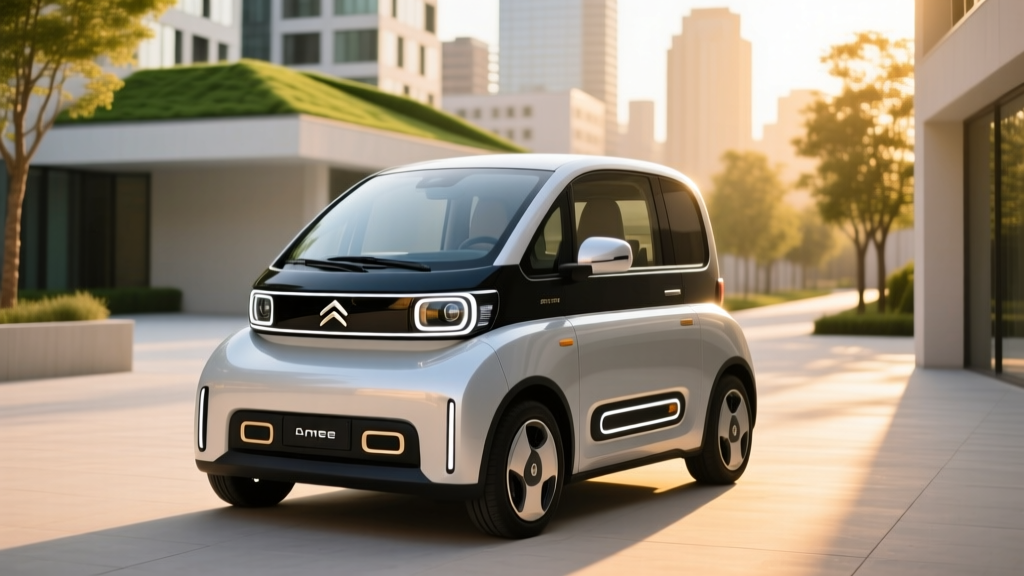
The Citroën Ami is a two-seat electric quadricycle (not a full passenger car) designed for short urban trips. It offers a WLTP-rated range of 47 miles (75 km) from a 5.5 kWh lithium-ion battery, tops out at 28 mph (45 km/h), and charges from a standard household outlet in about 3 hours. Priced from roughly €7,990 in Europe (approximately $8,700 USD before any local incentives), it's one of the cheapest new electric vehicles available — but it is not sold in the United States and does not meet U.S. federal safety or NHTSA certification standards. If you're in a market where it's available and your daily driving is under 30 miles on low-speed urban roads, the Ami is a compelling micro-mobility option. If you need highway capability, crash-tested safety, or more than two seats, look elsewhere.
What Exactly Is the Citroën Ami?
First launched in 2020 and refreshed for the 2024–2025 model years, the Citroën Ami is classified in Europe as a light quadricycle (L6e category), not a standard M1 passenger car. This distinction matters enormously because it determines what safety testing, licensing, and road access apply.
In several European countries, the Ami can be driven by holders of a moped license (AM category) or even by 14- to 16-year-olds with minimal certification — a major selling point for teen mobility and elderly drivers who no longer hold a full license. However, the quadricycle classification also means the Ami does not undergo Euro NCAP crash testing and lacks the structural crash protection, airbags, and advanced driver-assistance systems (ADAS) found in conventional EVs like the Dacia Spring or Fiat 500e.
Stellantis, Citroën's parent company, markets the Ami alongside its mechanically identical siblings: the Fiat Topolino (Italian styling) and the Opel Rocks Electric (German market). All three share the same powertrain, battery, and chassis.
Specs at a Glance: Battery, Range, and Performance
The Ami's powertrain is deliberately simple. Here are the exact figures from Citroën's official specifications:
| Specification | Value |
|---|---|
| Battery capacity (usable) | 5.5 kWh (lithium-ion, NMC chemistry) |
| WLTP range | 47 miles / 75 km |
| Real-world range (mixed urban, mild weather) | 35–43 miles / 55–70 km |
| Real-world range (cold weather, heater on) | 25–32 miles / 40–50 km |
| Motor output | 6 kW (8 hp) |
| Top speed | 28 mph / 45 km/h |
| 0–25 mph (0–40 km/h) | ~10 seconds |
| Vehicle weight (unladen) | ~1,025 lbs / 465 kg |
| Seats | 2 (side by side) |
| Cargo volume | ~2.2 cu ft / 63 liters (behind seats) |
| Length × Width × Height | 95.3 × 54.5 × 59.6 in (2.41 × 1.39 × 1.51 m) |
Real-World Range vs. WLTP Sticker
The 47-mile WLTP figure is measured under standardized low-speed urban conditions that actually align reasonably well with how the Ami is driven. However, expect 10–20% range loss in cold weather (below 40°F / 5°C) because the cabin heater draws directly from the 5.5 kWh battery, and there is no heat pump. At sustained top speed (28 mph) with headwinds or inclines, consumption rises noticeably. In our estimation, plan for 35–40 usable miles in moderate conditions and 25–30 miles in winter before needing to recharge.
Charging: Simple but Slow
The Citroën Ami does not support DC fast charging. It doesn't need to — the battery is so small that AC charging from a standard outlet is practical.
| Charging Method | Power (kW) | 0–100% Time | Miles Added per Hour |
|---|---|---|---|
| Standard household outlet (Schuko/Type E, 230V) | ~1.8 kW | ~3 hours | ~15 miles/hr |
| Type 2 cable (public AC, limited to onboard charger) | ~1.8 kW (capped) | ~3 hours | ~15 miles/hr |
| DC fast charging | Not supported — no CCS or CHAdeMO port | ||
The Ami ships with a built-in cable and Schuko plug stored in the door jamb. You simply plug it into any standard European household outlet. A full 0–100% charge takes approximately 3 hours. There's no onboard charger upgrade option — the 1.8 kW rate is hardwired.
Practical note: Because the battery is only 5.5 kWh, a "full charge" costs very little. At the European average residential electricity price of roughly €0.25/kWh (approximately $0.27/kWh), a full charge costs about €1.38 (~$1.50). That works out to roughly €0.03 per mile ($0.03/mi) — dramatically cheaper than any gasoline vehicle.
Cost Breakdown: Purchase, Running, and Ownership
The Ami's headline appeal is affordability. Here's a detailed cost comparison against a typical small gasoline city car (e.g., a used Fiat 500 or Toyota Aygo) and a full-size budget EV (e.g., Dacia Spring).
| Cost Factor | Citroën Ami (2025) | Small Gas City Car | Dacia Spring EV |
|---|---|---|---|
| Base purchase price | €7,990 (~$8,700) | €14,000–18,000 new / €5,000–8,000 used | €17,990 (~$19,600) |
| Fuel/energy cost per mile | €0.03/mi | €0.12–0.15/mi | €0.04/mi |
| Annual "fuel" (6,000 mi/yr) | €180 | €720–900 | €240 |
| Annual maintenance | ~€100 (minimal) | €400–600 | €200–300 |
| Insurance (avg. European) | €200–400/yr | €500–800/yr | €400–600/yr |
| 5-year total cost of ownership | ~€10,000–11,000 | ~€18,000–23,000 | ~€21,000–23,000 |
The Ami's 5-year total cost of ownership is roughly half that of a comparable gasoline city car. The savings come from three areas: rock-bottom energy cost, near-zero maintenance (no oil changes, no exhaust system, no transmission fluid, regenerative braking saves pad wear), and low insurance premiums due to the vehicle's low value and low speed.
U.S. Buyers: Tax Credit and Availability Reality
The Citroën Ami is not available for sale in the United States and is not expected to be. It does not meet NHTSA Federal Motor Vehicle Safety Standards (FMVSS), and importing one for road use is not legally practical. It therefore does not qualify for the IRS §30D federal EV tax credit, which applies only to new clean vehicles purchased from licensed U.S. dealers meeting battery-sourcing, MSRP cap, and buyer income requirements. U.S. buyers seeking an ultra-affordable EV should look at the used EV market (where the §25E used clean vehicle credit offers up to $4,000) or consider an electric bicycle or NEV (Neighborhood Electric Vehicle) for local trips.
How the Ami Compares to a Gas Car or Hybrid
The Ami doesn't compete with a Toyota Prius or Honda Civic — it competes with scooters, e-bikes, and city car-sharing services. But for buyers weighing it against a cheap used gas car for urban commuting, the comparison is instructive.
| Factor | Citroën Ami | Used Gas City Car (e.g., 2018 Fiat 500) | Toyota Yaris Hybrid (HEV) |
|---|---|---|---|
| Purchase price | €7,990 | €6,000–8,000 | €21,000+ |
| Energy cost per mile | €0.03 | €0.12–0.15 | €0.08–0.10 |
| Top speed | 28 mph | 100+ mph | 109 mph |
| Range | 35–47 miles | 300+ miles | 500+ miles |
| Highway capable? | No | Yes | Yes |
| Crash-tested (NCAP)? | No | Yes (older standard) | Yes (5-star) |
| Seats | 2 | 4 | 5 |
| Annual running cost | ~€300–500 | ~€1,100–1,500 | ~€800–1,100 |
The tradeoff is clear: the Ami wins on operating cost and purchase price but loses on speed, range, safety certification, seating, and versatility. It's a supplemental vehicle, not a primary car for most households.
Common Misconceptions About the Citroën Ami
| Myth | Fact |
|---|---|
| "The Ami is a real electric car like a Tesla or Leaf." | It's a light quadricycle (L6e), not a crash-tested passenger car. No airbags, no ABS (on early models), no highway access. |
| "47 miles of range is enough for anyone in a city." | In cold weather with the heater running, expect 25–32 real miles. Detours, hills, and accessory use reduce this further. |
| "It qualifies for EV tax credits." | Not in the U.S. (not sold there). In Europe, local incentives vary by country — some cities offer purchase subsidies of €500–2,000, but there's no EU-wide equivalent to the U.S. §30D credit. |
| "I can drive it on the highway." | The Ami is legally restricted to roads with speed limits of 50 km/h (31 mph) or below in most jurisdictions. Motorways and expressways are prohibited. |
| "Charging takes forever." | 3 hours from empty on a standard outlet is reasonable for a vehicle you charge overnight or at work. The tiny 5.5 kWh battery makes this practical. |
| "The battery will need expensive replacement." | Citroën provides a battery warranty of 2 years/unlimited mileage or specific capacity retention guarantees depending on market. Replacement cost is estimated at €1,500–2,500 — a significant fraction of the vehicle's value, but the small battery is inherently cheaper to replace than a 60+ kWh pack. |
Real-World Ownership: What First-Time Buyers Should Know
If you're considering the Ami as your first electric vehicle — or your first vehicle period — here's what matters beyond the spec sheet.
Home Charging Access
The Ami's greatest convenience advantage is that it needs no special charging infrastructure. Any standard household outlet (Schuko in Europe) works. You don't need a Level 2 wallbox, a panel upgrade, or an electrician visit. If you live in an apartment with access to any outdoor outlet — even a ground-floor extension cord from your unit — you can charge. This makes the Ami viable for urban renters who lack dedicated parking or charging access, a major barrier for full-size EV adoption.
Climate Considerations
The Ami's cabin heater is a resistive electric heater, not a heat pump. It draws heavily from the 5.5 kWh battery. In Nordic winters or alpine climates, range can drop by 30–40%, and the cabin may struggle to maintain comfort below freezing. The Ami is best suited to mild and Mediterranean climates — southern France, Italy, Spain, Portugal, and similar regions. Citroën has offered optional heated seats in some markets to reduce heater load.
Driving Patterns
The Ami is ideal for commutes under 15 miles each way, grocery runs, school drop-offs, and neighborhood errands. It is not suitable for intercity travel, highway driving, or carrying more than one passenger. If your household has a second car for longer trips, the Ami works brilliantly as the daily runabout. If it would be your only vehicle, honestly audit your driving diary: any trip over 30 miles round-trip or requiring speeds above 30 mph rules it out.
Safety Reality
This is the most important ownership consideration. The Ami has a tubular steel frame and a curb weight of roughly 1,025 lbs. In a collision with a full-size vehicle (average weight 3,500–4,500 lbs), physics is not on your side. There are no airbags, and the vehicle has not been crash-tested by Euro NCAP or any equivalent body. Drive defensively, stick to low-speed urban streets, and treat the Ami more like an enclosed scooter than a car.
Decision Framework: Should You Buy the Citroën Ami?
Choose the Citroën Ami if:
- You live in a European or other market where the Ami is legally sold and road-registered.
- Your daily driving is under 30 miles round-trip on roads with speed limits ≤ 30 mph.
- You have access to a standard electrical outlet for overnight charging.
- You want the lowest possible purchase price and running cost for an enclosed electric vehicle.
- You have a second vehicle (or access to transit/car-sharing) for longer trips and highway travel.
- You value easy parking (the Ami fits in half a standard parking space) and minimal maintenance.
Look elsewhere if:
- You live in the United States — the Ami is not sold or street-legal there.
- You need highway speeds, crash-tested safety, or more than two seats.
- Your commute exceeds 30 miles or includes high-speed roads.
- You live in a region with harsh winters and need reliable cold-weather range.
- You want DC fast charging capability or a vehicle that can road-trip.
- You need cargo space beyond a few grocery bags (2.2 cu ft).
Alternatives to consider:
- Dacia Spring: A proper 4-seat, crash-tested EV with ~140 miles WLTP range, starting around €17,990. Available in Europe.
- Fiat 500e: Full-featured city EV with ~199 miles WLTP range, DC fast charging, and proper safety equipment. Starting ~€29,000.
- Renault Twingo E-Tech (upcoming): Expected to bridge the gap between quadricycle and full EV pricing.
- Electric cargo bike: For solo urban commuting under 15 miles, a quality e-cargo bike (€2,500–5,000) may be even more practical and doesn't require registration or insurance.
Frequently Asked Questions
Can I buy the Citroën Ami in the United States?
No. The Citroën Ami is not sold in the U.S. and does not meet NHTSA Federal Motor Vehicle Safety Standards. There are no current plans from Stellantis to certify or import it for the American market. U.S. buyers looking for ultra-low-cost electric transport should explore Neighborhood Electric Vehicles (NEVs, LSV class), e-bikes, or the used EV market with the §25E tax credit.
How long does the Citroën Ami battery last?
Citroën provides a battery warranty that varies by market, generally covering 2 years with capacity retention guarantees. Based on NMC lithium-ion degradation patterns for small, lightly stressed batteries, expect the 5.5 kWh pack to retain roughly 80–85% of its original capacity after 5 years and 50,000 miles of typical urban use. Replacement cost is estimated at €1,500–2,500 — consult your local Citroën dealer for exact warranty terms in your country.
Is the Citroën Ami safe?
The Ami has a steel tubular frame but has not been crash-tested by Euro NCAP or equivalent agencies. It lacks airbags and advanced safety systems. Its low weight (~1,025 lbs) and low top speed (28 mph) mean it is most at risk in collisions with larger vehicles. It is safest when used exclusively on low-speed urban streets, driven defensively, and treated as an enclosed quadricycle rather than a conventional car.
How much does it cost to charge the Citroën Ami?
A full charge from empty costs approximately €1.38 (~$1.50) at the European average residential electricity rate of €0.25/kWh. That provides roughly 35–47 real-world miles, equating to about €0.03–0.04 per mile. For comparison, a small gasoline car at 40 MPG with fuel at €1.80/liter costs roughly €0.13 per mile — about 3–4× more per mile.
Can the Citroën Ami go on highways?
No. The Ami is legally restricted to roads with speed limits at or below 50 km/h (31 mph) in most European jurisdictions. Motorways, expressways, and any road requiring a minimum speed above the Ami's 28 mph top speed are prohibited. This is both a legal and practical limitation.
Does the Citroën Ami have air conditioning?
The Ami does not have traditional air conditioning. It has a cabin ventilation system and an optional electric heater. In warm weather, you rely on opening the large flip-up windows (which are standard) and the ventilation fan. This is a deliberate cost and weight-saving measure consistent with its quadricycle design philosophy.
What's the difference between the Citroën Ami, Fiat Topolino, and Opel Rocks Electric?
All three are mechanically identical — same 5.5 kWh battery, 6 kW motor, 47-mile WLTP range, and 28 mph top speed. The differences are purely cosmetic and market-specific: the Ami wears Citroën branding with a playful French design, the Topolino has Italian Dolce Vita styling with a canvas roof option, and the Rocks Electric targets the German market with Opel/Vauxhall branding. Pricing and available incentives may differ by country and brand.