The Quick Answer: No Fully Electric Pacifica Exists Yet
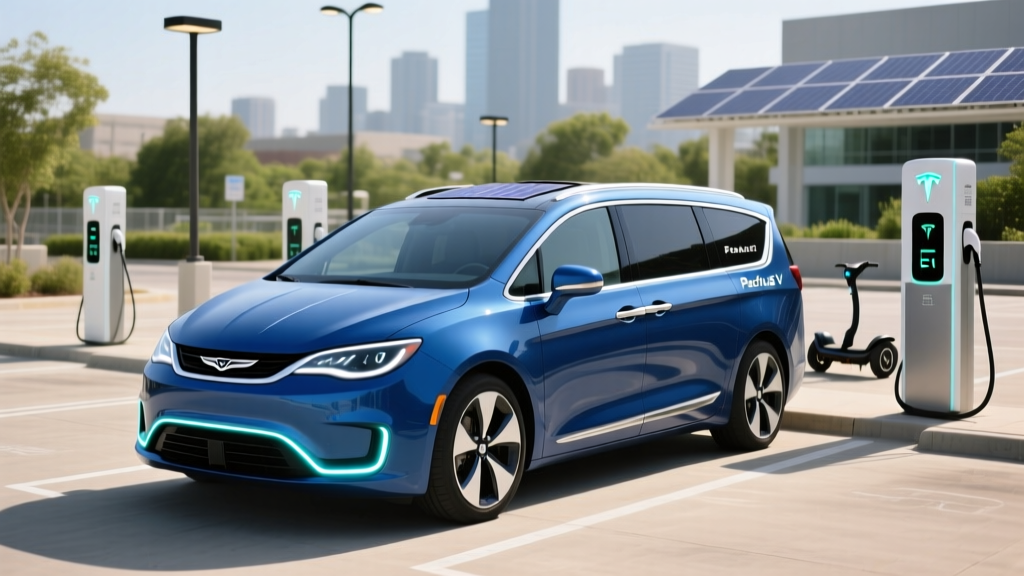
If you're searching for a Pacifica electric car, here's the reality as of the 2026 model year: Chrysler does not sell a fully electric (BEV) Pacifica. What Chrysler does offer is the Chrysler Pacifica Hybrid, a plug-in hybrid electric vehicle (PHEV) with an EPA-estimated 32 miles of electric-only range, a 16 kWh battery pack, and a combined 82 MPGe when operating in electric mode. It remains one of the only plug-in minivans on the U.S. market. If you need a fully electric minivan with zero gas use, you'll need to look at alternatives like the Kia EV9 or Tesla Model X — or wait for Stellantis's promised electric platforms later this decade.
Minivan buyers have a unique set of needs: three rows, serious cargo capacity, easy child-seat installation, and the ability to handle school runs, road trips, and grocery hauls without breaking the bank. The Pacifica Hybrid tries to thread the needle — offering electric commuting with gas-engine backup for longer trips. But is it the right fit for your household? Let's break down the numbers, the costs, and the real-world ownership experience.
2026 Chrysler Pacifica Hybrid: Specs and Real-World Performance
| Specification | 2026 Chrysler Pacifica Hybrid (PHEV) |
|---|---|
| Powertrain | 3.6L V6 + 2 electric motors (eCVT) |
| Combined System Output | 260 hp |
| Battery (Usable) | 16 kWh (NMC lithium-ion) |
| EPA Electric-Only Range | 32 miles |
| EPA MPGe (Electric Mode) | 82 MPGe |
| EPA MPG (Gas-Only / Hybrid Mode) | 30 MPG combined |
| Total Range (Electric + Gas) | ~520 miles |
| 0-60 mph | ~7.1 seconds |
| Level 2 Charge Time (0-100%) | ~2 hours at 6.6 kW |
| DC Fast Charging | Not available |
| Starting MSRP (Hybrid SE) | ~$51,095 |
| Battery/Powertrain Warranty | 8 years / 100,000 miles (battery); 5 yr / 60,000 mi (powertrain) |
Real-World Range vs. EPA Estimate
The EPA rates the Pacifica Hybrid at 32 miles of electric-only range. In real-world testing, expect 26–30 miles on a full charge during warm weather with mixed city/highway driving. In cold weather (below 35°F), that number can drop to 20–24 miles due to cabin heating demands and reduced battery efficiency. Highway-only driving at 70+ mph will also reduce electric range to roughly 22–25 miles. The gasoline engine seamlessly takes over when the battery depletes, so you're never stranded — but your fuel savings depend heavily on how much of your daily driving fits within that electric window.
For context, the average American one-way commute is roughly 16 miles, according to the U.S. Census Bureau. That means many families could complete their daily school drop-off, commute, and errands entirely on electricity — then rely on the gas engine for weekend road trips. That's the PHEV proposition in a nutshell: you get EV-like operating costs for daily driving without the range anxiety of a full BEV.
Pacifica Hybrid vs. Gas Pacifica vs. Electric Alternatives
To understand whether the Pacifica Hybrid is the right electrified choice for your family, it helps to see it alongside its gas-only sibling and the closest fully electric competitors.
| Attribute | Pacifica Hybrid (PHEV) | Pacifica Gas (V6) | Kia EV9 (BEV, 3-Row) | Tesla Model X (BEV) |
|---|---|---|---|---|
| Starting MSRP | ~$51,095 | ~$40,990 | ~$54,900 | ~$79,990 |
| EPA Range (Electric) | 32 mi (EV only) | N/A | 279–304 mi | 311–335 mi |
| Fuel Cost / Mile | ~$0.04 (EV) / ~$0.12 (gas) | ~$0.14 | ~$0.04–$0.06 | ~$0.04–$0.06 |
| Cargo (Behind 3rd Row) | 32.3 cu ft | 32.3 cu ft | 20.2 cu ft | 15.0 cu ft (+ frunk) |
| Stow 'n Go Seating | 3rd row only | 2nd & 3rd row | N/A | N/A |
| Home Charging Needed? | Recommended, not required | No | Essential | Essential |
| Federal Tax Credit (§30D) | Not eligible | Not eligible | Up to $7,500* | Up to $7,500* |
*Federal §30D tax credit eligibility depends on MSRP caps, buyer income limits, and battery component/critical mineral sourcing requirements. Check current rules at IRS.gov. Credit can be transferred to the dealer as a point-of-sale discount for 2026.
The Pacifica Hybrid's biggest advantage over BEV competitors is flexibility. You don't need a home charger to own it (Level 1 charging from a standard 120V outlet will replenish the 16 kWh battery overnight in roughly 10–12 hours), and the gas engine eliminates range anxiety on long trips. Its biggest disadvantage is that it still burns gasoline on longer drives, and it doesn't qualify for the federal EV tax credit that can bring BEV alternatives closer in effective price.
Real Costs of Ownership: 5-Year Breakdown
Sticker price is only the beginning. Here's what owning a Pacifica Hybrid actually costs compared to the gas Pacifica and a fully electric Kia EV9 over five years and 75,000 miles, assuming 50% of Pacifica Hybrid miles are driven on electricity.
| Cost Category | Pacifica Hybrid (PHEV) | Pacifica Gas (V6) | Kia EV9 (BEV) |
|---|---|---|---|
| Purchase Price (Base MSRP) | $51,095 | $40,990 | $54,900 |
| Federal Tax Credit | $0 | $0 | Up to $7,500 |
| Effective Purchase Price | $51,095 | $40,990 | $47,400 |
| Fuel/Energy (5 yr / 75k mi) | ~$4,500 | ~$10,500 | ~$3,750 |
| Maintenance (5 yr) | ~$3,200 | ~$4,500 | ~$1,800 |
| Insurance (5 yr avg) | ~$9,500 | ~$8,500 | ~$10,500 |
| Estimated 5-Year Total Cost | ~$68,295 | ~$64,490 | ~$63,450 |
| Cost Per Mile | ~$0.91 | ~$0.86 | ~$0.85 |
Fuel costs assume $3.50/gal gasoline and $0.15/kWh electricity (national averages as of early 2026; your local rates may vary significantly). Insurance estimates are national averages — actual premiums vary by state, driving record, and provider. Maintenance includes scheduled service, tires, and brakes. Source: EPA fueleconomy.gov and manufacturer data.
The Pacifica Hybrid's higher purchase price and lack of federal tax credit make it the most expensive option in this comparison on paper. However, for families who specifically need minivan features — sliding doors, Stow 'n Go seating (third row on the Hybrid), and a lower step-in height — the BEV alternatives don't perfectly substitute. The Kia EV9, while a capable three-row SUV, has significantly less cargo space and no sliding doors. The Tesla Model X is far more expensive and offers falcon-wing doors but limited practicality for child-seat access.
Home Charging: What Pacifica Hybrid Owners Need to Know
One of the Pacifica Hybrid's most practical traits is that you don't need a dedicated home charging station to own one — but you'll want one to maximize savings.
| Charging Level | Power (kW) | Time to Full (16 kWh) | Cost to Install |
|---|---|---|---|
| Level 1 (120V household outlet) | 1.4 kW | ~10–12 hours | $0 (use existing outlet) |
| Level 2 (240V, dedicated circuit) | 6.6 kW (vehicle max) | ~2 hours | $500–$2,000+ |
| DC Fast Charging | N/A | N/A | N/A — not supported |
Level 1 charging works fine if you drive less than 30 miles per day and can plug in overnight. A standard 120V outlet delivers roughly 4–5 miles of electric range per hour of charging, which is enough to replenish a full day's electric driving by morning.
Level 2 charging is the upgrade most Pacifica Hybrid owners pursue. A 240V Level 2 wallbox (like the ChargePoint Home Flex or Emporia V2) on a 30- or 40-amp circuit will fully recharge the Pacifica's battery in about two hours. Installation costs vary widely:
- Simple install (panel has capacity, short wire run): $500–$900 for equipment + electrician
- Moderate install (longer run, new breaker): $900–$1,500
- Complex install (panel upgrade to 200A required): $2,000–$4,000+
Always get a quote from a licensed electrician before purchasing equipment. Your home's electrical panel capacity is the single biggest variable — if you're already near your panel's limit with HVAC, an electric oven, and a dryer, you may need a panel upgrade. Some utility companies offer rebates for Level 2 charger installation; check with your local provider.
At $0.15/kWh (national residential average), fully charging the Pacifica Hybrid's 16 kWh battery costs roughly $2.40. That gets you up to 32 miles of driving — about $0.075 per mile on electricity, compared to roughly $0.12 per mile on gasoline at $3.50/gallon. Over a year of 10,000 electric miles, that's a savings of roughly $450 in fuel alone.
Common Misconceptions About the Pacifica and EVs
| Myth | Fact |
|---|---|
| "The Pacifica comes in a fully electric version." | As of 2026, only the PHEV (plug-in hybrid) variant exists. Chrysler's parent company Stellantis has discussed future electric platforms, but no fully electric Pacifica is currently on sale or officially announced with a release date. |
| "I need a home charger to own a plug-in hybrid." | You can charge the Pacifica Hybrid on a standard 120V outlet overnight. A Level 2 charger is a convenience upgrade, not a requirement. |
| "PHEVs are the worst of both worlds." | For the right use case — daily drives under 30 miles with occasional long trips — a PHEV delivers EV-like daily costs with gas-car road-trip capability. Data from the EPA shows PHEV owners who charge regularly achieve significantly lower fuel consumption than gas-only drivers. |
| "The battery will need expensive replacement soon." | Chrysler covers the Pacifica Hybrid's battery for 8 years / 100,000 miles (10 years / 150,000 miles in CARB states). The 16 kWh pack is smaller and less stressed than a full BEV battery, and real-world degradation data on the Pacifica Hybrid has been modest — most owners report 10–15% capacity loss after 5+ years. |
| "I'll get the $7,500 federal tax credit." | The Pacifica Hybrid does not qualify for the federal §30D new clean vehicle credit. This credit is available for qualifying BEVs and some PHEVs that meet battery sourcing, MSRP, and buyer income requirements — but the Pacifica Hybrid is not on the IRS eligible list as of 2026. |
Decision Framework: Is the Pacifica Hybrid Right for You?
Choose the Chrysler Pacifica Hybrid if:
- You need a true minivan (sliding doors, low floor, 3-row seating for 7) and don't want a fully electric vehicle yet
- Your daily driving is under 30 miles round-trip and you can charge at home (even on a 120V outlet)
- You take regular road trips where charging infrastructure is uncertain
- You value Stow 'n Go third-row seating and Chrysler's minivan-specific features (built-in vacuum, rear-seat entertainment)
- You're not ready to commit to BEV ownership but want to reduce fuel costs
Choose a fully electric alternative (Kia EV9, Tesla Model X) if:
- You have reliable home Level 2 charging and want zero gasoline use
- You want to qualify for the federal §30D tax credit (up to $7,500, income and MSRP limits apply — see IRS.gov)
- Your household has a second gas car for rare long trips
- You want the lowest per-mile energy cost and minimal maintenance
- You can accept SUV form factors rather than a traditional minivan layout
Wait for a fully electric Pacifica if:
- You specifically need minivan features (sliding doors, maximum cargo volume) but want full electric operation
- You're comfortable delaying your purchase 2–4+ years for Stellantis's next-generation electric platforms
- Current BEV three-row options don't meet your cargo or seating requirements
What First-Time Electrified Minivan Buyers Should Know
If the Pacifica Hybrid is your first plug-in vehicle, a few practical realities will shape your ownership experience:
Charge whenever you can. The fuel savings of a PHEV only materialize if you actually plug in. A Pacifica Hybrid that's never charged operates as a conventional hybrid — still efficient at ~30 MPG combined, but you're paying a $10,000 premium over the gas model for electric capability you're not using. Make plugging in as automatic as plugging in your phone.
Precondition the cabin while plugged in. The Pacifica Hybrid can use grid power to heat or cool the cabin before you leave. This preserves battery range for actual driving rather than climate control — especially impactful in winter when cabin heating can cut electric range by 25–30%.
Understand the hybrid modes. The Pacifica Hybrid defaults to electric-first operation, but you can select Hybrid mode (blends gas and electric for maximum total range) or E-Save mode (reserves battery charge for later — useful if your destination has a low-emission zone or you want electric driving at the end of a trip).
Track your electric miles. The vehicle's Uconnect system displays an electric-vs-gas driving ratio. Aim to maximize your electric percentage — owners who charge daily and drive under 30 miles typically report 70–85% of their miles on electricity.
Budget for slightly higher insurance. PHEVs and BEVs typically cost 5–15% more to insure than their gas equivalents, according to industry data. Get quotes before purchasing to avoid surprises.
Frequently Asked Questions
Will Chrysler ever make a fully electric Pacifica?
Stellantis (Chrysler's parent company) has committed to offering electric options across its lineup by the late 2020s, and has shown concepts like the Chrysler Airflow. However, as of early 2026, no fully electric Pacifica has been officially announced with a release date or confirmed specs. The current-generation Pacifica platform is not designed as a dedicated EV architecture. When a replacement generation arrives, it may adopt Stellantis's STLA Large platform, which supports both hybrid and fully electric powertrains.
Does the Pacifica Hybrid qualify for any tax credits?
The Pacifica Hybrid does not currently qualify for the federal §30D new clean vehicle credit. Some states and utilities offer their own incentives for PHEV purchases — check your state energy office and local utility for current programs. The previously available $7,500 credit for the Pacifica Hybrid expired after Chrysler reached its original manufacturer cap under the prior credit structure.
How long does the Pacifica Hybrid battery last?
Chrysler warranties the high-voltage battery for 8 years or 100,000 miles (10 years / 150,000 miles in California Air Resources Board states). The warranty guarantees the battery will retain a minimum capacity level (typically 60–70% of original). Real-world reports from early Pacifica Hybrid owners (2017–2020 models) suggest moderate degradation of roughly 10–15% over 5–7 years of regular use. Full battery replacement, if needed out of warranty, is estimated at $5,000–$8,000 including labor — though this is rarely needed within the vehicle's normal lifespan.
Can I tow with the Pacifica Hybrid?
Yes, but with reduced capacity compared to the gas Pacifica. The Pacifica Hybrid is rated for 1,750 lbs of towing capacity, versus 3,600 lbs for the gas-only model. That's enough for a small utility trailer or a pair of dirt bikes, but not a boat or large camper. If towing is a priority, the gas Pacifica or a BEV SUV like the Rivian R1S (7,700 lbs tow rating) is a better choice.
Is the Pacifica Hybrid good in cold weather?
The Pacifica Hybrid operates in all climates, but expect reduced electric-only range in cold weather. Below freezing, the 32-mile EPA electric range typically drops to 20–24 miles as the battery loses efficiency and cabin heating draws additional power. The gasoline engine compensates seamlessly, so total range isn't a concern — but your fuel costs will be higher in winter months. Using the vehicle's preconditioning feature while plugged in mitigates some of this loss.