The Short Answer on Chrysler EV Cars
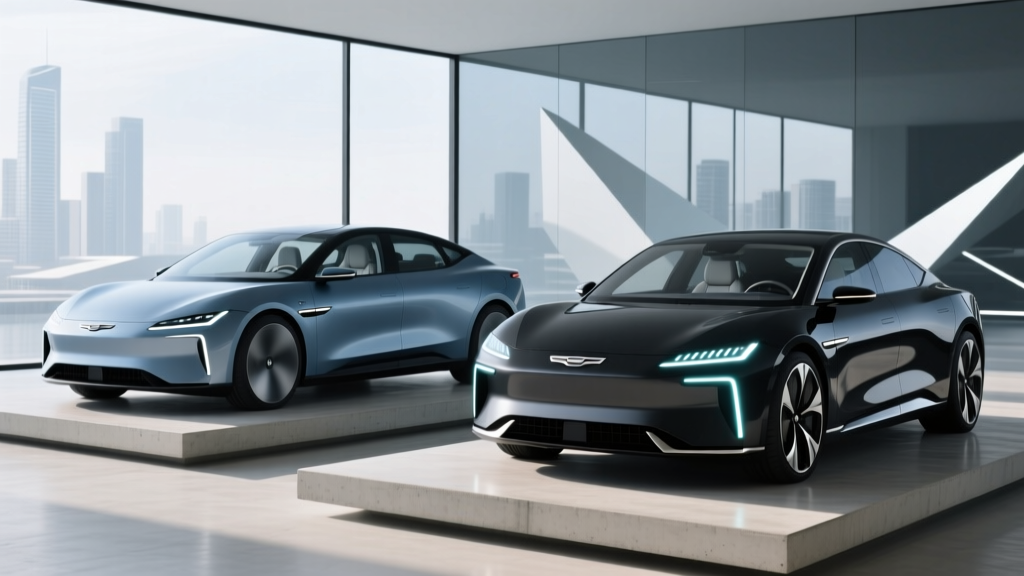
As of early 2026, Chrysler does not sell a production electric vehicle in the United States. The brand's EV future rests primarily on the Chrysler Halcyon Concept, a sleek all-electric sedan unveiled in early 2024 that signals the direction of Chrysler's first dedicated BEV — expected to arrive as a 2027 or 2028 model-year production vehicle. If you are shopping for an EV today and have your heart set on a Chrysler, you will need to wait or look at rival brands like Tesla, Hyundai, or Chevrolet. If you are willing to hold out, the Halcyon's promised specs and Chrysler's STLA Large platform suggest a competitive mid-size electric sedan with targeted range exceeding 350 miles.
Chrysler's Electric Vehicle Roadmap: Where Things Stand
Chrysler has been conspicuously absent from the EV market while competitors like Tesla, Hyundai, Kia, and Chevrolet have fielded multiple generations of electric vehicles. Parent company Stellantis has committed to offering BEV options across its brand portfolio, but Chrysler — historically known for minivans (Pacifica) and the now-discontinued 300 sedan — has been the slowest to transition.
The Halcyon Concept, revealed in February 2024, is the clearest indicator of what's coming. It sits on Stellantis's STLA Large platform, a flexible architecture that supports battery-electric powertrains with battery packs ranging from roughly 85 kWh to 118 kWh (usable). The concept showcased:
- Inductive (wireless) charging capability
- SAE Level 2+ driver assistance with a retractable steering wheel concept for future Level 4 autonomy
- An 800-volt electrical architecture for faster DC charging
- LFP (lithium iron phosphate) and NMC battery chemistry options
However, concept-to-production timelines in the auto industry typically run 2–4 years, and Stellantis has not confirmed a firm on-sale date, production specifications, or pricing for any Chrysler EV. What follows is an analysis based on the STLA Large platform's known capabilities and industry context.
Projected Specs: What a Production Chrysler EV Sedan Could Offer
While official EPA figures do not exist yet for any Chrysler production EV, the STLA Large platform's engineering parameters give us a reasonable projection window. Here is what the platform supports, alongside comparable segment benchmarks:
| Specification | STLA Large Platform (Projected) | Tesla Model 3 Long Range (2025) | Hyundai Ioniq 6 SE Long Range (2025) |
|---|---|---|---|
| Battery Capacity (usable) | 85–118 kWh | 75 kWh | 77.4 kWh |
| EPA Range (target) | 350–400+ mi (est.) | 363 mi | 361 mi |
| Electrical Architecture | 800V | 400V | 800V |
| Peak DC Fast Charge | ~250–350 kW (est.) | 250 kW | 235 kW |
| 10–80% DC Charge Time | ~18–25 min (est.) | ~28 min | ~18 min |
| Horsepower (AWD) | Up to ~450 hp (est.) | 346 hp | 320 hp |
| 0–60 mph | ~4.5–5.5 sec (est.) | 4.2 sec | 5.1 sec |
| Base MSRP (est.) | $45,000–$55,000 | $42,490 | $38,650 |
Real-world range caveat: Any EPA-targeted range above 350 miles will likely translate to 280–320 miles in sustained highway driving at 75 mph, and potentially 250–280 miles in freezing temperatures. This is consistent with how most EVs deliver 70–85% of their EPA sticker on the highway in cold conditions. The 800V architecture, if implemented, would primarily benefit charging speed rather than range.
Chrysler Pacifica PHEV: The Electrified Option You Can Buy Today
If you need a Chrysler with some electric capability right now, the Chrysler Pacifica Hybrid (a plug-in hybrid, or PHEV) remains the brand's only electrified offering. It is not a BEV, but it provides meaningful electric-only driving for daily errands:
- Battery: 16 kWh lithium-ion
- Electric-only range: 32 miles (EPA)
- Combined fuel economy (hybrid mode): 30 MPG / 82 MPGe
- Total range: ~430 miles (gas + electric)
- Base MSRP: ~$42,095 (2025 model year)
- Level 2 home charge time (0–100%): ~2 hours at 7.2 kW
For families who need minivan space and want to run most school runs and grocery trips on electricity, the Pacifica PHEV fills a niche no pure BEV minivan currently matches (the Kia Carnival is not available as a PHEV in the US, and the Toyota Sienna is a hybrid-only, not a plug-in). Per fueleconomy.gov, the Pacifica Hybrid achieves 82 MPGe when operating on its combined electric and gas powertrain.
Cost Reality: EV vs. Gas vs. PHEV for Chrysler Buyers
Whether you are considering waiting for a Chrysler BEV, buying a Pacifica PHEV, or cross-shopping a rival EV, the financial picture matters. Here is a five-year ownership cost comparison using the Pacifica Hybrid, a hypothetical Chrysler BEV sedan, and a comparable gas sedan as benchmarks:
| Cost Category | Chrysler Pacifica PHEV | Projected Chrysler BEV Sedan | Comparable Gas Sedan (e.g., Honda Accord) |
|---|---|---|---|
| Purchase Price (MSRP) | $42,095 | $48,000 (est.) | $32,000 |
| Federal Tax Credit (§30D) | Up to $3,750* | Up to $7,500* | $0 |
| Fuel/Energy (5 yr, 15k mi/yr) | ~$4,800 | ~$3,750 | ~$8,250 |
| Maintenance (5 yr) | ~$3,200 | ~$1,800 | ~$3,500 |
| Insurance (5 yr avg) | ~$9,500 | ~$10,500 | ~$7,800 |
| Estimated 5-Yr Total | ~$55,845 | ~$56,550 | ~$51,550 |
*Federal tax credit eligibility under IRS §30D depends on MSRP caps ($55,000 for sedans, $80,000 for SUVs/vans), buyer income limits ($150,000 single / $300,000 joint AGI), and battery critical-mineral and component sourcing requirements that change annually. Always verify current-year eligibility with a tax professional before purchasing. Point-of-sale transfer is available for qualifying purchases.
The BEV's higher insurance premiums (typically 15–25% more than comparable gas vehicles) and uncertain resale value partially offset the fuel and maintenance savings. However, the gap narrows significantly if you can charge at home on residential electricity rates (national average ~$0.16/kWh as of 2025) rather than relying on DC fast charging at $0.35–$0.55/kWh.
Charging Realities: What a Future Chrysler EV Owner Needs
Chrysler has not detailed the production EV's charging connector, but Stellantis has committed to adopting the NACS (North American Charging Standard) connector across its North American brands. This means a future Chrysler BEV should natively access Tesla Supercharger stations — a significant practical advantage over CCS-equipped vehicles that require adapters.
Home charging infrastructure remains the single biggest ownership variable:
- Level 1 (120V, ~1.4 kW): Adds roughly 4–5 miles of range per hour. Adequate only if you drive under 30 miles daily and can charge overnight (10–14 hours).
- Level 2 (240V, 7.2–11.5 kW): Adds 25–45 miles per hour. A full overnight charge for a 100 kWh battery. Installation costs $500–$2,500 depending on electrical panel capacity and run length, per licensed electrician estimates.
- DC Fast Charging (150–350 kW public): Adds 150–300+ miles in 20–30 minutes. Essential for road trips but not a daily strategy due to cost and battery health considerations.
If you live in an apartment or lack access to a dedicated parking space with electrical infrastructure, EV ownership becomes substantially more challenging. Public charging reliability remains inconsistent outside major metro corridors, and relying exclusively on DC fast charging can accelerate battery degradation over time.
Common Misconceptions About Chrysler and EVs
| Myth | Fact |
|---|---|
| "Chrysler already sells an electric car." | As of 2026, Chrysler has no production BEV for sale. The only electrified Chrysler is the Pacifica Hybrid PHEV. |
| "The Halcyon Concept is available to order." | The Halcyon remains a concept vehicle. No production version has been officially announced with a firm release date or finalized specs. |
| "Chrysler EVs will qualify for the full $7,500 tax credit." | §30D eligibility depends on battery sourcing, MSRP caps, and buyer income — all subject to annual rule changes. Qualification cannot be guaranteed until the vehicle is certified by the IRS. |
| "800V architecture means unlimited charging speed." | 800V enables faster peak charging, but actual charge speed depends on the station's output, battery temperature, and the vehicle's charge curve, which tapers significantly above 80% SoC. |
| "A Chrysler EV will be cheaper than a Tesla." | Unlikely at launch. Legacy automakers typically price initial EV offerings at a premium to their gas models. Expect a Chrysler BEV sedan to start in the $45,000–$55,000 range before incentives. |
Decision Framework: Should You Wait for Chrysler or Buy Now?
Choose to wait for a Chrysler EV if:
- You are loyal to the Chrysler brand and prefer its design language and dealership network
- You do not need a new vehicle within the next 18–24 months
- You want an 800V sedan with potential NACS-native Supercharger access
- You are comfortable buying a first-generation EV with potential early-production quirks
Choose to buy a competing EV now if:
- You need a vehicle within the next 6–12 months
- You want proven battery longevity data and established charging network compatibility
- You value a robust Supercharger or Electrify America network today
- You want to lock in current §30D tax credit eligibility before sourcing rules potentially tighten further
- Real-world range validation and third-party reliability data matter to your purchase decision
Choose the Pacifica Hybrid PHEV if:
- You need minivan space and cannot wait for an electric minivan
- Your daily driving is under 30 miles and you can charge at home overnight
- You want to reduce fuel consumption without range-anxiety risk on road trips
Frequently Asked Questions
Does Chrysler make a fully electric car in 2026?
No. Chrysler does not currently sell a battery-electric vehicle. The brand's only electrified product is the Pacifica Hybrid, a plug-in hybrid minivan with 32 miles of electric-only range. A production BEV based on the Halcyon Concept is expected no earlier than the 2027 model year.
What platform will the first Chrysler EV use?
Chrysler's first production BEV is expected to ride on Stellantis's STLA Large platform, which supports battery packs from approximately 85–118 kWh, 800-volt electrical architecture, and both LFP and NMC battery chemistries. The same platform underpins other forthcoming Stellantis products.
Will Chrysler EVs use NACS or CCS connectors?
Stellantis has announced plans to adopt NACS for its North American vehicles, meaning a future Chrysler BEV should be compatible with Tesla Superchargers without an adapter. However, this has not been confirmed for the specific production model.
How much will a Chrysler electric car cost?
No official pricing exists. Based on STLA Large platform positioning and segment competitors, a reasonable estimate is $45,000–$55,000 for a base trim, potentially reaching $60,000+ for a performance or luxury-oriented variant. This is before any applicable federal or state incentives.
Is the Pacifica Hybrid worth buying as a bridge to a full EV?
For families who need minivan utility and have home charging access, the Pacifica Hybrid's 32-mile electric range covers most daily driving. You will use zero gas on school runs and errands while retaining 400+ miles of total range for road trips. The trade-off is a higher purchase price versus the gas Pacifica and a more complex powertrain to maintain long-term. Per NHTSA, always check for open recalls on any vehicle you consider.
Should I be concerned about Chrysler's EV inexperience?
First-generation EVs from any legacy automaker often carry early-production risks — software bugs, charging compatibility issues, and supply-chain parts shortages. Stellantis has EV experience through other brands (Peugeot e-208, Fiat 500e, Jeep Wrangler 4xe), but a dedicated large-platform BEV is new territory. Waiting 12–18 months after launch for early issues to be resolved is a pragmatic strategy.