The Short Answer on Chrysler Electric Vehicles
As of early 2026, Chrysler does not yet sell a production electric vehicle. The brand's EV future centers on the Halcyon concept, unveiled in February 2024, which previews a sedan built on Stellantis' STLA Large platform. Production is targeted for late 2026 or 2027. If you need a Chrysler EV today, there isn't one — but the Halcyon signals Chrysler's intent to go fully electric by 2028, starting with a large sedan that should target 350+ miles of EPA range, 800-volt architecture for fast DC charging, and a starting price likely in the $45,000–$55,000 range before incentives. Below, we break down what's confirmed, what's estimated, and whether you should wait or look elsewhere now.
Chrysler's Electric Vehicle Roadmap: Where Things Stand
Chrysler has been the quietest Stellantis brand when it comes to electrification. While Jeep rolled out the 4xe plug-in hybrids and Dodge teased the Charger Daytona EV, Chrysler's current lineup still consists solely of the Pacifica minivan (available as a gas model and the Pacifica Hybrid PHEV). That changes with the brand's announced pivot to the STLA Large platform — a flexible architecture supporting both battery-electric and extended-range powertrains.
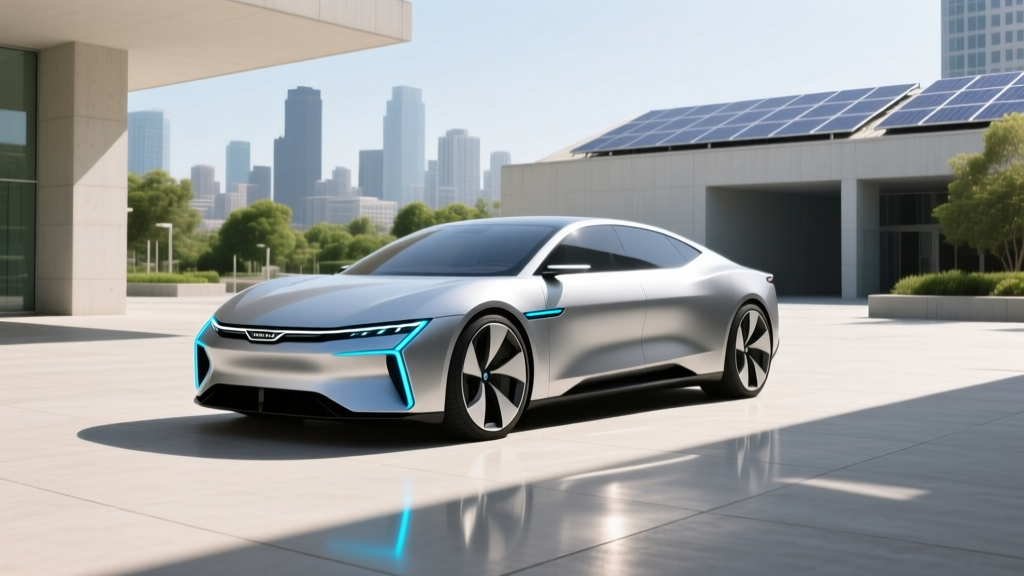
The Halcyon concept is the most concrete signal of what's coming. Key details from the concept reveal:
- Low-slung sedan/wagon profile — a departure from the Pacifica's minivan form factor
- 800-volt electrical architecture — enabling DC fast charging at up to 350 kW peak (sustained rates will be lower, as with all EVs)
- LFP and NMC battery chemistry options expected across STLA Large vehicles, with pack sizes ranging from roughly 85 kWh to 118 kWh
- Level 2+ ADAS with Stellantis' STLA AutoDrive system (hands-off, eyes-off on mapped highways — still requires driver readiness, not Level 4 autonomy)
- Inductive (wireless) charging capability shown in the concept, though production inclusion is unconfirmed
Important caveat: Concept vehicles routinely lose features before production. The Halcyon's butterfly doors, yoke steering, and full glass canopy are almost certainly not production-bound. Focus on the platform specs, not the show-car styling.
Estimated Specs: What STLA Large Tells Us
Because the Chrysler Halcyon remains pre-production, we can't provide confirmed EPA range or MSRP figures. But the STLA Large platform has been detailed by Stellantis, and sibling vehicles (like the Dodge Charger Daytona EV) give us reliable benchmarks for what a Chrysler EV on this architecture should deliver.
| Specification | Estimated / Projected | Source Basis |
|---|---|---|
| Platform | STLA Large (BEV) | Stellantis |
| Battery Capacity | 85–118 kWh (usable) | STLA Large specs |
| Battery Chemistry | NMC (long-range) / LFP (base) | Stellantis announcements |
| EPA Range (est.) | 320–400 miles | Platform target, Dodge Charger Daytona precedent |
| Architecture | 800V | Halcyon concept |
| Peak DC Fast Charge | Up to 350 kW | STLA Large target |
| 10–80% DC Charge (est.) | ~22–27 minutes | Based on 800V platform benchmarks |
| Level 2 Home Charge | ~11 kW (48A) onboard | Industry standard for this class |
| Drivetrain | RWD / AWD options | STLA Large flexibility |
| Horsepower | 300–500+ HP (trim dependent) | Platform range |
| 0–60 mph (est.) | 4.5–6.5 seconds | Comparable STLA Large vehicles |
| Starting MSRP (est.) | $45,000–$55,000 | Market positioning vs. Tesla Model S, Hyundai Ioniq 6 |
| Federal Tax Credit (§30D) | Eligibility TBD — depends on battery sourcing | IRS rules |
Real-World Range Expectations
Stellantis targets up to 400 miles of range on the STLA Large platform. In practice, expect 320–360 real-world miles for a well-equipped AWD trim under mixed driving. Highway-only driving at 75+ mph typically drops range 15–20% below EPA. In cold weather (below 32°F), expect an additional 20–30% reduction due to battery chemistry limitations and cabin heating demand, even with a heat pump. A 400-mile EPA rating could realistically deliver 260–280 miles on a cold winter highway run.
Chrysler EV vs. Gas and Hybrid: Cost and Practicality
If you're cross-shopping a future Chrysler EV against today's Chrysler Pacifica Hybrid (PHEV) or a competing midsize EV, here's how the numbers stack up. We compare projected Chrysler EV ownership against the Pacifica Hybrid and a Tesla Model Y (the segment benchmark) over five years and 75,000 miles.
| Cost Factor | Chrysler EV (Projected) | Chrysler Pacifica Hybrid | Tesla Model Y LR AWD |
|---|---|---|---|
| Base MSRP | $50,000 (est.) | $51,095 | $48,990 |
| Federal Tax Credit (§30D) | $0–$7,500 (sourcing TBD) | $0 (PHEV credit expired for new) | $0 (MSRP/income dependent) |
| Fuel / Energy Cost | $4,500 (est. at $0.14/kWh avg) | $7,200 (gas + electric) | $4,200 |
| Maintenance (5 yr) | $1,800 (est.) | $4,500 | $1,700 |
| Insurance (5 yr avg) | $9,500 (est.) | $7,800 | $10,200 |
| Depreciation (est.) | $18,000 | $20,000 | $19,500 |
| Total 5-Year Cost | ~$84,800–$91,300 | ~$89,595 | ~$83,590 |
Key takeaway: A Chrysler EV's cost competitiveness hinges on two unknowns — final MSRP and federal tax credit eligibility. If Stellantis sources battery components and critical minerals to meet IRS §30D requirements, the $7,500 point-of-sale credit could bring the effective price down to the low $40Ks, making it highly competitive. If not, buyers will pay a premium for a brand-new EV nameplate with no track record.
EV vs. Hybrid vs. Gas: Which Chrysler Makes Sense for You?
| Factor | Chrysler EV (Future) | Pacifica Hybrid (PHEV) | Pacifica Gas |
|---|---|---|---|
| Electric-Only Range | 320–400 mi (full EV) | 32 mi (EPA) | 0 mi |
| Total Range | 320–400 mi | 520+ mi (gas + electric) | 570+ mi |
| Home Charging Needed? | Yes — Level 2 strongly recommended | Optional (runs fine on gas) | No |
| Fuel Cost per Mile | ~$0.04–$0.06 | ~$0.07–$0.12 (varies by EV share) | ~$0.12–$0.15 |
| Maintenance Burden | Low (no oil, fewer moving parts) | Medium (ICE + EV systems) | Higher (full ICE) |
| Availability | Late 2026/2027 (projected) | Now | Now |
The Pacifica Hybrid is a practical bridge for buyers who want some electric driving without committing fully. Its 32 miles of electric-only range covers most daily commutes, and the gas engine eliminates range anxiety on road trips. But if your household has reliable Level 2 home charging and your daily driving stays under 250 miles between charges, a full EV will cost less per mile and require far less maintenance over time.
First-Time EV Buyer Considerations
If you're considering waiting for Chrysler's EV or jumping into the EV market now with another brand, here are the practical realities that spec sheets don't always surface:
Home Charging Is the Make-or-Break Factor
Level 1 charging (120V household outlet) delivers roughly 3–5 miles of range per hour — adequate only if you drive under 30 miles daily and can plug in overnight. A Level 2 home charger (240V, 48A) adds 25–35 miles per hour, meaning a full overnight charge from 20% to 100%. Installation costs range from $800–$2,500 if your electrical panel has capacity, or $3,000–$5,000+ if you need a panel upgrade (common in homes with 100A service). Factor this into your purchase decision before committing to any EV.
Charging Speed Is About the Curve, Not the Peak
The Halcyon concept's 800V architecture suggests peak DC charging at up to 350 kW. But EVs don't sustain peak rates — the charge curve tapers significantly above 80% State of Charge. On a 350 kW-capable vehicle, expect to sustain 250–300 kW from 10–50%, then taper to 100–150 kW through 80%, and drop to under 50 kW above 90%. A "10–80% in 22 minutes" claim is meaningful; a "0–100% in 25 minutes" claim would be misleading.
Cold Weather Hits All EVs — LFP More Than NMC
If you live in a region with sustained sub-freezing winters, expect 20–30% range loss. LFP (lithium iron phosphate) batteries — likely offered in base trims — are more affected by cold than NMC (nickel manganese cobalt) chemistry. A heat pump (expected on STLA Large) mitigates cabin heating energy draw but doesn't eliminate the battery's reduced discharge efficiency in cold. Preconditioning — warming the battery before fast charging or departure — is essential for preserving range and charge speed in winter.
Federal Tax Credit: Don't Count on It Until You Verify
The §30D clean vehicle credit offers up to $7,500, but eligibility depends on:
- MSRP caps: $55,000 for sedans, $80,000 for SUVs/trucks/vans
- Buyer income limits: $150K single / $300K joint AGI
- Battery component manufacturing: increasing percentages must be made in North America
- Critical mineral sourcing: must come from the U.S. or FTA partners
Stellantis has been investing in North American battery production (including a joint venture with Samsung SDI in Indiana), which improves the odds of §30D eligibility — but final certification happens per model, per model year. Consult a tax professional and check the IRS qualifying vehicle list before assuming the credit applies.
Should You Wait for a Chrysler EV or Buy Now?
Decision Framework
Wait for the Chrysler EV if:
- You're loyal to the Chrysler brand and want a sedan (not an SUV or minivan)
- You don't urgently need a new vehicle — production is likely late 2026 or 2027
- You want to see confirmed EPA range, pricing, and §30D eligibility before committing
- You prefer 800V architecture for the fastest possible DC charging on road trips
Buy a different EV now if:
- You need a vehicle within 6 months — the Chrysler EV isn't available
- You need a minivan or 3-row SUV (the Chrysler EV will likely be a sedan)
- You want a proven platform with known reliability data and established service networks
- Models like the Hyundai Ioniq 6 (EPA 361 mi, ~$42K), Tesla Model S (EPA 402 mi, ~$80K), or BMW i5 (EPA 295 mi, ~$67K) already serve the electric sedan segment
Consider the Pacifica Hybrid if:
- You need a minivan now with some electric capability
- You lack reliable home Level 2 charging and want the gas-engine safety net
- Your daily commute is under 30 miles, which the 32-mile electric range covers
Common Misconceptions About Chrysler's EV Plans
| Myth | Fact |
|---|---|
| "The Chrysler Halcyon is available to order now." | The Halcyon is a concept vehicle. No production version has been officially unveiled or priced as of early 2026. |
| "Chrysler EVs will get the full $7,500 tax credit automatically." | §30D eligibility depends on battery sourcing, MSRP, and buyer income. Stellantis' North American battery plants improve odds, but each model must be individually certified by the IRS. |
| "800V means it charges at 350 kW the whole time." | 800V architecture enables high peak rates, but the charge curve tapers as the battery fills. Expect peak rates only in the 10–50% SoC window. |
| "Chrysler is abandoning the Pacifica for EVs." | Stellantis has indicated the Pacifica will continue. The EV sedan is an addition to the brand, not a direct Pacifica replacement — at least initially. |
| "Wireless charging from the concept will be in the production car." | Concept features are aspirational. Inductive charging adds cost, weight, and efficiency loss. Its inclusion in a production Chrysler EV is unconfirmed. |
What to Watch For Next
Chrysler's EV timeline will become clearer through 2026. Key milestones to track:
- Production vehicle reveal: Expected mid-to-late 2026. This will confirm final design, battery options, and trim structure.
- EPA range certification: Usually published on fueleconomy.gov a few months before sales begin.
- §30D eligibility listing: The IRS updates its qualifying vehicle list periodically. Check before purchasing.
- Dealer allocation and delivery timeline: Stellantis' dealer network will determine how quickly you can actually get one after the order books open.
Until then, the Chrysler electric vehicle remains a promise — one built on a capable platform, but one that hasn't yet been tested by real buyers on real roads.
Frequently Asked Questions
Does Chrysler currently sell an electric vehicle?
No. As of early 2026, Chrysler's only electrified offering is the Pacifica Hybrid, a plug-in hybrid (PHEV) minivan with 32 miles of electric-only range. Chrysler's first production EV is expected in late 2026 or 2027.
What platform will the first Chrysler EV use?
The STLA Large platform, developed by Stellantis. It supports 800-volt architecture, battery packs from approximately 85 to 118 kWh, and both RWD and AWD configurations. The Dodge Charger Daytona EV is the first production vehicle on this platform.
How much will a Chrysler EV cost?
No official pricing has been announced. Based on STLA Large platform positioning and competitive sedans, expect a starting MSRP between $45,000 and $55,000. Whether it qualifies for the $7,500 federal tax credit depends on battery sourcing and IRS certification at launch.
Will the Chrysler EV have over 300 miles of range?
Stellantis targets up to 400 miles of range on STLA Large vehicles. Real-world results will depend on trim, drivetrain (AWD reduces range), wheel size, and driving conditions. Expect 320–360 miles in mixed real-world driving for most trims.
Should I wait for the Chrysler EV or buy something else?
If you need a vehicle now, the Chrysler EV isn't an option. If you can wait 12–18 months and want a Chrysler-branded electric sedan, it may be worth monitoring announcements. Otherwise, the Hyundai Ioniq 6, Tesla Model 3/S, and BMW i5 are proven electric sedans available today.
Will Chrysler's EV support NACS (Tesla) charging?
Stellantis has not confirmed the charging connector for the Chrysler EV. However, the broader industry is shifting to NACS (the Tesla connector standard), and several automakers have committed to NACS adoption by 2025–2026. It is likely — but not confirmed — that a production Chrysler EV will use NACS or offer a CCS-to-NACS adapter.