Quick Answer: Chinese EVs in the US Market
As of 2026, you cannot easily buy a Chinese-made electric car in the United States through official dealer channels. Brands like BYD, NIO, Xpeng, and Zeekr sell heavily in Europe, Southeast Asia, and Australia, but face a 100%+ US tariff on Chinese-built EVs (imposed in 2024 and sustained into 2026), plus an uncertain dealer and service network. The Volvo EX30 and Polestar models sold in the US are built in China but carry European brand badges and US dealer support — these are your closest legal options. If you're considering importing a Chinese EV independently, expect no federal tax credit, no local warranty support, and potential CCS/NACS charging adapter issues.
Why Chinese Made Electric Cars Are Making Headlines
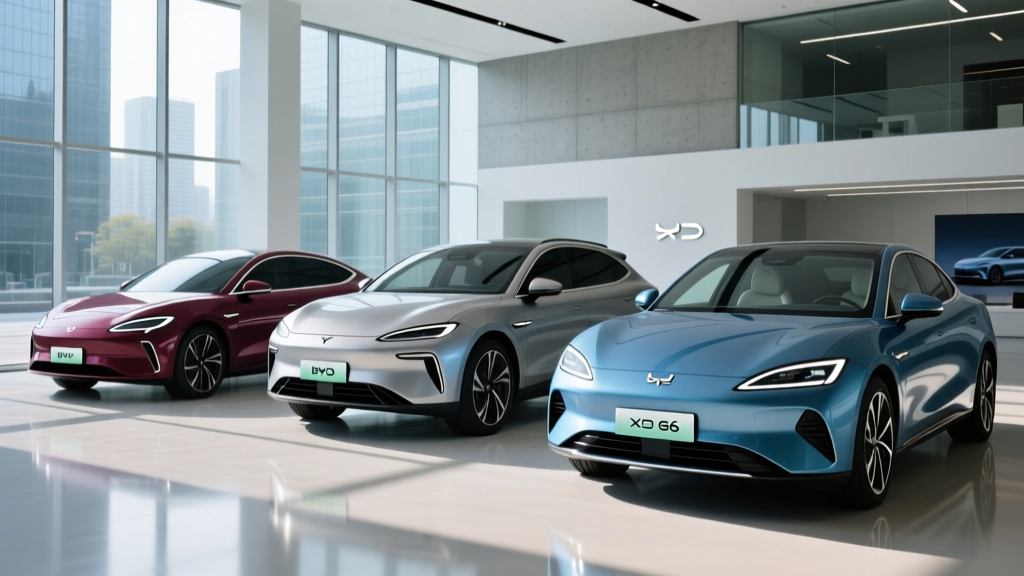
China produces over 60% of the world's electric vehicles, and brands like BYD (Build Your Dreams) have surpassed Tesla in quarterly global BEV sales multiple times since late 2023. The BYD Seal, for example, offers 354 miles of WLTP range (roughly 300 miles EPA-equivalent), a 82.5 kWh LFP Blade Battery, and 0-60 mph in 5.9 seconds — all at a European price around €45,000 (~$48,000 USD). The BYD Dolphin starts under €30,000 in Europe, undercutting most Western EVs by $10,000 or more.
Other Chinese OEMs — NIO (premium sedans/SUVs with battery-swap tech), Xpeng (ADAS-focused SUVs), Zeekr (Geely's premium EV brand), and MG (SAIC-owned, UK heritage) — are expanding aggressively into Europe, Australia, Thailand, and Brazil. Their vehicles consistently earn strong Euro NCAP safety ratings and feature competitive LFP or NMC battery packs.
But the US market is a different story entirely.
The Tariff Wall: 100%+ Duties Block Direct Sales
In May 2024, the Biden administration raised the Section 301 tariff on Chinese-built electric vehicles from 25% to 100%, effective August 2024. This tariff remains in effect in 2026. The practical result: a $35,000 BYD Dolphin would cost over $70,000 if imported directly to the US — destroying the value proposition entirely.
Additionally, Chinese-made EVs are ineligible for the §30D federal tax credit (up to $7,500), because the credit requires battery components and critical minerals to be sourced from the US or free-trade-agreement partners — not from a "foreign entity of concern" (FEOC), which includes Chinese companies. Per IRS rules on the new clean vehicle credit, any vehicle with battery components manufactured by a FEOC after 2023 is disqualified.
What You Can Actually Buy: Chinese-Built EVs with US Dealer Support
Several vehicles sold in the US are manufactured in China but carry European or American brand names and full dealer networks:
| Model | Brand Origin | Built In | EPA Range | Battery (kWh) | Base MSRP (2026) | §30D Eligible? |
|---|---|---|---|---|---|---|
| Volvo EX30 | Sweden (Geely-owned) | China (Luqiao) | 265 mi | 69 kWh (NMC) | $36,345 | No (FEOC battery) |
| Polestar 2 | Sweden (Geely-owned) | China (Luqiao) | 276 mi (LR) | 82 kWh (NMC) | $49,900 | No (FEOC battery) |
| Polestar 4 | Sweden (Geely-owned) | China (Hangzhou Bay) | 300 mi (est.) | 102 kWh (NMC) | $59,900 | No (FEOC battery) |
| Lotus Eletre | UK (Geely-owned) | China (Wuhan) | 270 mi (est.) | 112 kWh (NMC) | $107,400 | No |
| Lincoln Star* (announced) | USA (Ford) | TBD | TBD | TBD | TBD | TBD |
*Announced — not yet on sale. Specs preliminary.
Key takeaway: these vehicles are designed and branded in Europe, but manufactured in Chinese plants owned by Geely (which also owns Volvo and Polestar). They come with US warranties and service networks, but their Chinese battery supply chains typically disqualify them from the $7,500 federal tax credit.
Specs That Make Chinese EVs Tempting — If You Could Buy Them
Here's what the most-discussed Chinese EVs offer in markets where they're available:
| Model | Battery | WLTP Range | Est. EPA Range | Peak DC Charge | 10–80% Time | 0–60 mph | EU/UK Price (≈USD) |
|---|---|---|---|---|---|---|---|
| BYD Seal | 82.5 kWh LFP | 354 mi | ~300 mi | 150 kW | ~26 min | 5.9s | ~$48,000 |
| BYD Dolphin | 60.4 kWh LFP | 265 mi | ~225 mi | 88 kW | ~29 min | 7.0s | ~$32,000 |
| BYD Atto 3 | 60.5 kWh LFP | 260 mi | ~220 mi | 88 kW | ~29 min | 7.3s | ~$38,000 |
| NIO ET7 | 100 kWh NMC | 367 mi | ~310 mi | 180 kW | ~25 min | 3.8s | ~$72,000 |
| Xpeng G6 | 87.5 kWh NMC | 330 mi | ~280 mi | 210 kW | ~20 min | 6.2s | ~$45,000 |
| Zeekr 001 | 100 kWh NMC | 340 mi | ~290 mi | 200 kW | ~22 min | 3.8s | ~$52,000 |
Important context: WLTP range estimates (used in Europe and China) are typically 10–15% more optimistic than EPA estimates used in the US. Real-world highway range at 75 mph will be lower still — expect 15–25% below WLTP figures in mixed driving. Cold weather (below 32°F) can reduce range another 20–30% in any EV, regardless of origin.
Chinese EVs vs. US-Available Alternatives: Cost Comparison
If you're drawn to the value proposition of a Chinese EV, here's how comparable US-market alternatives stack up on total cost:
| Factor | BYD Seal (if imported, hypothetical) | Tesla Model 3 LR (2026 US) | Hyundai Ioniq 6 SE LR (2026 US) |
|---|---|---|---|
| Base MSRP | ~$48,000 + 100% tariff = ~$96,000 | $47,740 | $42,715 |
| Federal Tax Credit (§30D) | $0 (FEOC ineligible) | $0 (battery sourcing TBD for 2026) | Up to $7,500 (if sourcing qualifies) |
| Effective Price | ~$96,000 | $47,740 | ~$35,215 |
| EPA Range | ~300 mi (est.) | 341 mi | 361 mi |
| Peak DC Charge | 150 kW | 250 kW | 233 kW |
| 10–80% Charge Time | ~26 min | ~18 min | ~18 min |
| US Service Network | None | Extensive | Extensive |
| Parts Availability | Import only, weeks delay | Readily available | Readily available |
| Insurance (avg annual) | Est. $2,800+ (no US data) | ~$2,400 | ~$1,900 |
The tariff math is devastating. Even the most affordable Chinese EVs become more expensive than premium US-market options once the 100% duty is applied. And without a dealer network, you face real ownership risk: a fender-bender could mean weeks of waiting for body panels shipped from Shenzhen.
Common Misconceptions About Chinese Made Electric Cars
| Myth | Fact |
|---|---|
| "Chinese EVs are low quality and unsafe." | BYD, NIO, and Xpeng models regularly earn 5-star Euro NCAP ratings. BYD's Blade Battery (LFP) passes nail-penetration tests without thermal runaway — a safety benchmark many NMC batteries fail. |
| "I can just import one through a gray-market dealer." | The 100% tariff applies to all Chinese-origin EVs regardless of import method. You'll also face EPA/DOT compliance issues — Chinese-market vehicles aren't certified to US FMVSS safety standards, making street registration extremely difficult or impossible in most states. |
| "Chinese EVs will flood the US market soon." | The 100% tariff has no sunset clause as of 2026. Some Chinese OEMs (BYD, Chery) are building factories in Mexico, Brazil, Thailand, and Hungary to serve regional markets — but USMCA rules of origin and potential additional tariffs on Chinese-branded vehicles from Mexico complicate any US entry strategy. |
| "They use CCS connectors, so charging is fine." | Chinese domestic-market EVs primarily use the GB/T charging standard, not CCS or NACS. European-export models use CCS2. You'd need adapters for US public charging infrastructure, adding cost and reducing reliability. |
| "BYD is opening US dealerships." | BYD has repeatedly stated it has no plans to enter the US passenger car market while the 100% tariff remains. BYD does sell electric buses and commercial vehicles in the US through separate channels. |
Real-World Ownership Considerations If You Still Want One
If you're a US buyer seriously considering a Chinese-made EV — perhaps you're an expat returning from China, or you're looking at a Polestar/Volvo with Chinese manufacturing — here's what to plan for:
Home charging access: Any EV you can legally register in the US will charge on a standard Level 2 (240V) home charger. Budget $500–$1,500 for a quality Level 2 unit (like a ChargePoint Home Flex or Emporia V2) plus $800–$2,500 for electrician installation, depending on whether your panel needs a 200A upgrade. Chinese-brand EVs without US dealer support won't have proprietary home charger ecosystems, so third-party J1772/NACS chargers are your best bet.
Climate impact: LFP batteries (common in BYD vehicles) are slightly more resistant to cold-weather degradation than NMC, but all EVs lose 20–30% range in sub-freezing temperatures. If you live in the upper Midwest or Northeast, plan for a vehicle with at least 25% more EPA range than your daily driving needs.
Insurance: Insurers price risk based on parts availability, repair complexity, and claims history. A gray-market Chinese EV with no US parts network will face significantly higher premiums — potentially 30–50% above a comparable US-market EV. Get quotes before purchasing.
Resale value: Without an established US brand presence and service network, expect steep depreciation. NADA and Kelley Blue Book won't have residual value guides for a BYD Seal, making trade-ins and lease returns nearly impossible.
Decision Framework: Should You Buy a Chinese Made Electric Car?
Choose a Chinese-built EV with US dealer support (Volvo EX30, Polestar 2/4) if:
- You want European design with competitive pricing
- You accept that the §30D tax credit likely won't apply
- You have access to home Level 2 charging
- You're comfortable with a Geely-owned brand
Wait for Chinese brands to enter the US market if:
- The 100% tariff is repealed or reduced (no timeline for this)
- BYD or NIO opens a US factory (announced for Mexico/Brazil, not US)
- You can accept the ownership risk of no dealer network today
Choose a US-market alternative (Tesla, Hyundai, Ford, GM) if:
- You want the §30D tax credit (up to $7,500 at point of sale)
- You need reliable service and parts access
- You want NACS native compatibility with the Tesla Supercharger network
- You care about resale value and insurance affordability
Frequently Asked Questions
Can I legally import a BYD or NIO to the United States?
Technically, you can attempt to import a non-US-certified vehicle through the "show or display" exemption or by modifying it to meet FMVSS standards — but the process costs $10,000–$30,000+, takes months, and the 100% tariff still applies on top of the purchase price. For practical purposes, it's not viable for a daily driver.
Will BYD sell cars in the US eventually?
BYD executives have said they will not enter the US passenger vehicle market while the 100% tariff is in place. BYD is building factories in Mexico, Brazil, Hungary, Thailand, and Indonesia — but none of these are confirmed to produce vehicles for US export. Political and trade dynamics could shift, but there is no announced timeline.
Are Chinese EV batteries safe and durable?
BYD's Blade Battery (LFP chemistry) is among the safest EV batteries in the world by thermal runaway resistance. LFP cells typically last 3,000+ charge cycles before degrading to 80% capacity — that's 500,000+ miles of driving for most models. NMC batteries from CATL (which supplies Tesla, BMW, and others) are similarly durable. The chemistry is proven; the concern in the US is service support, not battery quality.
Do Chinese made electric cars qualify for the $7,500 tax credit?
No. Under current IRS §30D rules, vehicles with battery components or critical minerals sourced from a "foreign entity of concern" (which includes Chinese companies like BYD, CATL, and Gotion) are disqualified from the federal clean vehicle credit. This applies even to vehicles assembled outside China if the battery supply chain traces back to a FEOC.
What about the Volvo EX30 — isn't that basically a Chinese EV?
The Volvo EX30 is designed in Sweden, branded as a Volvo, and sold through US Volvo dealers with a full warranty. It is manufactured in Luqiao, China, by Geely (Volvo's parent company). Its battery is supplied by Chinese companies, which is why it doesn't qualify for the §30D credit. Functionally, it's a legitimate option with US support — but philosophically, it's a Chinese-built product. Your comfort level with that distinction is personal.
How do Chinese EVs compare to Tesla on charging speed?
Most Chinese-market EVs peak between 88 kW and 210 kW on DC fast charging. The Tesla Model 3 Long Range peaks at 250 kW, achieving a 10–80% charge in roughly 18 minutes on a V3 Supercharger. The Xpeng G6 (210 kW peak, ~20 min 10–80%) is competitive, but most BYD models (88–150 kW) charge noticeably slower than current Tesla, Hyundai, or Kia offerings. The gap matters most on road trips where charging time adds up.
Sources: IRS Clean Vehicle Credits, fueleconomy.gov (EPA range data), manufacturer spec sheets (BYD Global, Volvo USA, Polestar USA). Tax credit eligibility rules are current as of 2026 and subject to change — consult a tax professional for your specific situation.