Chinese Ford Bronco EV Spotted: The Quick Answer
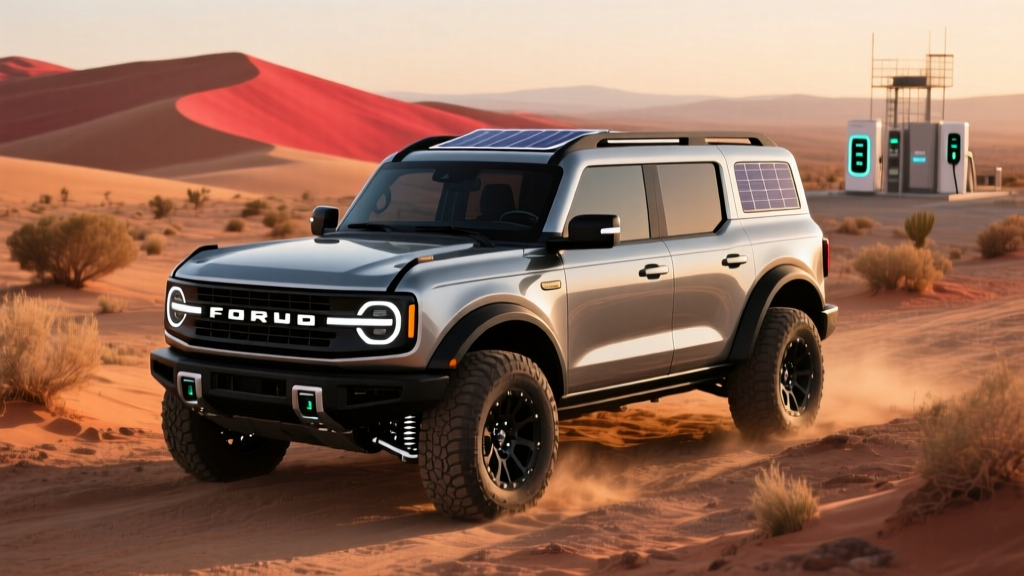
What was spotted: Camouflaged prototypes of a fully electric Ford Bronco, believed to be built on a modified version of Ford's Chinese-market EV platform, were photographed testing in late 2025 near a cold-weather proving ground in northern China. The vehicle appears to be a midsize electric SUV with Bronco styling cues, including the signature round headlights, boxy profile, and removable roof panels.
Is it confirmed? No. Ford has not officially announced a Bronco EV for the US or Chinese market as of early 2026. The prototypes appear to be part of Ford's partnership with Chinese automaker JMC (Jiangling Motors Corporation) or potentially a skunkworks project leveraging Ford's design IP. Until Ford issues an official press release or files trademark/patent documents, all specifications remain preliminary and estimated.
Should you wait for it? Only if you need a body-on-frame electric off-roader and your purchase timeline extends into 2027 or later. Current alternatives like the Rivian R1S, Jeep Wrangler 4xe (PHEV), and the upcoming electric Jeep Recon are available or closer to market.
What the Spy Photos Actually Show
The prototype spotted in China features several distinctive elements that link it to the Bronco lineage:
- Boxy, upright greenhouse with a near-vertical windshield and flat roofline consistent with the current T6-platform Bronco
- Circular LED headlamp signatures visible through camouflage wrap
- No visible exhaust routing, confirming battery-electric rather than hybrid or ICE powertrain
- Charging port on the driver-side front fender, typical of EV prototypes in the Chinese market
- Estimated wheelbase of ~114-116 inches, placing it between the 2-door Bronco (101.6 in) and 4-door Bronco (116.1 in)
- Ground clearance appears to be 10+ inches based on wheel-well-to-body proportions, suggesting serious off-road intent
Notably, the prototype does not appear to share a platform with the US-market Bronco, which is built on the body-on-frame T6 architecture shared with the Ranger. Instead, industry analysts suggest it may use a skateboard EV platform developed jointly by Ford and a Chinese partner — potentially a derivative of the platform underpinning Ford's China-market electric vehicles or a new architecture altogether.
According to Ford's official media site, the company has committed to a growing EV portfolio but has not listed a Bronco EV in its announced global lineup. The Chinese-market prototype may be a regional product, a technology demonstrator, or an early look at a future global model — we simply don't know yet.
Estimated Specs: What a Bronco EV Would Need to Compete
Based on the prototype proportions, platform speculation, and competitive benchmarks, here are estimated specifications for a potential production Bronco EV. These are not confirmed by Ford and should be treated as analyst projections.
| Spec | Estimated / Target | Competitive Benchmark |
|---|---|---|
| Battery Capacity | 95-110 kWh (NMC chemistry likely) | Rivian R1S: 128.9 kWh (Max Pack) |
| EPA Range (est.) | 280-320 miles | R1S Dual-Motor: 352 mi EPA |
| Motor Configuration | Dual-motor AWD (possible tri-motor variant) | R1S Quad-Motor: 835 HP |
| Horsepower (est.) | 400-550 HP | Bronco Raptor (gas): 418 HP |
| 0-60 mph (est.) | 4.5-5.5 seconds | R1S Dual-Motor: 5.0 sec |
| Peak DC Fast Charge | 175-250 kW (est.) | Hyundai Ioniq 5: 240 kW peak |
| 10-80% Charge Time (est.) | 22-30 minutes | R1S: ~28 min at 200+ kW |
| Ground Clearance | 10.5-11.5 inches (est.) | Bronco Badlands: 11.5 in |
| Towing Capacity (est.) | 5,000-7,500 lbs | R1S: 7,700 lbs |
| Base MSRP (est.) | $55,000-$65,000 | Bronco Wildtrak (gas): ~$52,000 |
Important context on range: A boxy, heavy off-road SUV will face significant aerodynamic drag. Even with a 100 kWh battery, real-world highway range at 75 mph could drop to 230-260 miles in mild weather and potentially 180-210 miles in freezing temperatures due to battery chemistry limitations and cabin heating demands. The EPA sticker number would represent an optimistic blended-cycle figure.
Bronco EV vs. Gas Bronco: Real Cost Comparison
If a Bronco EV materializes, the most relevant comparison for current Bronco shoppers is the gas-powered model. Here's how the economics would stack up over 5 years, assuming a $60,000 EV MSRP vs. a $48,000 gas Bronco Wildtrak MSRP.
| Cost Category | Bronco EV (est.) | Gas Bronco Wildtrak |
|---|---|---|
| Purchase Price | $60,000 | $48,000 |
| Federal Tax Credit (§30D) | Up to $7,500* | $0 |
| Effective Purchase Price | ~$52,500 | $48,000 |
| Fuel/Energy (75,000 mi) | $4,500-$6,000 (home L2) | $10,500-$12,000 (gas at $3.50/gal, 18 MPG) |
| Maintenance (5 yr) | $1,200-$1,800 | $3,500-$4,500 |
| Insurance (5 yr avg) | $9,000-$11,000 | $7,000-$8,500 |
| Estimated Depreciation | $18,000-$22,000 | $15,000-$18,000 |
| 5-Year Total Cost | $79,200-$91,300 | $84,000-$91,000 |
*Federal §30D tax credit eligibility depends on battery sourcing requirements, buyer income caps ($150K single / $300K joint), and MSRP caps ($80K for SUVs). Rules are subject to change — verify current eligibility at IRS.gov. Point-of-sale transfer is available for qualified buyers.
The EV version roughly breaks even over 5 years if you can charge primarily at home on Level 2 and qualify for the full tax credit. Public DC fast charging at $0.35-$0.50/kWh would narrow the fuel-cost advantage significantly. Insurance premiums for EVs remain 15-25% higher on average due to repair costs and battery replacement exposure.
Real-World Ownership Considerations
Before getting excited about a Bronco EV prototype, weigh these practical realities:
Home Charging Access
A 100 kWh battery on a Level 1 (120V) outlet would take over 80 hours for a full charge — completely impractical. You need a Level 2 home charger (240V, 40-48 amps) to add roughly 25-35 miles of range per hour of charging. Installation typically costs $800-$2,500 if your electrical panel has capacity, or $3,000-$5,000+ if a panel upgrade to 200 amps is needed. Without home charging, daily ownership becomes a significant friction point.
Off-Road Range Reality
Low-speed rock crawling and trail driving consume energy differently than highway miles. Expect range to drop by 30-50% during sustained off-road use due to low gearing, accessory loads (winches, lights), and lack of regenerative braking opportunities. A Bronco EV with 300 miles of EPA range might deliver only 150-180 miles of trail range before needing a charge — a serious concern in remote areas without charging infrastructure.
Cold Weather Performance
NMC battery chemistry, which a Bronco EV would likely use for its energy density, loses 20-30% of usable capacity in sub-freezing temperatures without preconditioning. A heat pump (expected in any modern EV at this price point) mitigates cabin heating losses but doesn't fully recover the battery's reduced chemical efficiency. Northern-climate owners should budget for 200-240 real-world winter miles from a 300-mile EPA rating.
Charging on the Trail
This is the Bronco EV's biggest unresolved question. Off-road destinations — Moab, the Rubicon Trail, remote forest roads — are precisely where DC fast charging infrastructure is thinnest. Ford would need to address this with either robust V2L (vehicle-to-load) capability for auxiliary equipment, partnerships with off-road-area charging networks, or a range-extender variant.
Common Misconceptions About the Spotted Prototype
| Myth | Fact |
|---|---|
| "It's the next-gen US Bronco EV" | The prototype appears to be a Chinese-market or joint-venture project. Ford has not announced a US Bronco EV. |
| "It will definitely come to America" | Ford's China-specific EVs (like the Equinox EV sold in China) have not always crossed to the US. Import tariffs on Chinese-built vehicles (currently 100% under 2024 rules) make direct import economically unviable. |
| "Electric means it can't off-road" | EVs offer instant torque and precise throttle control, which are advantages in rock crawling. The Rivian R1S and GMC Hummer EV have proven electric off-road capability. Weight is the tradeoff. |
| "It'll cost under $40,000" | A body-on-frame (or equivalent) electric SUV with off-road hardware, 100+ kWh battery, and 300-mile range would realistically start at $55,000-$65,000 before incentives. |
| "It qualifies for the $7,500 tax credit" | Credit eligibility requires meeting battery-sourcing and critical-mineral requirements under §30D. A Chinese-built vehicle would almost certainly not qualify, and a US-built version would depend on its battery supply chain. |
How It Stacks Up Against Current Alternatives
If you're shopping now for an electric or electrified off-road SUV, here's what's actually available or near-market:
| Vehicle | Powertrain | EPA Range / MPG | 0-60 | Starting MSRP | Status |
|---|---|---|---|---|---|
| Rivian R1S (Dual-Motor) | BEV, 128.9 kWh | 352 mi EPA | 5.0 sec | $79,900 | On sale |
| Jeep Wrangler 4xe | PHEV, 17 kWh | 22 mi electric + 20 MPG | 6.0 sec | $52,995 | On sale |
| Jeep Recon (est.) | BEV, ~100 kWh | ~300 mi (est.) | ~5.5 sec (est.) | ~$55,000 (est.) | Expected late 2026 |
| GMC Hummer EV SUV | BEV, 212.7 kWh | 314 mi EPA | 3.5 sec | $99,995 | On sale |
| Ford Bronco Raptor (gas) | Gas, 3.0L V6 TT | 16 MPG combined | 5.5 sec | $87,895 | On sale |
The Rivian R1S remains the most capable all-electric off-road SUV currently purchasable, but its ~$80K starting price puts it in luxury territory. The Jeep Wrangler 4xe is the pragmatic bridge: 22 miles of electric-only range covers most commutes, and the gas engine eliminates range anxiety on remote trails. The upcoming Jeep Recon is the closest direct competitor to what a Bronco EV would become.
Decision Framework: Should You Wait or Buy Now?
Choose to wait for a potential Bronco EV if:
- Your purchase timeline is 2027 or later
- You specifically want Ford's Bronco design language and dealer/service network
- You're willing to accept uncertainty around specs, pricing, and availability
- You have reliable home charging and don't frequently drive remote off-road trails
Choose the Rivian R1S now if:
- You need an electric off-road SUV today
- You can absorb the $80K+ price point
- You value OTA updates, a growing Supercharger-compatible charging network, and proven capability
Choose the Jeep Wrangler 4xe if:
- You want electric commuting without sacrificing trail range
- You frequently go off-grid where charging doesn't exist
- You want a proven platform with massive aftermarket support
- Your budget is closer to $50K-$60K
Choose the upcoming Jeep Recon if:
- You want an electric Jeep at a more accessible price than the R1S
- You're comfortable with a late-2026 or 2027 delivery timeline
- Stellantis's EV platform execution gives you confidence
Frequently Asked Questions
Is the Chinese Ford Bronco EV real or just a rumor?
Camouflaged prototypes have been photographed, so a physical vehicle exists. However, Ford has not officially announced a Bronco EV for any market. The prototype may be a Chinese-market product, a technology testbed, or an early version of a future global model. Treat all specs as preliminary until Ford confirms details.
Would a Chinese-built Bronco EV be sold in the United States?
Highly unlikely in its current form. US tariffs on Chinese-manufactured vehicles reached 100% in 2024, making direct import economically impossible. If Ford intends to sell a Bronco EV in the US, it would need to be manufactured in North America or another tariff-exempt market. The Chinese prototype may simply be testing the concept for the world's largest EV market.
How would an electric Bronco handle off-road trails compared to gas?
Electric motors provide instant, linear torque from zero RPM — an advantage in precise rock-crawling situations. Regenerative braking can also simulate low-range gearing. The main disadvantage is weight (EV batteries add 1,500+ lbs), which affects suspension articulation, tire wear, and recovery situations. Range in remote areas without charging remains the critical limitation.
What battery chemistry would a Bronco EV likely use?
NMC (nickel manganese cobalt) is the most probable chemistry given the need for high energy density in a heavy off-road vehicle. LFP (lithium iron phosphate) offers longer cycle life and lower cost but is heavier per kWh, making it less suitable for a vehicle where weight already impacts off-road performance. NMC batteries typically carry an 8-year/100,000-mile warranty with a 70% capacity retention guarantee, per federal requirements.
Would the Bronco EV qualify for the federal tax credit?
If built in the US with qualifying battery components and critical minerals, it could be eligible for up to $7,500 under IRS §30D. However, buyer income must not exceed $150,000 (single) or $300,000 (joint), and the vehicle MSRP must be under $80,000 for SUVs. Battery sourcing requirements continue to tighten annually. A Chinese-built version would not qualify. Always verify current rules with a tax professional.
Sources: Ford Motor Company Media, IRS Clean Vehicle Credits, EPA Fuel Economy