Can You Buy Chinese EVs in the US in 2026?
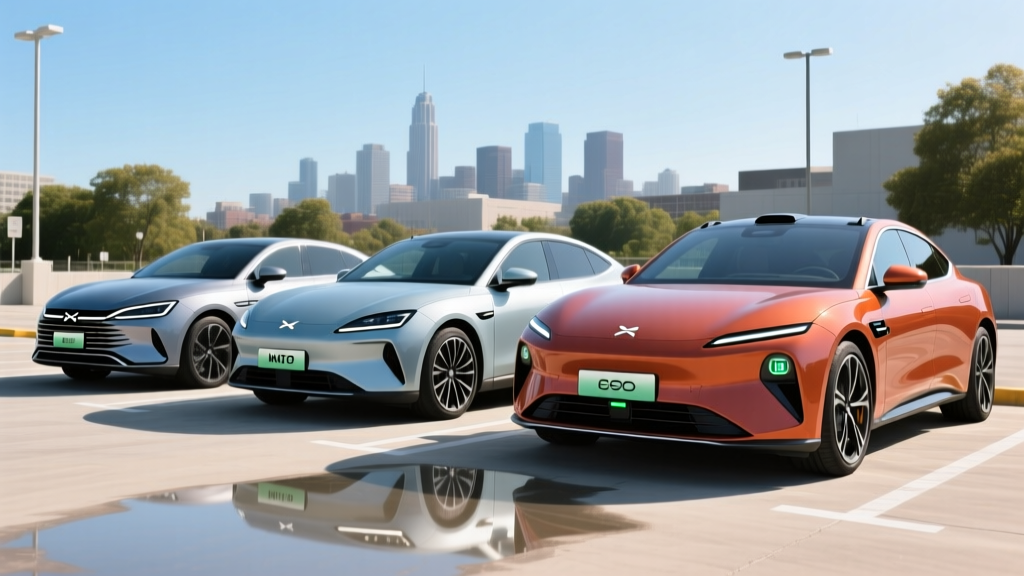
Short answer: Almost none, and those that exist are priced out of contention. As of 2026, the United States imposes a 100% tariff on Chinese-made electric vehicles — effectively doubling their sticker price before destination fees, state taxes, or dealer markups. Brands like BYD, NIO, and Zeekr do not sell passenger cars to US consumers. The only Chinese-manufactured EVs reaching American driveways are niche models (like certain Polestar variants) that have been rerouted through third-country assembly or are sold at heavily inflated prices. For practical EV shopping in 2026, Chinese EVs are not a viable option for US buyers.
Why Chinese EVs Are Effectively Locked Out of the US Market
The US government escalated tariffs on Chinese-made EVs from 25% to 100% in mid-2024 under Section 301 trade authorities, and those rates remain fully in effect for the 2026 model year. This isn't a minor surcharge — it's a market-closure mechanism. A BYD Seal that lists for roughly $38,000 in China would carry an import duty of approximately $38,000 upon US entry, pushing its landed cost above $76,000 before any dealer margin, compliance modifications, or shipping logistics.
Several additional barriers compound the tariff wall:
- National security data restrictions: The US Department of Commerce has proposed rules restricting connected vehicles from China over data-security concerns, targeting telematics, over-the-air update channels, and ADAS sensor data flows.
- IRA battery-sourcing requirements: Under the IRS §30D clean vehicle credit, any EV containing battery components from a "foreign entity of concern" (FEOC) — a category that includes Chinese manufacturers — is disqualified from the federal tax credit. This applies to all Chinese-sourced battery cells and critical minerals processed in China.
- No dealer or service network: Chinese OEMs have not invested in US dealership franchises, parts warehouses, or certified technician networks for passenger vehicles.
Which Chinese-Linked EVs Can You Actually Buy?
A small handful of vehicles with Chinese manufacturing ties are available — but with major caveats:
| Brand / Model | Chinese Connection | US Availability (2026) | Approx. MSRP | EPA Range |
|---|---|---|---|---|
| Polestar 4 | Owned by Geely (China); initially built in Hangzhou Bay | Available; production shifting to South Korea for US-market units | ~$56,000 | ~300 mi (est.) |
| Lotus Eletre | Owned by Geely; built in Wuhan | Limited availability, high price | ~$107,000 | ~270 mi (est.) |
| Volvo EX30 | Owned by Geely; China-built units | US launch delayed; rerouting production to Belgium plant | ~$36,000 (est.) | ~265 mi (est.) |
| Fisker Ocean (defunct) | Used BYD batteries; company bankrupt in 2024 | Discontinued — no new sales | N/A | N/A |
Key takeaway: Polestar and Volvo, both under China's Geely Holding Group, have actively restructured supply chains to build US-bound vehicles outside China specifically to avoid the 100% tariff and to preserve §30D tax credit eligibility. Even these brands are not "Chinese EVs" in any practical sense by the time they reach American showrooms.
Cost Reality: What a Chinese EV Would Actually Cost US Buyers
To understand why the tariff is a de facto ban, here's a concrete cost comparison showing what happens when you apply the 100% duty to a popular Chinese EV versus a comparable US-market alternative:
| Cost Factor | BYD Seal (Hypothetical US Import) | Tesla Model 3 RWD (2026 US Market) | Hyundai Ioniq 6 SE (2026 US Market) |
|---|---|---|---|
| Factory / base price | ~$38,000 | $38,990 | $37,500 |
| US import tariff (100%) | +$38,000 | $0 (US-assembled) | $0 (Korea-built, 0% tariff) |
| Shipping & compliance | ~$3,500 | ~$1,200 | ~$1,800 |
| Dealer / retail margin | ~$5,000 | $0 (direct sales) | ~$3,000 |
| Estimated MSRP to consumer | ~$84,500 | $38,990 | ~$42,300 |
| Federal §30D tax credit | $0 (FEOC battery disqualified) | $7,500 (point-of-sale)* | $7,500 (point-of-sale)* |
| Effective net price | ~$84,500 | ~$31,490 | ~$34,800 |
| EPA range | ~350 mi (CLTC; ~290 mi EPA est.) | 272 mi | 361 mi |
| Battery | 82.5 kWh (LFP Blade) | 57.5 kWh (LFP) | 77.4 kWh (NMC) |
| DC fast charge (peak) | 150 kW | 170 kW | 240 kW |
| 10–80% charge time | ~30 min | ~25 min | ~18 min |
* §30D credit eligibility requires meeting income caps ($150K single / $300K joint), MSRP caps ($55K sedans / $80K SUVs), and battery sourcing rules. Verify at irs.gov. Credit available as point-of-sale reduction through participating dealers.
The math is stark: a tariff-inflated BYD Seal would cost nearly 2.7× more than a Tesla Model 3 with comparable or better range, while being ineligible for any federal incentive and having zero US service infrastructure.
Chinese EVs vs. US and Korean Alternatives: Ownership Cost Breakdown
Even if tariffs were reduced, buyers should evaluate total cost of ownership (TCO) across five years. Here's how a hypothetical Chinese import compares to vehicles you can actually buy today:
| 5-Year Cost Category | Chinese EV (Hypothetical, ~$84K) | Tesla Model 3 ($39K) | Toyota Camry Hybrid ($30K) |
|---|---|---|---|
| Purchase price (after credit) | $84,500 | $31,490 | $30,000 |
| Fuel / electricity (60K mi) | $4,200 | $4,200 | $5,800 |
| Maintenance (5 yr) | $3,500 (no parts network) | $2,100 | $3,200 |
| Insurance (5 yr avg) | $12,000+ (no actuarial data) | $8,500 | $6,800 |
| Depreciation (est. 5 yr) | ~$45,000 (orphan brand risk) | $14,000 | $11,000 |
| Estimated 5-yr TCO | ~$149,200 | ~$60,290 | ~$56,800 |
The hypothetical Chinese EV's 5-year TCO is roughly 2.5× that of the Tesla Model 3 and nearly 3× that of a Camry Hybrid. The depreciation figure is the biggest wild card — without a service network, brand reputation, or parts supply, resale value would crater.
Common Myths About Chinese EVs in the US — Debunked
| Myth | Fact |
|---|---|
| "Chinese EVs are so cheap, they'll disrupt the US market with $15,000 cars." | The 100% tariff doubles the import price. A $15,000 BYD Seagull becomes ~$30,000+ before shipping, compliance, and dealer margin — and still gets no tax credit. US-market Chevrolet Equinox EV starts around $33,000 after credit. |
| "BYD is about to launch in the US any day now." | BYD has explicitly stated it has no plans to sell passenger vehicles in the US under current trade conditions. They are focusing on Europe, Southeast Asia, and Latin America, and are building factories in Hungary, Brazil, Thailand, and Indonesia to serve those markets. |
| "Chinese batteries are inferior and unsafe." | CATL and BYD are the world's two largest battery producers. BYD's Blade Battery (LFP chemistry) has demonstrated strong thermal stability in nail-penetration tests. The issue isn't quality — it's trade policy and data-security concerns, not engineering. |
| "I can import a Chinese EV myself through a grey-market dealer." | Importing a non-homologated vehicle requires EPA and NHTSA compliance certification, crash-test validation, and software localization. The cost and legal risk make this impractical for individual buyers. NHTSA import rules are strict. |
| "If tariffs were removed, Chinese EVs would be the best deal." | Without tariff protection and with FEOC credit disqualification removed, some Chinese models would be price-competitive. But buyers would still face no dealer network, uncertain parts availability, potential software/data restrictions, and high insurance premiums due to lack of claims history. |
What This Means for First-Time EV Buyers in 2026
If you've been reading headlines about China's booming EV market and wondering when those ultra-affordable models will reach American driveways, here's the practical reality and what you should do instead:
Decision Framework: What to Buy Instead
- If your budget is under $35,000 (after credits): Look at the Tesla Model 3 RWD ($38,990 – $7,500 credit ≈ $31,490), Chevrolet Equinox EV LT (~$33,000 after credit), or a certified pre-owned EV like a 2023 Hyundai Ioniq 5.
- If you want maximum range per dollar: The Hyundai Ioniq 6 SE at 361 miles EPA and ~$34,800 after credit is the efficiency champion. Expect ~300–320 miles in real-world highway driving, less in sub-40°F weather.
- If you need an SUV with family space: Tesla Model Y Long Range (320 mi EPA, ~$42,990 after credit) or Hyundai Ioniq 5 (303 mi EPA, ~$38,000 after credit) remain the segment leaders.
- If you're considering a PHEV as a bridge: The Toyota RAV4 Prime (42 mi electric-only, 94 MPGe, ~$44,000 before credit) eliminates range anxiety while still qualifying for partial incentives.
- If you were hoping for a cheap Chinese EV: That option does not exist in 2026 and will not exist for the foreseeable future. Redirect your research toward US, Korean, and European brands competing aggressively on price.
Real-World Ownership Considerations
Regardless of brand origin, every first-time EV buyer should honestly assess these factors before purchasing:
- Home charging access: Do you have a garage or driveway where a Level 2 (240V) charger can be installed? A typical Level 2 home installation costs $800–$2,500 (equipment + electrician + permit) and adds 25–44 miles of range per hour of charging. Without home charging, EV ownership is significantly less convenient and more expensive.
- Daily driving pattern: If your round-trip commute is under 80 miles, any modern EV handles it easily — even in cold weather with a 20–30% range reduction. If you regularly drive 200+ miles one-way, prioritize models with 300+ EPA miles and fast DC charging (200+ kW peak).
- Climate: In regions where winter temperatures regularly drop below 25°F, expect 20–35% range loss. Models with heat pumps (standard on Tesla, Hyundai/Kia, and most 2025+ EVs) recover some efficiency. LFP batteries are more tolerant of frequent 100% charging but are slightly more affected by extreme cold than NMC chemistries.
- Charging infrastructure: Check the Alternative Fuels Data Center for DC fast chargers along your common routes. Tesla Superchargers (now opening to NACS-equipped non-Tesla EVs) remain the most reliable network. Electrify America and EVgo are improving but still have higher downtime rates.
Where Chinese EV Technology Is Actually Winning (Outside the US)
It's worth understanding what Chinese automakers are achieving globally, because it shapes long-term industry dynamics:
- BYD sold over 4.2 million electrified vehicles globally in 2024, surpassing Tesla in total volume. Their vertical integration — they make their own batteries, semiconductors, and motors — gives them a 15–25% cost advantage over most Western OEMs.
- CATL's Shenxing battery (LFP chemistry with 4C charging capability) can charge from 10–80% in approximately 10 minutes, a technology that will eventually reach global markets through licensing deals.
- NIO's battery-swap stations — over 2,800 deployed in China — allow a full battery exchange in under 5 minutes, an alternative to DC fast charging that eliminates degradation concerns for the owner.
These innovations are real and significant. But they exist in a market ecosystem that the US has deliberately walled off through tariffs, data-security rules, and FEOC sourcing restrictions. American consumers benefit indirectly as Western OEMs are forced to accelerate their own cost reductions and technology development to compete globally.
Frequently Asked Questions
Will Chinese EVs ever be sold in the US?
Not under current trade policy. The 100% tariff, FEOC battery-sourcing restrictions, and connected-vehicle data rules create a triple barrier. A change in US-China trade relations could alter this, but no such shift is on the 2026–2028 horizon. Chinese OEMs are building factories in Europe, Southeast Asia, Mexico, and South America — deliberately diversifying away from US market dependence.
Can I buy a BYD vehicle in the US in 2026?
No. BYD does not sell passenger vehicles in the United States. They sell electric buses and commercial trucks through a Lancaster, California facility, but their consumer car lineup (Seal, Dolphin, Atto 3, Han, Tang) is not available. BYD has publicly confirmed they have no US passenger-vehicle entry plans while current tariffs remain.
Are Polestar and Volvo considered Chinese EVs?
They're owned by China's Geely Holding Group, but the vehicles sold in the US are manufactured in China (Polestar, shifting to Korea), Belgium (Volvo EX30), or Sweden. By 2026, Polestar is actively moving US-bound production to South Korea's Renault Korea plant to avoid the 100% tariff and preserve tax-credit eligibility. Calling them "Chinese EVs" oversimplifies a global supply chain.
What's the cheapest EV I can actually buy in the US in 2026?
The Chevrolet Equinox EV LT starts around $33,000 after the $7,500 federal tax credit (if you meet income and sourcing requirements). The Tesla Model 3 RWD comes in at approximately $31,490 after credit. On the used market, 2022–2023 models like the Nissan Leaf S or Chevrolet Bolt EV can be found for $15,000–$20,000, though the used-EV credit (§25E) is capped at $4,000 and has its own eligibility rules.
Do Chinese EV batteries pose a safety risk?
There is no evidence that Chinese-manufactured LFP or NMC batteries from major producers (CATL, BYD, CALB) are less safe than batteries from LG, SK On, Samsung SDI, or Panasonic. BYD's Blade Battery has passed rigorous nail-penetration and crush tests. The US government's restrictions are based on trade protection and data-security concerns — not battery safety defects. For verified safety ratings on any EV you're considering, check IIHS and NHTSA.
How does the 100% tariff affect EV prices overall?
The tariff doesn't directly raise prices on non-Chinese EVs, but it reduces competitive pressure on US, Korean, and European automakers. Without low-cost Chinese alternatives pushing prices down, US-market EV pricing reflects less downward competition. However, domestic price wars (Tesla's repeated cuts, Hyundai/Kia's aggressive pricing, Ford's cost reductions on the Mustang Mach-E) have driven prices down independently.