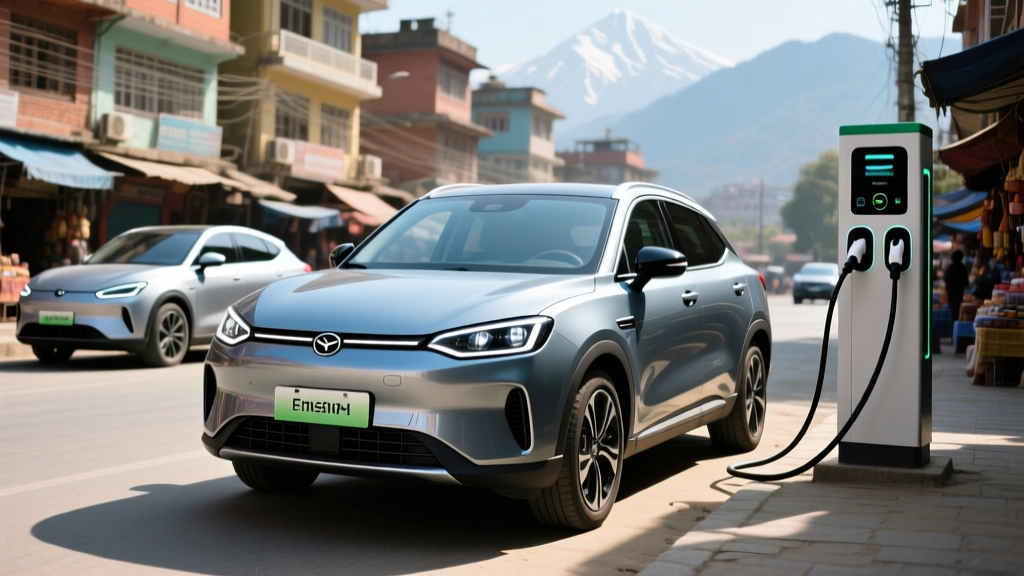
The Short Answer: Not Anytime Soon
As of 2026, Chinese-built electric vehicles remain effectively locked out of the US market. A cumulative tariff structure — including a 100% duty on Chinese EVs enacted in 2024, plus baseline import duties and additional Section 301 tariffs — pushes the landed cost of a vehicle like the BYD Seagull from roughly $12,000 in China to well over $30,000 before dealer markup, erasing the price advantage that makes these cars compelling abroad. No major Chinese automaker (BYD, NIO, Xpeng, Li Auto, Zeekr) sells vehicles to US consumers as of this writing, and none have announced concrete plans to do so while current trade policy remains in effect.
Why Chinese EVs Are Priced Out of the US Market
The barrier isn't technology or consumer demand — it's policy. Here's how the tariff stack breaks down for a hypothetical Chinese EV import in 2026:
| Tariff Layer | Rate | Impact on $15,000 Vehicle |
|---|---|---|
| Baseline auto import duty | 2.5% | +$375 |
| Section 301 tariff (China-origin goods) | 25% | +$3,750 |
| EV-specific tariff (2024 USTR ruling) | 100% | +$15,000 |
| Total landed cost before shipping/dealer | ~127.5% | ~$34,125 |
That $34,125 figure doesn't include ocean freight (~$1,200–$2,000 per vehicle), homologation costs to meet NHTSA safety standards, EPA certification, or dealer margin. Realistically, a BYD Dolphin that sells for $18,000 in Europe would need a US MSRP above $42,000 to be profitable — putting it directly against established rivals like the Hyundai Ioniq 5, Chevrolet Equinox EV, and Tesla Model 3 that already have domestic service networks, §30D tax credit eligibility, and proven parts supply chains.
The Chinese EVs Americans Are Missing (Spec Breakdown)
To understand what the tariff wall blocks, consider the vehicles Chinese brands sell elsewhere in 2026:
| Model | Battery / Chemistry | Range (WLTP) | Peak DC Charge | Price (China/EU) | US Availability |
|---|---|---|---|---|---|
| BYD Seagull | 38.9 kWh / LFP Blade | ~250 mi (WLTP) | 40 kW | ~$10,500 / ~$22,000 (EU) | None |
| BYD Seal | 82.5 kWh / LFP Blade | ~354 mi (WLTP) | 150 kW | ~$38,000 (EU) | None |
| NIO ET5 | 75 kWh / NMC (swap-capable) | ~340 mi (WLTP) | 140 kW | ~$45,000 (EU) | None |
| Xpeng G6 | 87.5 kWh / NMC | ~354 mi (WLTP) | 215 kW | ~$42,000 (EU) | None |
| Zeekr 001 | 100 kWh / NMC | ~385 mi (WLTP) | 200 kW | ~$52,000 (EU) | None |
Range caveat: WLTP figures run 10–15% higher than EPA estimates in real-world US driving. Expect the BYD Seal to deliver roughly 300–310 EPA-equivalent miles, and the Seagull closer to 210–220 miles — still respectable for the price, but not class-leading against a 363-mile EPA-rated Ioniq 5 Long Range or 341-mile Model 3 Long Range.
Could Chinese Automakers Bypass Tariffs With US or Mexico Factories?
This is the scenario industry analysts watch most closely. BYD has built or announced factories in Brazil, Hungary, Thailand, Indonesia, and Turkey — but as of 2026, none in the US or Mexico. The company has stated publicly that it is "studying" a North American site, but the political risk is enormous:
- Mexico route: USMCA trade rules require 75% regional value content for tariff-free auto imports. A Chinese brand assembling vehicles in Mexico with Chinese-sourced batteries and powertrains would likely still face tariffs, and Mexico has signaled willingness to align with US trade policy on Chinese EVs.
- US factory route: Building in the US would require billions in investment, a service network from scratch, and navigating a hostile political environment — all while the 100% tariff on Chinese EVs could theoretically be lifted or modified, making the investment moot or, conversely, permanent.
- Partnership route: Geely (parent of Volvo and Polestar) already sells EVs in the US through those brands, which use some Chinese-sourced platforms but are manufactured in Belgium, China (for Volvo), or South Korea. This is currently the only viable channel for Chinese EV technology reaching American driveways.
What This Means for Your EV Purchase Decision
If you're researching Chinese EVs because you want an affordable electric car, here's the practical reality: the sub-$25,000 EV segment these brands dominate abroad simply doesn't exist in the US market in 2026. Instead, here's what budget-conscious buyers should consider:
Choose Your Path
If you need a new EV under $35,000 (before credits): Look at the Chevrolet Equinox EV (2LT, ~$33,600 MSRP, 319 mi EPA), Nissan Leaf (SV Plus, ~$36,000, 212 mi EPA), or base Hyundai Ioniq 5 Standard Range (~$42,400 MSRP but often discounted, 245 mi EPA). Factor in the §30D federal tax credit — up to $7,500 — though eligibility depends on battery sourcing, MSRP caps ($55,000 sedans / $80,000 SUVs/trucks), and buyer income limits ($150K single / $300K joint).
If you can stretch to $35,000–$45,000: The Tesla Model 3 Long Range AWD ($42,630 MSRP, 341 mi EPA, ~$35,130 after credit), Hyundai Ioniq 5 Long Range ($47,400, 310 mi EPA), and Ford Mustang Mach-E Select ($42,995, 250 mi EPA) offer better charging infrastructure, established service, and credit eligibility.
If you're waiting for a $20,000 EV: The next-generation Tesla Model 2 (announced, expected late 2026 or 2027) and refreshed Chevrolet Bolt (expected 2026, NACS-equipped) are the most likely candidates — but neither has confirmed pricing or availability. Don't plan a purchase around them yet.
EV vs Gas: The Cost Comparison That Makes the Tariff Debate Moot
Even without ultra-cheap Chinese imports, the total cost of ownership math favors domestic and Korean EVs over comparable gas cars for most drivers with home charging access:
| Cost Factor (5 Years / 75,000 mi) | Hyundai Ioniq 5 SEL AWD ($47,400) | Toyota RAV4 XLE AWD ($33,425) |
|---|---|---|
| Purchase price (after $7,500 credit) | ~$39,900 | $33,425 |
| Fuel / electricity (home L2, $0.14/kWh avg) | ~$3,150 (30 kWh/100mi) | ~$8,100 (28 MPG, $3.50/gal) |
| Maintenance (no oil, fewer brakes) | ~$1,800 | ~$3,600 |
| Insurance (avg premium) | ~$9,500 | ~$7,200 |
| 5-Year Total | ~$54,350 | ~$52,325 |
| Cost per mile | ~$0.72 | ~$0.70 |
Real-world ownership notes: The Ioniq 5's advantage grows significantly if you have access to free or discounted workplace charging, live in a state with low electricity rates (under $0.10/kWh in parts of the Pacific Northwest and Southeast), or drive more than 15,000 miles annually. It shrinks if you rely exclusively on DC fast charging at $0.35–$0.48/kWh (common on Electrify America and EVgo), which pushes your fuel cost closer to $7,000–$9,000 over 75,000 miles — roughly matching gas.
Common Misconceptions About Chinese EVs in America
| Myth | Fact |
|---|---|
| "Chinese EVs are low quality and unsafe" | BYD, NIO, and Xpeng vehicles score well in Euro NCAP testing (BYD Seal: 5 stars, 2023). Quality has converged with Korean and European rivals. The real gap is in US-specific crash testing (IIHS/NHTSA) — these vehicles haven't been submitted. |
| "A Chinese EV would only cost $12,000 in the US" | That's the China domestic price before tariffs, shipping, homologation, and dealer margin. Realistic US MSRP would be $30,000+ for a Seagull equivalent — comparable to existing options. |
| "Tariffs will be lifted soon" | The 100% EV tariff has bipartisan support and is tied to broader US-China trade policy. No legislative or executive action to reduce it is pending as of 2026. |
| "BYD is coming to the US next year" | BYD has made no official US market entry announcement. The company is prioritizing Southeast Asia, South America, and Europe, where tariff barriers are lower or negotiable. |
| "Chinese EVs can't qualify for US tax credits anyway" | Correct, but not because of origin — the §30D credit requires battery components and critical minerals from US or FTA-partner nations. Even a Chinese EV assembled in South Korea or Japan would likely fail the battery-sourcing requirement. |
What First-Time EV Buyers Should Actually Focus On
Rather than waiting for Chinese imports that may never arrive, concentrate on these decision factors:
- Home charging access: If you can install a Level 2 charger (240V, 32–48A, adding 25–35 miles per hour of charging), EV ownership is dramatically easier. Expect $800–$2,500 for equipment and electrician labor, potentially more if your panel needs upgrading to 200A. Without home charging, your cost-per-mile advantage over gas largely disappears on public DC fast chargers.
- Climate and range reality: In sub-freezing winters, expect 20–35% range loss on most EVs (LFP batteries like those in standard-range Teslas and some BYD models lose more than NMC chemistries). A 310-mile EPA-rated Ioniq 5 may deliver 200–230 miles in a Minnesota January. Plan your battery size around your worst-case driving day, not your average commute.
- Charging network reliability: Tesla Superchargers remain the most reliable DC fast-charging network (typically 97%+ uptime). Non-Tesla networks (Electrify America, EVgo, ChargePoint) have improved but still experience 10–20% downtime at some stations. If your regular routes lack reliable charging, a PHEV like the Toyota RAV4 Prime (42 mi electric-only, 38 MPG combined after depletion) may be a better fit.
- Tax credit eligibility: The §30D credit's battery-sourcing and critical-mineral requirements eliminate many vehicles from the full $7,500. Check the DOE's qualifying vehicle list before committing to a purchase — and consult a tax professional if you're near the income caps ($150K single / $225K head of household / $300K joint MAGI).
Frequently Asked Questions
Will BYD ever sell cars in the United States?
BYD has not announced any US market entry plans as of 2026. The company is expanding aggressively in Europe, Southeast Asia, and South America, where tariff barriers are lower. A US entry would require either a domestic factory (billions in investment) or a change in trade policy — neither appears imminent.
Are there any Chinese-made EVs currently sold in the US?
Not under Chinese brand names. However, some vehicles with Chinese ownership or platforms are available: the Polestar 2 and 4 (Geely-owned, manufactured in China), certain Volvo EX30 variants (built in China), and the Lincoln Nautilus (assembled in China). These face the same tariff structure, which is reflected in their pricing.
Why are Chinese EVs so cheap in China?
Three factors: massive domestic battery supply chain integration (CATL and BYD control much of global LFP production), aggressive government subsidies that have built scale, and intense domestic competition among 100+ EV brands that compresses margins. These structural advantages don't transfer to export markets once tariffs, shipping, and local compliance costs are added.
Should I wait for cheaper EVs before buying?
If your current vehicle is functional and you can wait 2–3 years, the next-generation Chevrolet Bolt (expected 2026, NACS-equipped) and potential Tesla compact model may offer sub-$30,000 pricing. But waiting indefinitely for Chinese EVs to enter the US market is not a sound strategy given current trade policy. If you need a vehicle now, the Equinox EV, base Ioniq 5, and Model 3 RWD offer strong value with tax credit eligibility.
How do Chinese EV batteries compare to US and Korean batteries?
CATL and BYD Blade (LFP) batteries are globally competitive in cycle life, safety, and cost — BYD's LFP Blade cells are widely considered among the safest in production. However, LFP chemistry has lower energy density than NMC (meaning heavier or larger packs for the same range) and worse cold-weather performance. For US buyers in northern climates, NMC packs (like those in Hyundai/Kia and many Tesla models) remain the better choice.