Quick Answer: Will Chinese EVs Come to the US?
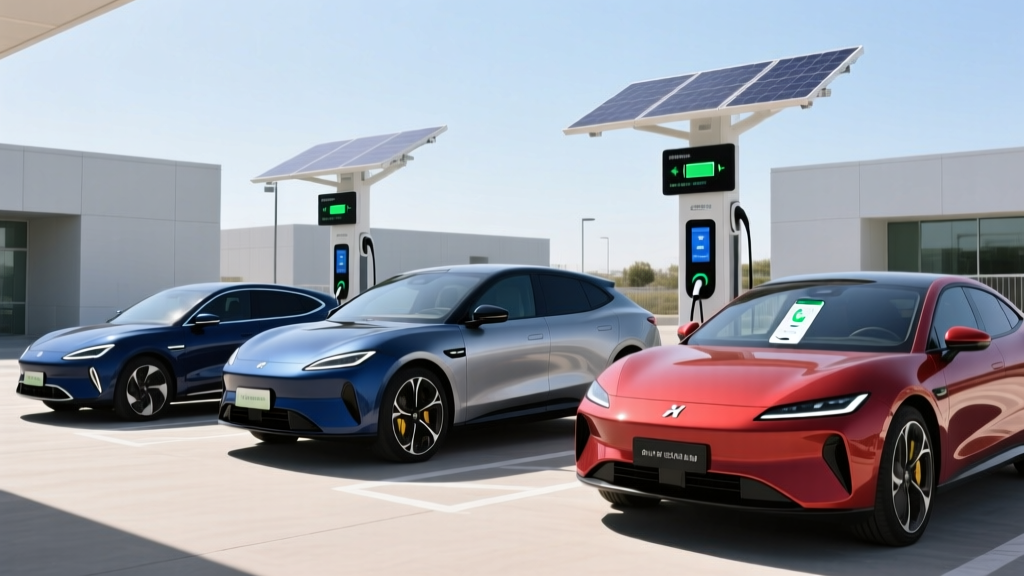
As of 2026, Chinese-branded electric vehicles are not available for sale in the United States. A 100% tariff on Chinese-built EVs, combined with strict §30D battery-sourcing rules and a separate 25% tariff on Chinese lithium-ion cells, makes direct imports economically impossible. You cannot walk into a US dealership and buy a BYD Seal, NIO ET7, or Zeekr 001 today. However, Chinese supply chains still reach American EVs indirectly through components, and one brand—Polestar—has navigated partial Chinese manufacturing ties. Below, we map exactly what's blocked, what's not, and what this means for your next EV purchase.
The Tariff Wall: Why Chinese EVs Are Priced Out of the US
In May 2024, the Biden administration raised the Section 301 tariff on Chinese-built electric vehicles from 25% to 100%. That tariff remains in full effect through 2026. To understand why this is a total blockade, consider the math on a vehicle like the BYD Seal, which starts around ¥189,800 (roughly $26,000 USD) in China:
| Cost Layer | BYD Seal (Example) | Comparable US-Market EV (Tesla Model 3 RWD) |
|---|---|---|
| Factory/MSRP Base | ~$26,000 | $38,990 |
| Shipping & Logistics | ~$2,500 | $0 (domestic) |
| Section 301 Tariff (100%) | +$26,000 | $0 |
| Standard Auto Import Duty (2.5%) | +$650 | $0 |
| Dealer/Distribution Margin | ~$4,000 | Included |
| Estimated Showroom Price | ~$59,150 | $38,990 |
| Federal §30D Tax Credit Eligible? | No (Chinese battery) | Potentially up to $7,500 |
| Effective Buyer Cost | ~$59,150 | ~$31,490 (with credit) |
The tariff alone doubles the base price. Then the IRS §30D clean vehicle credit excludes any vehicle with battery components from a "foreign entity of concern" (FEOC)—which includes Chinese manufacturers. So a Chinese EV would cost nearly double an equivalent American-built model after incentives. No automaker can compete at that spread.
Which Chinese Brands Wanted In—and Where They Went Instead
Several Chinese EV makers have publicly discussed US expansion, but the tariff wall has redirected their efforts:
- BYD: The world's largest EV maker (by combined BEV + PHEV volume) has no US passenger-vehicle presence. In 2026, BYD focuses on Europe, Southeast Asia, Mexico, and South America, where tariffs are lower. BYD sells commercial electric trucks and buses in the US, but those face separate procurement restrictions.
- NIO: The premium sedan/SUV maker initially targeted the US market but pivoted to Europe (Norway, Germany, Netherlands) and China domestic sales. No US timeline has been announced.
- Zeekr (Geely): Zeekr launched in Europe and the Middle East. Parent company Geely owns Volvo and Polestar, which do sell in the US—but from non-Chinese factories.
- XPeng: Focused on China and select European markets. No US retail plans as of 2026.
- Chery / Omoda: Announced European expansion; US entry remains speculative and unlikely under current tariff policy.
The one nuance: Polestar (headquartered in Sweden, owned by Geely) sells in the US. The Polestar 2 was initially built in China but shifted production to South Korea and then to a new plant in South Carolina for certain models to sidestep tariffs and qualify for partial tax credits. This shows the workaround path: build outside China.
The Battery Supply Chain: Where Chinese Tech Already Lives in Your EV
Even though you can't buy a Chinese-branded car, Chinese battery chemistry powers many American-market EVs. CATL (Contemporary Amperex Technology Co. Limited) is the world's largest battery cell maker, and its LFP (lithium iron phosphate) prismatic cells appear in standard-range versions of vehicles like the Tesla Model 3 and certain Ford Mustang Mach-E trims.
Here's how the §30D FEOC rules affect this:
- 2024 onward: Battery components from FEOC entities disqualify a vehicle from the credit.
- 2025 onward: Critical minerals sourced from FEOC entities also disqualify.
- Result: Automakers have been aggressively re-sourcing to LG, SK On, Panasonic, and Samsung SDI cells built in US, Korean, or Japanese plants to maintain credit eligibility.
Tesla, for example, shifted some Model 3 Standard Range units to CATL-sourced LFP cells from its Shanghai factory—those vehicles do not qualify for the $7,500 credit. Meanwhile, Model 3 Long Range units with US-assembled battery packs using non-FEOC minerals do qualify. The IRS maintains a list of eligible vehicles that updates periodically.
What This Means for US Buyers: Your Real Options in 2026
If you were hoping a $25,000 Chinese EV would disrupt the US market and bring down prices, that's not happening in 2026. Here's what you can actually buy at the affordable end of the market:
| Vehicle | MSRP | EPA Range | Est. 5-Yr Fuel/Charge Cost | §30D Credit |
|---|---|---|---|---|
| Chevrolet Equinox EV 2LT | $33,600 | 319 mi | $3,200 (home charging) | Up to $7,500 |
| Tesla Model 3 RWD | $38,990 | 272 mi | $3,000 | Up to $7,500 (varies by battery source) |
| Hyundai Ioniq 5 SE (Std Range) | $42,600 | 240 mi | $3,400 | Up to $7,500 (US-built) |
| Gas baseline: Toyota RAV4 LE (AWD) | $30,400 | ~410 mi (tank) | $8,500 (gas at $3.40/gal, 28 MPG) | $0 |
After applying the $7,500 point-of-sale credit (if you meet IRS income caps—$150K single / $300K joint for new vehicles), the Equinox EV drops to roughly $26,100. That's competitive with a gas RAV4 on purchase price alone, and the fuel savings widen the gap over time.
Real-World Ownership: What You Still Need to Budget For
Whether or not Chinese EVs arrive, EV ownership economics in 2026 look like this for a typical buyer:
Cost Breakdown: 5-Year EV Ownership (Equinox EV Example, 12K mi/yr)
- Purchase (after credit): ~$26,100
- Home Level 2 charger install: $800–$2,200 (240V/48A circuit; panel upgrade adds $1,500–$3,000 if needed)
- Electricity (5 years, $0.14/kWh avg, 3.2 mi/kWh): ~$3,200
- Maintenance (tires, cabin filter, wipers—no oil/brakes): ~$1,800
- Insurance premium (avg EV surcharge 15–20%): ~$9,500 over 5 years vs. ~$7,800 for gas equivalent
- Total 5-year cost of ownership: ~$41,400–$43,600
- Gas RAV4 5-year total: ~$30,400 + $8,500 fuel + $3,500 maint. + $7,800 ins. = ~$50,200
Net EV savings over 5 years: roughly $6,600–$8,800, driven primarily by fuel and maintenance reductions, partially offset by higher insurance.
Common Misconceptions About Chinese EVs in the US
| Myth | Fact |
|---|---|
| "Chinese EVs are cheap and low quality." | BYD, NIO, and Zeekr vehicles score well in Euro NCAP crash tests and feature advanced LFP batteries with 3,000+ cycle life. The quality gap has largely closed; the price gap is created by tariffs, not manufacturing. |
| "Tariffs protect us from unsafe Chinese cars." | Tariffs are primarily economic policy (protecting domestic auto manufacturing and reducing FEOC supply-chain dependence), not safety-driven. Chinese EVs sold in Europe meet UNECE safety standards comparable to NHTSA requirements. |
| "If I wait, Chinese EVs will arrive and prices will drop." | No major Chinese brand has announced a US production facility. Even if one did, building a factory takes 3–4 years. The earliest realistic entry via local manufacturing would be 2029–2030, and political opposition could still block it. |
| "All EV batteries are made in China anyway." | China dominates cell manufacturing (~75% global capacity), but US-market EVs increasingly use cells from LG (Michigan/Tennessee), SK On (Georgia), Panasonic (Kansas/Nevada), and Samsung SDI. The §30D FEOC rules are accelerating this shift. |
| "I can import a Chinese EV myself." | Personal importation of non-EPA-certified vehicles is essentially impossible for modern production cars. The EPA and NHTSA require crash testing, emissions certification, and manufacturer compliance—no individual can bypass this for a BYD or NIO. |
Decision Framework: What Should You Buy Right Now?
If you were hoping for a cheap Chinese EV, here's your practical path:
- If budget is under $30K (after credit): The Chevrolet Equinox EV 2LT ($26,100 effective) or a used Tesla Model 3 (eligible for the $4,000 used-EV credit under §25E if priced under $25,000) are your best bets.
- If you want maximum range per dollar: The Equinox EV at 319 miles EPA for ~$26K effective is the current value leader. Real-world highway expectation: ~260–280 miles; cold-weather drop of 15–25% in sub-30°F conditions.
- If you need AWD and space: The Hyundai Ioniq 5 (built in Georgia, credit-eligible) or Tesla Model Y (built in Texas) offer strong cargo volume and available AWD, starting ~$42–48K before credits.
- If you can't charge at home: Factor in public DC fast charging costs ($0.30–$0.50/kWh at networks like Electrify America or EVgo). That raises your 5-year fuel cost to ~$6,000–$8,000, narrowing the EV savings gap. A PHEV like the Toyota RAV4 Prime (42 mi electric-only range, 38 MPG gas) may be more practical.
- If you're set on waiting for Chinese brands: You'll be waiting until at least 2029–2030, and only if a company like BYD builds a North American or allied-nation factory that clears FEOC rules. This is speculative—don't delay a purchase you need now based on this possibility.
The Geopolitical Wild Cards That Could Change the Timeline
Three scenarios could shift the outlook beyond 2026:
- Tariff reduction via trade deal: A future administration could negotiate reduced EV tariffs with China in exchange for market access in other sectors. This would require congressional support and is unlikely before 2028.
- Chinese automaker builds in Mexico: BYD has been scouting Mexican factory sites. However, the USMCA (US-Mexico-Canada Agreement) requires 75% regional content for tariff-free auto imports, and a Chinese-owned Mexican plant could face separate FEOC scrutiny under §30D rules. Even a Mexican-built BYD might not qualify for the tax credit.
- Technology licensing instead of branding: Ford's BlueOval City battery plant licensed LFP technology from CATL—a model where Chinese tech enters the US supply chain without Chinese-branded vehicles. Expect more of this approach: Chinese chemistry and IP, American-branded and assembled vehicles.
For a detailed breakdown of which current US-market EVs qualify for the federal credit and the battery-sourcing rules behind it, the DOE's fueleconomy.gov tax credit page is the most reliable resource. For tariff specifics, the NHTSA import guidelines explain why individual imports of uncertified vehicles are not feasible.
Can I buy a BYD in the United States in 2026?
No. BYD does not sell passenger vehicles in the US. The 100% Section 301 tariff on Chinese-built EVs makes importing them economically unviable, and BYD has not announced any US manufacturing plans.
Will Chinese EVs ever be sold in the US?
It's possible but unlikely before 2030. A Chinese automaker would need to build a factory outside China (likely in an allied country or the US itself), navigate FEOC battery-sourcing rules, and establish a dealer network—all while facing political scrutiny. The most likely path is technology licensing (like Ford-CATL) rather than direct brand entry.
Do any US-market EVs use Chinese batteries?
Some do. Tesla has used CATL LFP cells in certain Model 3 Standard Range units, and some other manufacturers have sourced Chinese cells. However, vehicles with FEOC-sourced battery components do not qualify for the $7,500 §30D federal tax credit, which incentivizes automakers to shift to non-Chinese suppliers.
What's the cheapest new EV I can buy in the US right now?
The Chevrolet Equinox EV starts at $33,600 MSRP and qualifies for the full $7,500 federal tax credit (if you meet income requirements), bringing the effective price to roughly $26,100. That makes it the most affordable new long-range EV (319 miles EPA) available in 2026.
Is it worth waiting for cheaper EVs to arrive?
If you need a vehicle now, waiting for hypothetical Chinese EV entry is not practical—the timeline is 2029 at the earliest, with no guarantees. Current US-market EVs like the Equinox EV, Tesla Model 3, and Hyundai Ioniq 5 already offer strong value after tax credits, with real-world ranges of 240–320 miles and mature charging networks.