Quick Answer: Can You Buy a Chinese EV in the US Right Now?
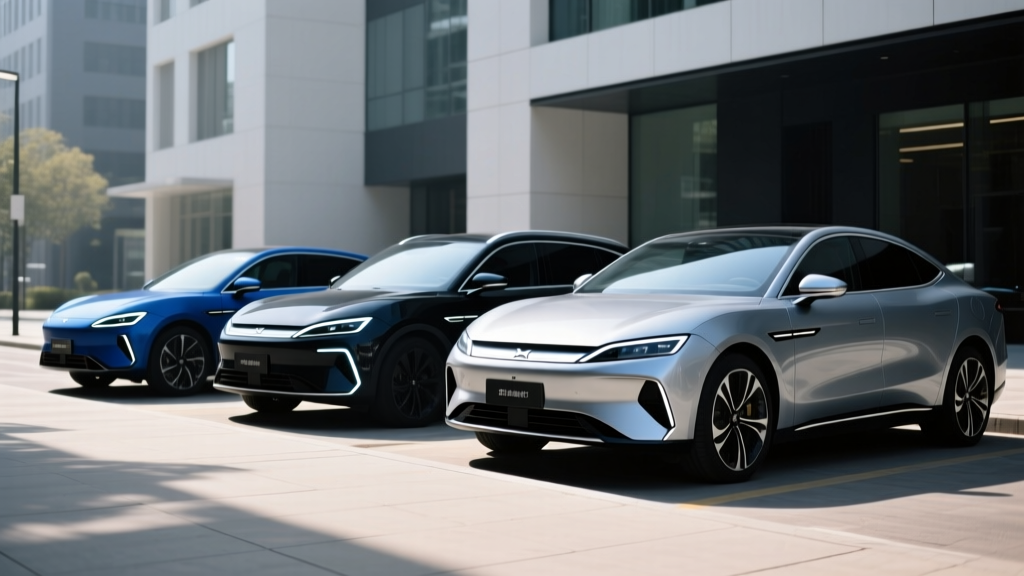
Yes, Chinese-made electric vehicles are technically legal to sell in the United States — there is no outright import ban. However, a combination of 100%+ tariffs, strict federal tax-credit exclusions, and national-security sourcing rules make them commercially nonviable for American consumers in 2026. A $30,000 BYD Seagull would cost well over $60,000 after tariffs land on US soil, and it would qualify for $0 in federal EV incentives. Meanwhile, no major Chinese automaker — including BYD, NIO, Xpeng, or Zeekr — currently sells a passenger EV through US dealerships.
If you've seen headlines about incredibly cheap, high-range Chinese electric cars flooding global markets, you're not alone in wondering whether American buyers are missing out. China produces some of the most affordable and technologically competitive EVs in the world. But the US market operates under a unique set of trade barriers that effectively wall off Chinese-built EVs from American driveways. Here's exactly what those barriers are, what they cost, and what your realistic alternatives look like.
The Tariff Wall: Why a $30K BYD Costs $60K+ in America
The headline number for Chinese EVs is eye-catching. The BYD Dolphin starts around $30,000 in China. The BYD Seagull undercuts that at roughly $10,000–$12,000 domestically. But those prices evaporate the moment a vehicle crosses the US border. Here's how the tariff stack works in 2026:
| Tariff Layer | Rate | Applies To |
|---|---|---|
| Baseline auto import duty | 2.5% | All imported passenger vehicles |
| Section 301 tariff (Trump-era, maintained) | 25% | Chinese-origin goods including autos |
| EV-specific tariff increase (announced May 2024, phased in) | 100% (by 2026) | Chinese-built battery electric vehicles |
| Combined effective tariff | ~102.5%+ | — |
A $30,000 Chinese EV faces roughly $30,750 in tariffs alone, pushing the landed cost above $60,000 before dealer markup, shipping, compliance modifications, or state registration fees. That obliterates the price advantage entirely. For context, a US-market Hyundai Ioniq 5 (built in Georgia) starts around $42,000 with an EPA-estimated 303 miles of range — and it may qualify for a federal tax credit of up to $7,500 under IRS §30D, subject to income and sourcing rules.
The math simply doesn't work for Chinese automakers to enter the US passenger EV market at competitive prices.
The Tax Credit Exclusion: No Federal Incentives for Chinese-Built EVs
Even if a Chinese automaker absorbed the tariff hit, the federal EV tax credit under IRS §30D introduces a second barrier. The Inflation Reduction Act established strict battery-component and critical-mineral sourcing requirements that Chinese supply chains cannot satisfy:
- Battery component rule: Starting in 2024, vehicles with battery components manufactured or assembled by a "foreign entity of concern" (FEOC) — which includes Chinese companies — are disqualified from the credit. This expands to critical minerals in 2025 and beyond.
- Final assembly requirement: The vehicle must undergo final assembly in North America to qualify.
- MSRP caps: Vans, SUVs, and trucks must be priced at or below $80,000; sedans at or below $55,000.
- Income caps: Modified adjusted gross income cannot exceed $150,000 (single), $225,000 (head of household), or $300,000 (joint).
A Chinese-built EV fails on at least the first two criteria — FEOC battery sourcing and non-North-American assembly — meaning $0 federal credit regardless of price or buyer income. This is a structural exclusion, not a loophole that can be engineered around easily.
What Chinese EVs Offer Globally (And Why the US Cares)
The reason Chinese EVs dominate headlines is that their specs are genuinely impressive for the price. Here's how some popular global-market Chinese EVs compare to what's available in the US:
| Model (Global Market) | Price (Domestic) | Range (CLTC/WLTP) | Battery | US Alternative | US Price (MSRP) | EPA Range |
|---|---|---|---|---|---|---|
| BYD Seagull | ~$10,000 | ~250 mi (CLTC) | ~39 kWh LFP | Chevy Bolt EV | ~$28,000 | 259 mi |
| BYD Dolphin | ~$30,000 | ~260 mi (WLTP) | ~60 kWh LFP | Hyundai Kona Electric | ~$33,000 | 261 mi |
| NIO ET7 | ~$55,000 | ~440 mi (WLTP) | 100 kWh NMC | BMW i5 | ~$67,000 | 295 mi |
| Xpeng G9 | ~$45,000 | ~355 mi (WLTP) | ~98 kWh NMC | Ford Mustang Mach-E | ~$43,000 | 312 mi |
Critical caveat on range figures: Chinese CLTC and European WLTP range estimates are significantly more optimistic than US EPA testing. A 250-mile CLTC rating typically translates to roughly 180–200 miles EPA. That BYD Seagull's "250 miles" would likely sticker at around 185–195 EPA miles — competitive with a Bolt EV but not class-leading.
The US alternatives also benefit from established dealer networks, NHTSA crash-test compliance, available Level 2 ADAS features, and domestic service infrastructure. A BYD with a battery issue in Ohio has nowhere to go for warranty service today.
The Loophole Question: Can Chinese Brands Build in the US or Mexico?
This is where the conversation gets more nuanced. The tariff and tax-credit barriers target Chinese-built vehicles, not Chinese-owned companies. In theory, a Chinese automaker could:
- Build a factory in the US, Mexico, or Canada (satisfying the USMCA final-assembly requirement)
- Source battery cells and critical minerals from non-FEOC suppliers
- Qualify for the §30D tax credit
In practice, this is extraordinarily difficult. Battery cell manufacturing is dominated by Chinese firms (CATL, BYD, EVE Energy), and untangling that supply chain to meet FEOC requirements takes years and billions in investment. Volvo's parent company Geely (Chinese-owned) sells the EX30 and EX90 in the US — but these are built in Belgium and South Carolina respectively, with non-Chinese battery sourcing. That's the template: Chinese capital, non-Chinese manufacturing and supply chain.
BYD has announced interest in a Mexico factory, but as of 2026, no Chinese-headquartered automaker has broken ground on a US EV assembly plant. Mexico's proximity to the US makes it a logical entry point, but the US has signaled it may impose additional restrictions on Chinese-automaker Mexican production under USMCA review provisions.
What This Means for Your EV Purchase Decision
If you're shopping for an EV and wondering whether waiting for cheap Chinese imports makes sense — it doesn't, at least not in the foreseeable future. Here's a practical decision framework based on your situation:
Choose Your Path
Choose a US-built EV now if: You want federal tax credit eligibility (up to $7,500 point-of-sale), established service infrastructure, NHTSA/IIHS safety ratings, and competitive EPA range (250–350+ miles). Models like the Tesla Model Y (Fremont/Austin), Hyundai Ioniq 5 (Georgia), and Ford Mustang Mach-E (Mexico, credit-eligible trims) are strong options.
Choose a PHEV if: You lack reliable home charging access or frequently drive in regions with sparse DC fast-charging infrastructure. The Toyota RAV4 Prime (42 miles electric-only, 38 MPG combined after depletion) bridges the gap without range risk.
Choose a used EV if: Budget is the primary constraint. The used clean vehicle credit offers up to $4,000 (30% of sale price, max $4,000) on EVs priced at $25,000 or less, subject to income caps. A 2022–2023 Chevy Bolt EV with 259 miles of EPA range routinely lists in the $18,000–$22,000 range.
Do NOT wait for Chinese EVs if: You need a vehicle within 12–24 months. No Chinese automaker has announced a US retail timeline, and trade policy shows no signs of easing.
Real Costs: EV vs. Gas vs. Hybrid Ownership in 2026
Regardless of where your EV is built, the ownership economics favor electrification for most drivers — but the savings depend on your charging setup, electricity rates, and driving patterns. Here's a 5-year comparison for a driver covering 12,000 miles annually:
| Cost Category | EV (Hyundai Ioniq 5) | Hybrid (Toyota RAV4 Hybrid) | Gas (Toyota RAV4 LE) |
|---|---|---|---|
| Purchase price (MSRP) | $42,450 | $33,425 | $29,825 |
| Federal tax credit | −$7,500 (if eligible) | $0 | $0 |
| Effective purchase | $34,950 | $33,425 | $29,825 |
| Fuel/energy (5 yrs) | $3,600 (home L2, $0.14/kWh) | $6,750 (39 MPG, $3.50/gal) | $9,000 (30 MPG, $3.50/gal) |
| Maintenance (5 yrs) | ~$1,500 | ~$2,800 | ~$3,200 |
| Insurance (5 yrs est.) | ~$9,500 | ~$7,800 | ~$7,200 |
| Estimated 5-yr total | ~$49,550 | ~$50,775 | ~$49,225 |
Key takeaways: The EV's fuel savings (~$5,400 over gas in 5 years) and maintenance savings offset its higher insurance premiums. With the $7,500 credit applied, total 5-year costs are competitive with a gas RAV4 — and significantly lower if electricity rates are below national average or if solar charging is available. Without the tax credit, the EV costs roughly $3,000–$5,000 more over 5 years, though that gap narrows as fuel prices rise.
Insurance is the hidden cost. EV insurance premiums run 15–25% higher than equivalent gas vehicles, driven by higher repair costs for battery and structural damage. Get quotes before purchasing.
Common Misconceptions About Chinese EVs in the US
| Myth | Fact |
|---|---|
| "Chinese EVs are banned in the US." | No outright ban exists. 100%+ tariffs make them commercially impractical, but importing one is legal. |
| "Chinese EVs have terrible quality." | BYD, NIO, and Xpeng score well in Chinese and European safety tests (Euro NCAP). Quality concerns are overstated, but US-specific crash testing (NHTSA/IIHS) is largely absent. |
| "Chinese batteries are unsafe." | CATL and BYD are the world's largest battery suppliers. BYD's Blade LFP battery passes nail-penetration tests. However, UL certification and US fire-code compliance for home installations add another layer of review. |
| "If I import one myself, I skip the tariffs." | Individual imports still face the full tariff stack. You'll also need EPA/DOT compliance modifications, which can cost $5,000–$15,000+ for a vehicle never certified for US sale. |
| "Volvo/Polestar are Chinese EVs, and they sell here." | Geely (Chinese) owns Volvo, but Volvo's US-market EVs are built in Belgium, Sweden, and South Carolina with non-Chinese battery supply chains. They're Chinese-owned, not Chinese-built. |
Frequently Asked Questions
Can I personally import a BYD or NIO from China?
Legally, yes — but you'll pay 100%+ in tariffs, spend $5,000–$15,000 on EPA/DOT compliance modifications, receive no federal or state EV incentives, and have zero warranty or service support in the US. The total landed cost will exceed what comparable US-market EVs cost. It's technically possible and financially irrational.
Will Chinese EVs ever be affordable in the US?
Not under current trade policy. The 100% EV tariff was specifically designed to prevent Chinese EV market entry, and both major US political parties support maintaining or increasing it. The only realistic path to affordable Chinese-branded EVs in America is through local manufacturing with non-Chinese supply chains — which no Chinese automaker has committed to as of 2026.
Are there any Chinese-owned EVs I can buy in the US today?
Yes. Volvo (owned by Geely) sells the EX90 and EX30 in the US. Polestar (also Geely-affiliated) sells the Polestar 2 and 3. However, these are built outside China and use non-Chinese battery supply chains to qualify for various incentives. They're Chinese-owned but not Chinese-manufactured in the tariff sense.
What's the cheapest new EV I can actually buy in the US?
The Nissan Leaf S starts around $28,140 with 149 miles of EPA range (40 kWh battery). The Chevy Bolt EV starts around $28,000 with 259 miles of range (65 kWh battery) and offers far better value per mile of range. Both are assembled in North America and may qualify for the §30D federal tax credit depending on battery sourcing, your income, and current IRS guidance. Check fueleconomy.gov for the latest eligible vehicle list.
How do Chinese EV ranges compare to US models?
Chinese-market range figures use the CLTC standard, which is roughly 20–30% more optimistic than US EPA testing. A Chinese EV advertising 400 km (249 miles) CLTC would likely achieve 175–200 miles under EPA testing. Always convert to EPA-equivalent numbers when comparing. US-market EVs like the Tesla Model 3 Long Range (341 EPA miles) and Lucid Air Grand Touring (512 EPA miles) remain range leaders globally.
The bottom line: Chinese EVs represent genuine competition in global markets, but US trade policy has effectively priced them out of the American market for the foreseeable future. American buyers have strong, tax-credit-eligible alternatives from Tesla, Hyundai/Kia, Ford, GM, and others — with established charging networks, service infrastructure, and safety certifications that no grey-market Chinese import can match.