The Short Answer
No Chinese-branded electric trucks are currently available for consumer purchase in the United States as of 2026. High import tariffs (100% under Section 301), stringent homologation requirements, and the absence of a dealer/service network effectively block brands like BYD, JAC, and Geely from the US market. The only Chinese-origin EVs sold stateside are those manufactured locally (e.g., Volvo EX30, Polestar models built in South Carolina) or commercial-only fleet vehicles. If you're shopping for an electric pickup, your real options remain the Ford F-150 Lightning, Rivian R1T, Chevrolet Silverado EV, and Tesla Cybertruck.
Why Chinese EV Trucks Aren't Sold in the US
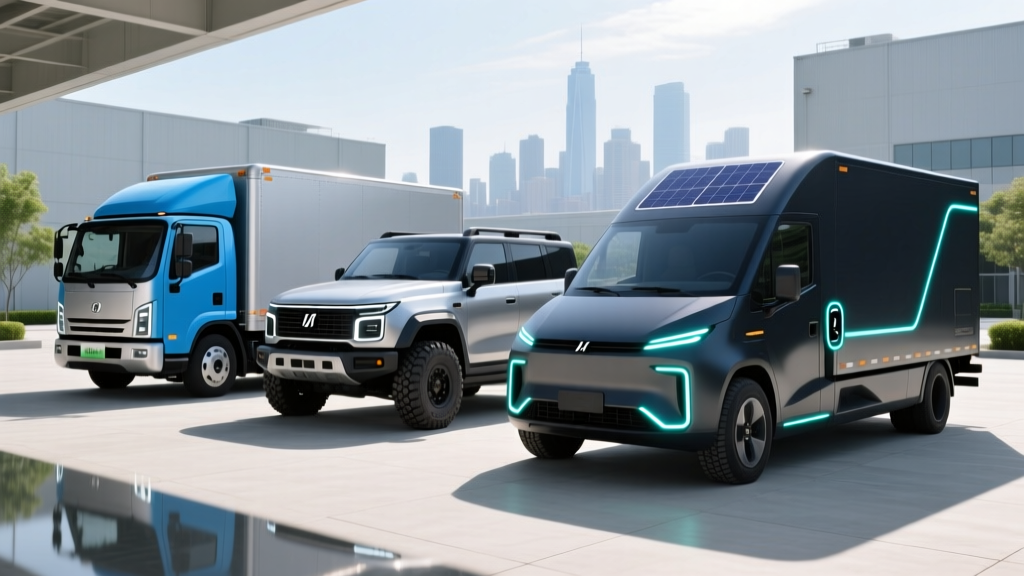
China produces over 60% of the world's electric vehicles, and domestic brands like BYD, Great Wall Motors, and SAIC offer compelling electric pickups at aggressive price points. The BYD Shark, for instance, launched in 2024 as a plug-in hybrid pickup with global ambitions, and fully electric models from brands like JAC and Radar (a Geely sub-brand) target emerging markets.
However, three structural barriers prevent these vehicles from reaching American driveways:
- 100% Section 301 Tariff: Enacted in 2024 and still in effect for 2026, Chinese-made EVs face a doubling of the standard 25% tariff, effectively adding $20,000–$40,000 to any imported vehicle's cost. This applies to trucks as well as passenger cars.
- Federal Motor Vehicle Safety Standards (FMVSS): Every vehicle sold in the US must meet NHTSA crash-test and equipment standards. Chinese-market trucks are typically homologated to Chinese GB standards or European ECE regulations — neither satisfies FMVSS without costly redesigns.
- No Dealer or Service Infrastructure: Even if a Chinese OEM cleared tariff and safety hurdles, establishing a US dealer network, parts supply chain, and certified technician base takes years and billions of dollars.
The IRS §30D tax credit further disadvantages Chinese battery supply chains: vehicles with battery components from a "foreign entity of concern" (which includes most Chinese battery manufacturers) are disqualified from the $7,500 federal credit.
Chinese EV Trucks That Exist Globally (But Not Here)
To understand what American buyers are missing — and what they might eventually see — here are the most prominent Chinese electric and electrified trucks currently sold overseas:
| Model | Type | Battery / Range | Price (Local Market) | US Availability |
|---|---|---|---|---|
| BYD Shark 6 | PHEV pickup | 29.5 kWh / ~60 mi EV-only | ~$35,000 (AUD equiv.) | Not available |
| Radar RD6 (Geely) | BEV pickup | 86 kWh / ~315 mi (CLTC) | ~$25,000 (CNY equiv.) | Not available |
| JAC T9 EV | BEV pickup | 80 kWh / ~250 mi (WLTP) | ~$30,000 (AUD equiv.) | Not available |
| Great Wall Poer EV | BEV pickup | ~80 kWh / ~250 mi | Announced, limited markets | Not available |
Range note: CLTC (China) and WLTP (Europe) range figures are typically 10–20% higher than US EPA estimates. A Radar RD6 rated at 315 mi CLTC would likely achieve ~250–270 mi under EPA testing — competitive with a base Ford F-150 Lightning's 240 mi EPA range, but at a significantly lower price point in its home market.
How US Electric Trucks Compare (What You Can Actually Buy)
Since Chinese EV trucks aren't an option, here's how the current US-market electric pickups stack up in 2026:
| Spec | Ford F-150 Lightning (Std Range) | Rivian R1T (Dual Motor, Standard) | Chevy Silverado EV (4WT) | Tesla Cybertruck (AWD) |
|---|---|---|---|---|
| EPA Range | 240 mi | 270 mi | 390 mi (Est. range, 4WT) | 340 mi |
| Battery (usable) | 98 kWh (NMC) | 95 kWh (NMC) | 200 kWh (NMC) | 123 kWh (NMC) |
| Peak DC Charge | 150 kW | 200 kW | 350 kW | 250 kW |
| 10–80% Time | ~41 min | ~30 min | ~20 min | ~17 min |
| 0–60 mph | 4.0 sec | 4.5 sec | ~5.0 sec | 4.1 sec |
| Horsepower | 580 hp | 533 hp | 510 hp | 600 hp |
| Max Towing | 7,700 lbs | 11,000 lbs | 10,000 lbs | 11,000 lbs |
| Base MSRP | $54,995 | $69,900 | $57,900 | $79,990 |
| §30D Credit Eligible? | Yes (if income/sourcing qualify) | Yes (if income/sourcing qualify) | Yes (if income/sourcing qualify) | Yes (if income/sourcing qualify) |
Real-world range caveat: Highway driving at 75 mph typically reduces EPA range by 15–20%. In freezing temperatures (below 20°F), expect an additional 20–30% loss due to cabin heating and battery chemistry limitations. The Silverado EV's massive 200 kWh pack provides the best buffer against these reductions.
The Cost Equation: EV Truck vs Gas Truck Ownership
The appeal of Chinese EV trucks is primarily price — but let's examine what a US electric truck actually costs versus a comparable gas truck over five years.
| Cost Factor (5-Year) | Ford F-150 Lightning ($55K) | Ford F-150 Gas XLT ($48K) |
|---|---|---|
| Purchase Price (after $7,500 credit*) | $47,495 | $48,000 |
| Fuel / Electricity (75,000 mi) | $4,500 (home charging at $0.14/kWh) | $10,500 (gas at $3.50/gal, 20 MPG) |
| Maintenance | $1,800 | $4,200 |
| Insurance (avg. annual) | $11,000 ($2,200/yr) | $8,500 ($1,700/yr) |
| Total 5-Year Cost | $64,795 | $71,200 |
*§30D credit eligibility depends on buyer income (≤$150K single / $300K joint), vehicle MSRP (≤$80K for trucks), and battery critical-mineral sourcing. Verify current rules at irs.gov.
The EV truck wins on total cost of ownership by roughly $6,400 over five years — but only if you can charge at home. Public DC fast charging at $0.40–$0.60/kWh narrows the gap significantly, potentially adding $3,000–$5,000 in fuel costs over 75,000 miles.
Real-World Ownership Considerations Before You Buy Any EV Truck
Home Charging Access
Level 2 home charging (240V, 40–48 amps / 9.6–11.5 kW) adds 25–35 miles of range per hour and is essential for daily usability. Installation costs range from $800 (simple outlet near panel) to $3,500+ (panel upgrade required for 200A service). Without home charging, an EV truck becomes a logistics challenge — especially given the 100+ kWh batteries that can take 12+ hours on Level 1 (120V).
Charging Infrastructure Gaps
While the Tesla Supercharger network (now NACS-equipped and opening to non-Tesla vehicles via adapter) and Electrify America's CCS stations cover most interstate corridors, rural areas and apartment dwellers remain underserved. A Silverado EV's 350 kW peak charge rate is meaningless if your nearest DC fast charger tops out at 50 kW.
Towing and Payload Reality
Towing with any EV truck reduces range by 40–50%. The F-150 Lightning's 240-mile range drops to roughly 120–140 miles when pulling a 5,000-lb trailer. This is the single biggest ownership surprise for new EV truck buyers who plan to tow frequently.
Cold Climate Performance
NMC battery chemistry (used in all current US electric trucks) loses efficiency below freezing. A heat pump (standard on Rivian, optional on some Ford trims) mitigates cabin-heating energy draw but doesn't eliminate the 20–30% range reduction in sustained sub-20°F conditions.
Common Misconceptions About Chinese EV Trucks
| Myth | Fact |
|---|---|
| "You can import a BYD truck yourself." | Personal vehicle imports must still meet FMVSS or be at least 25 years old. You cannot legally register a new Chinese-market truck for US road use. |
| "Chinese EVs are low quality." | BYD's Blade Battery (LFP chemistry) passes nail-penetration tests without thermal runaway. Build quality on models like the Seal and Atto 3 earns competitive Euro NCAP scores. The barrier isn't quality — it's regulation and geopolitics. |
| "Tariffs will be lifted soon." | The 100% Section 301 tariff on Chinese EVs has bipartisan support and is unlikely to be reversed before the late 2020s at the earliest. |
| "Chinese trucks would qualify for the tax credit." | Under current §30D rules, battery components from a foreign entity of concern (including Chinese manufacturers like CATL and BYD) disqualify a vehicle from the credit entirely. |
Decision Framework: What Should You Actually Do?
If You're Considering a Chinese EV Truck...
- If you live in the US: You cannot buy one. Focus on the F-150 Lightning (best value with credit), Rivian R1T (best off-road capability), or Silverado EV (best range and charge speed).
- If you live in Australia, Southeast Asia, or Latin America: The BYD Shark PHEV and Radar RD6 are worth test-driving — but verify local service network availability and parts lead times before committing.
- If you want the lowest-cost electric truck in the US: Watch for the upcoming Chevrolet Silverado EV 4WT fleet-oriented trims and the refreshed F-150 Lightning pricing. The base Lightning at ~$47,500 after the federal credit remains the most affordable full-size electric pickup available.
- If towing is your priority: No current EV truck is ideal for frequent long-distance towing. Consider a diesel or a PHEV like the upcoming Ram 1500 Ramcharger (series hybrid with onboard generator) as a bridge solution.
Frequently Asked Questions
Will BYD ever sell trucks in the US?
BYD has stated it is evaluating the US market but has not announced a timeline. Given the 100% tariff and battery-sourcing rules that would disqualify BYD vehicles from the §30D credit, a US launch before 2028 is unlikely. BYD is currently prioritizing Europe, Australia, and Southeast Asia.
Are any "Chinese" EVs currently sold in the US?
Yes — but they're rebadged or manufactured outside China. The Volvo EX30 (Chinese-owned Geely, built in Belgium/China for other markets) and Polestar models (Geely-owned, some assembled in South Carolina) are the closest examples. None are trucks.
What's the cheapest electric truck I can buy in the US right now?
The Ford F-150 Lightning Pro at $54,995 MSRP, potentially $47,495 after the $7,500 federal credit (if you meet income and sourcing requirements). No sub-$40,000 electric truck exists in the US market in 2026.
Do Chinese EV batteries degrade faster?
Not necessarily. BYD's LFP Blade Battery demonstrates strong cycle life (3,000+ cycles to 80% capacity in lab testing) and superior thermal stability compared to many NMC cells. However, long-term real-world degradation data from Chinese-market trucks is still limited outside China's domestic fleet.
Can I charge a future Chinese EV truck on US charging networks?
If one were sold here, it would likely use the NACS connector (now the US standard adopted by nearly all automakers for 2025+). Connector compatibility would not be the barrier — tariffs and safety regulations are.