The Short Answer: Chinese EVs Aren't Sold in the US
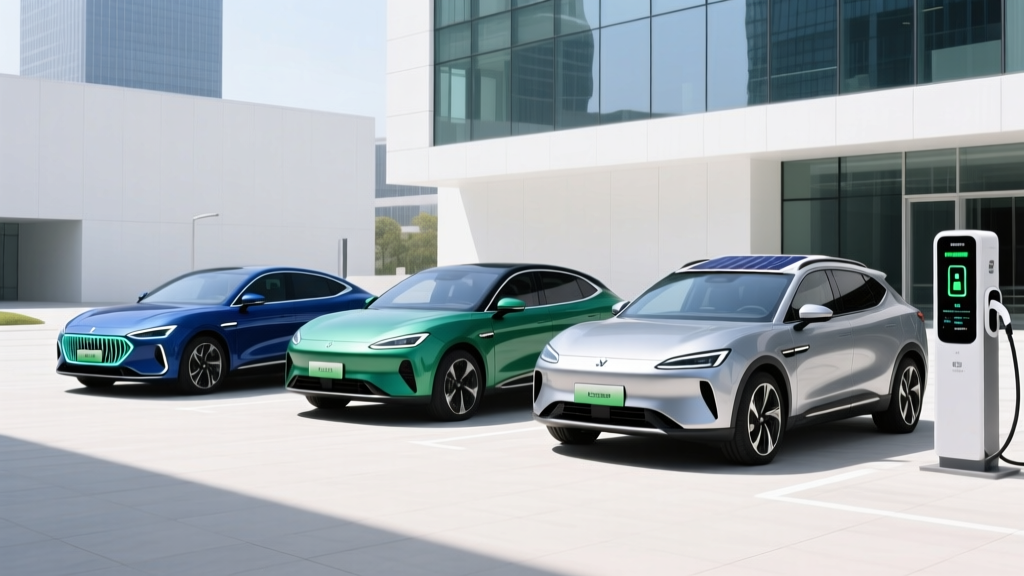
As of 2026, no Chinese EV manufacturer sells passenger vehicles directly to US consumers. BYD, NIO, Xpeng, Li Auto, and Zeekr have all expanded globally — into Europe, Southeast Asia, Australia, and Latin America — but the US market remains effectively closed due to a combination of 100%+ tariffs on Chinese-built vehicles, national security concerns, and §30D tax credit sourcing rules that disqualify vehicles with Chinese battery components or critical minerals. If you're shopping for an EV in the US today, Chinese brands are not an option at any dealership. However, their global pricing and technology are reshaping what you'll eventually see from competing brands.
Which Chinese EV Manufacturers Lead Globally?
China produces more electric vehicles than any other nation, and several manufacturers have achieved scale and technology that rival or exceed Western competitors. Here's who matters:
| Manufacturer | Key Models | Global Markets (2026) | Notable Tech |
|---|---|---|---|
| BYD | Seal, Atto 3, Dolphin, Han | Europe, Australia, SE Asia, Latin America, Middle East | Blade Battery (LFP), vertical integration, e-Platform 3.0 |
| NIO | ET7, EL6, ET5 | Europe (Norway, Germany, Netherlands), China | Battery swap stations, 150 kWh semi-solid-state pack |
| Xpeng | G6, P7+, MONA M03 | Europe, SE Asia, Middle East | XNGP ADAS, 800V architecture, advanced lidar integration |
| Li Auto | L7, L8, L9 (EREVs) | China primarily, limited Middle East | Extended-range EVs with 180+ mi electric-only range |
| Zeekr (Geely) | 001, 007, X | Europe, Middle East, SE Asia | SEA platform (shared with Volvo/Polestar), 800V charging |
| MG (SAIC) | MG4, MG ZS EV | Europe, UK, Australia, India | Affordable pricing, established brand recognition |
BYD briefly surpassed Tesla in global BEV deliveries in late 2023 and has remained competitive since, largely on the strength of its LFP Blade Battery chemistry and aggressive pricing. The BYD Seal, for example, offers a ~350-mile WLTP range (roughly 300 miles EPA-equivalent) at a European price point around €45,000 — undercutting a Tesla Model 3 by thousands in several markets.
Why Can't Americans Buy These Cars?
Three primary barriers keep Chinese EVs out of US showrooms:
1. Tariffs Exceeding 100%
In May 2024, the Biden administration raised tariffs on Chinese-built EVs from 25% to 100% under Section 301 trade provisions. These tariffs remain in effect in 2026. A BYD Seal that costs roughly $30,000 to produce would face an effective landed cost above $60,000 before dealer markup — eliminating the price advantage entirely.
2. Federal Tax Credit Disqualification
The IRS §30D clean vehicle credit explicitly excludes any vehicle whose battery contains components manufactured by a "foreign entity of concern" (FEOC), which includes Chinese companies. Since virtually every Chinese-brand EV uses battery cells from CATL, BYD, Gotion, or EVE Energy, none would qualify for the up-to-$7,500 credit — even if they were sold here. The MSRP caps ($55,000 for sedans, $80,000 for SUVs/trucks) and buyer income limits ($150K single / $300K joint) further restrict eligibility for any future entrant.
3. National Security and Data Concerns
Connected vehicles collect enormous amounts of data — GPS location, driver behavior, camera feeds, voice commands. The US government has flagged Chinese-manufactured vehicles as potential data-security risks, and the Department of Commerce has proposed rules restricting connected-vehicle hardware and software from Chinese entities. These proposed rules, expected to take full effect by 2027, would make it legally difficult for Chinese OEMs to sell technology-laden EVs in the US regardless of tariffs.
How Do Chinese EVs Compare to What You Can Buy?
Even though you can't purchase them, Chinese EVs influence the US market through pricing pressure on global competitors and technology sharing (Geely owns Volvo and Polestar; CATL supplies Tesla and Ford). Here's how representative Chinese models stack up against US-available alternatives:
| Spec | BYD Seal (EU) | Tesla Model 3 LR (US) | Hyundai Ioniq 6 SE LR (US) |
|---|---|---|---|
| Battery | 82.5 kWh (LFP Blade) | 79 kWh (NMC) | 77.4 kWh (NMC) |
| Range (WLTP / EPA) | ~354 mi WLTP (~300 EPA est.) | 341 mi EPA | 361 mi EPA |
| Peak DC Charge | 150 kW | 250 kW | 233 kW |
| 10–80% DC Time | ~26 min | ~15 min | ~18 min |
| 0–60 mph | 5.9 sec (RWD) | 4.2 sec (AWD) | 5.1 sec (RWD) |
| Price (local market) | ~€45,000 (~$48,000) | $47,740 MSRP | $42,450 MSRP |
| Tax Credit Eligible (US) | No | Partial (varies by sourcing) | Yes (if income/MSRP caps met) |
The data reveals an important nuance: while Chinese EVs win on price in markets without tariffs, their charging speeds and software ecosystems often lag behind Tesla's Supercharger network integration or Hyundai/Kia's 800V architecture. The BYD Seal's 150 kW peak charge rate, for instance, means noticeably longer stops on road trips compared to the Ioniq 6's 233 kW capability.
Common Misconceptions About Chinese EVs
| Myth | Fact |
|---|---|
| "Chinese EVs are cheap and low-quality" | BYD, NIO, and Zeekr score well in Euro NCAP crash testing. The BYD Seal earned a 5-star rating. Build quality on premium models rivals German competitors. |
| "They'll be in the US soon" | With 100% tariffs, FEOC battery rules, and connected-vehicle security proposals, no Chinese OEM has announced US passenger-vehicle sales plans as of 2026. BYD has explicitly stated it is "not in a hurry" to enter the US. |
| "Chinese batteries are inferior" | CATL and BYD are the world's two largest battery manufacturers. BYD's Blade Battery (LFP) passes nail-penetration tests without thermal runaway. Tesla sources LFP cells from CATL for Standard Range Model 3s globally. |
| "I can import one myself" | Federal Motor Vehicle Safety Standards (FMVSS) compliance, EPA certification, and DOT registration make individual importation of non-certified vehicles effectively impossible for road use. |
| "Volvo/Polestar are Chinese cars" | Geely (Chinese) owns Volvo and Polestar, but vehicles sold in the US are manufactured in Belgium, Sweden, or South Carolina. They comply with US regulations and can qualify for tax credits depending on battery sourcing. |
The Indirect Impact: How Chinese EVs Affect Your Purchase
Even without direct availability, Chinese manufacturers shape the EVs you can buy in three ways:
Price Pressure on Competitors
BYD's aggressive global pricing forces Tesla, Volkswagen, and Hyundai/Kia to reduce margins or add features to remain competitive. The Tesla Model 3 price cuts throughout 2023–2025 were partly a response to BYD's Seal and Dolphin undercutting in Europe and China. American buyers benefit from this competition even without Chinese cars on dealer lots.
Battery Supply Chain Integration
Ford licensed CATL's LFP battery technology for its Michigan plant (opening 2026). Tesla's Standard Range vehicles use CATL LFP cells. The affordable end of the US EV market increasingly depends on Chinese battery chemistry and manufacturing know-how — even when the badge on the hood is American, Korean, or German.
Technology Benchmarking
Xpeng's XNGP driver-assistance system and NIO's battery-swap model push Western competitors to accelerate their own ADAS and charging infrastructure development. When you see GM expand its Ultium charging network or Tesla improve FSD (Supervised), competitive pressure from Chinese tech plays a role.
What Should You Buy Instead?
If you were intrigued by Chinese EV pricing or technology, here's a practical decision framework for the US market in 2026:
Choose a Tesla Model 3 or Model Y if: You want the best charging network access (Supercharger), competitive pricing ($38,990–$52,490 MSRP range), strong software/ADAS, and potential §30D credit eligibility (check current IRS sourcing requirements at irs.gov).
Choose a Hyundai Ioniq 5/6 or Kia EV6 if: You prioritize fast DC charging (800V architecture, 10–80% in ~18 min), strong build quality, and broader tax credit eligibility. The Ioniq 6 SE Long Range starts at $42,450 with 361 miles EPA range.
Choose a Chevrolet Equinox EV if: You want the most affordable long-range option. Starting around $33,000 MSRP (before credit) with up to 319 miles EPA range, it's the closest US-market equivalent to the value proposition Chinese brands offer abroad.
Choose a PHEV (Toyota RAV4 Prime, Hyundai Tucson PHEV) if: You lack reliable home charging or live in a region with extreme cold. A plug-in hybrid gives you 30–42 miles of electric-only range for daily commuting with gas-engine backup for road trips — no range anxiety, no charging-desert risk.
Real-World Ownership: What First-Time EV Buyers Should Know
Regardless of brand origin, first-time EV buyers face the same practical considerations:
Home Charging Is the Foundation
Level 2 home charging (240V, 32–48 amps, 7.7–11.5 kW) adds 25–44 miles of range per hour and costs $500–$2,000 to install depending on whether your electrical panel needs upgrading. Without home charging, EV ownership becomes significantly less convenient and more expensive (public DC fast charging costs $0.30–$0.60/kWh vs. $0.12–$0.18/kWh at home).
Real-World Range vs. EPA Stickers
Expect 15–30% range reduction in cold weather (below 32°F) and 10–20% reduction at sustained highway speeds above 70 mph. A 340-mile EPA-rated vehicle may deliver 240–270 miles on a winter highway trip. Plan accordingly.
Total Cost of Ownership
| Cost Factor (5 Years / 60,000 mi) | EV (avg. $42K) | Gas Sedan (avg. $32K) |
|---|---|---|
| Purchase (after incentives) | ~$34,500 (with $7,500 credit) | ~$32,000 |
| Fuel / Electricity | ~$3,600 (home charging avg.) | ~$9,000 (30 MPG, $3.50/gal) |
| Maintenance | ~$1,800 | ~$4,200 |
| Insurance | ~$7,800 | ~$6,000 |
| Total 5-Year Cost | ~$47,700 | ~$51,200 |
EVs tend to break even or save money over five years despite higher purchase prices and insurance premiums — but only if you have access to affordable home charging and qualify for the federal credit. Without the credit or with expensive public charging, the math shifts considerably.
Could Chinese EVs Enter the US Market Eventually?
Possible paths exist, but none are imminent:
- Manufacturing in a non-China location: BYD is building factories in Thailand, Brazil, Hungary, and Indonesia. A vehicle built in Hungary or Brazil could theoretically avoid the 100% China tariff — but FEOC battery sourcing rules would still block tax credit eligibility.
- Licensing or joint ventures: Ford's CATL LFP licensing deal in Michigan is a template — Chinese technology, American manufacturing. More such arrangements are likely.
- Trade negotiation shifts: Tariff policy can change with administrations, but bipartisan concern about Chinese auto imports makes near-term reversal unlikely.
For now, American EV shoppers should focus on the increasingly competitive domestic, Korean, Japanese, and European options — all of which are responding to the pricing and technology pressure that Chinese manufacturers have forced upon the global industry.
Can I buy a BYD or NIO in the United States?
No. As of 2026, no Chinese EV manufacturer sells passenger vehicles through US dealerships. Tariffs exceeding 100%, FEOC battery sourcing restrictions, and connected-vehicle security regulations effectively block Chinese brands from the market.
Are Chinese EV batteries safe?
Yes. BYD's Blade Battery (LFP chemistry) has passed rigorous nail-penetration and crush tests without thermal runaway. CATL supplies battery cells to Tesla, BMW, and Mercedes-Benz. Chinese battery manufacturers lead the world in LFP technology, which is inherently more thermally stable than NMC chemistry.
Will Chinese EVs be available in the US by 2027 or 2028?
Unlikely for direct sales. BYD has publicly stated it has no US entry timeline. The connected-vehicle security rules proposed by the Department of Commerce would take effect by model year 2027, creating an additional barrier. However, Chinese battery technology will increasingly appear inside vehicles from other brands manufactured in the US or allied nations.
What's the cheapest long-range EV I can buy in the US?
The Chevrolet Equinox EV LT starts around $33,000 MSRP and offers up to 319 miles of EPA-rated range. With the §30D tax credit (if eligible — check income caps and battery sourcing at irs.gov), effective pricing can drop below $26,000 — approaching the value proposition Chinese brands offer in other markets.
Do Volvo and Polestar count as Chinese EVs?
Geely, a Chinese conglomerate, owns both Volvo and Polestar. However, vehicles sold in the US are manufactured outside China (Belgium, Sweden, South Carolina) and comply with all US safety and emissions standards. Depending on battery sourcing, some models may qualify for the federal tax credit. They are not subject to the 100% Chinese-EV tariff.