The Bottom Line on Chinese EV Car Brands in the US (2026)
As of 2026, no Chinese-headquartered automaker sells passenger EVs directly to US consumers. Brands like BYD, NIO, Xpeng, and Li Auto dominate globally — BYD is the world's largest EV seller — but 100%+ US tariffs on Chinese-built vehicles, combined with national-security supply-chain scrutiny, keep them off American dealer lots. If you're shopping for an EV in the US today, Chinese brands are not a purchase option. They are, however, reshaping what's available from the brands you can buy, forcing competitors to cut prices and accelerate tech. Below, we break down exactly who these brands are, what they cost globally, what the tariff wall means, and how to shop smart in the market they're indirectly influencing.
Who Are the Major Chinese EV Car Brands?
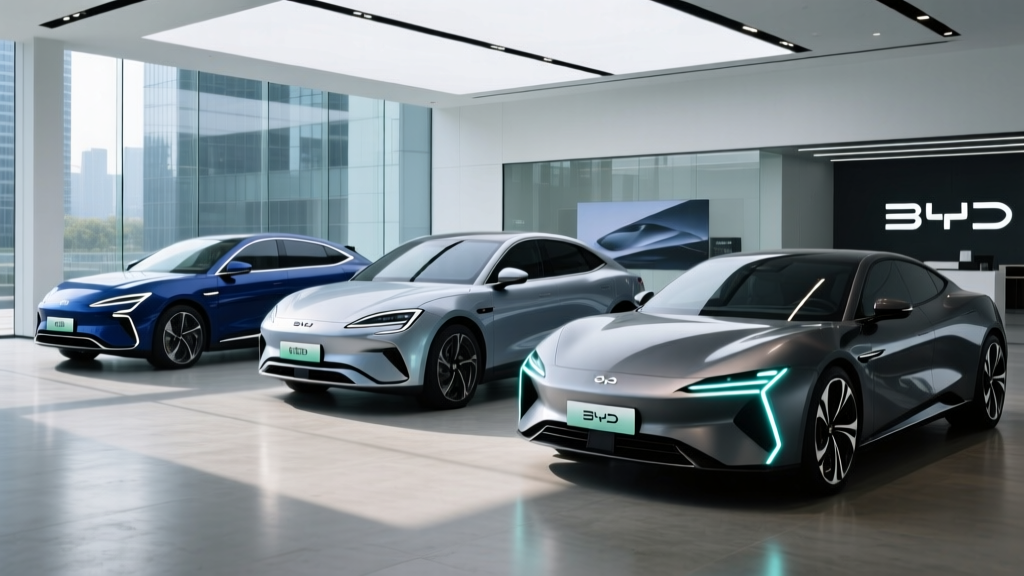
China produces over 60% of the world's electric vehicles. The major players have moved well beyond early copycat designs into globally competitive platforms with advanced battery tech, smart cabins, and aggressive pricing. Here are the names you'll see in international headlines:
| Brand | Parent / HQ | Key Models (Global) | Battery Chemistry | Global Starting Price (Approx.) |
|---|---|---|---|---|
| BYD | BYD Company (Shenzhen) | Seal, Atto 3, Dolphin, Han | LFP (Blade Battery) | ~$12,000–$45,000 |
| NIO | NIO Inc. (Shanghai) | ET7, EL8, ET5, ONVO L60 | NMC + LFP options; swappable packs | ~$35,000–$70,000 |
| Xpeng | XPeng Inc. (Guangzhou) | G6, P7+, MONA M03 | NMC | ~$20,000–$45,000 |
| Li Auto | Li Auto (Beijing) | L7, L8, L9 (EREV) | NMC (EREV range-extender) | ~$40,000–$60,000 |
| Zeekr | Geely Group (Hangzhou) | 001, 007, X | NMC (CATL Qilin) | ~$30,000–$55,000 |
| MG (SAIC) | SAIC Motor (Shanghai) | MG4, MG ZS EV | NMC / LFP | ~$25,000–$35,000 |
BYD's Blade Battery (a cell-to-pack LFP design) has become an industry benchmark for thermal stability and cycle life, with BYD's own testing showing nail-penetration resistance without thermal runaway. NIO's battery-swap stations — over 2,700 globally — let drivers exchange a depleted pack for a charged one in under five minutes, sidestepping charging-time concerns entirely.
Why Can't You Buy a BYD or NIO in the United States?
The barrier isn't product quality — it's trade policy. Here's the current tariff landscape as of 2026:
- Section 301 tariff on Chinese-built EVs: Raised to 100% in late 2024 under USTR directives, effectively doubling the landed cost of any Chinese-manufactured passenger EV.
- Additional duties and fees: Existing 2.5% import duty plus potential Section 232 national-security reviews on connected-vehicle software and hardware.
- Connected-vehicle ban (Commerce Dept): Proposed rules would prohibit Chinese-manufactured connected-vehicle hardware and software in US cars by 2027, targeting data-security concerns in vehicles with cellular, GPS, and OTA-update capabilities.
- No US dealer or service network: Even if tariffs were waived, these brands lack US parts depots, certified technicians, and NHTSA homologation (crash-test compliance for US-specific regulations).
The practical result: a BYD Seal that sells for the equivalent of ~$26,000 in China would land in the US at well over $52,000 before dealer markup — eliminating the price advantage entirely. The US International Trade Administration confirms these tariffs remain in effect.
How Chinese EV Brands Compare Globally (Specs You Should Know)
Even though you can't buy them stateside, understanding what these vehicles offer globally helps you evaluate whether US-market competitors are priced fairly. Here's a spec snapshot of three popular Chinese EVs versus their US-available rivals:
| Spec | BYD Seal (Global) | Tesla Model 3 (US) | NIO ET7 (Global) | BMW i5 (US) |
|---|---|---|---|---|
| Battery (usable) | 82.5 kWh (LFP Blade) | 75 kWh (NMC) / 79 kWh (LFP) | 100 kWh (NMC) / 75 kWh (LFP) | 81.2 kWh (NMC) |
| Range (CLTC/WLTP/EPA) | ~570 km CLTC (~355 mi) | 341 mi EPA (LR AWD) | ~530 km WLTP (~330 mi) | 295 mi EPA |
| Peak DC Charge | 150 kW | 250 kW | 140 kW (100 kWh pack) | 205 kW |
| 10–80% DC Time | ~30 min | ~25 min | ~34 min | ~30 min |
| 0–60 mph | ~5.9s (RWD) | 4.2s (LR AWD) | ~3.8s (AWD) | 5.8s (eDrive40) |
| Base Price | ~$26,000 (China) | $44,130 MSRP | ~$55,000 (Europe) | $67,100 MSRP |
Range context: CLTC (China) and WLTP (Europe) test cycles produce more optimistic range figures than the US EPA cycle. A 570 km CLTC rating roughly translates to ~300–320 real-world US highway miles in moderate temperatures, and expect 20–30% loss in sub-freezing weather without a heat pump.
The takeaway: Chinese brands deliver 80–90% of the performance and range of US-market EVs at 40–60% of the price — in markets without punitive tariffs. That pricing pressure is forcing Tesla, Hyundai, and others to introduce more affordable trims and faster-charging architectures.
The Indirect Impact: How Chinese EV Brands Affect Your US Purchase
Even without direct sales, Chinese EV car brands shape what you pay and what you get in three concrete ways:
1. Price Compression
BYD's global expansion into Europe, Southeast Asia, and Latin America has forced legacy automakers to accelerate cost reduction. Tesla's price cuts through 2024–2025 were partly a response to BYD's market-share gains. Hyundai's Ioniq 5 and Kia's EV6 pricing became more aggressive as Chinese competitors captured export markets. When you negotiate a US EV purchase in 2026, you're benefiting from competition that Chinese brands created — even if you never see a BYD badge.
2. Battery Technology Transfer
LFP (lithium iron phosphate) batteries, championed by BYD's Blade design, are now used in standard-range Tesla Model 3s, Ford's Mustang Mach-E base trims, and several other US-market EVs. LFP offers lower energy density than NMC but dramatically better cycle life (3,000+ full cycles vs. ~1,500 for NMC), superior thermal stability, and no cobalt or nickel supply-chain risk. This chemistry shift was driven by Chinese manufacturing scale.
3. Feature Expectations
Chinese EV interiors have normalized large rotating touchscreens, voice-controlled everything, over-the-air updates, and Level 2+ ADAS as standard — not premium — features. US buyers now expect these at lower price points, and automakers are responding.
What US Buyers Should Do Instead: A Decision Framework
If you were interested in Chinese EV car brands for their value proposition, here's where to look in the US market:
- If you wanted a BYD Dolphin (~$15K subcompact): No direct US equivalent exists yet. Watch the Chevrolet Bolt EV successor (expected ~$28K) or consider a used Nissan Leaf (from ~$12K used).
- If you wanted a BYD Seal (~$26K midsize sedan): Test-drive the Tesla Model 3 RWD ($44,130 before incentives), Hyundai Ioniq 6 SE ($37,500), or Chevrolet Equinox EV 2LT (~$33,000). The Equinox EV offers 319 mi EPA range and may qualify for the §30D federal tax credit (up to $7,500, subject to MSRP caps, buyer income limits, and battery-sourcing requirements — verify eligibility on IRS.gov).
- If you wanted NIO's battery-swap concept: No US equivalent. Prioritize fast-charging architecture instead: Hyundai/Kia E-GMP vehicles (800V, 10–80% in ~18 min at 350 kW chargers) or the Porsche Taycan (800V, peak 320 kW).
- If you wanted a Li Auto EREV (extended-range): Look at the BMW X5 xDrive50e PHEV ($66,000, ~38 mi electric-only) or the Toyota RAV4 Prime PHEV ($43,690, 42 mi electric-only) for range-extender-like flexibility without pure-EV range anxiety.
Real Costs: What You'll Actually Pay for a US-Market EV in 2026
| Cost Category | US EV (e.g., Equinox EV 2LT) | Comparable Gas Car (e.g., Equinox LT AWD) | Notes |
|---|---|---|---|
| Base MSRP | $33,000 | $28,600 | EV premium: ~$4,400 |
| Federal Tax Credit (§30D) | Up to –$7,500 (if eligible) | $0 | Income caps: $150K single / $300K joint. MSRP cap: $55K (SUVs). Verify on IRS.gov. |
| Effective Purchase Price | ~$25,500 (with credit) | $28,600 | EV can be cheaper after incentives |
| Fuel / Energy (5 yr, 60K mi) | ~$3,600 (home L2, $0.14/kWh avg) | ~$7,500 ($3.25/gal, 28 MPG) | EV saves ~$3,900 over 5 years |
| Maintenance (5 yr) | ~$1,800 | ~$4,200 | No oil, fewer brake replacements (regen) |
| Insurance (annual avg) | ~$1,900/yr | ~$1,500/yr | EV insurance ~25% higher on average |
| Home Charger Install (Level 2) | $800–$2,000 (one-time) | $0 | Depends on panel capacity; 240V/40A circuit typical |
| 5-Year Total Cost of Ownership | ~$37,600 | ~$47,800 | EV saves ~$10,200 (with tax credit + home charging) |
Key caveats: These savings assume reliable home charging access. If you rely solely on public DC fast charging at $0.35–$0.50/kWh, your 5-year energy cost rises to ~$6,300–$9,000, narrowing the gap significantly. Cold-climate owners should budget for 20–30% winter range loss and potential battery-preconditioning energy use. Always verify current-year §30D eligibility — battery-sourcing rules tighten annually.
Common Misconceptions About Chinese EV Brands
| Myth | Fact |
|---|---|
| "Chinese EVs are low quality and unsafe." | BYD, NIO, and Xpeng vehicles have earned 5-star Euro NCAP ratings. Build quality in 2026 models rivals Korean and Japanese competitors. The quality gap that existed in 2015 is closed. |
| "Chinese brands will be in the US next year." | No credible timeline exists. The 100% tariff, connected-vehicle ban, and lack of homologation mean US entry is years away at minimum — if it happens at all. |
| "I can import a BYD myself." | Personal importation of non-EPA/NHTSA-certified vehicles is effectively prohibited. The vehicle must meet all Federal Motor Vehicle Safety Standards, which requires manufacturer cooperation. |
| "Chinese batteries are inferior." | CATL and BYD are the world's two largest battery cell manufacturers, supplying Tesla, BMW, and others. BYD's Blade LFP battery is among the safest in production, and CATL's Qilin cells power vehicles globally. |
| "Buying a US EV means avoiding Chinese parts." | Many US-market EVs contain Chinese-sourced battery minerals, cells, or components. The §30D tax credit's "foreign entity of concern" (FEOC) rules are specifically designed to reduce this dependency, but full decoupling is ongoing. |
What First-Time EV Buyers Should Know (Regardless of Brand Origin)
Whether you're inspired by Chinese EV innovation or focused on US-market options, these fundamentals apply:
- Home charging is the make-or-break factor. If you can install a Level 2 charger (240V, 32–48A, adding 25–40 miles per hour of charging), EV ownership is seamless. Without home charging, public infrastructure reliability varies dramatically by region. Budget $800–$2,000 for a professional Level 2 installation, and confirm your electrical panel has capacity — a 200A panel is typically sufficient, but older homes with 100A panels may need a $1,500–$3,000 upgrade.
- EPA range is a ceiling, not a floor. Expect 75–85% of EPA range at sustained highway speeds (70–80 mph), and 65–75% in freezing temperatures. A 319-mile EPA rating means ~250 real-world highway miles in summer, ~210 in winter.
- DC fast charging peaks briefly, then tapers. A "250 kW peak" charge rate may sustain for only 5–10 minutes before dropping to 100–150 kW. Always look at 10–80% charge times, not peak kW figures.
- LFP batteries tolerate daily 100% charging. If your EV has an LFP pack (check the spec sheet), you can charge to 100% daily without accelerated degradation. NMC/NCA packs benefit from an 80% daily limit with 100% only for road trips.
- Federal tax credits are not guaranteed. The §30D credit requires meeting MSRP caps ($55,000 for sedans, $80,000 for SUVs/trucks), buyer income limits, and battery-component/critical-mineral sourcing thresholds that tighten each year. Point-of-sale transfer is available, reducing your purchase price directly. Confirm eligibility at the time of purchase — rules change.
Frequently Asked Questions
Can I buy a BYD in the United States in 2026?
No. BYD does not sell passenger vehicles in the US. A 100% tariff on Chinese-built EVs, combined with connected-vehicle security regulations and lack of NHTSA/EPA certification, makes it commercially and legally impractical. BYD sells commercial electric buses and trucks in the US through separate channels, but not consumer cars.
Will Chinese EV brands ever enter the US market?
It's unlikely before 2030. The tariff structure, geopolitical tensions around connected-vehicle data security, and the massive investment required to build a US dealer and service network make near-term entry impractical. Some Chinese brands (like Volvo's parent Geely) sell in the US through non-Chinese-branded subsidiaries, but direct Chinese-brand passenger EV sales face structural barriers.
Are Chinese EV batteries used in US-market cars?
Yes, indirectly. CATL supplies cells to several global automakers, and Chinese-processed critical minerals (lithium, graphite) appear in many battery supply chains. However, the §30D tax credit's FEOC (foreign entity of concern) rules, effective 2024–2025, disqualify vehicles with battery components from Chinese entities, incentivizing automakers to source elsewhere. Check the IRS qualified-vehicle list for current eligibility.
What's the closest US alternative to a BYD vehicle?
For a BYD Dolphin equivalent (affordable subcompact EV), the closest US option is the upcoming Chevrolet Bolt successor or a used Nissan Leaf. For a BYD Seal alternative (midsize EV sedan), the Tesla Model 3, Hyundai Ioniq 6, and Chevrolet Equinox EV are the most direct competitors, with the Equinox EV offering the best value at ~$33,000 MSRP before incentives.
How do Chinese EV prices compare when adjusted for tariffs?
A BYD Seal at ~$26,000 in China would cost approximately $52,000+ landed in the US after the 100% tariff — before dealer markup, shipping, and compliance costs. This eliminates the price advantage and places it above a Tesla Model 3 Long Range ($44,130 MSRP). The tariff effectively makes Chinese EVs uncompetitive in the US regardless of their inherent value proposition.