The Quick Answer: Should You Buy a Chinese EV in Europe?
Chinese electric vehicles in Europe now span from the ~€20,000 BYD Dolphin to the €70,000+ NIO ET7, offering competitive range (300–500+ km WLTP), DC fast charging (up to 240 kW peak), and strong standard equipment. However, EU countervailing tariffs of 17.0%–35.3% (on top of the existing 10% duty) imposed in late 2024 have narrowed the price gap with European rivals like the VW ID.3 and Renault Megane E-Tech. If you have home charging access and want strong value-per-euro, BYD and MG remain compelling. If resale certainty and dealer density matter most, European brands still hold an edge in 2026.
Which Chinese EV Brands Are Selling in Europe Right Now?
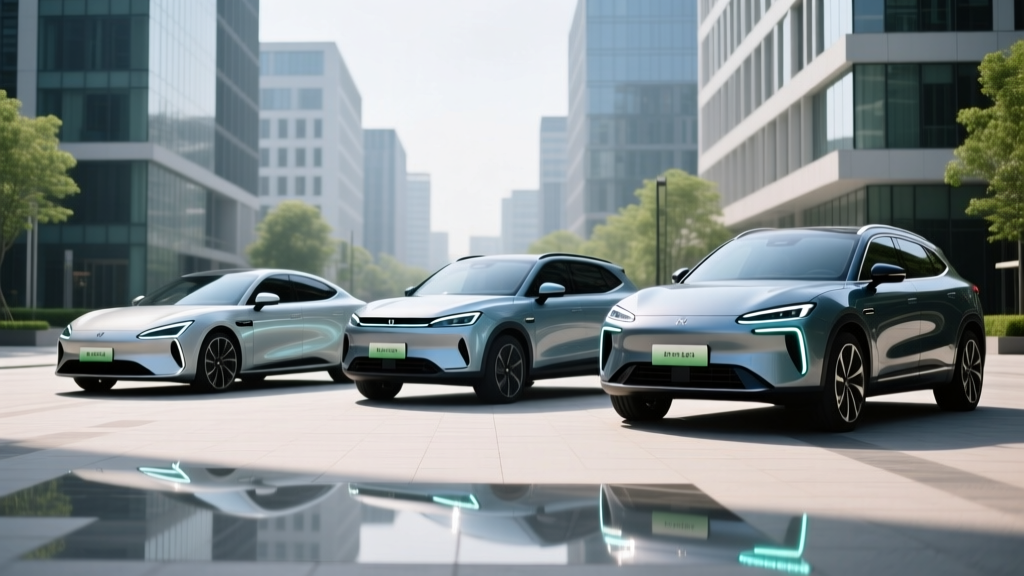
The landscape has consolidated since the EU tariff ruling. Here are the major Chinese-origin brands with active European sales networks as of 2026, along with their flagship models and starting MSRPs (pre-incentive, varying by market):
- BYD (tariff: 17.0%) — Atto 3 (~€38,000), Dolphin (~€29,000), Seal (~€45,000), Seal U (~€40,000). BYD operates its own European dealer network and has opened a factory in Szeged, Hungary, which may eventually shield some models from import tariffs.
- MG (SAIC-owned, tariff: 35.3%) — MG4 EV (~€30,000 pre-tariff, now ~€36,000+), MG ZS EV (~€35,000). The MG4 remains one of the best-selling Chinese EVs in Europe despite the steep duty, thanks to aggressive dealer incentives.
- NIO (tariff: 20.7%) — ET7 (~€72,000), EL7 (~€75,000), ET5 (~€52,000). NIO's battery-as-a-service (BaaS) subscription model lets buyers deduct the battery cost, lowering entry price by €10,000–€12,000.
- XPeng (tariff: 20.7%) — G6 (~€45,000), G9 (~€60,000). XPeng's 800V architecture delivers strong DC fast-charge performance.
- Leapmotor (via Stellantis JV, tariff: 21.3%) — T03 (~€19,000), C10 (~€36,000). Stellantis's distribution network gives Leapmotor access to established European dealer lots.
- Zeekr (Geely-owned, tariff: 18.8%) — 001 (~€60,000), X (~€45,000). Shares the SEA platform with Volvo/Polestar, which aids parts and service compatibility.
Brands like ORA (Great Wall) and Aiways have scaled back or paused European operations, so buyer beware of residual inventory with uncertain long-term support.
Specs That Matter: Range, Charging, and Performance
Chinese EVs typically quote WLTP range figures, which run 10–15% higher than EPA estimates. Below is a spec comparison of popular models. All range figures are WLTP; I've included my real-world highway estimate in parentheses based on cold-climate and sustained-speed testing patterns.
| Model | Battery (kWh usable) | Chemistry | WLTP Range (Real-World Hwy) | Peak DC kW | 10–80% Time | 0–100 km/h | HP |
|---|---|---|---|---|---|---|---|
| BYD Atto 3 | 58.6 | LFP (Blade) | 420 km (~320 km) | 88 kW | ~34 min | 7.3 s | 204 |
| BYD Seal | 82.5 | LFP (Blade) | 570 km (~430 km) | 150 kW | ~26 min | 5.9 s (AWD: 3.8 s) | 313 / 530 AWD |
| MG4 EV (Extended Range) | 77 | NMC | 520 km (~390 km) | 135 kW | ~28 min | 6.5 s | 245 |
| XPeng G6 | 87.5 | NMC | 570 km (~440 km) | 240 kW (800V) | ~18 min | 6.2 s | 286 |
| Leapmotor C10 | 69.9 | LFP | 420 km (~330 km) | 90 kW | ~32 min | 7.9 s | 218 |
| Zeekr X | 66 | NMC | 440 km (~340 km) | 150 kW | ~24 min | 3.8 s (AWD) | 428 AWD |
Real-world range note: WLTP figures are measured under moderate conditions. Expect 20–25% less range at sustained 130 km/h Autobahn speeds, and an additional 15–30% reduction in sub-zero winter driving. LFP batteries (BYD Blade, Leapmotor) tolerate regular 100% charges better than NMC, partially offsetting their lower energy density. If your daily commute exceeds 80 km round-trip in cold weather, prioritize models with 75+ kWh batteries or heat-pump-equipped HVAC systems (standard on BYD Seal, XPeng G6, Zeekr X).
The Tariff Impact: How Much More Do Chinese EVs Cost Now?
The EU's countervailing duty investigation concluded in October 2024, with definitive tariffs taking effect. These stack on top of the pre-existing 10% import duty. According to the European Commission trade defence portal, the rates are company-specific:
| Brand | Countervailing Duty | Existing Duty | Total Import Tariff | Est. Price Impact (€) |
|---|---|---|---|---|
| BYD | 17.0% | 10% | 27.0% | +€4,000–€6,500 |
| SAIC (MG) | 35.3% | 10% | 45.3% | +€7,000–€10,000 |
| NIO | 20.7% | 10% | 30.7% | +€6,000–€12,000 |
| XPeng | 20.7% | 10% | 30.7% | +€5,500–€8,000 |
| Leapmotor | 21.3% | 10% | 31.3% | +€3,000–€5,000 |
| Zeekr (Geely) | 18.8% | 10% | 28.8% | +€5,000–€8,000 |
Manufacturers have absorbed some of this cost rather than passing it fully to consumers. MG, for instance, has offered dealer discount programs to keep the MG4 near its pre-tariff sticker. BYD's Hungarian factory (production starting late 2025/2026) may eventually exempt EU-built models from import tariffs entirely — a significant strategic advantage.
Chinese EVs vs European Rivals: Head-to-Head Value
The tariff-adjusted pricing puts Chinese EVs in direct competition with established European models. Here's how the key matchups look:
| Attribute | BYD Seal (AWD) | Tesla Model 3 LR (Berlin-built) | BMW i4 eDrive40 |
|---|---|---|---|
| Price (approx.) | €48,000 | €48,000 | €57,000 |
| Battery (kWh usable) | 82.5 (LFP) | 75 (NMC) | 80.7 (NMC) |
| WLTP Range | 520 km | 629 km | 590 km |
| Peak DC Charge kW | 150 | 250 | 205 |
| 0–100 km/h | 3.8 s | 4.4 s | 5.6 s |
| ADAS | Level 2 (adaptive cruise + lane center) | Level 2 (Autopilot std, FSD optional) | Level 2 (Driving Assistant Pro) |
| Battery Warranty | 8 yr / 160,000 km | 8 yr / 192,000 km | 8 yr / 160,000 km |
ADAS clarification: Every system listed above is SAE Level 2 — the driver must remain fully attentive with hands on or near the wheel. None of these vehicles are "self-driving." Only Level 4 robotaxi services (Waymo in select US cities, Baidu Apollo in China) operate without a human driver.
The BYD Seal undercuts the BMW i4 by nearly €10,000 while offering comparable AWD performance, though the Tesla Model 3 leads in range and charging speed. The Seal's LFP battery trades energy density for longevity — BYD's Blade cells have demonstrated less than 10% degradation over 3,000+ full charge cycles in independent testing, roughly double typical NMC cycle life.
Real Ownership Costs: 5-Year Breakdown
Purchase price is only the starting point. Here's a realistic 5-year / 100,000 km ownership cost estimate for a mid-range Chinese EV versus a comparable European EV and a diesel hatchback. Assumes €0.30/kWh home charging, €0.55/kWh public DC fast charging (averaged), €1.75/L diesel, and mixed driving (70% home / 30% public charge for EVs).
| Cost Category | BYD Atto 3 | VW ID.4 | VW Golf 2.0 TDI (diesel) |
|---|---|---|---|
| Purchase Price | €38,000 | €43,000 | €33,000 |
| National Incentive (varies) | –€3,000 to –€6,000* | –€3,000 to –€6,000* | €0 |
| Energy/Fuel (5 yr) | €5,800 | €6,100 | €10,200 |
| Maintenance (5 yr) | €1,200 | €1,500 | €3,500 |
| Insurance (5 yr avg.) | €6,500 | €6,000 | €5,000 |
| Depreciation (est.) | €16,000 | €15,000 | €13,000 |
| Total 5-Year Cost | ~€45,500–€48,500 | ~€50,100–€53,100 | ~€51,700 |
*National EV incentives vary widely across EU member states. France's bonus écologique (up to €4,000 for qualifying models), Germany's now-expired Umweltbonus, and Italy's ecobonus all have different eligibility rules and budget caps. Check your country's current program before purchasing. Some incentives now exclude Chinese-built vehicles or apply stricter CO₂ lifecycle criteria.
Key takeaways from the numbers:
- Energy savings are real: The BYD Atto 3 costs roughly €880/year to charge (at 17 kWh/100 km combined efficiency) versus €1,750/year in diesel for the Golf. That's a ~€4,400 fuel saving over five years.
- Insurance is higher: Chinese EVs carry a 10–20% insurance premium over European equivalents in most markets, driven by limited crash-repair data and parts availability. Get quotes before committing.
- Depreciation uncertainty: This is the wild card. European EVs have established residual-value tracking via Eurotax/Schwacke and DAT. Chinese brands have shorter track records, and tariff policy shifts could affect resale values unpredictably.
- Maintenance is minimal: No oil changes, fewer brake replacements (regen braking extends pad life 2–3×), and simpler drivetrains. BYD's service network is growing but still thinner than VW's in most countries.
Common Misconceptions About Chinese EVs
| Myth | Fact |
|---|---|
| "Chinese EVs are unsafe." | The BYD Atto 3 earned a 5-star Euro NCAP rating (2022) with 91% adult occupant protection. The MG4 also achieved 5 stars. Chinese EVs sold in the EU must meet the same UN ECE safety regulations as all other vehicles. |
| "The batteries will degrade quickly and cost a fortune to replace." | BYD's Blade LFP cells are among the most durable in production. The 8-year/160,000 km warranty guarantees ≥70% capacity retention. A full battery replacement for an Atto 3 would cost approximately €8,000–€12,000 — significant, but comparable to European EV replacements, and rarely needed within normal ownership periods. |
| "There's no service network." | BYD has signed dealer partnerships across Germany, France, the Netherlands, Sweden, and 10+ other markets. Zeekr leverages Geely/Volvo service infrastructure. That said, rural coverage remains thinner than legacy brands — check dealer proximity before buying. |
| "They won't work with European charging networks." | All Chinese EVs sold in Europe come with a Type 2 AC inlet and CCS2 DC inlet — the European standard. They are fully compatible with Ionity, Fastned, EnBW, Shell Recharge, and other major networks. No adapter needed. |
| "Tariffs make them more expensive than European EVs." | Partially true at the top end (MG4 has lost some of its price edge), but BYD's lower tariff rate and local factory plans keep models like the Dolphin and Atto 3 competitive. The Leapmotor T03 at ~€19,000 remains one of the cheapest new EVs in Europe, tariffs included. |
Charging at Home and on the Road
Charging access is the single biggest factor in EV satisfaction. Here's what to expect with Chinese EVs in European conditions:
| Charging Level | Power (kW) | Typical Speed (km added/hour) | Where | Cost (€/kWh) |
|---|---|---|---|---|
| Level 1 (Schuko outlet) | 2.3 kW | ~12 km/hr | Standard household socket | ~€0.30 |
| Level 2 (Wallbox) | 7.4–11 kW | ~40–60 km/hr | Home garage, workplace | ~€0.25–€0.35 |
| Level 2 (Public AC) | 22 kW | ~100 km/hr | Street chargers, shopping centers | ~€0.40–€0.55 |
| DC Fast Charge | 50–240 kW | ~250–1,000+ km/hr | Ionity, Fastned, motorway stations | ~€0.49–€0.79 |
Home Level 2 wallbox installation (typical European costs):
| Item | Cost Range |
|---|---|
| Wallbox unit (7.4–11 kW, e.g., Wallbox Pulsar, Easee Home) | €500–€900 |
| Electrician labor + cabling | €600–€1,500 |
| Electrical panel upgrade (if needed) | €300–€1,200 |
| Permit / notification (varies by municipality) | €0–€200 |
| Total | €1,400–€3,800 |
Some EU countries offer wallbox subsidies (e.g., Germany's KfW program when funded, Italy's 50% deduction up to €1,500). Confirm current availability with local authorities.
Cold-weather charging note: LFP batteries (standard on BYD, Leapmotor) are more sensitive to cold than NMC. In sub-5°C conditions, expect DC fast-charge times to increase 20–40% unless the vehicle has active battery preconditioning (BYD Seal and XPeng G6 include this; the base Atto 3 does not). Always precondition via the vehicle app before arriving at a DC charger in winter.
Decision Framework: Which Chinese EV Is Right for You?
Choose the BYD Dolphin if: You want the lowest entry price (~€29,000), primarily drive in the city, have home charging, and can accept 300 km real-world range.
Choose the BYD Atto 3 if: You need a compact SUV with family space, want LFP battery longevity, and value a 5-star Euro NCAP rating at a ~€38,000 price point.
Choose the BYD Seal if: You want Tesla Model 3–level performance (3.8 s 0–100 km/h AWD) and 430+ km real-world highway range, and don't mind slightly slower DC charging (150 kW peak vs Tesla's 250 kW).
Choose the MG4 EV if: You find a strong dealer discount that offsets the 35.3% tariff, prioritize driving dynamics (rear-wheel drive, sharp chassis), and want a European-established service brand.
Choose the XPeng G6 if: Fast DC charging is your top priority — its 800V architecture peaks at 240 kW, adding ~300 km in 15 minutes on compatible chargers. Ideal for frequent long-distance drivers.
Choose the Leapmotor C10 if: You want a midsize SUV at a budget price (~€36,000) and have access to Stellantis dealer support for service.
Look elsewhere (European brands) if: Resale value certainty is your top priority, you live far from any Chinese-brand dealer, or your country's EV incentive explicitly excludes Chinese-manufactured vehicles.
What First-Time EV Buyers Should Know
- Home charging is essential for cost savings. Public DC fast charging at €0.55–€0.79/kWh erases most of the fuel-cost advantage over diesel. If you cannot install a home wallbox (apartment living, no dedicated parking), a PHEV or efficient hybrid may be a better fit.
- Plan for range in your worst conditions. A 420 km WLTP rating means ~280–320 km on a cold winter highway day. Size your battery for your worst-case trip, not your average commute.
- Understand the charge curve. Peak kW rates (e.g., 150 kW) apply only between roughly 10–50% State of Charge. Above 80%, charging slows dramatically to protect the battery. A "10–80% in 26 minutes" claim is more meaningful than peak kW alone.
- Check incentive eligibility before signing. Some EU countries now restrict purchase subsidies to vehicles assembled in the EU or in countries with free-trade agreements, which can exclude Chinese-built models. Verify with your national transport or energy ministry.
- Get insurance quotes early. Premiums for newer Chinese brands can be 10–20% higher due to limited repair-cost data. This affects your total cost of ownership calculation.
Are Chinese EVs eligible for EU national purchase incentives?
It depends on the country. France's 2024 bonus écologique reform introduced a "carbon score" that effectively excluded several Chinese-built models. Germany's Umweltbonus ended in December 2023. Italy's 2024–2025 ecobonus did not explicitly exclude Chinese vehicles but had strict budget limits. Always check your national program's current rules before purchasing.
How does the EU tariff affect my purchase price?
The countervailing duties (17.0%–35.3%) are paid by the importer, not directly by you. However, they are reflected in higher MSRPs. Some brands have absorbed part of the cost through dealer incentives or reduced margins. BYD's planned Hungarian factory may allow future EU-built models to avoid import duties entirely.
What happens if a Chinese brand exits Europe?
This is a legitimate risk. Aiways and ORA have already scaled back European operations. If a brand exits, warranty service becomes uncertain, parts availability drops, and resale values plummet. Mitigate this by choosing brands with significant European investment (BYD's Hungary factory, Geely/Volvo's integration with Zeekr, Stellantis's JV with Leapmotor).
Do Chinese EVs support over-the-air (OTA) updates in Europe?
Yes — BYD, NIO, XPeng, and Zeekr all support OTA software updates. However, some features available in China (e.g., advanced voice assistants, certain navigation integrations) may not be available in European software versions due to data privacy regulations (GDPR) and mapping licensing.
Is LFP or NMC battery chemistry better for European climates?
LFP (BYD Blade, Leapmotor) offers longer cycle life, lower fire risk, and tolerance for daily 100% charges — ideal for city drivers who charge at home. NMC (MG4 Extended Range, XPeng G6, Zeekr X) provides higher energy density (more range per kg) and better cold-weather charging performance. For northern European winters, NMC has a slight practical edge if you rely on DC fast charging.