The Short Answer on Chinese EVs in Canada
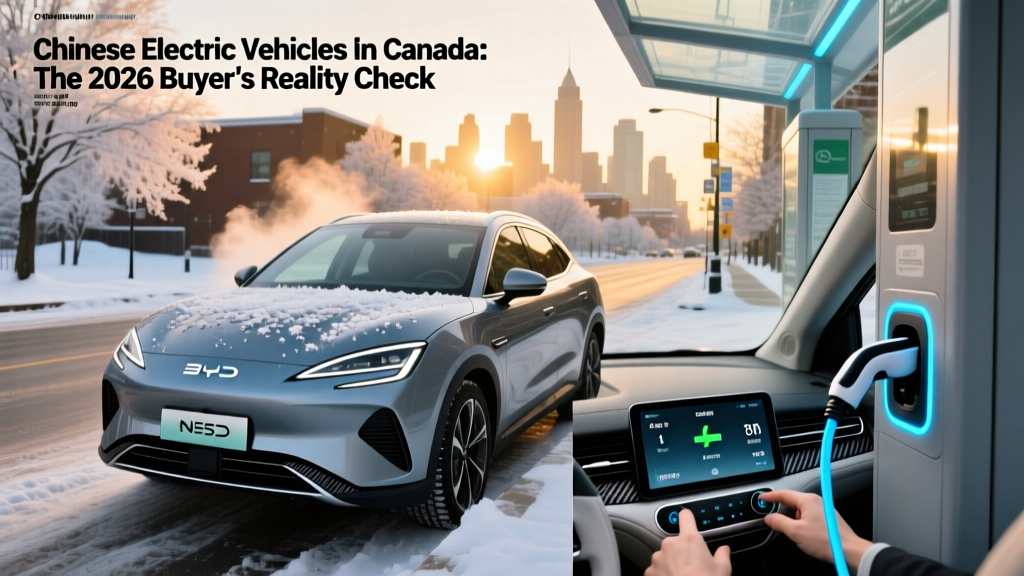
As of 2026, Chinese electric vehicles in Canada face a 100% federal surtax on top of standard import duties, effectively doubling the price of models from BYD, NIO, Xpeng, and other China-manufactured brands. This tariff, enacted in late 2024, means a BYD Atto 3 that might cost $35,000 CAD elsewhere lands in Canada closer to $70,000+ — eliminating the price advantage that made these vehicles compelling globally. A handful of Chinese-owned brands (MG, Polestar's China-built models) technically remain available, but their pricing is severely inflated by the tariff. For most Canadian EV shoppers in 2026, domestically assembled or tariff-exempt alternatives from Hyundai, Tesla, Ford, and Volkswagen offer dramatically better value.
Why Chinese EVs Were Generating Buzz — and What Changed
China became the world's largest EV market and exporter by building capable, affordable electric vehicles at scale. BYD surpassed Tesla in global BEV sales in late 2023, and brands like NIO, Xpeng, Zeekr, and Leapmotor attracted attention with competitive range (400+ km WLTP), fast DC charging (150-250 kW peak), and aggressive pricing.
Canadian consumers noticed. Search interest in "Chinese electric vehicles in Canada" spiked as buyers hoped these models could address the country's persistent EV affordability gap. The average new EV transaction price in Canada hovered above $65,000 CAD through 2025, while Chinese-market EVs were selling in Europe for the equivalent of $35,000-$45,000 CAD.
Then Canada's government acted. Citing national security concerns, unfair trade practices, and the need to protect North American auto manufacturing, Canada imposed a 100% surtax on Chinese-made EVs effective October 1, 2024. This policy remains fully in force for the 2026 model year.
The Real Cost: Chinese EVs vs. Canadian Alternatives
To understand why the tariff matters, consider what happens to a Chinese EV's price when it crosses the border versus what you'd pay for a comparable vehicle assembled in North America or tariff-exempt regions.
| Vehicle | Origin | Est. Pre-Tariff Price (CAD) | 100% Surtax Impact | Est. Canadian Price (CAD) | EPA-Equiv Range |
|---|---|---|---|---|---|
| BYD Atto 3 (Standard) | China | $38,000 | +$38,000 | ~$76,000+ | ~340 km |
| BYD Seal | China | $52,000 | +$52,000 | ~$104,000+ | ~420 km |
| MG4 EV (XPOWER) | China | $42,000 | +$42,000 | ~$84,000+ | ~350 km |
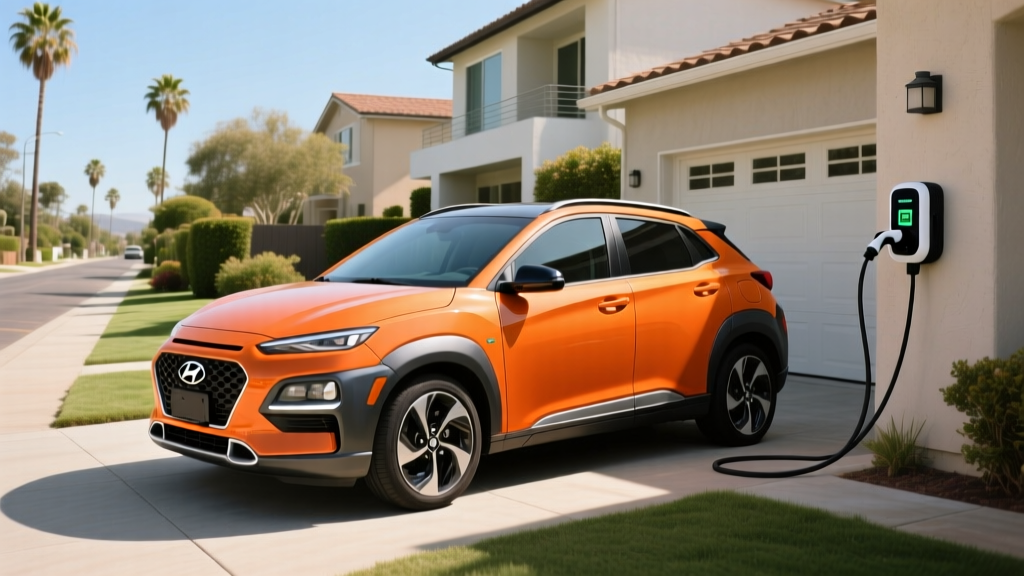
| Hyundai Ioniq 5 (Preferred) | USA (GA) | — | None | $58,999 | 488 km |
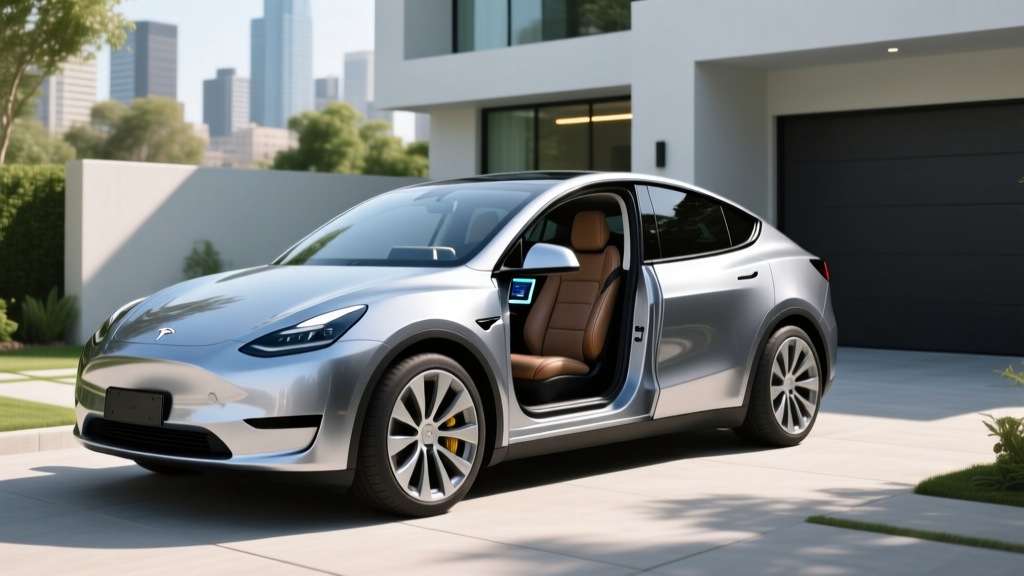
| Tesla Model Y (LR AWD) | USA (TX) | — | None | $63,990 | 533 km |
| VW ID.4 (Pro S AWD) | USA (TN) | — | None | $57,995 | 435 km |
The math is brutal. A BYD Atto 3 — which retails for roughly €38,000 in Europe — would need to sell for over $76,000 CAD to cover the surtax, making it more expensive than a fully loaded Tesla Model Y Long Range with superior range, Supercharger access, and North American service infrastructure.
Which Chinese-Connected Brands Can You Actually Buy in Canada?
Not every brand with Chinese ownership is automatically subject to the 100% surtax. The tariff applies based on country of manufacture, not country of brand ownership. Here's the current landscape:
Available but Tariff-Affected (Manufactured in China)
- MG (SAIC Motor): The MG4 EV was briefly available in Canada before the tariff. Current pricing makes it non-competitive. MG's Canadian presence is minimal as of 2026.
- Polestar 2 (China-built variants): Polestar, owned by Geely, manufactures the Polestar 2 in China. The surtax applies, pushing prices significantly higher than the Volvo EX40 or Tesla Model 3.
- Any direct BYD, NIO, Xpeng, Zeekr import: These brands have not established Canadian dealer networks, and the tariff makes direct importation economically unviable.
Chinese-Owned but Tariff-Exempt (Manufactured Outside China)
- Volvo (Geely-owned): Volvo's EVs for North America, including the EX90 and EX40, are manufactured in Belgium and South Carolina. No surtax applies.
- Polestar 3/4 (non-China production): Polestar has shifted some production to South Korea and the US for North American models, potentially avoiding the tariff depending on the specific model year and plant.
- Lotus (Geely-owned): The Eletre and Emeya are manufactured in Wuhan, China — the surtax applies fully.
Chinese EVs vs. Gas Cars and Hybrids: Canadian Ownership Costs
Even if you could buy a tariff-free Chinese EV at its intended price, how would it stack up against the gas and hybrid alternatives Canadian buyers actually cross-shop? Let's run a 5-year ownership comparison using realistic Canadian figures.
| Cost Factor | EV (e.g., Ioniq 5 @ $59K) | Hybrid (e.g., RAV4 Hybrid @ $40K) | Gas (e.g., RAV4 Gas @ $35K) |
|---|---|---|---|
| Purchase Price (after incentives) | $54,000* | $40,000 | $35,000 |
| Fuel / Electricity (5 yrs) | $4,200** | $8,750 | $12,500 |
| Maintenance (5 yrs) | $1,800 | $3,500 | $4,200 |
| Insurance (5 yrs avg) | $11,500 | $8,500 | $7,800 |
| Depreciation (est.) | $22,000 | $14,000 | $13,000 |
| 5-Year Total | $93,500 | $74,750 | $72,500 |
*Assumes $5,000 in federal iZEV rebate (if eligible) — note: the iZEV program status should be confirmed at purchase, as Canadian federal incentive programs are subject to change.
**Based on $0.12/kWh home charging (varies by province — Quebec as low as $0.06/kWh, Ontario higher at ~$0.15/kWh). Cold-weather range loss of 20-30% is factored into energy consumption.
Key takeaway: Even without the tariff, a Chinese EV at $38,000 CAD would still carry higher insurance and depreciation costs than a proven hybrid like the RAV4 Hybrid. The fuel and maintenance savings are real but don't fully offset the gap for most buyers over 5 years. The tariff makes the comparison moot — Chinese EVs simply aren't price-competitive in Canada in 2026.
Real-World Canadian Ownership Considerations
Canadian EV ownership presents challenges that go well beyond purchase price. These factors apply to any EV in Canada but are especially relevant when considering whether an imported Chinese model — with potentially limited service infrastructure — would be practical.
Cold-Weather Range Loss
This is the single biggest reality check for Canadian EV buyers. Lithium-ion batteries lose efficiency in cold temperatures, and cabin heating draws significant energy. Expect 20-35% range reduction at -20°C compared to the EPA or WLTP sticker. A vehicle rated for 400 km may deliver only 260-320 km in a Prairie or Quebec winter.
Chinese-market vehicles like the BYD Seal use LFP (lithium iron phosphate) battery chemistry in some trims. LFP offers excellent longevity and lower cost but is more susceptible to cold-weather range loss than NMC chemistry, and charges more slowly when cold. Without a robust heat pump and battery preconditioning system — features that Tesla, Hyundai, and BMW have refined for North American winters — a Chinese EV could struggle in Canadian conditions.
Charging Infrastructure Gaps
Canada's public DC fast charging network has expanded significantly, with Electrify America (Canada), Petro-Canada's Electric Highway, and the Tesla Supercharger network (now open to non-Tesla vehicles via the NACS adapter) covering major corridors. However:
- Rural and Northern Canada remains underserved — the Trans-Canada Highway has gaps in Northern Ontario, Saskatchewan, and parts of BC's interior.
- Chinese brands have no proprietary charging network. Tesla owners benefit from 1,500+ Supercharger stalls across Canada; BYD or MG buyers would rely entirely on third-party networks.
- Connector compatibility: China uses the GB/T charging standard domestically. Vehicles exported to North America must use NACS or CCS1. Confirming that a Chinese export model supports CCS1/NACS and can communicate properly with Canadian charging networks (authentication, payment, charge curve management) is a real concern with grey-market imports.
Service and Parts Availability
This is where the tariff question becomes secondary to a more practical one: who fixes it when it breaks? Chinese brands without Canadian dealer networks mean:
- No warranty service centers
- Potentially weeks-long waits for parts shipped from China
- Independent shops may lack diagnostic tools and training for unfamiliar EV platforms
- Collision repair becomes complicated without OEM parts supply chains
Compare this to Hyundai's 60+ Canadian dealerships with EV-trained technicians, or Tesla's mobile service fleet. For a $60,000+ vehicle purchase, service infrastructure matters enormously.
Common Misconceptions About Chinese EVs in Canada
| Myth | Fact |
|---|---|
| "Chinese EVs are half the price of other EVs in Canada." | Not anymore. The 100% surtax eliminates the price advantage entirely. A BYD Atto 3 costs more in Canada than a Tesla Model Y after the tariff. |
| "I can import a Chinese EV myself and save money." | The surtax applies to all EVs manufactured in China regardless of import method. You'll pay 100% on top of the vehicle's value at the border, plus standard duties, GST/HST, and freight. |
| "Chinese EVs have poor quality and safety." | Modern Chinese EVs from BYD, NIO, and Xpeng have scored well in Euro NCAP testing (BYD Atto 3 achieved 5 stars). Quality concerns are outdated for major brands — the issue in Canada is price and support, not build quality. |
| "The tariff will be lifted soon." | Canada's 100% EV surtax is aligned with similar US and EU policies and is tied to broader trade and industrial policy. There is no announced timeline for removal as of early 2026. Plan your purchase assuming it remains in effect. |
| "Polestar and Volvo are Chinese, so they're tariffed." | The tariff is based on manufacturing location, not brand ownership. Volvo EX90s built in South Carolina and Polestar models assembled in South Korea are not subject to the China surtax. |
Decision Framework: Should You Wait for Chinese EVs?
Choose an Available Canadian-Market EV Now If:
- You need a vehicle in the next 12 months — Chinese brands have no confirmed Canadian launch timeline
- You live in a region with harsh winters and need proven cold-weather performance with local service support
- You want to access the federal iZEV rebate (up to $5,000) and provincial incentives, which generally require purchasing from authorized Canadian dealers
- You rely on public charging and want guaranteed network compatibility (NACS/CCS1)
- You value predictable warranty service and parts availability
Consider Monitoring the Chinese EV Market If:
- Your purchase timeline is 3+ years out and trade policy may shift
- BYD or another Chinese brand announces a North American manufacturing plant — vehicles built locally would bypass the tariff entirely (as of 2026, BYD has announced a Mexico plant but no Canadian or US facility)
- You're in a fleet or commercial purchasing position where direct import negotiations might change the calculus
- You're specifically interested in a segment where Chinese brands lead (e.g., affordable compact EVs, electric buses/commercial vehicles)
What First-Time Canadian EV Buyers Should Know Instead
If Chinese EVs are off the table, here's a practical framework for your first EV purchase in Canada:
1. Start With Home Charging
Before choosing a car, confirm you can install a Level 2 (240V) home charger. This is where 80%+ of EV charging happens. Budget $1,500-$3,500 CAD for a quality Level 2 station (e.g., ChargePoint Home Flex, Grizzl-E Smart) plus electrician installation. If your panel needs an upgrade to 200A, add $2,000-$4,000. A Level 2 charger at 7.2-11.5 kW adds 35-60 km of range per hour — enough to fully recharge overnight.
2. Size the Battery for Your Worst Day, Not Your Average Day
Your 30 km commute is easy. The question is whether you can handle the 300 km winter highway trip to visit family. Choose a battery that delivers your longest common trip with a 20% buffer in cold weather. For most Canadians, that means at least 400 km of EPA-rated range (which becomes ~280-320 km real-world in January).
3. Compare Total Cost, Not Just Sticker Price
An EV at $58,000 with $4,000 in annual fuel savings over a gas car at $38,000 takes roughly 5 years to break even on fuel alone — and that's before factoring in potentially higher insurance premiums (typically 10-20% higher for EVs in Canada) and steeper depreciation in the first few years.
4. Verify Incentive Eligibility Before Committing
Canada's federal iZEV program has specific MSRP caps and eligible vehicle lists. Provincial rebates vary: Quebec offers up to $7,000, BC up to $4,000 (income-tested), while Alberta and Saskatchewan offer no provincial EV rebates. Confirm current program status at the point of purchase — funding caps and eligibility rules change.
FAQ: Chinese Electric Vehicles in Canada
Can I buy a BYD in Canada in 2026?
No. BYD has not established a Canadian dealer network, and even if you arranged a direct import, the 100% surtax would roughly double the vehicle's price. BYD has hinted at North American expansion but has confirmed no Canadian retail presence for 2026.
Does the 100% tariff apply to all Chinese-owned car brands?
No. The tariff applies to vehicles manufactured in China, regardless of brand ownership. Volvo (owned by China's Geely) manufactures many models outside China and those vehicles are not subject to the surtax. Always check the vehicle's country of assembly on the window sticker or Transport Canada documentation.
Will Chinese EV prices drop if the tariff is removed?
If the tariff were lifted, Chinese EVs could theoretically enter Canada at prices 40-50% below current North American EVs. However, there is no announced timeline or political momentum for tariff removal as of 2026. Canada's policy aligns with similar US tariffs, and both countries have signaled intent to protect domestic EV manufacturing. Do not base a purchase decision on speculation about tariff changes.
Are Chinese EV batteries safe and reliable?
Battery safety and longevity from major Chinese manufacturers like BYD and CATL is well-documented. BYD's Blade Battery (LFP chemistry) has demonstrated strong thermal stability in nail penetration tests, and CATL supplies batteries to Tesla, BMW, and others globally. The concern in Canada is not battery quality — it's cold-weather performance of LFP chemistry and the lack of local warranty service infrastructure.
What's the best EV alternative to a Chinese brand in Canada right now?
For buyers who wanted the affordability of a Chinese EV, the closest alternatives in 2026 include the Hyundai Ioniq 5 (488 km range, 800V fast charging, $58,999 CAD), the Tesla Model Y Long Range (533 km, Supercharger access, $63,990), and the Volkswagen ID.4 Pro S (435 km, competitive pricing at $57,995). For maximum affordability, the Nissan Leaf (starting ~$44,990, 342 km range) remains the cheapest new EV available, though its CHAdeMO connector limits DC fast charging options.
How does the Canadian tariff compare to US and EU policy?
The US imposes a similar 100% tariff on Chinese EVs under Section 301 trade actions. The EU enacted countervailing duties ranging from 17% to 35.3% (on top of the existing 10% duty) depending on the manufacturer, effective mid-2024. Canada's flat 100% surtax is the most aggressive of the three, making Chinese EVs least price-competitive in the Canadian market.
Sources: Government of Canada tariff schedule, Transport Canada iZEV program, manufacturer spec sheets (Hyundai Canada, Tesla Canada, Volkswagen Canada). Pricing and incentive figures reflect early 2026 data and are subject to change. Confirm all figures with your dealer and tax professional before purchasing.