The Short Answer on Chinese Electric Mini Trucks
Most Chinese electric mini trucks — like the popular Chang Li, Luyuan, and similar models sold on Alibaba for $1,500–$5,000 — are not street-legal for public roads in the vast majority of US states. They are classified as Low-Speed Vehicles (LSVs) or off-road utility vehicles, meaning they're restricted to private property or roads with speed limits of 35 mph or below in select jurisdictions. They do not meet NHTSA Federal Motor Vehicle Safety Standards (FMVSS) for full-size passenger or commercial vehicles, lack airbags, crash-test certification, and modern battery-management systems. If you need a legal, roadworthy small electric truck for daily driving, you'll want to look at US-market alternatives like the Ford Maverick (hybrid) or wait for upcoming compact EV pickups from established manufacturers.
What Exactly Is a Chinese Electric Mini Truck?
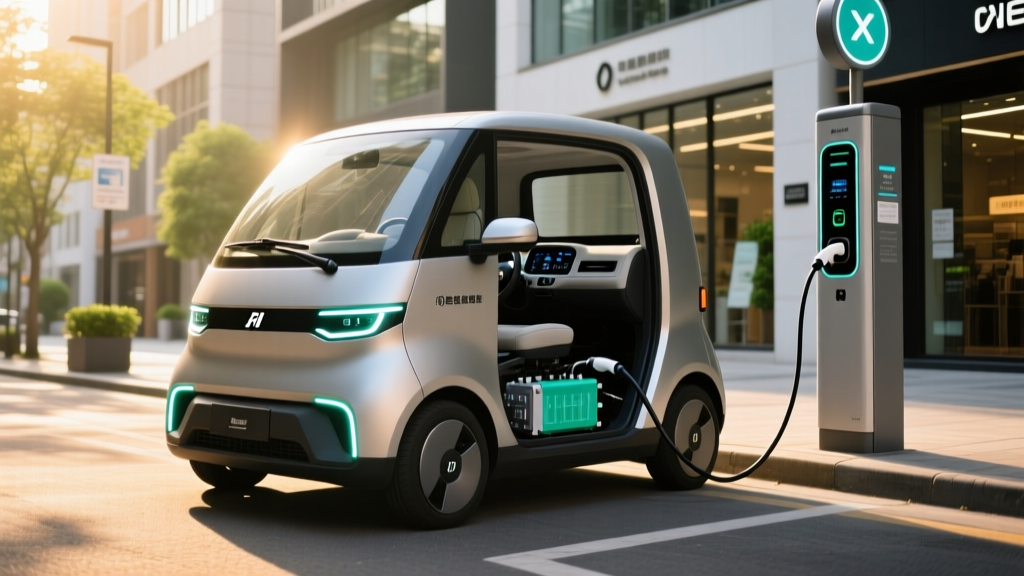
The term "Chinese electric mini truck" typically refers to small, low-speed electric utility vehicles manufactured in China and sold direct-to-consumer through platforms like Alibaba, AliExpress, or independent importers. These vehicles usually share the following profile:
- Price: $1,500–$5,500 (before shipping and import fees)
- Top speed: 25–40 mph
- Battery: 4–10 kWh, typically lead-acid or low-grade LFP (lithium iron phosphate)
- Range: 20–50 miles (claimed, often overstated)
- Charging: Standard 120V household outlet (Level 1), 6–10 hours to full
- Payload: 500–1,500 lbs
- Weight: 800–2,000 lbs (vs. 4,000–6,000 lbs for a US-market pickup)
These are essentially electrified versions of the "kei truck" form factor popular in Japan and China — small flatbed or enclosed-cargo vehicles designed for short-haul farm, campus, or neighborhood use. The appeal is obvious: a truck bed, electric drivetrain, and a price point that undercuts every US-market vehicle by an order of magnitude. But the reality of ownership is far more complicated.
Street-Legal Status: The Core Problem
Under NHTSA regulations, any vehicle driven on public US roads must comply with Federal Motor Vehicle Safety Standards. Chinese electric mini trucks almost universally fail to meet these requirements. Here's why:
| Safety Requirement | US FMVSS Standard | Typical Chinese Mini Truck |
|---|---|---|
| Crash testing (frontal, side, rollover) | FMVSS 208, 214, 216 | Not tested |
| Airbags (driver & passenger) | FMVSS 208 | Absent |
| Seatbelt pretensioners | FMVSS 209 | Basic lap belts only |
| Lighting (DOT-approved) | FMVSS 108 | Non-compliant or aftermarket |
| Windshield (safety glass) | FMVSS 205 | Acrylic or thin glass |
| Battery management system (BMS) | FMVSS 305 | Minimal or none |
Low-Speed Vehicle (LSV) Classification
Some of these trucks can be registered as LSVs (also called Neighborhood Electric Vehicles or NEVs) in certain states. LSV rules under FMVSS 500 allow vehicles with a top speed of 20–25 mph on roads with speed limits up to 35 mph. Requirements include headlamps, turn signals, tail lamps, a VIN, and basic seatbelts. However:
- Not all states allow LSV registration — rules vary widely by state and county.
- LSVs cannot be driven on highways or roads posted above 35 mph.
- Insurance is extremely limited — most major insurers won't write policies for imported LSVs, leaving you personally liable in an accident.
- Resale value is near zero — there's no established used market for these vehicles.
Real Costs: Purchase, Charging, and Hidden Expenses
The sticker price on Alibaba is misleading. Here's what you'll actually spend to get a Chinese electric mini truck delivered, registered (if possible), and operational:
| Cost Category | Chinese Mini Truck (Estimated) | US-Market Compact Truck (e.g., Ford Maverick Hybrid) |
|---|---|---|
| Vehicle purchase price | $3,000–$5,500 | $28,000–$35,000 MSRP |
| Ocean freight + import duties | $1,500–$3,000 | N/A (dealer delivery included) |
| Customs broker fees | $300–$600 | N/A |
| Registration & titling | $100–$500 (if LSV-eligible) | $150–$400 |
| Insurance (annual) | $800–$2,000 (limited carriers) | $1,200–$1,800 (full coverage) |
| Fuel/electricity (annual, 5,000 mi) | $150–$250 (~$0.04/mi) | $400–$600 (hybrid, ~$0.09/mi at 42 MPG) |
| Maintenance (annual) | $200–$800 (parts scarce) | $300–$500 (dealer network) |
| Battery replacement (if needed) | $800–$2,000 (no warranty support) | Covered under 8-yr/100,000-mi warranty |
| Total first-year cost | $6,050–$13,150 | $29,700–$38,300 |
The Chinese mini truck wins on raw purchase price, but the gap narrows when you factor in shipping, import logistics, insurance difficulty, and the complete absence of warranty coverage or dealer support. A single battery failure — common within 2–3 years on lead-acid models — can cost 30–50% of the original purchase price to replace.
EV vs Gas: How a Mini Truck Compares to Alternatives
If you're considering a Chinese electric mini truck, you likely need a small utility vehicle for one of these use cases: farm/ranch work, large-property maintenance, campus or warehouse transport, or short-range neighborhood hauling. Here's how the options stack up:
| Factor | Chinese EV Mini Truck | Gas-Powered Kei Truck (Used, Imported) | Ford Maverick Hybrid | Electric UTV (Polaris Ranger XP) |
|---|---|---|---|---|
| Street-legal (public roads) | Limited (LSV only) | 25-yr import rule applies | Fully legal, all roads | Off-road only |
| Range | 20–50 mi (real-world) | 200–350 mi | 500+ mi (16.5-gal tank, 42 MPG combined) | 40–60 mi |
| Top speed | 25–40 mph | 55–75 mph | 100+ mph | 25–55 mph |
| Cargo bed | Yes (small) | Yes (small) | Yes (4.5 ft bed, 1,500 lb payload) | Yes (small) |
| Charging/refuel time | 6–10 hrs (120V) | 5 min (gas station) | 5 min (gas station) | 8–10 hrs (120V) |
| Warranty | None | None (used) | 3-yr/36,000-mi basic; 8-yr/100,000-mi hybrid battery | 1-yr limited |
| Safety features | Minimal | Minimal | Ford Co-Pilot360 (AEB, lane-keep, blind-spot) | Roll cage, harness |
For purely off-road or private-property use, a Chinese EV mini truck or a purpose-built electric UTV makes functional sense. For any public-road driving, the Ford Maverick Hybrid is the most practical, legal, and safe option — and its 42 MPG combined (EPA-rated) means fuel costs stay low while giving you full highway capability.
Battery and Charging Reality Check
The batteries in most Chinese electric mini trucks are the weakest link. Here's what buyers need to understand:
Lead-Acid vs. LFP Chemistry
Most sub-$3,000 models use sealed lead-acid (SLA) batteries. These are heavy, have low energy density, and degrade quickly — expect 300–500 charge cycles before significant capacity loss. That translates to roughly 2–3 years of daily use before you'll see range drop by 30–40%.
Models in the $3,500–$5,500 range may offer LFP (lithium iron phosphate) packs. LFP is more durable (2,000+ cycles), safer (lower thermal runaway risk), and lighter. However, these packs still lack the sophisticated battery management systems (BMS) found in US-market EVs, meaning cell balancing, thermal management, and state-of-health monitoring are rudimentary at best.
Charging Speed and Practicality
These trucks charge exclusively on Level 1 (120V AC), drawing roughly 0.8–1.5 kW. For a 6 kWh battery, a full charge takes 5–8 hours. There is no DC fast-charging capability and no Level 2 (240V) option on most models. If you need daily use, overnight charging works — but you cannot "top up" quickly during the day.
Common Misconceptions — Fact vs. Fiction
| Myth | Fact |
|---|---|
| "I can register it as a regular vehicle in my state." | Most states require FMVSS compliance for full registration. LSV registration is limited and varies by jurisdiction. |
| "It qualifies for the $7,500 federal EV tax credit." | The IRS §30D credit requires the vehicle to be manufactured by a qualified OEM, meet battery sourcing rules, and have a valid 17-character VIN from a recognized manufacturer. Chinese direct-import mini trucks do not qualify. |
| "The 50-mile range claim is accurate." | Real-world range with payload, hills, or cold weather is typically 50–60% of claimed range — expect 20–30 miles in practical use. |
| "Parts and batteries are easy to replace." | Replacement batteries and proprietary components often have 4–8 week shipping times from China with no local support network. |
| "It's insured like a normal car." | Major insurers (Geico, Progressive, State Farm) generally won't cover imported LSVs. Specialty carriers exist but charge high premiums relative to vehicle value. |
Real-World Ownership: Who Should Actually Buy One?
Despite the limitations, there are legitimate use cases where a Chinese electric mini truck makes sense — and many where it doesn't.
Decision Framework: Should You Buy a Chinese Electric Mini Truck?
YES, consider one if ALL of the following apply:
- You'll use it exclusively on private property (farm, ranch, large estate, campground, industrial site).
- Your daily driving needs are under 15 miles round-trip at low speeds.
- You have a standard 120V outlet near where you park and can charge overnight.
- You're comfortable performing basic maintenance yourself or sourcing parts internationally.
- You don't need highway speeds, crash protection, or climate control.
- You view it as a $3,000–$5,000 disposable utility tool, not a long-term vehicle investment.
NO, look at alternatives if ANY of the following apply:
- You need to drive on public roads with speed limits above 35 mph.
- You want insurance coverage and liability protection.
- You live in a climate with harsh winters (lead-acid batteries lose 40–50% capacity below 32°F).
- You expect warranty support or local service.
- You need the vehicle to last more than 3–4 years without major component replacement.
- You want to qualify for any federal or state EV incentives.
Practical Alternatives Worth Considering
If the Chinese electric mini truck doesn't fit your needs, here are legitimate alternatives across different price points and use cases:
For Street-Legal Road Use
- Ford Maverick Hybrid (2026): Starting at ~$28,000 MSRP, 42 MPG combined, 1,500-lb payload, full FMVSS compliance, Ford Co-Pilot360 safety suite, 8-year/100,000-mile hybrid battery warranty.
- Used Nissan Leaf (2018–2023): $10,000–$18,000, 150–226 miles EPA range, qualifies for the §25E used EV credit (up to $4,000, income limits apply).
For Off-Road / Private Property Use
- Polaris Ranger XP Kinetic: ~$30,000, 110 kWh battery, 110-mile range, 1,250-lb payload, full roll cage, US warranty and dealer network. Purpose-built electric UTV.
- Used Japanese kei truck (Honda Acty, Suzuki Carry): $5,000–$12,000, gas-powered, 25-year import-legal, parts available. Not electric, but proven reliability and street-legal in many states under classic/LSV rules.
For Neighborhood / Campus Use
- GEM eUtility (Polaris GEM): ~$15,000, LSV-legal in all 50 states, 30-mile range, US-manufactured, insurable, DOT-compliant lighting and safety glass.
Frequently Asked Questions
Are Chinese electric mini trucks legal to drive on US streets?
In most cases, no. They do not meet NHTSA's Federal Motor Vehicle Safety Standards and cannot be registered as full highway vehicles. Some may qualify as Low-Speed Vehicles (LSVs) for roads with speed limits of 35 mph or below, but LSV registration rules vary by state and county. Always check with your local DMV before purchasing.
Do Chinese electric mini trucks qualify for the federal EV tax credit?
No. The IRS §30D clean vehicle credit requires the manufacturer to be a recognized OEM with a valid VIN structure, the vehicle to meet battery critical-mineral and component sourcing thresholds, and the buyer to meet income caps ($150,000 single / $300,000 joint for new vehicles). Direct-import Chinese mini trucks do not meet any of these criteria. The §25E used-EV credit (up to $4,000) also requires a qualifying dealer sale and OEM recognition.
What is the real-world range of a Chinese electric mini truck?
While many sellers advertise 40–60 miles of range, real-world testing with payload, moderate terrain, and temperatures below 70°F typically yields 20–35 miles. Lead-acid battery models degrade faster, losing 30–40% capacity within 2–3 years of daily cycling.
Can I charge a Chinese electric mini truck at a public charging station?
No. These vehicles use standard 120V AC charging with a household plug. They are not compatible with Level 2 (J1772) or DC fast-charging (CCS, NACS, CHAdeMO) connectors. Public charging infrastructure is not usable with these vehicles.
What happens if the battery dies — can I get a replacement?
Replacement batteries are available from the original seller or third-party suppliers in China, but shipping takes 4–8 weeks and costs $800–$2,000 depending on chemistry and capacity. There is no US-based warranty, dealer network, or certified technician support. Some owners retrofit aftermarket LFP packs, but this requires electrical expertise and voids any remaining seller warranty.
Is a Chinese electric mini truck a good first EV for someone new to electric vehicles?
No. A first-time EV buyer should prioritize safety, reliability, insurance availability, warranty coverage, and charging convenience — all areas where these trucks fall short. A used Nissan Leaf, Chevrolet Bolt EV, or a new Ford Maverick Hybrid are far better entry points into electrified vehicle ownership with established support networks and legal road access.