The Short Answer on Chinese EVs in America
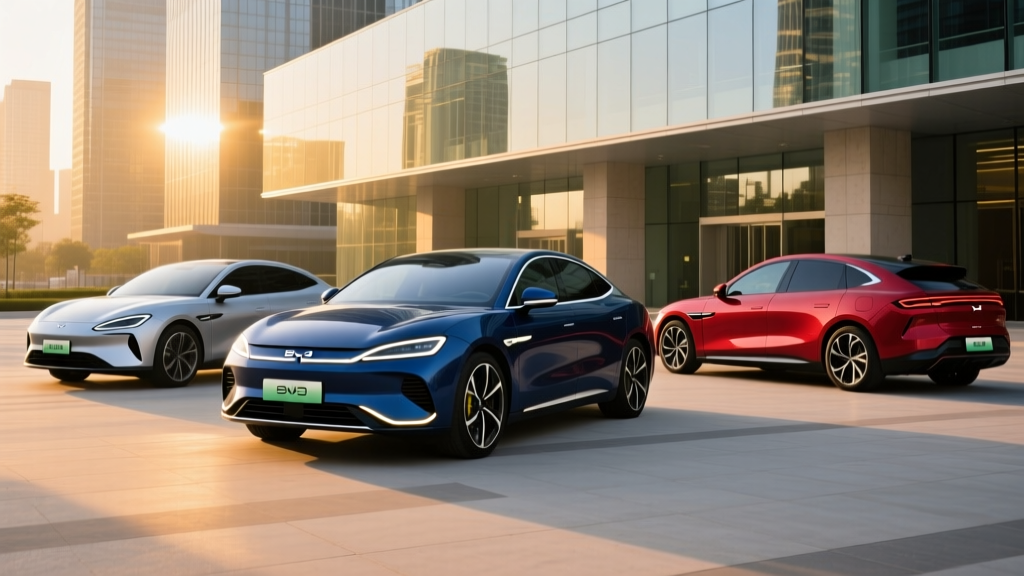
As of 2026, you cannot buy a BYD, NIO, Xpeng, or Zeekr directly in the United States. A combination of 100%+ import tariffs, national security reviews, and dealership restrictions effectively blocks pure Chinese-brand EVs from the US market. However, several vehicles manufactured in China by Chinese-owned companies are sold here — notably the Volvo EX30, Volvo EX40, Polestar 2, Polestar 4, and the Lotus Eletre. These carry Chinese VIN origins but are sold through established Western brands with US dealer networks and warranty support. None of these currently qualify for the full $7,500 federal §30D tax credit due to battery-sourcing and foreign-entity-of-concern (FEOC) rules.
Why Chinese-Brand EVs Aren't Sold in the US
The barrier isn't technology — it's trade policy. The US imposed a 100% tariff on Chinese-made electric vehicles starting in August 2024, up from the prior 25% rate, and that tariff remains in effect through 2026. When you add the standard 2.5% auto import duty, a Chinese-built EV effectively faces a 102.5% tariff before it reaches a showroom. A BYD Seal that costs roughly $30,000 in China would need to sell for over $60,000 in the US just to break even on import costs — eliminating the price advantage that makes these cars competitive in Europe, Southeast Asia, and South America.
Beyond tariffs, the IRS §30D clean vehicle credit includes FEOC provisions that disqualify vehicles with battery components or critical minerals sourced from Chinese companies — which covers virtually every Chinese-manufactured EV. This means even if a brand like BYD could absorb the tariff, buyers would get no federal tax incentive, further eroding any cost advantage.
Chinese-Made EVs You Can Actually Buy in the US
Several Chinese-owned automakers sell vehicles in the US that are assembled in Chinese factories. Here's what's available for the 2026 model year:
| Model | Brand / Parent | EPA Range | Battery (kWh) | DC Fast Charge (peak kW) | 10-80% Time | Base MSRP |
|---|---|---|---|---|---|---|
| Volvo EX30 Single Motor | Volvo (Geely) | 275 mi | 69 kWh (NMC) | 153 kW | ~26 min | $36,345 |
| Volvo EX40 Single Motor | Volvo (Geely) | 293 mi | 82 kWh (NMC) | 200 kW | ~22 min | $53,550 |
| Polestar 2 Long Range DM | Polestar (Geely) | 320 mi | 82 kWh (NMC) | 200 kW | ~22 min | $49,900 |
| Polestar 4 Long Range DM | Polestar (Geely) | 300 mi (est.) | 102 kWh (NMC) | 200 kW | ~24 min | $59,990 |
| Lotus Eletre | Lotus (Geely) | 304 mi (est.) | 112 kWh (NMC) | 350 kW (capable) | ~18 min (350kW station) | $107,400 |
Key pattern: All of these are Geely-owned brands. Geely, headquartered in Hangzhou, China, has navigated US market entry by leveraging Western brand equity (Volvo is Swedish by heritage, Lotus is British) while manufacturing in Chinese plants. This strategy sidesteps some of the brand-trust barriers a pure Chinese badge would face.
The Real Cost: Chinese-Made vs US/EU-Built EVs
Let's compare the Volvo EX30 (China-built, Geely-owned) against two US-market benchmarks — the Hyundai Ioniq 5 (South Korea / Georgia-built) and the Tesla Model Y (Fremont/Austin-built) — to see whether buying a Chinese-made EV saves money once you factor in incentives.
| Cost Factor | Volvo EX30 (China-built) | Hyundai Ioniq 5 SE (US-built) | Tesla Model Y LR (US-built) |
|---|---|---|---|
| Base MSRP | $36,345 | $42,600 | $44,990 |
| Federal §30D Credit | $0 (FEOC/sourcing) | $7,500 | $7,500 |
| Effective Price (after credit) | $36,345 | $35,100 | $37,490 |
| EPA Range | 275 mi | 303 mi | 320 mi |
| Cost per EPA Mile of Range | $132/mi | $116/mi | $117/mi |
| Battery Warranty | 8 yr / 100,000 mi | 10 yr / 100,000 mi | 8 yr / 120,000 mi |
| Charging Network Access | CCS → NACS adapter needed for Superchargers | NACS (native 2025+) | NACS (native) |
The takeaway: The EX30's lower sticker price is wiped out by the lack of a federal tax credit. After the §30D credit, the Ioniq 5 is actually cheaper and delivers more range. This is the core economic problem Chinese-made EVs face in the US — tariff and credit policies are specifically designed to neutralize their cost advantage.
What About Tariff Workarounds? Mexico, Local Assembly?
Some analysts have speculated that Chinese automakers could build EVs in Mexico and export them to the US under the USMCA trade agreement. As of 2026, this hasn't materialized for several reasons:
- USMCA rules of origin require 75% of vehicle content to be made in North America to qualify for tariff-free import — a threshold no Chinese EV platform currently meets.
- Mexican production by Chinese brands (BYD, Chery, MG) is focused on the domestic Mexican and Latin American markets, not US export.
- Political risk makes any Chinese automaker hesitant to invest billions in a North American factory when future US administrations could tighten rules further.
BYD has announced plans for a factory in Mexico, but the company has explicitly stated it is for the Mexican domestic market. There is no confirmed timeline or commitment for BYD vehicles to be sold in the US through any channel.
Ownership Considerations for Chinese-Made EVs
If you're considering a Volvo EX30, Polestar 2, or another Geely-owned, China-built EV, these practical factors matter:
Home Charging Access
All of these vehicles support Level 2 AC charging at 11 kW (48A) via a J1772/NACS connector. A typical home Level 2 installation on a 240V/60A circuit costs $800–$2,200 (equipment + licensed electrician + permit), depending on whether your electrical panel needs an upgrade. If you live in an apartment or lack a dedicated parking spot, public charging reliance will add cost and time. The EX30 and EX40 use CCS1 connectors natively; you'll need a Tesla NACS DC adapter (~$175–$250) to access Supercharger stalls.
Cold-Weather Range Loss
Expect 20–35% range reduction in sub-freezing temperatures across all of these NMC-battery vehicles. The EX30's 275-mile EPA range could drop to ~180–210 miles on a 15°F day with cabin heat running. Volvo and Polestar include heat pumps in most trims, which mitigates this somewhat (roughly 5–10% less loss than resistive heating), but the physics of lithium-ion chemistry in cold weather is unavoidable.
Charging Speed Realities
The EX30 peaks at 153 kW on DC fast charging — adequate but not class-leading. More importantly, the charge curve matters: peak rate is only sustained between roughly 10–40% SoC, after which it tapers. Real-world 10–80% sessions take about 26 minutes at a 150+ kW station. Compare this to the Hyundai Ioniq 5's 800V architecture, which sustains higher rates longer and achieves 10–80% in approximately 18 minutes. On a road trip, that 8-minute gap per charge stop adds up.
Insurance and Depreciation
Insurance premiums for Volvo and Polestar EVs run 10–25% higher than comparable gas vehicles, reflecting higher repair costs and parts pricing for EV-specific components. Depreciation data for the EX30 is still limited (it launched in the US for MY2025), but Polestar 2 resale values have lagged behind Tesla and Hyundai/Kia EVs — a consideration if you plan to sell within 3–5 years.
Myths vs. Facts: Chinese EVs in America
| Myth | Fact |
|---|---|
| "BYD is about to launch in the US any day now." | BYD has made no official US entry announcement. The 100%+ tariff makes direct import economically unviable. |
| "Chinese EVs are cheap and low quality." | BYD Seal, NIO ET7, and Zeekr 001 have earned strong Euro NCAP and Chinese C-NCAP safety ratings. Quality is competitive, but US-spec compliance (FMVSS) is a separate hurdle. |
| "Volvo is still Swedish, so it's not a Chinese car." | Volvo Cars has been owned by China's Geely Holding since 2010. Design and engineering remain in Gothenburg, Sweden, but the EX30 and EX40 are manufactured in China (Luqiao and Chengdu plants). |
| "I can import a BYD or NIO myself." | US federal vehicle importation requires EPA and NHTSA compliance certification. Individual import of a non-certified vehicle is effectively impossible for road-legal use. |
| "Chinese EVs get the $7,500 tax credit." | No Chinese-manufactured EV qualifies for the §30D credit. FEOC battery-sourcing rules and the North American final-assembly requirement exclude them entirely. |
Decision Framework: Should You Buy a Chinese-Made EV?
Buy a Chinese-made EV (Volvo EX30/EX40, Polestar, Lotus) if:
- You value Scandinavian or European design language and don't mind Chinese manufacturing origin.
- You qualify for a state-level EV rebate (e.g., California, Colorado, New York) that doesn't have FEOC sourcing restrictions — some state incentives still apply regardless of where the car was built.
- You primarily drive in urban/suburban areas where the EX30's 275-mile range is more than sufficient for daily use.
- You already have Level 2 home charging installed and rarely road-trip more than 200 miles in a single day.
Choose a US/EU/Korea-built EV instead (Tesla, Hyundai, Ford, BMW) if:
- The $7,500 federal tax credit is essential to your budget — these vehicles (when meeting §30D sourcing rules) can qualify, dropping effective price below Chinese-made competitors.
- You need 300+ miles of EPA range for frequent highway driving or road trips.
- Native NACS/Supercharger access matters to you and you don't want to rely on adapters.
- Long-term resale value and established US service networks are priorities.
- You live in a cold climate and want the maximum possible winter range buffer.
Frequently Asked Questions
Will BYD ever sell cars in the United States?
There is no confirmed timeline. BYD has expressed interest in the US market in past statements, but the 100%+ tariff, FEOC credit restrictions, and the need for FMVSS compliance certification make entry extremely difficult. BYD is currently prioritizing markets where it faces fewer trade barriers — Europe (despite EU tariffs of ~35%), Southeast Asia, South America, and the Middle East. Don't hold your breath for a 2027 US launch.
Are Chinese-made Volvos safe?
Yes. Volvo's safety engineering is conducted in Sweden, and manufacturing quality at Geely's Chinese plants meets global Volvo standards. The EX40 (formerly XC40 Recharge) earned an IIHS Top Safety Pick+ rating. Manufacturing location does not change the engineering, crash-test performance, or safety systems.
Can I get my Chinese-made EV serviced easily?
Volvo and Polestar have established US dealer and service networks — roughly 550+ Volvo dealers and 60+ Polestar service points nationwide. Lotus has a smaller but growing network. This is a major advantage over a hypothetical direct-entry Chinese brand, which would need to build a service infrastructure from scratch.
Do Chinese-made EVs qualify for any incentives at all?
They do not qualify for the federal §30D credit. However, some state incentives (California's CVRP, Colorado's state tax credit, New York's Drive Clean Rebate) are based on vehicle type and price rather than country of origin or battery sourcing. Check your specific state program rules — eligibility varies, and program details change annually.
What about NIO, Xpeng, or Zeekr — will they come to the US?
NIO has discussed US entry since 2021 but has made no concrete moves. Xpeng has focused on China, Europe, and select Asian markets. Zeekr (also Geely-owned) launched in Europe in 2023 but has not announced US plans. All three face the same tariff and regulatory barriers as BYD. Geely's strategy has been to channel its US ambitions through Volvo, Polestar, and Lotus rather than launching Chinese-branded vehicles directly.