Quick Answer: Can You Buy Chinese Electric Cars in the US?
As of 2026, no mainstream Chinese-brand electric vehicles are available for sale in the United States. Brands like BYD, NIO, Xpeng, and Li Auto do not sell vehicles through US dealerships. A 100% combined tariff on Chinese-made EVs (25% Section 301 tariff + 2.5% standard auto tariff + additional duties) makes importing them economically unviable. However, several vehicles manufactured in China by non-Chinese brands — such as the Polestar 2, Volvo EX30, and select Lincoln models — are or were sold in the US, though some face tariff-related pricing adjustments or supply shifts. If you're searching for Chinese electric cars for sale stateside, your realistic options are limited to these badge-engineered or joint-venture models, and the landscape is shifting rapidly.
Why Chinese EV Brands Aren't on US Dealer Lots
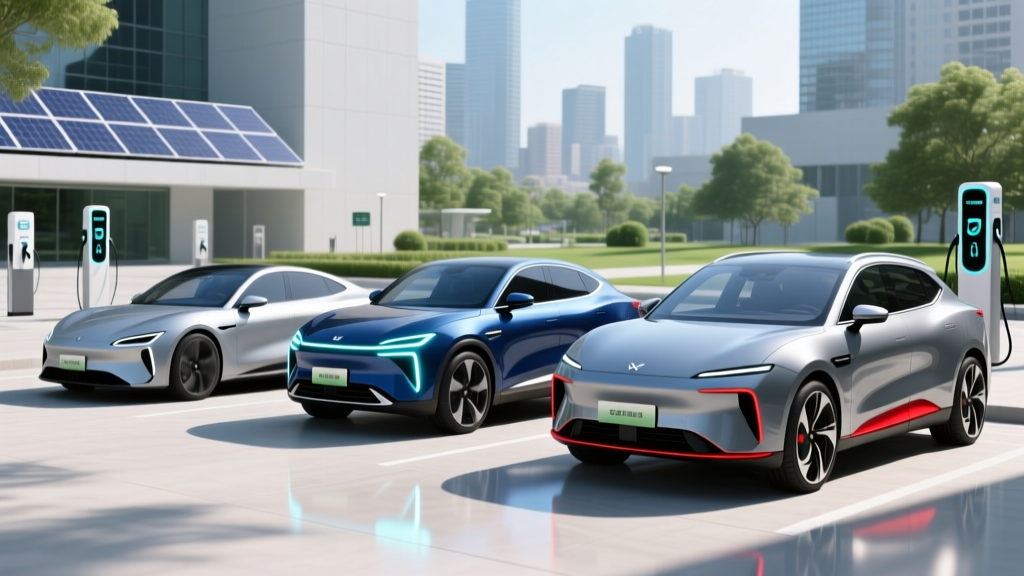
The absence of BYD, NIO, Xpeng, Zeekr, and other Chinese automakers from the US market isn't an accident — it's the result of layered trade policy, safety homologation gaps, and deliberate market strategy.
The United States currently imposes a 100%+ effective tariff on vehicles manufactured in China. This includes:
- 2.5% standard import duty on passenger vehicles
- 25% Section 301 tariff on Chinese-origin goods (in place since 2018, reinforced in 2024)
- Additional tariffs signed into law in 2024 specifically targeting Chinese EVs, raising the combined rate to effectively 100% of the vehicle's declared value
A BYD Seal that sells for roughly $26,000 in China would need to be priced above $52,000 in the US just to cover tariff costs — before dealer margins, shipping, compliance modifications, and marketing. That eliminates the price advantage that makes these cars compelling globally.
Beyond tariffs, Chinese-market vehicles are built to GB/T charging standards and Chinese safety regulations (C-NCAP), not the US NHTSA Federal Motor Vehicle Safety Standards (FMVSS) or the CCS/NACS connector ecosystem. Retooling a model for US sale requires hundreds of millions in engineering and crash-test investment — a bet no Chinese OEM has been willing to make given the tariff wall.
Which Chinese-Built EVs Can You Actually Buy in the US?
Several vehicles assembled in China are sold by Western brands in the US market. Here's where things stand for the 2026 model year:
| Model | Brand HQ | Built In | EPA Range | Starting MSRP (2026) | US Availability |
|---|---|---|---|---|---|
| Polestar 2 | Sweden (Geely-owned) | China (Luqiao) | 276 mi (Long Range Dual Motor) | $49,900 | Available — tariff surcharge applied |
| Volvo EX30 | Sweden (Geely-owned) | China (Zhangjiakou) | 265 mi (estimated, pending EPA) | $36,350 | Delayed — US launch pushed to late 2025/2026 due to tariff review |
| Polestar 4 | Sweden (Geely-owned) | China (Hangzhou Bay) | ~300 mi (estimated) | $59,900 | Announced — US deliveries expected 2026 |
| Lotus Eletre | UK (Geely-owned) | China (Wuhan) | ~304 mi (WLTP; EPA pending) | $107,000 | Limited availability |
Notice a pattern: Geely Holding Group (which owns Volvo, Polestar, Lotus, and Zeekr) is the primary conduit for Chinese-manufactured EVs reaching US buyers. These vehicles are engineered to Western safety and software standards but assembled in Chinese factories leveraging the country's battery supply chain dominance.
Real Cost of Ownership: Chinese-Built EV vs. US-Built Competitor
Let's compare a Chinese-built EV you can actually buy against a comparable US-assembled alternative to understand the real economics.
| Cost Factor | Polestar 2 Long Range Dual Motor (China-built) | Tesla Model 3 Long Range AWD (US-built) |
|---|---|---|
| Base MSRP | $49,900 | $47,740 |
| Federal §30D Tax Credit | $0 (battery sourcing does not meet IRS critical-mineral and battery-component requirements) | $3,750–$7,500 (varies by sourcing; check current IRS guidance) |
| Effective Net Price | ~$49,900 | ~$40,240–$43,990 |
| Battery Capacity | 78 kWh usable (NMC, CATL cells) | 75 kWh usable (NMC/LFP depending on batch) |
| DC Fast Charge (10–80%) | ~34 min (peak 200 kW) | ~25 min (peak 250 kW) |
| Est. Annual Charging Cost (12,000 mi, $0.14/kWh home) | $588 | $546 |
| Est. Annual Fuel Cost (gas equivalent at 28 MPG, $3.40/gal) | $1,457 | $1,457 |
| Annual Fuel/Charge Savings vs. Gas | ~$869 | ~$911 |
| Battery Warranty | 8 yr / 100,000 mi | 8 yr / 120,000 mi |
| 5-Year Est. Maintenance | ~$1,800 | ~$1,500 |
The tariff and tax-credit gap creates a $6,000–$10,000 effective price penalty for the Chinese-built Polestar 2 compared to the US-built Tesla Model 3. Over five years, charging and maintenance costs are comparable, but the upfront disparity is difficult to close without aggressive manufacturer incentives or state-level rebates.
The BYD Question: Why the World's Largest EV Maker Skips America
BYD sold over 3 million electrified vehicles globally in 2024 and offers compelling models like the Seal (280 mi CLTC range, ~$26,000 in China) and Atto 3 (260 mi WLTP, ~$30,000). Yet BYD has explicitly stated it has no plans to enter the US passenger vehicle market.
The reasons are strategic:
- Tariffs destroy the price proposition: A $26,000 Seal becomes a $52,000+ car in the US — competing directly with the BMW i4 and Mercedes EQB.
- BYD is winning elsewhere: Europe, Southeast Asia, Latin America, and Australia offer massive growth without the tariff headache.
- Political risk: Congressional scrutiny of Chinese tech (see: Huawei, TikTok) makes a US launch a reputational and regulatory gamble.
- Dealer and service network: Building a US dealer network from scratch costs billions, and direct-to-consumer sales face franchise-law barriers in most states.
For US buyers who admire BYD's value proposition, the closest proxy is watching what Geely-backed brands (Polestar, Volvo) bring to market using similar CATL and BYD battery cells.
Common Misconceptions About Chinese EVs in the US
| Myth | Fact |
|---|---|
| "Chinese EVs are cheap and low-quality." | BYD, NIO, and Xpeng vehicles score well in Euro NCAP and C-NCAP crash testing. The BYD Seal earned a 5-star Euro NCAP rating in 2023. Build quality in premium Chinese EVs rivals European competitors. |
| "I can just import a Chinese EV myself." | US Customs will block any vehicle not certified to FMVSS standards. The 25-year import exemption applies to classics, not new EVs. Grey-market importation is not a viable path. |
| "Chinese EVs qualify for the $7,500 federal tax credit." | The IRS §30D credit requires battery components and critical minerals to be sourced from the US or free-trade-agreement partners. Chinese-manufactured batteries are specifically excluded under the foreign entity of concern (FEOC) rules effective 2024–2026. |
| "Volvo and Polestar are Chinese cars." | Both are headquartered in Sweden with European engineering teams. They are owned by China's Geely Holding Group and some models are assembled in China, but design, safety engineering, and software are European-led. |
| "Chinese EVs will flood the US market once tariffs drop." | Bipartisan support for EV tariffs is strong. Even if Section 301 tariffs were reduced, NHTSA homologation and dealer-network buildout would take 3–5 years minimum. |
Decision Framework: Should You Buy a Chinese-Built EV in the US?
Choose a Chinese-built EV (Polestar 2, Volvo EX30) if:
- You value Scandinavian design and driving dynamics over maximum range-per-dollar
- You have access to home Level 2 charging (these models use CCS1 adapters for DC fast charging, and public CCS infrastructure remains widely available)
- You don't need the federal §30D tax credit to make the math work (perhaps your state offers its own incentive)
- You want a vehicle with strong IIHS safety credentials and European-tuned ride quality
Choose a US- or Mexico-built EV (Tesla Model 3/Y, Ford Mustang Mach-E, Hyundai Ioniq 5) if:
- Maximizing the federal tax credit ($3,750–$7,500) is important to your budget
- You want the fastest DC charging speeds and broadest public charging compatibility (NACS access to Tesla Superchargers)
- You prioritize lower long-term maintenance costs with a wider domestic service network
- Resale value matters — US-built EVs currently depreciate more predictably
Wait and watch if:
- You're hoping BYD or NIO will enter the US market — this is unlikely before 2029 at the earliest
- You want a sub-$30,000 EV — the cheapest realistic path is a used US-market model or a new Chevrolet Equinox EV (~$33,000 before credit)
What First-Time EV Buyers Should Know (Regardless of Origin)
If you're researching Chinese electric cars for sale and discovering the US market limitations, here are the fundamentals that apply to any EV purchase:
Home Charging Is Non-Negotiable for Most Owners
Over 80% of EV charging happens at home. A Level 2 home charger (240V, 32–48 amps) adds roughly 25–35 miles of range per hour and costs $800–$2,500 installed, depending on whether your electrical panel needs an upgrade. Without home charging, EV ownership becomes significantly less convenient and more expensive (public DC fast charging costs $0.30–$0.50/kWh vs. $0.10–$0.16/kWh at home).
Real-World Range Is 15–30% Below EPA Estimates in Adverse Conditions
A car rated at 300 miles EPA may deliver 220–250 miles at sustained highway speeds (75+ mph) in 30°F weather. This applies to every EV regardless of origin. Plan routes around charging stations, not sticker range.
Charging Speed Matters More Than Battery Size for Road Trips
A 250 kW peak charge rate that sustains above 150 kW to 80% (like the Hyundai Ioniq 5 or Tesla Model 3) will get you back on the road faster than a 200 kW peak that tapers aggressively after 50% State of Charge. Look at 10–80% charge times, not peak kW figures alone.
Insurance Costs Are Higher for EVs
Expect EV insurance premiums to run 15–25% higher than comparable gas vehicles due to battery replacement costs and specialized repair requirements. Get quotes before purchasing.
Frequently Asked Questions
Can I buy a BYD vehicle in the United States?
No. BYD does not sell passenger vehicles in the US market and has announced no plans to do so. The 100%+ effective tariff on Chinese-made EVs makes it economically unfeasible. BYD does sell electric buses and commercial vehicles in the US through separate divisions.
Are Polestar and Volvo considered Chinese cars?
Polestar and Volvo are Swedish-headquartered brands owned by China's Geely Holding Group. Some models (Polestar 2, Volvo EX30) are manufactured in China. They are engineered to European and US safety standards and are not classified as "Chinese brand" vehicles, though they are Chinese-assembled.
Do Chinese-built EVs sold in the US qualify for the federal tax credit?
Generally, no. Under the IRS §30D clean vehicle credit rules, vehicles with battery components manufactured by a "foreign entity of concern" (which includes Chinese companies) are disqualified. The Polestar 2, for example, does not qualify. Always verify current eligibility on the IRS website or with a tax professional, as rules are subject to change.
What's the cheapest EV I can buy in the US that uses Chinese battery cells?
Many US-market EVs use CATL or BYD battery cells at the module level, even if the pack is assembled elsewhere. However, the FEOC rules in §30D specifically target battery components and critical minerals sourced from Chinese entities. The tax credit eligibility depends on the full supply chain, not just cell origin. Check the DOE/FuelEconomy.gov credit eligibility tool for the latest qualifying models.
Will Chinese EV brands eventually sell cars in the US?
Not in the near term. The tariff environment, FMVSS homologation requirements, franchise dealer laws, and geopolitical tensions all create barriers that would take 5+ years and billions of dollars to overcome. Chinese OEMs are currently prioritizing markets with lower barriers: Europe, Southeast Asia, the Middle East, and Latin America.
How do Chinese EVs compare on battery technology?
China leads the world in LFP (lithium iron phosphate) battery production, with CATL and BYD as the dominant manufacturers. LFP offers longer cycle life, better thermal stability, and lower cost than NMC chemistry — at the trade-off of lower energy density and reduced cold-weather performance. Many US-market EVs (including base Tesla Model 3 and Ford Mustang Mach-E Select) already use Chinese-manufactured LFP cells.