The Short Answer: Are Chinese EVs Worth Buying in Europe?
Yes — but with caveats. Chinese-branded electric cars now account for roughly 20-25% of Europe's BEV market in 2026, led by MG, BYD, and increasingly NIO and XPeng. They typically undercut European rivals by €4,000–€8,000 on purchase price while offering competitive WLTP range (350–500 km), respectable DC fast-charging speeds (80–150 kW peak), and well-equipped cabins. The trade-offs? Dealer networks are still expanding, residual values are unproven, and EU tariff adjustments (the provisional countervailing duties imposed in 2024-2025) have narrowed the price gap on some models. For a European buyer with home charging access and a typical 30-50 km daily commute, a Chinese EV can deliver annual fuel savings of €1,200–€1,800 versus a comparable petrol hatchback — but you need to verify local service availability before signing.
Which Chinese EV Brands Are Actually Selling in Europe?
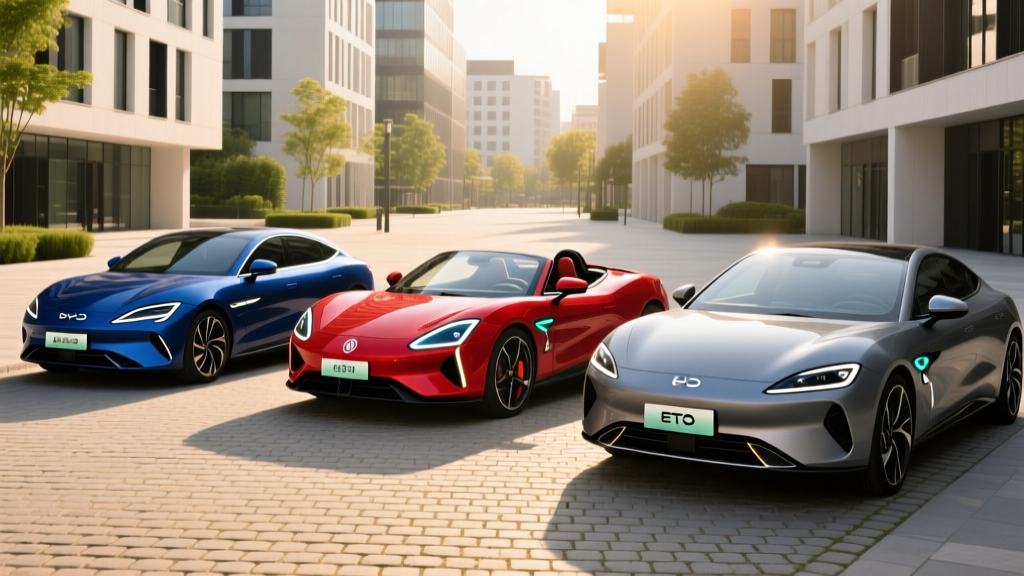
Not every Chinese automaker has a meaningful European footprint. Here's who's actually on showroom floors in 2026, not just at auto shows:
- MG (SAIC Motor): The most established. The MG4 EV remains a segment benchmark — a C-segment hatchback with up to 450 km WLTP range, rear-wheel drive, and a starting price around €28,990 (post-tariff adjustment). MG also sells the ZS EV (compact SUV) and the Marvel R.
- BYD: The global EV giant entered Europe with the Atto 3 (compact SUV, ~420 km WLTP, ~€38,000), the Dolphin (hatchback, ~427 km WLTP, ~€32,000), and the Seal sedan (520 km WLTP, ~€45,000). BYD uses its proprietary LFP Blade Battery across the lineup — more on why that matters below.
- NIO: Premium positioning with battery-swap capability. The ET7 sedan and EL6 SUV are available in select markets (Germany, Netherlands, Norway, Denmark, Sweden). Prices start around €69,000 for the ET7, but NIO's Battery-as-a-Service (BaaS) model can reduce the purchase price by ~€12,000–€21,000 if you lease the battery monthly.
- XPeng: The G6 mid-size SUV and P7 sedan target the Tesla Model Y/3 buyer. The G6 offers up to 520 km WLTP and an 800V architecture enabling peak DC charging at ~250 kW (10-80% in roughly 20 minutes). Starting around €43,000.
- Omoda/Jaecoo (Chery): Newer entrant. The Omoda E5 compact SUV undercuts at ~€30,000 with ~430 km WLTP.
Brands like Zeekr (Geely) have scaled back European ambitions after restructuring, while others like Avatr and Li Auto remain China-only as of early 2026.
Spec Comparison: Top Chinese EVs vs. European Rivals
Numbers matter more than marketing. Here's how the most relevant Chinese EVs stack up against the European and American benchmarks they're targeting:
| Model | WLTP Range | Battery (kWh) | Peak DC Charge (kW) | 10-80% Time | 0-100 km/h | Starting Price (€) |
|---|---|---|---|---|---|---|
| MG4 EV (Extended Range) | 450 km | 64 (NMC) | 135 kW | ~26 min | 7.9 s | €28,990 |
| BYD Dolphin | 427 km | 60.5 (LFP Blade) | 88 kW | ~38 min | 12.3 s | €32,000 |
| BYD Seal | 520 km | 82.5 (LFP Blade) | 150 kW | ~26 min | 5.9 s | €45,000 |
| XPeng G6 | 520 km | 87.5 (NMC) | 250 kW | ~20 min | 6.6 s | €43,000 |
| VW ID.3 (Pro S) | 546 km | 77 (NMC) | 170 kW | ~25 min | 7.3 s | €42,500 |
| Tesla Model Y (RWD) | 455 km | 60 (LFP) | 170 kW | ~25 min | 6.9 s | €44,990 |
| Renault Megane E-Tech (60 kWh) | 450 km | 60 (NMC) | 130 kW | ~30 min | 7.4 s | €41,990 |
Source: Manufacturer spec sheets; EV Database. Prices reflect 2026 MSRP inclusive of EU countervailing duties where applicable. WLTP figures are manufacturer-stated; real-world range is typically 15-25% lower depending on conditions.
Real-World Range and Charging: What the WLTP Sticker Doesn't Tell You
European WLTP range figures are more optimistic than US EPA estimates, and Chinese-market range claims (often CLTC) are even more generous. When you buy a Chinese EV in Europe, the WLTP number on the window sticker is what's homologated — but real-world results depend heavily on your conditions:
Range Reality Check
BYD Seal (WLTP 520 km): Expect ~400-430 km in mild spring/autumn mixed driving, ~340-380 km at sustained 120 km/h Autobahn speeds, and ~300-340 km in sub-zero winter conditions with cabin heating. LFP batteries lose slightly more range in extreme cold than NMC chemistries due to higher internal resistance at low temperatures.
MG4 EV Extended Range (WLTP 450 km): Expect ~360-390 km in real-world mixed use, ~300-330 km at highway speeds, and ~270-310 km in winter.
XPeng G6 (WLTP 520 km): Its 800V architecture and efficient SiC inverters help — expect ~430-460 km mixed, among the better real-world performers in this group.
Charging curve reality: Peak DC charge rates (the big kW number in ads) are sustained only between roughly 10-40% State of Charge. Above 60%, charging power tapers significantly. The XPeng G6's 250 kW peak is impressive, but it drops to ~100 kW past 60% and ~40 kW past 85%. Still, its 10-80% time of ~20 minutes is genuinely quick. The BYD Dolphin's 88 kW peak is its weakness — a 10-80% session takes ~38 minutes, noticeably longer than rivals on a road trip. If you drive motorways frequently, prioritize models with 130+ kW peak rates.
Cold-weather preconditioning: Most Chinese EVs now include battery preconditioning for DC charging (warming the pack before you arrive at the charger). BYD and XPeng handle this via navigation-based preconditioning. Verify this feature is active in your market's software — early European BYD firmware lacked it and was patched via OTA.
Total Cost of Ownership: Chinese EV vs. Petrol vs. European EV
The purchase-price advantage is real, but ownership costs tell the full story. Here's a 5-year/75,000 km cost comparison for a typical European driver:
| Cost Category | MG4 EV (€28,990) | BYD Seal (€45,000) | VW Golf 1.5 TSI (€32,000) | VW ID.3 Pro S (€42,500) |
|---|---|---|---|---|
| Purchase Price | €28,990 | €45,000 | €32,000 | €42,500 |
| Energy/Fuel (5 yr, 75k km) | €2,250 (home charging) | €2,400 | €7,500 (petrol) | €2,350 |
| Maintenance (5 yr) | €600 | €700 | €2,500 | €650 |
| Insurance (avg, 5 yr total) | €4,500 | €5,500 | €3,800 | €5,000 |
| Estimated Residual Value (5 yr) | -€11,500 (40%) | -€18,000 (40%) | -€14,400 (45%) | -€17,000 (40%) |
| Net 5-Year Cost | €24,840 | €35,600 | €31,400 | €33,500 |
| Cost per km | €0.33 | €0.47 | €0.42 | €0.45 |
Assumptions: Home electricity at €0.30/kWh; petrol at €1.75/L; average consumption 16 kWh/100 km (EV) and 6.5 L/100 km (petrol). Residual values for Chinese brands are estimated — limited used-market data exists. Insurance premiums for Chinese EVs tend to run 10-20% higher due to limited repair-network familiarity and parts supply uncertainty. Source: fueleconomy.gov methodology adapted for European energy prices.
Key takeaway: The MG4's combination of low purchase price and low running costs makes it the cheapest car to own in this comparison over 5 years. The BYD Seal, despite its premium positioning, costs more than the ID.3 largely due to its higher purchase price — though it offers more power and a larger battery. The petrol Golf is cheaper to buy than the Seal but costs more to run, closing the gap.
Common Myths About Chinese EVs — Fact-Checked
| Myth | Fact |
|---|---|
| "Chinese EV batteries are lower quality and will degrade fast." | BYD's LFP Blade Battery has demonstrated less than 5% degradation over 200,000 km in Chinese fleet data, per BYD's published testing. LFP chemistry offers superior cycle life (3,000+ full cycles vs. ~1,500-2,000 for NMC) at the trade-off of lower energy density. CATL, which supplies XPeng and others, is the world's largest battery maker and supplies Tesla, BMW, and Mercedes. |
| "There's no dealer or service network." | MG has the most established network, leveraging existing SAIC/MG dealerships across 20+ European countries. BYD has partnered with established dealer groups (Hedin Mobility in Sweden, Sterna Auto in the Netherlands, etc.) and had 200+ European service points by late 2025. Coverage is uneven — strong in Western/Northern Europe, thinner in Southern and Eastern markets. Always confirm a service center within 50 km of your home. |
| "EU tariffs killed the price advantage." | The EU's countervailing duties (ranging from ~17% for BYD to ~35% for SAIC/MG, on top of the existing 10% import duty) have increased prices but not eliminated the gap. BYD partially offset this by beginning European production at its Szeged, Hungary plant in 2025-2026, and MG shifted some MG4 production to India. The price gap narrowed by roughly €2,000-€4,000 depending on the model but persists. |
| "Software and infotainment are terrible." | Early exports had clunky translations and slow interfaces. The 2025-2026 models are significantly improved — XPeng's Xmart OS and NIO's NOMI/Banyan systems are competitive with European offerings. BYD's rotating center screen is distinctive. Apple CarPlay/Android Auto support is now standard on most models. OTA updates are regular. |
| "Resale value will be terrible." | Too early to confirm. Early data from Norway (Europe's most mature EV market) shows Chinese EVs depreciating somewhat faster than Teslas or VWs, but the gap is narrowing as brand awareness grows. The lower purchase price partially offsets higher depreciation in total cost calculations. |
What First-Time EV Buyers Need to Know Before Going Chinese
If this is your first EV purchase, several practical considerations apply regardless of brand — but are amplified with newer Chinese marques:
Home charging is essential for economics. The cost advantage of an EV collapses if you rely entirely on public DC fast charging, where rates of €0.50-€0.79/kWh can make per-km costs comparable to a frugal diesel. A home Level 2 wallbox (11-22 kW, three-phase) costs €800–€2,000 installed and is the single most important ownership prerequisite. All Chinese EVs sold in Europe use the standard Type 2 (AC) and CCS2 (DC) connectors — no proprietary plugs.
Verify the warranty terms. BYD offers an 8-year/200,000 km battery warranty with a 70% capacity retention threshold. MG offers 7 years/150,000 km. Compare this to Tesla's 8 years/160,000-192,000 km and VW's 8 years/160,000 km. BYD's higher mileage limit is notable for high-km drivers.
Parts availability is the real risk. While routine maintenance (cabin filters, brake fluid, tires) is straightforward, collision repair parts can take 4-8 weeks to arrive from China for some models. MG and BYD have invested in European parts warehouses, but the supply chain is not yet as mature as VW or Stellantis. If you live in a rural area with high deer-collision risk, this matters.
ADAS capabilities vary. Most Chinese EVs in Europe ship with Level 2 driver-assistance suites — adaptive cruise, lane centering, emergency braking. XPeng's XNGP and NIO's NOP+ are among the most capable, but regulatory differences mean European-spec software is more conservative than Chinese-market versions. None of these are self-driving; you must remain engaged at all times.
⚠️ What Chinese EV ADAS Does NOT Do
All driver-assistance systems in Chinese EVs sold in Europe are SAE Level 2. This means the driver must keep hands on the wheel (or demonstrate attentiveness via camera monitoring) and is legally responsible for all driving decisions. Features like XPeng's "Navigation Guided Pilot" or NIO's "NOP+" will handle motorway lane changes and on/off-ramps, but they will not navigate roundabouts, construction zones, or unmapped roads reliably. Treat them as advanced cruise control, not autonomous driving.
Decision Framework: Should You Buy a Chinese EV in Europe?
Choose a Chinese EV If:
- You have home charging (garage, driveway, or landlord-approved wallbox) — this unlocks the full cost advantage.
- You want the lowest purchase price in a given segment. The MG4 at ~€29,000 has no European rival at that price point with similar range and equipment.
- You live in a market with strong dealer presence — check MG, BYD, or XPeng dealer locators for a service point within 50 km.
- You plan to keep the car 5+ years — depreciation uncertainty matters less if you drive it into the ground.
- You value LFP battery chemistry (BYD) for its superior longevity and safety, and you don't need maximum range from a compact pack.
Stick with a European or Established Brand If:
- You rely on apartment/street parking with no charging access. Public-charging-only ownership erases the EV cost advantage regardless of brand, but the risk is higher with a less-established brand if you also need dealer support.
- You drive more than 400 km highway trips weekly. European brands (VW ID.4/7, BMW iX3) and Tesla still have an edge in charging-network integration (Tesla Supercharger, Ionity partnerships) and proven long-distance comfort.
- You need guaranteed strong resale value. Until more used-market data accumulates, VW, BMW, and Tesla have more predictable depreciation curves.
- You want the most mature ADAS. VW's Travel Assist and Tesla's Autopilot have more European road miles logged and more refined behavior in European-specific scenarios (narrow lanes, complex roundabouts).
Frequently Asked Questions
Are Chinese electric cars safe?
Yes, by European standards. The MG4 earned a 5-star Euro NCAP rating in 2023, and the BYD Seal achieved 5 stars in 2024 testing. Both scored well in adult occupant protection and active safety. Euro NCAP results are publicly available and apply the same rigorous protocols to all brands sold in Europe.
Can I get government incentives for a Chinese EV in Europe?
It depends on your country. France's bonus écologique was revised in 2024 to include a "carbon footprint" scoring system that effectively excluded several Chinese-made models (including the MG4 and Dacia Spring, which is Chinese-built). Germany ended its Umweltbonus in December 2023. Norway offers VAT exemptions on EVs under 500,000 NOK. The Netherlands offers the SEPP subsidy for EVs under €42,000. Check your national incentive rules — some are brand-neutral, others now explicitly disadvantage Chinese-manufactured vehicles.
How does charging speed compare to Tesla?
Tesla's Supercharger network remains the gold standard for reliability and speed. The Model Y (LFP, 170 kW peak) charges at roughly the same peak rate as the BYD Seal (150 kW) but benefits from seamless plug-and-charge integration and route preconditioning. XPeng's G6 at 250 kW peak is faster on paper and in practice at compatible chargers. The key difference is infrastructure, not the car — Tesla Superchargers are opening to other brands in Europe (via the Magic Dock/CCS adapter), which levels the playing field somewhat.
Will BYD or MG still be in Europe in 5 years?
Both have made significant infrastructure investments — BYD's Hungary factory, MG's expanded dealer network — that suggest long-term commitment. BYD is the world's largest EV maker by volume. The risk of a complete market exit is low, though individual models may be discontinued or refreshed. The bigger question is whether parts and service support will keep pace with sales growth.
What's the best Chinese EV to buy in Europe right now?
For value: MG4 EV Extended Range — lowest cost per km in its class, proven Euro NCAP 5-star safety, established dealer network. For premium: XPeng G6 — 800V architecture, fastest charging, competitive with the Tesla Model Y on tech. For families: BYD Atto 3 — practical SUV proportions, LFP battery longevity, solid build quality. Always test-drive and verify your local dealer situation before committing.