Quick Answer: Are Chinese Electric Cars Coming to America?
As of 2026, Chinese-branded electric vehicles remain effectively locked out of the US market. A combined tariff of 102.5% (100% Section 301 tariff plus 2.5% standard auto duty) makes direct imports economically unviable. Major Chinese EV makers like BYD, NIO, XPeng, and Zeekr have not announced plans to sell vehicles in the United States. American consumers looking for affordable EVs should instead focus on domestically assembled models, Korean imports, and European vehicles that qualify for the §30D federal tax credit.
The Tariff Wall: Why Chinese EVs Can't Compete in the US
In May 2024, the Biden administration raised the Section 301 tariff on Chinese-manufactured EVs from 25% to 100%, a policy that remains firmly in place through 2026. Combined with the baseline 2.5% auto import duty, any Chinese-built electric car faces a 102.5% total tariff before it reaches a US dealership floor.
To understand what this means in practice: a BYD Seal that sells for roughly $30,000 in China would need to be priced above $60,000 in the United States just to cover the tariff — eliminating the price advantage that makes these vehicles competitive in Europe and Southeast Asia.
The tariff applies to the country of manufacture, not the brand headquarters. This means even if a Chinese automaker attempted to badge-engineer a vehicle through a third-country partner, the origin-of-manufacture rules enforced by US Customs and Border Protection would still apply.
Which Chinese EV Brands Are Expanding — Just Not Here
The absence of Chinese EVs in America doesn't mean these companies are standing still. Several brands are aggressively expanding in markets without prohibitive tariffs:
BYD (Build Your Dreams)
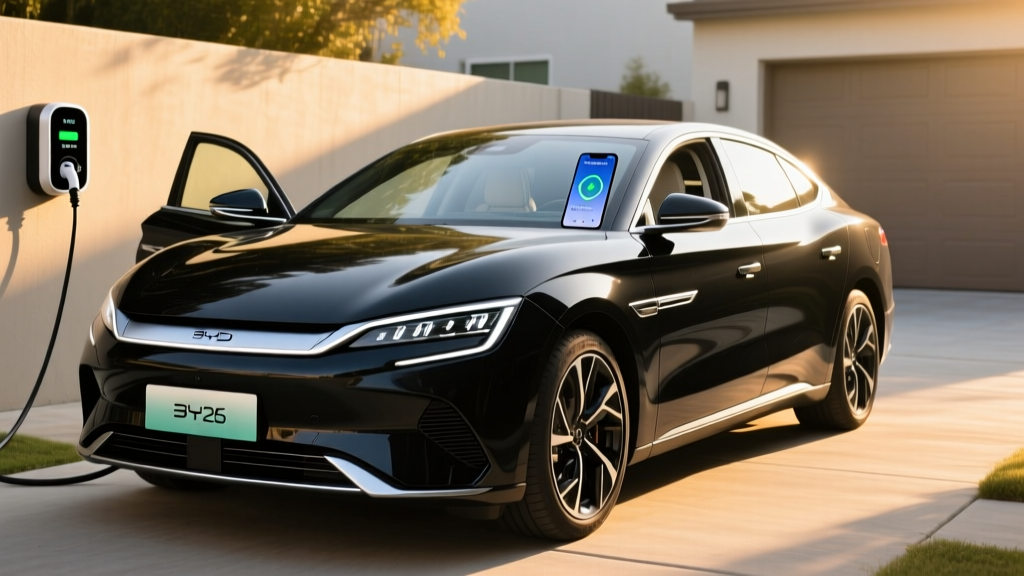
BYD is the world's largest EV manufacturer by volume, selling over 3 million new-energy vehicles in 2024. The company has launched in Europe, Australia, Thailand, Brazil, and Mexico. Models like the BYD Seal (EPA-equivalent ~340 miles range, 82.5 kWh Blade battery, LFP chemistry) and BYD Atto 3 compete directly with the Tesla Model 3 and Hyundai Kona Electric in those markets. BYD has stated publicly it has no plans to enter the US market under current tariff conditions.
NIO, XPeng, and Zeekr
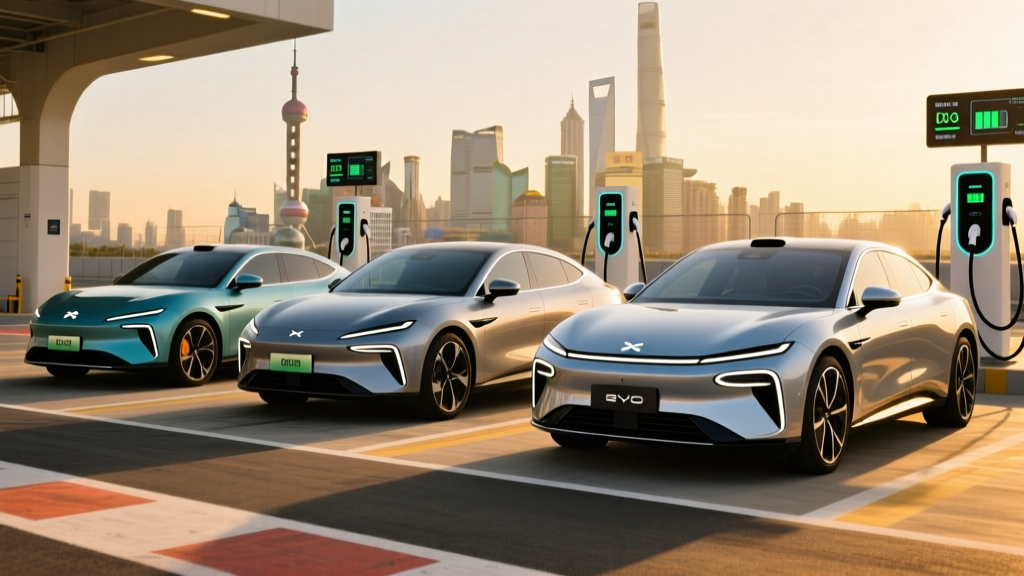
NIO operates battery-swap stations across China and has expanded into Norway, Germany, and the Netherlands. XPeng sells the G9 SUV in Europe with 800V architecture capable of 300+ kW DC fast charging. Zeekr (owned by Geely, which also owns Volvo and Polestar) has begun European deliveries. None have announced US retail operations.
The Geely-Volvo Connection: A Partial Loophole
Geely-owned Polestar and Volvo manufacture some vehicles in China but have shifted production for US-bound models. The Polestar 4, for example, began production in South Korea specifically to avoid the China tariff for the North American market. This illustrates that the barrier is manufacturing origin, not corporate ownership.
Cost Comparison: What If Chinese EVs Could Enter the US?
To understand the appeal — and why US policymakers acted — consider what Chinese EVs would cost without the tariff wall, compared to current US-market alternatives:
| Vehicle (Hypothetical US Entry) | Est. China Price | Price w/ 102.5% Tariff | US-Market Competitor | US Competitor MSRP |
|---|---|---|---|---|
| BYD Seal (RWD) | ~$30,000 | ~$60,750 | Tesla Model 3 RWD | $38,990 |
| BYD Dolphin | ~$18,000 | ~$36,450 | Chevrolet Bolt EV (discontinued) | $26,500 (was) |
| XPeng G9 (LR AWD) | ~$45,000 | ~$91,125 | Hyundai Ioniq 5 LR AWD | $50,600 |
| Zeekr 001 | ~$42,000 | ~$85,050 | Polestar 2 LR DM | $49,900 |
China prices reflect 2025-2026 domestic MSRPs converted to USD. US competitor MSRPs are base prices before destination or incentives. Source: manufacturer pricing data.
Even without tariffs, Chinese EVs would face the IRS §30D tax credit sourcing requirements. The credit mandates that battery components and critical minerals be sourced from the US or free-trade-agreement partners — a requirement no Chinese-manufactured vehicle can meet given current supply chains.
Real-World Ownership: What US Buyers Should Consider Instead
Since Chinese EVs aren't an option, here's how to evaluate the affordable EVs that are available in 2026, with real ownership numbers:
Home Charging Access Is the Make-or-Break Factor
Public charging infrastructure has improved — the Tesla Supercharger network now accepts NACS-equipped vehicles from Ford, Rivian, and others, and Electrify America has expanded its CCS footprint. But the economics of EV ownership depend heavily on home charging:
- Level 1 (120V): ~1.4 kW, adds 3-5 miles per hour. Fine for PHEVs or low-mileage drivers.
- Level 2 (240V): 7.7-11.5 kW, adds 25-44 miles per hour. Essential for daily BEV use.
- Home install cost: $800-$2,500 for a Level 2 charger with a dedicated 40-60A circuit, assuming your electrical panel has capacity. A panel upgrade (200A service) can add $1,500-$4,000.
Cost Per Mile: EV vs. Gas in 2026
| Metric | EV (Home L2 Charging) | Gas Vehicle (28 MPG Avg) |
|---|---|---|
| Energy cost per gallon-equivalent | $1.20-$1.80 (at $0.13-$0.18/kWh) | $3.40 (US avg, early 2026) |
| Cost per mile | $0.04-$0.06 | $0.12-$0.14 |
| Annual fuel cost (12,000 mi) | $480-$720 | $1,440-$1,680 |
| Annual maintenance | $300-$500 | $800-$1,200 |
EV efficiency assumed at 3.5 miles/kWh (112 MPGe). Gas price reflects US national average. Electricity rates vary significantly by state — check your utility's EV-specific time-of-use rates.
Common Misconceptions About Chinese EVs in America
| Myth | Fact |
|---|---|
| "Chinese EVs are cheap because they're low quality" | BYD, NIO, and XPeng vehicles score well in Euro NCAP testing. The BYD Seal earned a 5-star rating. Low prices reflect China's domestic battery supply chain dominance and scale, not poor engineering. |
| "Volvo and Polestar are Chinese cars in disguise" | While Geely owns both brands, US-bound Volvos and Polestars are manufactured in Belgium, Sweden, South Korea, or South Carolina. They comply with all US safety and sourcing regulations independently. |
| "The tariff will be lifted soon" | The 100% Section 301 tariff on Chinese EVs has bipartisan political support. No legislative or executive action to reduce it is pending as of 2026. Expect it to remain for years. |
| "I can import a Chinese EV myself" | Private imports must meet all FMVSS safety standards, EPA emissions certification, and the 102.5% tariff. The cost and regulatory burden make individual imports impractical and potentially illegal without manufacturer compliance documentation. |
| "Chinese EVs will come through Mexico" | The USMCA trade agreement requires 75% North American content for tariff-free auto imports. Chinese automakers building plants in Mexico (like BYD's announced facility) would still face tariffs on vehicles with predominantly Chinese-sourced components. |
Decision Framework: What to Buy Instead in 2026
If You Want an Affordable EV (Under $35,000 After Credits)
Choose the Chevrolet Equinox EV (base ~$33,000, EPA 319 miles, eligible for $7,500 §30D credit if income/sourcing requirements met) or the Hyundai Kona Electric (~$32,975, EPA 261 miles). These represent the value tier that Chinese EVs were expected to fill.
If You Want Maximum Range Per Dollar
Choose the Tesla Model 3 Long Range ($42,490, EPA 363 miles) or the Lucid Gravity Touring (when available, EPA 440+ miles). Chinese competitors like the Zeekr 001 offer similar range but remain unavailable.
If You Need a Family SUV
Choose the Hyundai Ioniq 5 ($42,500, EPA 303 miles, NACS-equipped for Supercharger access) or the Kia EV6 ($42,900, EPA 310 miles). Both support 800V DC fast charging at up to 240 kW (10-80% in ~18 minutes).
If You're Considering a PHEV Instead
For drivers without reliable home charging, a plug-in hybrid like the Toyota RAV4 Prime (42 miles electric-only, 38 MPG combined after battery depletion) or the Chrysler Pacifica Hybrid (32 miles electric, 30 MPG combined) eliminates range anxiety while still reducing fuel consumption by 50-70% for daily commutes under 30 miles.
Tax Credit Reality: §30D Rules That Shape Your Purchase
The federal EV tax credit under IRS §30D offers up to $7,500 for qualifying new EVs, but eligibility depends on several factors that would disqualify any hypothetical Chinese import:
- Battery component sourcing: 100% of battery components must be manufactured or assembled in North America (2025+ requirement).
- Critical minerals: At least 80% of critical minerals must be sourced from the US or FTA partners (2027+ requirement, stepping up annually).
- MSRP caps: Vans, SUVs, and pickups capped at $80,000; sedans and other vehicles capped at $55,000.
- Income limits: AGI must not exceed $300,000 (joint), $225,000 (head of household), or $150,000 (single).
- Point-of-sale transfer: As of 2024, the credit can be transferred to the dealer at purchase, reducing the upfront price rather than waiting for tax filing.
Chinese-manufactured batteries and components from companies like CATL and BYD are specifically classified as coming from a "foreign entity of concern," making any vehicle using them ineligible regardless of price or income.
Frequently Asked Questions
Will BYD ever sell cars in the United States?
BYD has publicly stated it has no plans to enter the US market while the 100% tariff remains. The company is focused on Europe, Southeast Asia, Latin America, and Australia. Even if the tariff were reduced, BYD would need to restructure its battery supply chain to meet §30D tax credit sourcing requirements — a multi-year undertaking.
Are any "Chinese" EVs already sold in America?
Not under Chinese brand names. However, some vehicles from Geely-owned brands (Volvo, Polestar) have Chinese corporate ownership but are manufactured outside China for the US market. The Volvo EX30, initially imported from China, was pulled from US sales in 2024 due to the tariff and shifted production to Belgium.
Could Chinese EVs come through Canada or Mexico?
Canada has also imposed a 100% tariff on Chinese EVs as of late 2024. Mexico remains a potential manufacturing hub, but USMCA rules of origin (75% North American content) and US FEOC (Foreign Entity of Concern) battery rules create substantial barriers. No Chinese automaker has announced a Mexico plant capable of producing US-compliant vehicles.
What's the cheapest new EV I can actually buy in the US in 2026?
The Nissan Leaf S starts around $28,140 (EPA 149 miles, CHAdeMO connector — note the limited fast-charging standard). For a more capable option, the Chevrolet Equinox EV LT starts near $33,000 with 319 miles of EPA range and NACS/CCS compatibility. After the $7,500 federal credit (if eligible), effective prices can drop to $25,500-$26,000.
Should I wait for Chinese EVs to become available?
No. There is no realistic timeline for Chinese-branded EVs to enter the US market. The tariff has bipartisan support, and supply chain restrictions under the Inflation Reduction Act add further barriers. The US EV market already offers competitive options in every segment — waiting for Chinese imports means delaying a purchase indefinitely.
Bottom Line: Look at What's Here, Not What's Headlines
Chinese electric vehicles dominate headlines and social media for their aggressive pricing and rapid technology advancement. But for American buyers in 2026, the tariff wall, battery sourcing rules, and political reality mean these vehicles simply aren't an option. The good news: the US EV market has matured to the point where affordable, long-range, fast-charging options exist from American, Korean, and European manufacturers — many qualifying for the full $7,500 federal tax credit. Focus your research on vehicles you can actually buy, charge, and service locally.