Quick Answer: Chinese Electric Cars Available in the USA
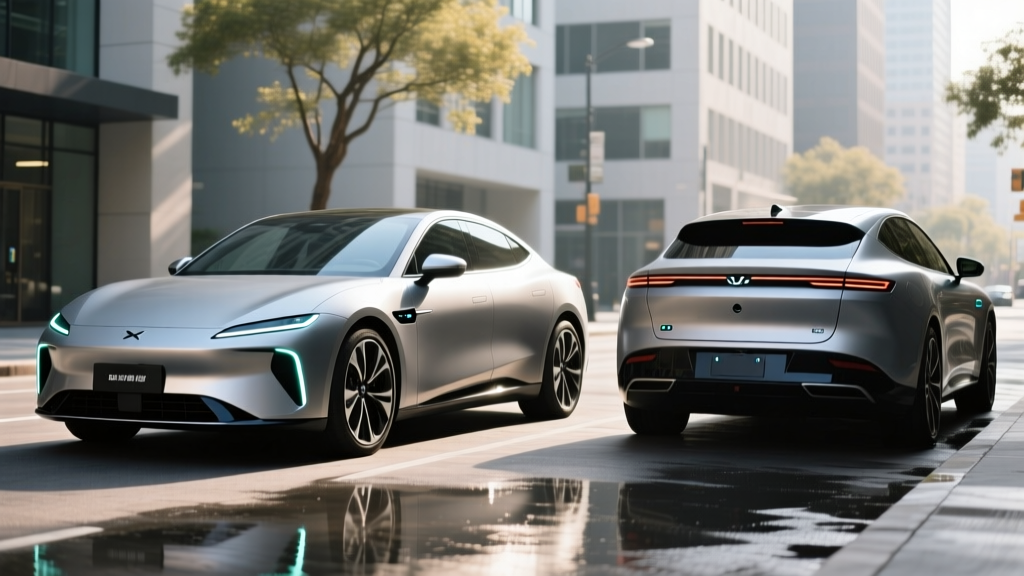
As of 2026, there are virtually no mainstream Chinese-branded electric vehicles (BYD, NIO, Xpeng, Li Auto, Zeekr, Geely) sold directly to US consumers. A combination of 100%+ tariffs on Chinese-made EVs, federal battery-sourcing restrictions under IRS §30D, and national-security concerns have effectively blocked the market. However, Chinese-owned brands like Volvo and Polestar manufacture EVs in South Carolina and sell them in the US, and some Chinese-built vehicles (like select Volvo models) are still imported — though they face steep tariff penalties that erase their price advantage.
Why Chinese EVs Are Mostly Locked Out of the US Market
The US has built a multi-layered trade wall against Chinese-made electric vehicles. Here's the stack of barriers as of 2026:
- 100% tariff on Chinese-made EVs: In May 2024, the Biden administration raised Section 301 tariffs on Chinese EVs from 25% to 100%, and this rate remains in effect. A $30,000 BYD Seagull would effectively cost $60,000+ at the port before dealer markup, freight, and compliance modifications.
- Battery component restrictions: Under §30D tax credit rules, any vehicle with battery components from a "foreign entity of concern" (FEOC) — which effectively means any Chinese manufacturer like CATL or BYD — is disqualified from the $7,500 federal credit. This applies to all 2026 model-year vehicles.
- Critical minerals sourcing: The tax credit's critical-minerals requirement further restricts supply chains tied to Chinese processing, even if the raw material originates elsewhere.
- Connected-vehicle ban: The Commerce Department's 2024 rule banning Chinese-made connected-vehicle hardware and software in US-market cars takes full effect for the 2027 model year, adding another compliance hurdle.
The combined effect: even if a Chinese automaker wanted to absorb the 100% tariff, their vehicles would be ineligible for the tax credit that makes competing EVs more affordable. The math simply doesn't work.
Chinese-Owned Brands You CAN Buy in the USA
While Chinese brands can't compete directly, Chinese parent companies own several marques that sell EVs in the US. These vehicles are built outside China (primarily in Europe or the US) and comply with US safety and emissions standards.
| Brand | Parent Company | US Models (2026) | Build Location | EPA Range | Starting MSRP |
|---|---|---|---|---|---|
| Volvo | Geely (China) | EX30, EX90, EX40 | Charleston, SC (EX90); Ghent, Belgium (EX30) | 260–310 mi | $44,900–$78,000 |
| Polestar | Geely + Volvo | Polestar 2, Polestar 3, Polestar 4 | Luqiao, China (P2); Chengdu, China (P3); Hangzhou, China (P4) | 276–320 mi | $49,900–$86,000 |
| Lotus | Geely (majority) | Eletre, Emeya | Wuhan, China | ~304 mi (est.) | $107,000+ |
Critical caveat: Polestar 2 and Polestar 4 are built in China and imported to the US. That means they are subject to the 100% Section 301 tariff. Polestar has acknowledged this challenge and is working to shift some production to South Korea (via Renault Korea's Busan plant) to mitigate tariff exposure. As of early 2026, the Polestar 2's US pricing reflects this tariff burden, which is why it has struggled to compete on price against the Tesla Model 3 and Hyundai Ioniq 6.
The Volvo EX90 is the standout here: built in Ridgeville, South Carolina, it avoids Chinese-import tariffs entirely. Its 111 kWh battery pack (NMC chemistry), 300-mile EPA range, and dual-motor AWD make it a legitimate luxury EV SUV — and its US assembly means it has a stronger case for §30D tax credit eligibility, provided battery sourcing clears FEOC requirements.
Cost Comparison: Chinese-Owned vs. Competing US-Market EVs
Let's compare what a buyer actually pays when considering a Chinese-owned EV against the most popular US-market alternatives. This table uses 2026 model-year base MSRPs, estimated tax-credit eligibility, and real-world charging costs.
| Vehicle | Base MSRP | Est. §30D Credit | Effective Price | EPA Range | kWh/100mi | 5-Yr Fuel/Charging Cost* |
|---|---|---|---|---|---|---|
| Volvo EX30 (Single Motor) | $44,900 | $0–$3,750** | $41,150–$44,900 | 261 mi | 31 | $3,875 |
| Tesla Model 3 RWD | $38,990 | $7,500 | $31,490 | 272 mi | 25 | $3,125 |
| Hyundai Ioniq 6 SE | $38,650 | $7,500 | $31,150 | 361 mi | 24 | $3,000 |
| Polestar 2 (Single Motor) | $49,900 | $0*** | $49,900 | 276 mi | 30 | $3,750 |
| Chevy Equinox EV LT | $33,600 | $7,500 | $26,100 | 319 mi | 30 | $3,750 |
*Based on US avg electricity at $0.17/kWh, 12,000 miles/year, 5 years. **Volvo EX30 eligibility depends on battery-sourcing compliance; partial credit possible. ***Polestar 2 built in China disqualifies from §30D credit due to FEOC battery component rules.
The numbers make the tariff impact obvious. The Polestar 2, a credible luxury sport sedan, costs nearly $18,000 more than a tax-credit-adjusted Chevy Equinox EV with comparable range. Without tariff relief or a production shift, Chinese-built EVs simply cannot compete on price in the US market.
What About Buying a Chinese EV Through the Grey Market?
Some enthusiasts ask whether it's possible to privately import a BYD Dolphin, Xpeng P7, or NIO ET7. The short answer: no, not practically.
US federal law requires all vehicles sold or driven on public roads to meet Federal Motor Vehicle Safety Standards (FMVSS). Chinese-market vehicles are built to China's GB standards, which differ significantly from FMVSS in crash-test protocols, lighting, bumper requirements, and airbag specifications. The NHTSA allows "show or display" imports for vehicles of historical significance, but this exemption is narrow, expensive ($5,000–$20,000+ in modifications and legal fees), and does not grant road registration in most states.
Even Canada — which has its own Chinese-EV tariff of 100% as of late 2024 — isn't a viable back door, since Canadian-spec vehicles still need US federalization to cross the border permanently.
EV vs. Gas: The Ownership Cost Question
If you're considering a Chinese-owned EV like the Volvo EX90 or EX30, you're likely cross-shopping against luxury gas vehicles or mainstream EVs. Here's how the five-year total cost of ownership (TCO) stacks up.
| Cost Category | Volvo EX90 Twin Motor ($78K) | BMW X5 xDrive40i ($67K) | Tesla Model X ($81K) |
|---|---|---|---|
| Purchase (after credits) | $78,000 (credit TBD) | $67,000 | $73,500 ($7,500 credit) |
| 5-Year Fuel/Energy | $4,250 | $12,750 | $4,500 |
| 5-Year Maintenance | $2,100 | $5,500 | $1,800 |
| 5-Year Insurance (est.) | $11,500 | $9,200 | $13,000 |
| Estimated Depreciation (5yr) | $31,200 | $26,800 | $36,450 |
| 5-Year TCO | $127,050 | $121,250 | $129,250 |
Sources: fueleconomy.gov for energy/fuel cost estimates; insurance via industry averages for luxury EVs vs. ICE. Depreciation based on Kelley Blue Book 5-year projections.
The EX90's TCO is competitive with the gas X5 despite a higher sticker, largely thanks to fuel and maintenance savings. EVs eliminate oil changes, transmission fluid, and exhaust-system repairs. Brake pad life extends dramatically with regenerative braking — many EV owners report 80,000+ miles on original pads.
Common Misconceptions About Chinese EVs in America
| Myth | Fact |
|---|---|
| "Chinese EVs are cheap and low quality" | BYD, NIO, and Xpeng vehicles score well in Euro NCAP and C-NCAP crash tests. The BYD Seal earned a 5-star Euro NCAP rating. Quality is competitive, but the tariff eliminates the price advantage in the US. |
| "I can just import a BYD from Mexico" | US customs enforces country-of-origin tariffs regardless of transshipment. The 100% tariff applies to vehicles manufactured in China, and NHTSA still requires FMVSS compliance for registration. |
| "Volvo is still a Swedish company" | Geely Holding Group (Hangzhou, China) has owned Volvo Cars since 2010. Volvo maintains Swedish design and engineering HQs in Gothenburg, but corporate ownership and significant R&D are in China. |
| "Chinese EV batteries are unsafe" | CATL and BYD are the world's two largest battery manufacturers. BYD's Blade Battery (LFP chemistry) has passed rigorous nail-penetration and thermal-runaway tests. The safety concern is geopolitical supply-chain dependency, not cell-level safety. |
| "Tariffs will drop soon" | Both major US political parties have signaled bipartisan support for maintaining high tariffs on Chinese EVs through at least 2028. No legislative relief is currently proposed. |
Real-World Ownership Considerations
If you're drawn to a Chinese-owned EV like the Volvo EX30 or EX90, the same practical ownership factors apply as with any EV:
Home charging access: A Level 2 home charger (7.2–11.5 kW) adds 25–44 miles of range per hour of charging. Installation costs $800–$2,500 depending on panel capacity and wiring distance. If you live in an apartment or lack a dedicated parking spot with electrical access, you'll rely on public DC fast charging — which costs $0.30–$0.50/kWh versus $0.12–$0.17/kWh at home, roughly tripling your per-mile energy cost.
Cold-weather range loss: All EVs lose 20–35% of rated range at temperatures below 20°F. The Volvo EX90 uses a heat pump system that mitigates this somewhat, but expect ~215–240 real-world miles from a 300-mile EPA rating in a Minnesota January. LFP-equipped vehicles (some EX30 trims) may see slightly steeper cold-weather losses than NMC packs.
Charging speed reality: The EX90 supports up to 250 kW DC fast charging. In practice, peak charge rate is sustained only from roughly 10–40% state of charge. A 10–80% session takes approximately 30 minutes at a functioning 250+ kW charger. The charge curve tapers significantly above 80%, so plan to unplug at 80% on road trips for time efficiency.
Insurance: EVs typically cost 15–25% more to insure than comparable gas vehicles, driven by higher repair costs for battery packs and aluminum body structures. Get quotes before purchasing — the Volvo EX90's sensor-laden bodywork (LiDAR standard) means even minor fender repairs involve recalibrating expensive hardware.
Decision Framework: Should You Buy a Chinese-Owned EV?
If / Then Buying Guide
- IF you want a luxury 3-row EV SUV and value Scandinavian design + US assembly → The Volvo EX90 is a strong pick. Built in South Carolina, it sidesteps tariffs and offers competitive TCO against the BMW X5 and Tesla Model X.
- IF you want the most affordable EV possible → Skip Chinese-owned options. The Chevy Equinox EV ($26,100 after credit), Hyundai Ioniq 6 ($31,150), and Tesla Model 3 ($31,490) all offer more range and full tax-credit eligibility at lower effective prices.
- IF you're hoping to buy a BYD or NIO directly → This isn't possible in the US market as of 2026, and no timeline exists for these brands to enter. Look at BYD's global pricing and realize the 100% tariff doubles it — making a $25K BYD Seagull a $50K+ proposition.
- IF you're considering a Polestar 2 → Understand that its China-built status means no §30D tax credit, which puts it $7,500 behind equivalently specced US- or Korea-built competitors. Wait for Polestar's Korea-built models or negotiate aggressive lease deals that may include manufacturer-subsidized incentives.
- IF you want a compact luxury EV crossover → The Volvo EX30 is appealing at $44,900, but verify current §30D eligibility before signing — partial or zero credit is possible depending on battery component sourcing. Cross-shop the Genesis GV60 and Cadillac Optiq.
What's Next: Could Chinese EVs Enter the US Market?
The most realistic path for Chinese EV brands to reach US consumers is local manufacturing. BYD has explored building a factory in Mexico (before Mexico's own tariff changes complicated this), and other brands have considered US or Canadian plants. However, political opposition remains fierce — a proposed BYD Mexico plant faced significant US congressional pushback in 2024–2025.
Meanwhile, Chinese automakers are dominating in markets without prohibitive tariffs: Southeast Asia, Latin America, the Middle East, and Africa. BYD sold over 4 million new-energy vehicles globally in 2025. The US market is simply not essential to their growth strategy given current trade policy.
For US buyers, the practical takeaway is clear: if you want an EV today, your best options remain US-, Korean-, German-, and Japanese-built vehicles from brands that qualify for federal tax credits and have established service networks. Chinese-owned brands like Volvo offer legitimate products, but the "Chinese EV bargain" you may have read about — a $20,000 BYD with 250 miles of range — does not and will not exist in the US market under current policy.
Frequently Asked Questions
Can I buy a BYD in the United States in 2026?
No. BYD does not sell passenger vehicles in the US market. The 100% Section 301 tariff on Chinese-made EVs, combined with FMVSS compliance requirements and §30D tax credit ineligibility, makes it economically unviable. BYD sells electric buses in the US through its Lancaster, California facility, but consumer vehicles are not available.
Are Volvo and Polestar considered Chinese cars?
They are owned by Geely Holding Group, a Chinese company. Volvo Cars is headquartered in Gothenburg, Sweden, and the EX90 is assembled in South Carolina. Polestar is headquartered in Gothenburg but currently manufactures in China. Ownership is Chinese; engineering, design, and (for Volvo) some manufacturing are Western.
Why are Chinese EVs so much cheaper in other countries?
Without the US 100% tariff, a BYD Dolphin sells for roughly €25,000 in Europe and under $20,000 in Thailand. Chinese automakers benefit from massive domestic scale, government subsidies, and vertically integrated battery supply chains. In markets with low or no tariffs, they undercut legacy automakers by 20–40%.
Will Chinese EV tariffs be reduced if trade relations improve?
No legislative or executive action to reduce the 100% tariff has been proposed as of early 2026. Both political parties broadly support protecting the US auto industry from Chinese EV imports. Any change would require either executive action or congressional legislation — neither of which appears imminent.
Should I wait for Chinese EVs to become available?
There is no credible timeline for Chinese-branded EVs to enter the US consumer market. If you need a vehicle now, the US market already offers competitive EVs starting under $30,000 after tax credits (Chevy Equinox EV, Nissan Leaf) and a robust selection in the $35,000–$55,000 range. Waiting for Chinese brands means waiting indefinitely.