China's Twin Challengers Enter the Class 8 Electric Arena
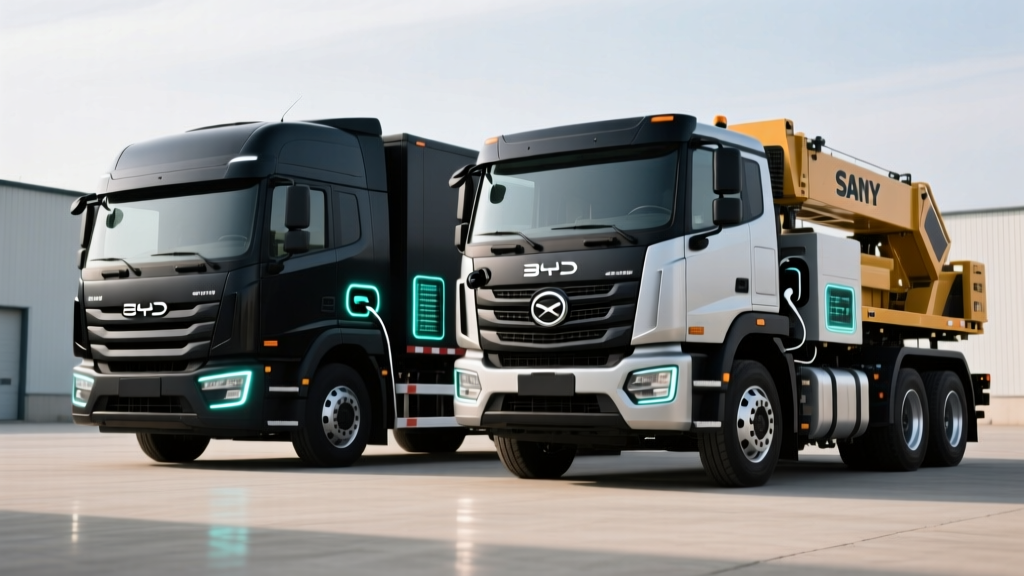
The heavy-duty electric truck segment has been Tesla's to lose since the Semi began limited deliveries in late 2022. But in 2026, two formidable competitors from China are making serious waves in global commercial fleets: the BYD 8TT (the long-awaited North American-spec Class 8 tractor) and the Sany Heavy Electric 425. Together, these represent what industry analysts have started calling the "China twin challenges Tesla Semi" moment — two purpose-built electric semis that undercut Tesla on price while matching or exceeding it in key operational metrics.
Both trucks are now available for fleet orders in the United States through direct commercial channels, and both bring battery chemistries, charging architectures, and price points that deserve close scrutiny. This review profiles each model, compares them head-to-head against the Tesla Semi, and delivers the exact numbers fleet buyers need to evaluate them.
BYD 8TT: Specs, Range, and Real-World Performance
BYD — the world's largest EV manufacturer by unit volume — has been operating electric buses and medium-duty trucks in North America since 2017, primarily through its Lancaster, California facility. The 8TT is their first purpose-built Class 8 day-cab tractor for the U.S. market, and it arrives with BYD's signature Blade Battery (LFP chemistry) in a configuration optimized for regional haul.
| Spec | Value |
|---|---|
| EPA Estimated Range | ~200 miles (loaded, 80,000 lb GCW) / ~250 miles (regional, lighter loads) |
| Battery Capacity | 565 kWh usable (LFP — Blade Battery) |
| Max DC Fast Charge | 350 kW peak (CCS2/MCS connector) |
| 10-80% Charge Time | ~55 minutes at 350 kW charger |
| Motor Output | Dual rear-axle integrated e-axles, 740 hp combined (550 kW) |
| 0-60 mph (unladen) | ~18 seconds |
| Drivetrain | 6x4, dual electric e-axles (rear) |
| Efficiency | ~2.0 kWh/mile (loaded highway cycle) |
| Base MSRP (fleet) | ~$295,000 (estimated, before incentives) |
| Battery Warranty | 8 years / 500,000 miles (≥70% capacity retention) |
| GVWR | 82,000 lb (with exemptions for BEV weight allowance) |
BYD 8TT Charging Architecture
The 8TT uses the emerging Megawatt Charging System (MCS) connector standard alongside CCS2 compatibility, positioning it for next-gen 1+ MW truck charging corridors. At a 350 kW DC fast charger, BYD quotes a 10-80% charge in approximately 55 minutes. The LFP Blade Battery's flatter charge curve (compared to NMC) means more sustained power delivery above 60% SoC — a real advantage for fleets that can't always charge to exactly 80%.
Depot charging on Level 2 (19.2 kW AC) adds roughly 8-10 miles of range per hour, meaning a full overnight charge (10 hours) restores approximately 80-100 miles. Most fleet operators will pair depot L2 with daytime DC opportunity charging at route endpoints.
BYD 8TT Tech & Cab Features
The 8TT cab borrows heavily from BYD's global commercial platform: a 15.6-inch rotating center display, digital instrument cluster, 360-degree camera system, and BYD's DiPilot ADAS suite (adaptive cruise, lane-keeping, automatic emergency braking, blind-spot monitoring). Notably, the truck includes V2L (vehicle-to-load) capability, allowing the battery to power auxiliary equipment at job sites — a feature Tesla doesn't offer on the Semi.
Drawbacks include a tighter cab than the Tesla Semi (no sleeper configuration available) and limited U.S. service infrastructure outside California and Texas. BYD is expanding its dealer/service network, but fleet buyers in the Midwest and Southeast should factor in service logistics.
Sany Heavy Electric 425: The Value Disruptor
Sany — better known in the U.S. for construction equipment — entered the electric truck space aggressively, and the Heavy Electric 425 (named for its 425 kWh battery option) targets the same regional-haul and drayage segments as the BYD 8TT and Tesla Semi. Sany's strategy is straightforward: undercut competitors on price while offering competitive range and charging speeds.
| Spec | Value |
|---|---|
| EPA Estimated Range | ~185 miles (loaded, 80,000 lb GCW) / ~230 miles (lighter loads) |
| Battery Capacity | 425 kWh usable (LFP — CATL cells) |
| Max DC Fast Charge | 300 kW peak (CCS2) |
| 10-80% Charge Time | ~50 minutes at 300 kW charger |
| Motor Output | Single integrated e-axle, 590 hp (440 kW) |
| 0-60 mph (unladen) | ~22 seconds |
| Drivetrain | 6x4, single electric e-axle (rear) |
| Efficiency | ~2.1 kWh/mile (loaded highway cycle) |
| Base MSRP (fleet) | ~$249,000 (estimated, before incentives) |
| Battery Warranty | 8 years / 400,000 miles (≥70% capacity retention) |
| GVWR | 82,000 lb (with BEV weight exemption) |
Sany 425 Charging & Depot Requirements
The Sany 425 tops out at 300 kW DC charging via CCS2, with a 10-80% time of roughly 50 minutes. The slightly smaller battery actually charges to 80% faster in absolute terms than some larger packs, though peak kW is lower. Depot AC charging at 19.2 kW restores approximately 7-9 miles per hour. Sany recommends a minimum 500A service panel for 4-unit depot charging — fleet operators should engage an electrical contractor early in the planning process.
Sany 425 Tech & Cab
Sany's cab is functional rather than futuristic: a 12.3-inch infotainment screen, basic digital cluster, standard backup camera, and a driver-assist suite (AEB, lane-departure warning, adaptive cruise). It lacks the polish of the Tesla Semi's interior or the BYD's rotating display, but it's competitive with legacy OEM offerings from Volvo and Freightliner. The standout feature is Sany's integrated fleet telematics platform, which provides real-time battery SoH monitoring, route optimization, and energy-cost analytics — built in at no extra charge.
Head-to-Head: China Twin Challenges Tesla Semi — By the Numbers
The table below puts all three trucks side by side on the metrics that matter most to fleet procurement teams:
| Spec | Tesla Semi (LR) | BYD 8TT | Sany 425 |
|---|---|---|---|
| EPA Range (loaded) | ~500 mi | ~200 mi | ~185 mi |
| Battery (kWh) | ~900 kWh (NMC) | 565 kWh (LFP) | 425 kWh (LFP) |
| Peak DC Charge (kW) | 1,000+ kW (MCS) | 350 kW | 300 kW |
| 10-80% Time | ~30 min | ~55 min | ~50 min |
| Horsepower | ~1,000+ hp | 740 hp | 590 hp |
| Efficiency (kWh/mi) | ~1.7 | ~2.0 | ~2.1 |
| Base Price (est.) | $290,000 | $295,000 | $249,000 |
| Battery Warranty | 8 yr / 1,000,000 mi | 8 yr / 500,000 mi | 8 yr / 400,000 mi |
| Production Status | Low-volume | Fleet orders open | Fleet orders open |
Federal Tax Credits and Commercial Incentives (2026)
Commercial electric trucks do not qualify for the consumer §30D credit. Instead, fleet buyers should evaluate the §45W Commercial Clean Vehicle Credit, which provides up to $40,000 for qualified commercial clean vehicles with GVWR over 14,000 lb. Key requirements per IRS §45W guidelines:
- Vehicle qualification: Must be a qualified clean vehicle (BEV or FCEV) used for business purposes in the U.S.
- Credit amount: 30% of the incremental cost over a comparable ICE vehicle, capped at $40,000 for vehicles over 14,000 lb GVWR.
- No MSRP cap: Unlike the consumer §30D credit, §45W has no MSRP ceiling — critical for Class 8 trucks priced $250K-$400K+.
- No income cap: Available to businesses of all sizes.
- Battery sourcing: Currently no critical-minerals or battery-component sourcing requirements under §45W (unlike §30D), though this may change with future legislation.
- Transferability: Businesses may elect to transfer the credit to the dealer/manufacturer for a point-of-sale price reduction (effective 2024 onward).
Beyond federal credits, state programs dramatically improve the economics. California's Hybrid and Zero-Emission Truck and Bus Voucher Incentive Project (HVIP) offers vouchers of $100,000-$165,000+ per Class 8 BEV tractor, depending on fleet size and disadvantaged-community criteria. New York's Truck Voucher Incentive Program and similar programs in New Jersey, Oregon, and Colorado provide additional $50,000-$120,000 per unit. Stacked incentives can bring the effective purchase price of a Sany 425 below $100,000 — competitive with a new diesel Class 8 tractor.
| Truck | Base Price | §45W Credit | CA HVIP Voucher | Effective Price |
|---|---|---|---|---|
| Tesla Semi (LR) | $290,000 | -$40,000 | -$120,000 | ~$130,000 |
| BYD 8TT | $295,000 | -$40,000 | -$120,000 | ~$135,000 |
| Sany 425 | $249,000 | -$40,000 | -$120,000 | ~$89,000 |
Note: Incentive amounts vary by state, fleet size, and program year. Consult your tax professional and state air-quality district for current eligibility. Figures are estimates based on published 2026 program guidelines.
Who Should Buy Which Truck?
Choose the Tesla Semi if:
- Your routes regularly exceed 300 miles and you need the 500-mile EPA range
- You have access to Tesla Megacharger infrastructure (or can install it at your depot)
- You value the longest battery warranty in the segment (1 million miles)
- You're willing to accept longer delivery timelines and low-volume production constraints
Choose the BYD 8TT if:
- Your regional-haul routes fall in the 120-180 mile range and you need LFP battery longevity
- You want MCS connector future-proofing for next-gen megawatt charging corridors
- V2L capability is valuable for your operations (construction, mobile work sites)
- You operate primarily in California or Texas where BYD has service infrastructure
Choose the Sany 425 if:
- Price is the primary driver — it undercuts competitors by $40K-$50K before incentives
- Your routes are drayage, port, or metro-area with daily distances under 130 miles
- You want the fastest path to delivery — Sany has shorter lead times than Tesla
- You can accept a smaller service network and are comfortable with a newer brand in North America
Pros and Cons: The Full Picture
BYD 8TT — Pros
- 565 kWh LFP battery offers excellent cycle life (3,000+ cycles to 80% SoH)
- MCS connector future-proofs for 1+ MW charging
- V2L capability unique in the segment
- Strong cold-weather LFP performance
- BYD's global manufacturing scale supports parts availability
BYD 8TT — Cons
- Range (~200 mi) insufficient for long-haul corridors
- Limited U.S. service network outside CA/TX
- Price comparable to Tesla Semi despite less range
- No sleeper cab option
Sany 425 — Pros
- Lowest base price in the segment (~$249K)
- Effective price under $90K with stacked incentives
- Shorter delivery lead times than Tesla or BYD
- Integrated fleet telematics at no extra cost
- Optional 500 kWh pack extends range
Sany 425 — Cons
- Shortest real-world range (~145-160 mi loaded)
- Lowest peak charge rate (300 kW)
- Sparse North American service/parts network
- Lower horsepower (590 hp) — noticeable on grades
- Unproven long-term reliability in U.S. operations
Ownership Economics: The Real TCO Story
The purchase price is only half the equation. Electric Class 8 trucks win on operating costs — electricity at $0.12-$0.18/kWh translates to roughly $0.24-$0.38 per mile in energy cost, versus $0.65-$0.90 per mile for diesel at current fuel prices. Over 100,000 miles annually, that's $30,000-$50,000 in annual fuel savings alone.
Maintenance savings are equally significant: no engine oil, no DEF fluid, no DPF regeneration, no transmission fluid changes, and regenerative braking extends brake life by 2-3x. Industry estimates from the National Renewable Energy Laboratory (NREL) suggest total maintenance cost reductions of 40-60% for BEV Class 8 trucks versus diesel equivalents.
The key risk is battery replacement outside warranty. A 500+ kWh LFP pack replacement currently costs $80,000-$120,000, though LFP chemistry's superior cycle life (3,000-5,000 cycles vs. 1,500-2,000 for NMC) makes out-of-warranty failure statistically less likely within a typical 7-year fleet lifecycle.
Verdict: The China Twin Challenges Tesla Semi — And It Matters
The BYD 8TT and Sany 425 don't beat the Tesla Semi on range or charging speed — Tesla's 500-mile EPA rating and megawatt-class charging remain unmatched. But they challenge Tesla where it matters most for the majority of Class 8 operations: price, availability, and practical suitability for regional routes.
Over 80% of U.S. Class 8 freight moves on routes under 250 miles. For these operations, the Tesla Semi's 500-mile range is overkill, and its long delivery timeline is a dealbreaker. The BYD 8TT offers a credible, well-equipped alternative with LFP durability and MCS future-proofing. The Sany 425 delivers the lowest entry cost in the segment, making electric drayage financially viable for smaller fleets.
The "China twin challenges Tesla Semi" narrative isn't about beating Tesla at its own game. It's about recognizing that most fleet buyers don't need 500 miles of range — they need trucks they can actually order, at prices that pencil out today, with service support that exists now. On those criteria, both BYD and Sany have compelling cases in 2026.
Frequently Asked Questions
What is the real-world range of the BYD 8TT and Sany 425?
The BYD 8TT delivers approximately 160-175 real-world miles at full 80,000 lb GCW on highway cycles (EPA-estimated ~200 mi). The Sany 425 manages approximately 145-160 miles under the same conditions (EPA-estimated ~185 mi). Both see only 10-15% cold-weather loss thanks to LFP chemistry — better than NMC-based competitors.
How fast do these trucks charge?
The BYD 8TT charges at up to 350 kW DC, reaching 10-80% in approximately 55 minutes. The Sany 425 peaks at 300 kW with a 10-80% time of about 50 minutes. Both use CCS2 connectors, and the BYD additionally supports the MCS (Megawatt Charging System) standard for future high-power corridors. Depot AC Level 2 charging adds 7-10 miles per hour for both trucks.
How much do these trucks cost after tax credits?
After the federal §45W commercial credit ($40,000 max) and California HVIP vouchers (~$120,000), the BYD 8TT drops to approximately $135,000 and the Sany 425 to approximately $89,000. Incentive amounts vary significantly by state — consult your state air-quality district and a tax professional for current eligibility. Per IRS guidelines, the §45W credit is available for business-use vehicles with no MSRP or income cap.
Is the BYD 8TT or Sany 425 worth buying vs. the Tesla Semi?
If your routes are under 200 miles and you need trucks now, both are strong alternatives. The Tesla Semi's 500-mile range and 1+ MW charging are unmatched, but production volume remains limited and delivery timelines are long. For drayage and regional haul, the Sany 425's sub-$90K effective price (with incentives) and the BYD 8TT's LFP durability and MCS readiness make them practical choices today.
What are the biggest pros and cons of these Chinese electric semis?
Pros: significantly lower pricing (Sany), LFP battery longevity and cold-weather performance (both), MCS future-proofing (BYD), and faster delivery timelines than Tesla. Cons: shorter range than Tesla Semi (150-200 mi vs. 500 mi), limited U.S. service networks, and unproven long-term reliability data in North American fleet operations.
Do these trucks qualify for the federal EV tax credit?
Not the consumer §30D credit — these are Class 8 commercial vehicles. They qualify for the §45W Commercial Clean Vehicle Credit (up to $40,000 for vehicles over 14,000 lb GVWR), which has no MSRP cap, no buyer income cap, and currently no battery-sourcing restrictions. Point-of-sale transfer to the dealer is permitted. Always verify current eligibility with your tax advisor and the IRS.