The Quick Answer: Can You Buy a China Electric Cycle in the US?
Yes — but with major caveats. A "China electric cycle" typically refers to electric bicycles, scooters, or light electric motorcycles manufactured in China and imported to the US. These range from $400 budget e-bikes on Amazon to $3,000+ electric mopeds. However, US buyers face three critical hurdles: federal import compliance (DOT/EPA certification for anything over 750W or 20 mph throttle-only), tariff exposure (Section 301 tariffs add 25% to many Chinese EV components as of 2026), and warranty/service gaps since most lack US dealer networks. For commuters, a domestically supported e-bike or a US-spec electric scooter often delivers better long-term value despite a higher sticker price.
What Exactly Is a "China Electric Cycle"?
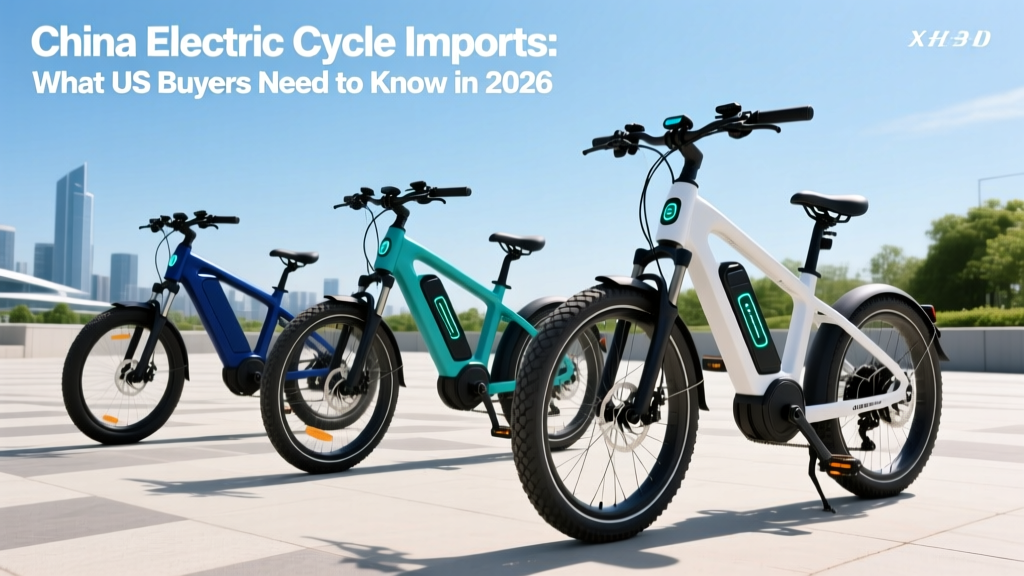
The term "China electric cycle" is broad and somewhat ambiguous in search intent. It generally encompasses three vehicle categories manufactured primarily in Chinese factories and exported globally:
- Electric bicycles (e-bikes): Pedal-assist or throttle-operated bicycles with hub or mid-drive motors, typically 250W–750W, governed to 20–28 mph depending on US class designation.
- Electric scooters/mopeds: Step-through or stand-up platforms with 1,000W–5,000W motors, speeds of 30–60 mph, often classified as low-speed vehicles or motorcycles depending on wattage and top speed.
- Light electric motorcycles: Full-frame electric two-wheelers from brands like NIU, Super Soco, or Zongshen with 3–10 kWh battery packs and highway-capable speeds.
China produces roughly 90% of the world's e-bikes by volume, with major manufacturing hubs in Tianjin, Wuxi, and Guangzhou. Brands like NIU Technologies have established some US distribution, but hundreds of smaller OEM factories sell unbranded or white-label units through Alibaba, AliExpress, Amazon, and direct-to-consumer import channels.
Real Costs: Purchase, Tariffs, Charging, and Maintenance
Before importing or purchasing a China electric cycle, understand the full cost picture — not just the listing price.
Purchase Price Breakdown
| Category | China Direct (Pre-Tariff) | US Landed Cost (2026 Est.) | US Domestic Equivalent |
|---|---|---|---|
| Budget e-bike (250–500W) | $400–$700 | $550–$950 | $800–$1,400 (Lectric, Ride1Up) |
| Mid-range e-bike (750W) | $700–$1,200 | $950–$1,600 | $1,500–$2,500 (Rad Power, Aventon) |
| Electric moped (2–3 kW) | $1,200–$2,000 | $1,700–$2,800 | $2,800–$4,500 (NIU US, CSC) |
| Light electric motorcycle (5+ kW) | $2,500–$5,000 | $3,500–$7,000 | $6,000–$12,000 (Zero FX, Ryvid) |
The "US Landed Cost" column factors in Section 301 tariffs (25% on many Chinese-origin e-bikes and components as of 2026), shipping ($150–$500 for ocean freight per unit), customs brokerage ($100–$250), and any required compliance modifications. Note that tariff classifications vary by HTS code — electric bicycles under HTS 8711.60 face different rates than lithium-ion battery packs imported separately.
Charging Cost: Electricity vs. Gasoline
One area where China electric cycles share the same advantage as any EV is fuel cost. At the US average residential electricity rate of ~$0.17/kWh (EIA, early 2026):
- E-bike (0.5 kWh battery): ~$0.09 per full charge → roughly $0.003/mile at 30-mile range
- Electric moped (2 kWh battery): ~$0.34 per full charge → roughly $0.009/mile at 40-mile range
- Gas scooter (50cc, 80 MPG): ~$0.04/mile at $3.20/gallon
The per-mile energy cost of an electric cycle is roughly 4–10x cheaper than an equivalent gas scooter. Over 5,000 annual miles, that's a savings of approximately $150–$180/year in fuel alone — modest in absolute terms but significant as a percentage of total operating cost for a low-price vehicle.
US Street-Legal Requirements: Where Imports Get Tricky
This is the most underappreciated risk of buying a China electric cycle direct. US regulations split electric two-wheelers into distinct categories with different compliance requirements:
E-Bikes (Under 750W, ≤20 mph throttle)
Under federal law (15 U.S.C. §2085), a bicycle with an electric motor under 750 watts and a top motor-powered speed of 20 mph on a flat surface is classified as a consumer product, not a motor vehicle. This means no DOT certification, no EPA certification, no VIN, no registration, and no insurance requirement. The Consumer Product Safety Commission (CPSC) oversees safety standards. Most Class 1 and Class 2 e-bikes from China fall into this category and can legally be imported and ridden without a license.
Electric Mopeds and Motorcycles (Over 750W or >20 mph)
Once an electric two-wheeler exceeds 750W or can surpass 20 mph on throttle alone, the National Highway Traffic Safety Administration (NHTSA) classifies it as a motor vehicle. This triggers a cascade of requirements:
- DOT certification (FMVSS compliance — lighting, brakes, mirrors, VIN)
- EPA certification (even electric vehicles require an EPA emission compliance certificate for import)
- State registration, titling, and insurance
- Valid motorcycle license or endorsement
Many China-sourced electric scooters listed at 2,000W–5,000W on Alibaba are not DOT-certified and cannot be legally registered for street use in the US. Buyers who import them anyway face seizure at customs, inability to insure, and potential liability in accidents. Always verify DOT/EPA certification before purchasing any electric cycle marketed above 750W.
China Electric Cycle vs. US-Spec E-Bike: Ownership Comparison
| Factor | Direct China Import (750W E-Bike) | US-Spec E-Bike (e.g., Rad Power, Aventon) |
|---|---|---|
| Typical Price (Landed) | $950–$1,600 | $1,500–$2,500 |
| Battery Chemistry | Often unspecified; generic NMC cells | Named cells (Samsung, LG, CATL); LFP options growing |
| Battery Capacity | 0.4–0.7 kWh (claimed) | 0.5–0.9 kWh (verified) |
| Range (Real-World) | 15–30 mi (highly variable) | 25–50 mi (EPA-like estimates published) |
| Warranty | None or seller-dependent (Alibaba disputes) | 1–2 years; US-based support |
| Spare Parts Availability | Limited; may require re-import from China | US warehousing; 2–5 day shipping |
| UL Certification | Rarely | UL 2849 (system-level) increasingly standard |
| Resale Value | Very low; no brand recognition | Moderate; established marketplaces |
| Local Bike Shop Service | Often refused (liability, unfamiliar parts) | Accepted by partnered shops |
Battery Chemistry and Safety: The Hidden Risk
The lithium-ion battery is the single most expensive and safety-critical component of any electric cycle. Here, the gap between cheap Chinese imports and reputable brands is widest.
Reputable US-market e-bikes increasingly use name-brand cells (Samsung 50E, LG MJ1, CATL) assembled into packs with battery management systems (BMS) that monitor cell voltage, temperature, and balance. Many now carry UL 2849 certification, a system-level safety standard covering the charger, battery, motor, and controller together.
By contrast, many ultra-cheap China direct imports use unbranded or recycled 18650 cells with minimal BMS protection. The New York City Fire Department reported over 250 fires linked to lithium-ion batteries from e-bikes and e-scooters between 2021 and 2025, with a significant share traced to uncertified, low-cost imported battery packs. In response, NYC and several other jurisdictions now prohibit the sale of e-bikes without UL certification.
Common Misconceptions About China Electric Cycles
| Myth | Fact |
|---|---|
| "All Chinese e-bikes are cheap junk" | China manufactures e-bikes for top global brands (Specialized, Trek, Giant). Quality varies enormously by factory and price point — not all Chinese production is low-quality. |
| "I can import any electric scooter and ride it legally" | Anything over 750W or 20 mph throttle-only requires DOT/EPA certification. Many imports are not street-legal in the US. |
| "The 1,000W rating on Alibaba is accurate" | Many sellers list peak wattage, not continuous. A "1,000W" motor may sustain only 500W. Ask for continuous rated power and controller amperage. |
| "Shipping is free or cheap from AliExpress" | Battery-containing shipments face hazmat surcharges. Air freight for a 15 kg e-bike battery can exceed $200. Sea freight is cheaper but takes 30–45 days. |
| "I'll save a fortune vs. buying locally" | After tariffs, shipping, customs fees, and potential compliance mods, the savings over a US-spec e-bike may be only $200–$500 — often not worth the warranty and safety trade-off. |
Real-World Ownership Considerations
If you're seriously considering a China electric cycle, evaluate your specific situation honestly:
Home Charging Access
Nearly all e-bikes and light electric scooters charge from a standard 120V household outlet (Level 1 equivalent). A typical 0.5 kWh e-bike battery charges from 0–100% in 3–5 hours using the included 2A charger (~100–150W draw). No special electrical work is needed. However, apartment dwellers should check building policies — some HOAs and landlords now restrict indoor charging of e-bike batteries due to fire risk, particularly for non-UL-certified packs.
Climate and Range Reality
Lithium-ion batteries lose capacity in cold weather. At 32°F (0°C), expect 20–30% range reduction compared to the manufacturer's claimed range at 77°F. A China-sourced e-bike claiming 40 km (25 miles) of range may deliver only 17–20 miles in winter conditions. Reputable US brands tend to publish conservative range estimates that already factor in mixed conditions; direct Chinese sellers often quote best-case laboratory figures.
Driving Patterns and Use Case
A China electric cycle makes the most sense for:
- Last-mile commuting (2–8 miles each way) on bike lanes or low-speed roads
- Campus or private-property use where DOT certification isn't required
- Buyers with mechanical aptitude who can source replacement cells and controllers independently
It makes less sense for:
- Daily commuters who need reliable warranty coverage and local service
- Riders in states with strict e-bike registration or insurance requirements
- Anyone planning to ride in mixed traffic at speeds above 25 mph
Decision Framework: Should You Import or Buy Domestic?
If X, Then Y
- If your budget is under $800 and you accept the risk: A direct China import from a high-rated Alibaba seller with Trade Assurance can work — but verify UL/CE certification, request cell brand documentation, and budget for potential customs delays.
- If you want warranty and local support: Spend $1,200–$2,000 on a US-brand e-bike (Lectric, Aventon, Rad Power, Ride1Up). You'll get UL certification, domestic spare parts, and a return policy.
- If you need a street-legal electric moped (30–45 mph): Buy from a DOT-certified importer like NIU (which has US distribution) or CSC Motorcycles. Do not import an uncertified moped — you cannot legally register it.
- If you're buying for commercial delivery/fleet use: US-spec with fleet support contracts. Downtime from a failed imported battery with no warranty path is a business risk that outweighs per-unit savings.
- If you're a hobbyist/builder sourcing components: China direct makes sense for frames, controllers, and motors — but source battery packs from US-based assemblers (e.g., EM3ev, Grin Technologies) who use verified cells and proper BMS.
Federal Incentives and Tax Considerations
Unlike four-wheeled EVs, electric bicycles and light electric cycles do not qualify for the federal §30D Clean Vehicle Credit (which applies to cars, trucks, and vans meeting battery-sourcing and MSRP requirements). However, some states and municipalities offer e-bike purchase incentives:
- Colorado offers a state e-bike tax credit (up to $450 for standard e-bikes, more for income-qualified buyers) as of 2026.
- Various utility companies (e.g., Xcel Energy, PG&E) offer $200–$500 e-bike rebates in their service territories.
- Some city programs (Portland, Denver, Burlington) provide income-qualified e-bike vouchers.
Check your state energy office and local utility for current programs. These incentives almost always require purchasing from a US-based retailer, which further reduces the cost advantage of importing direct from China.
Frequently Asked Questions
Are China electric cycles safe?
Quality varies enormously. E-bikes manufactured in China for reputable global brands (Specialized, Trek, Giant) meet the same UL and ISO standards as bikes assembled elsewhere. The safety risk lies primarily with ultra-cheap, unbranded units using uncertified battery cells and minimal BMS protection. Always look for UL 2849 certification on the complete system (battery + charger + motor + controller).
Can I legally ride a China electric cycle on US roads?
If it's a Class 1 or Class 2 e-bike (under 750W, ≤20 mph throttle), yes — it's classified as a bicycle under federal law. If it exceeds those thresholds, it's a motor vehicle and requires DOT/EPA certification, registration, insurance, and a motorcycle endorsement. Many Chinese electric scooters sold online exceed 750W and are not DOT-certified, making them illegal for street use.
How long do the batteries last on Chinese e-bikes?
With name-brand NMC cells (Samsung, LG, Panasonic), expect 500–800 full charge cycles before the battery degrades to 80% of original capacity — roughly 3–5 years of regular use. Generic unbranded cells may degrade significantly faster, sometimes within 200–300 cycles. Replacement battery packs for Chinese e-bikes typically cost $150–$400 if you can source a compatible pack, but availability is the main challenge.
What about the 2026 tariffs on Chinese EVs — do they affect e-bikes?
Section 301 tariffs of 25% apply to many Chinese-origin e-bikes and electric scooter components under HTS codes 8711.60 and related categories. The Biden-era tariff increases on Chinese EVs (up to 100% on electric cars) primarily target four-wheeled vehicles, but e-bike importers still face the baseline 25% Section 301 tariff plus standard duty rates. These costs are typically passed through to the buyer in the landed price.
Is it cheaper to buy a China electric cycle on Alibaba vs. a US e-bike brand?
On paper, yes — you might save $300–$800 on the purchase price. After tariffs, shipping, customs brokerage, and the absence of warranty coverage, the real savings narrow to roughly $150–$400 for a mid-range e-bike. For many buyers, the risk of battery safety issues, unavailable spare parts, and no return policy makes the US-spec option a better value over a 3–5 year ownership period.