The Short Answer on China Cheap Electric Cars in 2026
Chinese EVs from BYD, NIO, Xpeng, and Zeekr are among the most affordable electric vehicles globally — some starting under $15,000 USD equivalent. However, none are currently sold directly to US consumers due to 100%+ cumulative tariffs, non-compliance with US safety (NHTSA/FMVSS) and software standards, and the absence of dealer/service networks. If you're a US buyer chasing a sub-$25,000 EV, your realistic options are the Chevrolet Bolt EV/EUV (from ~$26,500 before credit), the Nissan Leaf (~$28,140), or a certified pre-owned Model 3. The "China cheap electric car" you see on social media simply isn't drivable on US roads in 2026.
Why Chinese EVs Are So Cheap (and Why That Price Doesn't Travel)
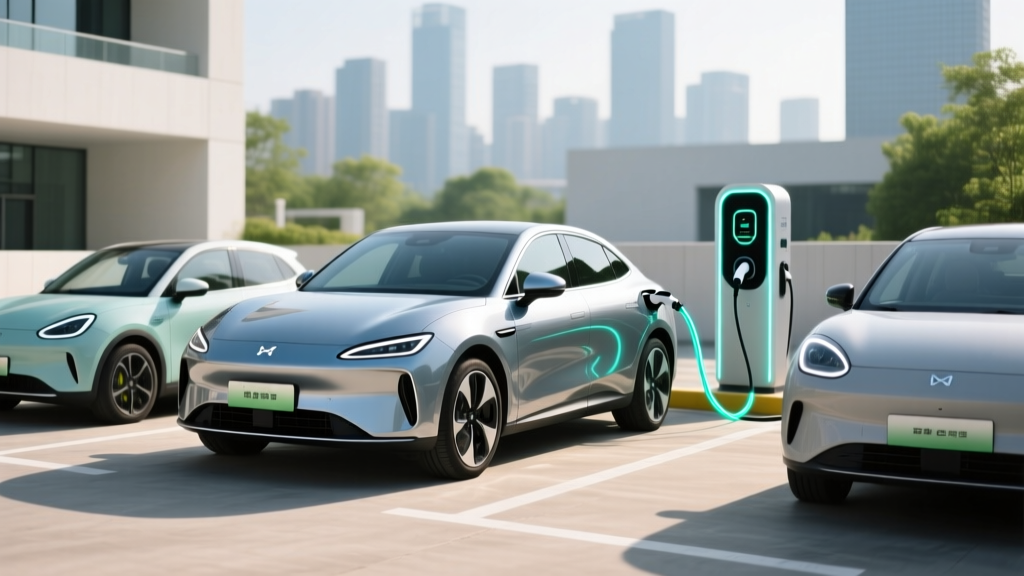
China's EV market is the world's largest, with over 9 million new-energy vehicles sold in 2025 alone. Scale, vertical battery integration (BYD makes its own LFP Blade cells), aggressive government subsidies through 2023, and cut-throat domestic competition have driven prices to levels Western automakers can't match. The BYD Seagull, for example, starts around 69,800 yuan (~$9,600 USD) in China with a 305 km CLTC range and a 44.9 kWh LFP battery. The BYD Dolphin hatchback begins near $14,500 USD equivalent.
But that sticker price is a domestic-market artifact. Three structural barriers prevent US sale:
- Tariffs: The US imposed a 100% tariff on Chinese-built EVs effective August 2024 under Section 301, on top of the baseline 2.5% auto tariff. A $15,000 BYD becomes a $30,000+ import — eliminating the value proposition entirely.
- Homologation: Every vehicle sold in the US must meet FMVSS crash, lighting, restraint, and software-security standards. Chinese-market EVs are built to GB/T and CCC standards, which don't cross-certify. Retooling costs hundreds of millions per platform.
- Dealer and service infrastructure: No Chinese brand has established a US retail or parts network. Even if imported, you'd have no warranty recourse or collision repair path.
The US Alternatives: What a "Cheap EV" Actually Costs Here
If the China cheap electric car dream is off the table, what can a budget-focused US buyer actually drive in 2026? Here's how the realistic sub-$35,000 EVs compare against the Chinese benchmarks you've seen online.
| Model | Base MSRP | Battery (kWh) | EPA Range | Peak DC Charge | 10–80% Time | 0–60 mph |
|---|---|---|---|---|---|---|
| BYD Seagull (China-only) | ~$9,600 | 44.9 LFP | ~190 mi (CLTC→EPA adj.) | 40 kW | ~55 min | ~13.0 s |
| BYD Dolphin (China-only) | ~$14,500 | 60.5 LFP | ~220 mi (adj.) | 80 kW | ~40 min | ~10.5 s |
| Chevrolet Bolt EV (US) | $26,500 | 65 NMC | 259 mi | 55 kW | ~65 min | 6.5 s |
| Nissan Leaf S (US) | $28,140 | 40 NMC | 149 mi | 50 kW | ~60 min | 7.9 s |
| Hyundai Kona Electric (US) | $32,675 | 64.8 NMC | 261 mi | 100+ kW | ~43 min | 7.6 s |
| Tesla Model 3 RWD (US) | $38,990 | 60 LFP | 272 mi | 170 kW | ~25 min | 5.8 s |
Sources: fueleconomy.gov, manufacturer spec sheets. Chinese CLTC ranges adjusted downward ~25% to approximate EPA testing rigor.
Real Cost of Ownership: US Budget EV vs. Gas Hatchback
Price is only the entry ticket. Here's a 5-year/75,000-mile ownership comparison between the Chevrolet Bolt EV (the closest US analog to a "cheap Chinese EV") and a comparable gas hatchback, the Hyundai Elantra 2.0L.
| Category | 2026 Bolt EV | 2026 Elantra Gas |
|---|---|---|
| Purchase (after §30D credit) | $19,000* | $22,500 |
| Energy (home L2 @ $0.14/kWh avg / gas @ $3.40/gal) | $3,150 | $7,650 |
| Maintenance | $1,400 | $3,800 |
| Insurance (5-yr avg) | $7,500 | $6,200 |
| Estimated resale (year 5) | –$9,000 | –$11,000 |
| Net 5-Year Cost | ~$22,050 | ~$29,150 |
*§30D point-of-sale credit of $7,500 assumes buyer meets IRS income caps ($150k single / $300k joint), vehicle MSRP cap ($55k cars), and battery critical-mineral/sourcing requirements. Confirm eligibility with a tax professional.
Even without the "China cheap" price, a US budget EV with the federal credit undercuts a gas equivalent by roughly $7,000 over five years — primarily through fuel and maintenance savings. The catch: this math requires reliable home Level 2 charging. Public DC fast charging at $0.40–$0.60/kWh erases most of the energy-cost advantage.
Real-World Ownership Considerations Before You Buy
Budget EVs come with trade-offs that Chinese-market marketing videos conveniently omit. Plan for these before signing:
Home Charging Access Is the Make-or-Break
A Level 2 home charger (240V, 32–48A, ~7.7–11.5 kW) adds 25–40 miles of range per hour and is the only way to unlock an EV's cost advantage. Installation runs $800–$2,500 for a straightforward panel-to-garage run, but can spike to $4,000+ if your home needs a 200A service upgrade. Renters and condo owners without dedicated parking face a genuine barrier — public charging is slower, more expensive, and less reliable than a gas station.
Cold-Weather Range Loss
LFP batteries (common in Chinese EVs and the base Model 3) lose roughly 25–35% of EPA range at 20°F, compounded by cabin heating draw. A Bolt rated at 259 miles EPA may deliver 170–190 real highway miles in a Midwest winter. NMC chemistry degrades less in cold but costs more. If you live north of I-70, budget a 30% winter range haircut into your commute math.
Charging Speed Reality
Peak kW numbers are marketing; the charge curve is physics. The Bolt's 55 kW peak is sustained only between roughly 10–40% SoC, then tapers sharply — a 10–80% session takes ~65 minutes. The Tesla Model 3's 170 kW peak and flatter curve cuts that to ~25 minutes. For road trips longer than 200 miles, charging speed matters more than range.
Insurance Premiums
EVs cost 15–25% more to insure than gas equivalents due to higher repair totals and battery replacement exposure. Get quotes before committing — a "cheap" EV with a $2,400/year premium vs. a gas car at $1,500 can erase fuel savings for low-mileage drivers.
Common Myths About Importing a Chinese EV
| Myth | Fact |
|---|---|
| "I can just import a BYD through a grey-market broker." | Federal law requires FMVSS compliance for road registration. Customs will seize non-conforming vehicles; DOT show-or-display exemptions apply only to limited collector cars, not mass-market EVs. |
| "Chinese EVs are unsafe." | Not universally true. BYD, NIO, and Xpeng score well on Euro NCAP and C-NCAP. But those test protocols differ from US FMVSS — and without US-spec crash structures, airbag tuning, and NHTSA certification, they cannot be sold here. |
| "BYD is coming to the US in 2026." | BYD executives have publicly stated the US market is not a near-term priority due to tariffs. BYD sells in Europe, Southeast Asia, Mexico, and Brazil — but no US retail presence is announced. |
| "A cheap Chinese EV would qualify for the $7,500 tax credit." | §30D requires final assembly in North America and strict battery-mineral sourcing rules. Even if a Chinese EV were sold here, it would almost certainly fail both tests. |
Decision Framework: Should You Wait, Import, or Buy US?
If X, Then Y
- If you need a sub-$25,000 EV today → Buy a 2024–2026 Chevrolet Bolt EV/EUV (still in production on the refreshed Ultium platform). It's the closest US-legal analog to the BYD Dolphin in size and price-after-credit.
- If you can stretch to ~$33,000 → The Hyundai Kona Electric or base Tesla Model 3 RWD offer meaningfully faster DC charging (100–170 kW vs. 55 kW), which changes road-trip viability.
- If you live in an apartment without charging access → Consider a PHEV like the Toyota Prius Prime (44 mi electric-only, 52 MPG combined after battery depletion). It's the bridge solution until public charging matures.
- If you're banking on a Chinese brand entering the US → Don't hold your purchase. Tariff and homologation timelines suggest 2029+ at the earliest for any volume Chinese-brand US launch.
- If you see a "grey import" listing online → Walk away. Registration, insurance, warranty, and resale will all be dead ends.
FAQ: China Cheap Electric Cars for US Buyers
What is the cheapest Chinese electric car in 2026?
The Wuling Hongguang Mini EV starts around $4,500 USD equivalent in China with ~105 miles of range and a 9.3 kWh battery. It's a neighborhood-class microcar not legal for US highway use. The cheapest highway-capable Chinese EV is the BYD Seagull at ~$9,600 USD.
Can I personally import a BYD or NIO to the US?
Effectively no. Federal Motor Vehicle Safety Standards compliance is mandatory for registration in all 50 states. Importation without homologation will result in seizure at the port, and no insurance company will write a policy on a non-conforming vehicle.
Will BYD or Xpeng ever sell cars in America?
Not in the near term. The 100% Section 301 tariff plus baseline 2.5% duty makes the economics unworkable, and neither company has announced US dealer plans. BYD has hinted at a potential Mexico plant that could theoretically serve North America under USMCA, but critical-mineral sourcing rules would still likely disqualify those vehicles from the §30D credit.
What's the cheapest new EV I can actually buy in the US in 2026?
The Chevrolet Bolt EV at $26,500 MSRP. After the $7,500 point-of-sale §30D credit (if you qualify), effective cost drops to ~$19,000 — making it the only new EV that competes with Chinese domestic pricing.
Do Chinese EVs have worse batteries than US ones?
No — BYD's LFP Blade battery is among the most durable and thermally stable in production, with demonstrated cycle life exceeding 3,000 full cycles. CATL, which supplies Tesla, BMW, and others, is also Chinese. The battery tech gap is a myth; the gap is in US regulatory compliance and service infrastructure.
Ownership and tax-credit data current as of the 2026 model year. Verify §30D eligibility at IRS.gov and vehicle safety ratings at NHTSA.gov before purchase.