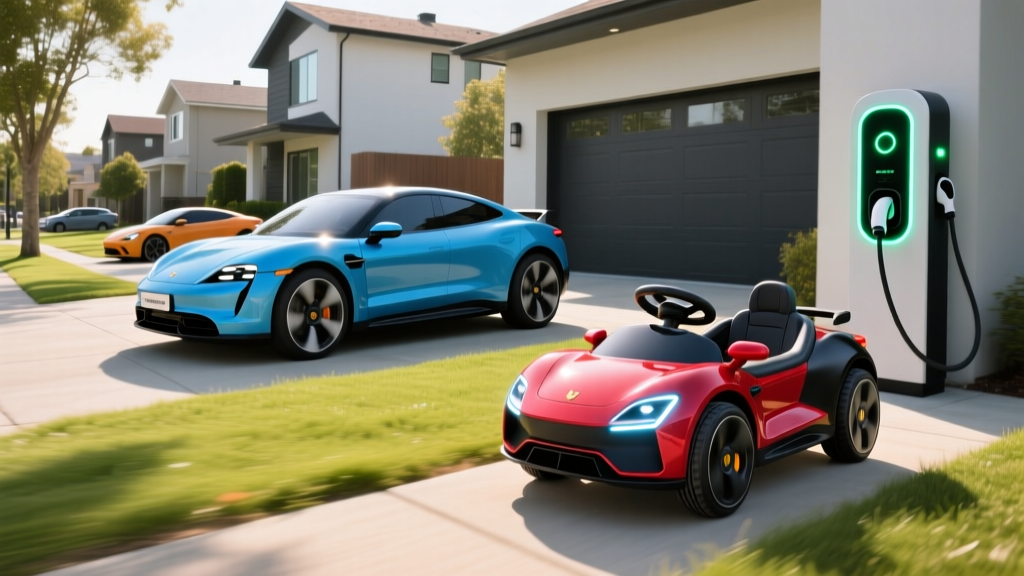
Quick Answer: A 24-volt children's electric car delivers roughly 4–6 mph top speed with 45–90 minutes of continuous run time on a full charge, powered by two 12V sealed lead-acid (SLA) batteries wired in series (or increasingly, a single 24V lithium pack). Expect to pay $250–$600 for a quality 24V ride-on in 2026. Compared to 12V models, you get approximately double the power for better hill climbing, grass traction, and capacity for two riders — but charging still takes 8–14 hours on a standard SLA setup.
If you're shopping for a ride-on vehicle for a child aged 3 to 8, the voltage rating is the single most important spec. It determines motor power, top speed, terrain capability, and whether the car can handle two kids at once. The 24-volt tier sits between entry-level 6V/12V toys and the 36V+ models aimed at older kids. Here's what the numbers actually mean, what you'll spend, and how to pick the right one.
What 24 Volts Actually Means for a Child's Ride-On
Voltage in a children's electric car works the same way it does in a full-size EV: it's the electrical pressure pushing current through the motor. Higher voltage means the motor can produce more torque and sustain higher speeds under load. Most 24V ride-ons achieve this by wiring two 12V, 7Ah–12Ah sealed lead-acid batteries in series — the same principle Tesla uses to wire hundreds of cells in series and parallel to reach 400V or 800V architectures.
The practical differences between voltage tiers are substantial:
| Spec | 6V Models | 12V Models | 24V Models | 36V Models |
|---|---|---|---|---|
| Top Speed | 2–3 mph | 3–5 mph | 4–6 mph | 6–10+ mph |
| Age Range | 1–3 years | 3–5 years | 3–8 years | 6–12 years |
| Max Rider Weight | ~44 lbs | ~66–88 lbs | ~100–143 lbs | ~143–176 lbs |
| Terrain | Flat pavement only | Pavement, light grass | Grass, gravel, mild hills | Most outdoor terrain |
| Typical Price | $80–$150 | $150–$350 | $250–$600 | $500–$1,200+ |
| Seat Capacity | 1 child | 1 child | 1–2 children | 1–2 children |
The 24V tier is the sweet spot for families who want a ride-on that handles real outdoor conditions — not just a driveway — without stepping into the speed and weight of a 36V model that may require helmets and more parental supervision.
Battery Chemistry: Lead-Acid vs. Lithium in 24V Ride-Ons
The battery chemistry inside your child's ride-on matters more than most parents realize. The two options in 2026 are sealed lead-acid (SLA) and lithium iron phosphate (LiFePO4/LFP) — the same LFP chemistry now used in the Tesla Model 3 Standard Range and Ford Mustang Mach-E Select.
| Factor | SLA (Lead-Acid) | LFP (Lithium) |
|---|---|---|
| Energy Density | 30–40 Wh/kg | 90–160 Wh/kg |
| Typical Capacity (24V) | 7Ah–12Ah (168–288 Wh) | 10Ah–20Ah (240–480 Wh) |
| Weight (battery pack) | 12–20 lbs | 5–10 lbs |
| Cycle Life | 200–300 cycles | 1,500–3,000+ cycles |
| Charge Time (full) | 8–14 hours | 3–5 hours |
| Lifespan (calendar) | 1–3 years | 5+ years |
| Cost (replacement pack) | $30–$60 | $80–$160 |
| Performance Fade | Noticeable after ~6 months | Minimal for years |
Most 24V ride-ons sold today still ship with SLA batteries because they keep the retail price lower. But the run-time degradation is real: a new SLA pack might deliver 60 minutes of driving, dropping to 35–40 minutes within a single season of heavy use. LFP packs hold their capacity far longer and charge in roughly a third of the time.
Practical tip: If you buy a 24V model with SLA batteries, budget for a replacement pack every 1–2 seasons. Several aftermarket companies now sell drop-in 24V LFP conversion kits ($80–$140) that fit standard SLA battery compartments, dramatically improving run time and charge speed.
Real-World Run Time and Charging: What to Expect
Manufacturer claims of "90 minutes of run time" assume flat pavement, a single rider under 50 lbs, and moderate throttle use. Real-world conditions cut that significantly.
Run-Time Reality Check (24V, 12Ah SLA pack):
- Claimed run time: 60–90 minutes
- Real-world, single rider, mixed terrain: 40–60 minutes
- Two riders or hilly grass: 25–40 minutes
- Cold weather (below 50°F): Reduce all figures by 20–35%
This mirrors the same physics that reduce full-size EV range in cold weather and under heavy loads — battery chemistry is less efficient at low temperatures, and higher current draw (more weight, more resistance) depletes capacity faster.
Charging follows a similarly predictable pattern. The included wall charger for most 24V SLA setups outputs roughly 2–3 amps at 29.4V (the absorption voltage for a 24V SLA pack). That translates to a full charge in 8–14 hours from empty. Unlike a full-size EV's charge curve, where DC fast charging tapers sharply above 80%, SLA chargers deliver a slow, steady trickle through the final absorption and float phases — meaning the last 20% takes almost as long as the first 80%.
Total Cost of Ownership: 24V Ride-On vs. Gas-Powered Alternatives
Gas-powered ride-on vehicles for children barely exist in the market — and for good reason: emissions, noise, heat, and maintenance make them impractical for young children. The real comparison is between voltage tiers and battery chemistries within the electric ride-on space.
| Cost Factor | 12V SLA Model | 24V SLA Model | 24V LFP Model |
|---|---|---|---|
| Purchase Price | $180–$300 | $280–$500 | $400–$650 |
| Battery Replacement (3-year span) | $60–$100 (2 packs) | $60–$120 (2 packs) | $0 (pack lasts 5+ years) |
| Electricity Cost (3 years, ~500 charges) | ~$15–$25 | ~$25–$40 | ~$25–$40 |
| Motor/Gearbox Wear (3 years) | Low | Moderate | Moderate |
| Estimated 3-Year Total | $255–$425 | $365–$660 | $425–$690 |
The electricity cost to run a 24V children's electric car is trivially low. At a national average of $0.17/kWh (per the U.S. Energy Information Administration), a full charge of a 24V 12Ah pack (roughly 0.29 kWh usable) costs about $0.05. Even with daily use over an entire summer, you're spending less than $5 in electricity.
The real ownership cost is battery replacement. SLA batteries in ride-on toys follow the same degradation pattern as lead-acid batteries in any application: sulfation from incomplete charging, capacity loss from deep discharge, and calendar aging. Storing an SLA pack over winter without a maintenance charger almost guarantees you'll need a new one by spring.
Safety, Speed Limiting, and Parental Controls
At 4–6 mph, a 24V ride-on moves at roughly jogging speed. That's fast enough to require attention to safety, especially on driveways near streets or on slopes.
Most 2026-era 24V models include these safety features:
- Parental remote control: A 2.4GHz remote lets an adult override steering and throttle from up to 100 feet away — functionally similar to a Level 2 driver-assist system where a supervisor can intervene
- Speed limiter switch: Restricts top speed to ~3 mph for younger or less experienced riders
- Seat belt: Typically a lap belt, sometimes a 3-point harness on premium models
- Soft-start module: Ramps up acceleration gradually instead of jerking forward — reducing the chance of a toddler toppling out
- Automatic brake: Releasing the pedal engages motor braking (similar to regenerative braking in a full-size EV, though far simpler)
The U.S. Consumer Product Safety Commission (CPSC) recommends helmets for any motorized ride-on toy used outdoors, and most 24V models are rated for children 3 and up. Always check the manufacturer's age and weight limits — exceeding them strains the motor and gearbox, leading to premature failure.
Decision Framework: Which 24V Ride-On Is Right for Your Family?
Choose a 24V SLA model if:
- Your budget is under $400
- The child will use it 2–3 times per week (not daily)
- You have flat or mildly sloped terrain
- You're comfortable replacing batteries every 1–2 seasons
- Single rider only (under 66 lbs)
Choose a 24V LFP model (or convert to LFP) if:
- Your budget is $400–$650
- The child will ride daily or multiple times per day
- You need fast turnaround between charges (3–5 hours vs. 8–14)
- Two riders or hilly/uneven terrain
- You want the battery to last the life of the toy
Step down to 12V if:
- The child is under 3 years old
- You only need flat-driveway use
- Budget is strictly under $200
Step up to 36V if:
- The child is 6+ and wants more speed (6–10 mph)
- You have large, varied terrain
- The child is ready for more responsibility (helmet use mandatory)
Common Misconceptions About 24V Children's Electric Cars
| Myth | Fact |
|---|---|
| "24V is too fast for a toddler" | Most 24V models have a speed limiter that caps speed at ~3 mph. Full 4–6 mph is appropriate for ages 4+ with supervision. |
| "The battery will last as long as the car" | SLA batteries typically need replacement every 1–3 years. LFP lasts 5+ years but costs more upfront. |
| "It charges overnight, so run time doesn't matter" | SLA chargers take 8–14 hours. If your child rides twice in one day, the second session may not be possible without an LFP upgrade or spare battery. |
| "All 24V cars are equally powerful" | Motor wattage varies from 100W to 400W+ per motor. Two 200W motors outperform a single 350W motor on hills and grass. |
| "It can go on any terrain" | 24V handles grass and gravel well, but deep mud, sand, and steep hills (>15° grade) will overwhelm most stock motors. |
Frequently Asked Questions
How long does a 24V battery last per charge in real use?
Expect 40–60 minutes with a single rider on mixed terrain, or 25–40 minutes with two riders or on grass and hills. SLA packs lose capacity over time — by the second season, subtract 20–30% from those figures. LFP packs maintain consistent run time for years.
Can I leave the 24V battery on the charger overnight?
Most modern 24V chargers have automatic shutoff or float mode, making overnight charging safe. However, never leave an SLA battery on a non-smart charger for more than 24 hours — overcharging causes gassing and permanent capacity loss. For long-term storage (winter), use a smart maintenance charger or disconnect the battery and store it charged above 50%.
Is a 24V ride-on safe for a 3-year-old?
Yes, with the speed limiter engaged (reducing top speed to ~3 mph) and parental remote control active. Always use the seat belt and supervise on any surface near a road or slope. The CPSC toy safety guidelines recommend checking for sharp edges, secure battery compartment latches, and UL-listed chargers.
Can I upgrade my 12V ride-on to 24V?
Technically yes — by adding a second 12V battery in series and upgrading to a 24V motor and controller — but it's rarely cost-effective. You'll spend $80–$150 on parts and risk damaging plastic gears not rated for the higher torque. It's usually better to sell the 12V model and buy a purpose-built 24V car.
Do 24V children's electric cars require any maintenance?
Minimal: keep battery terminals clean and tight, check tire pressure on pneumatic-tire models, and store the battery properly during off-seasons. The gearbox and motors are generally sealed and maintenance-free. Unlike a gas-powered vehicle of any size, there's no oil, no spark plugs, no air filter — just electrons and gears.