Quick Answer: Is the Chevy Volt Still a Good Buy?
The Chevrolet Volt (2011–2019) is a plug-in hybrid (PHEV), not a full battery-electric vehicle. It offers 35–53 miles of electric-only range depending on model year, backed by a gasoline range-extender for unlimited total range. Used Volt prices in 2026 range from roughly $8,000 (early Gen 1 models) to $18,000 (late Gen 2 examples). It remains one of the cheapest ways to drive mostly on electricity without range anxiety — but battery degradation, limited DC fast charging, and discontinued support are real considerations before you buy.
What Exactly Is the Chevy Volt?
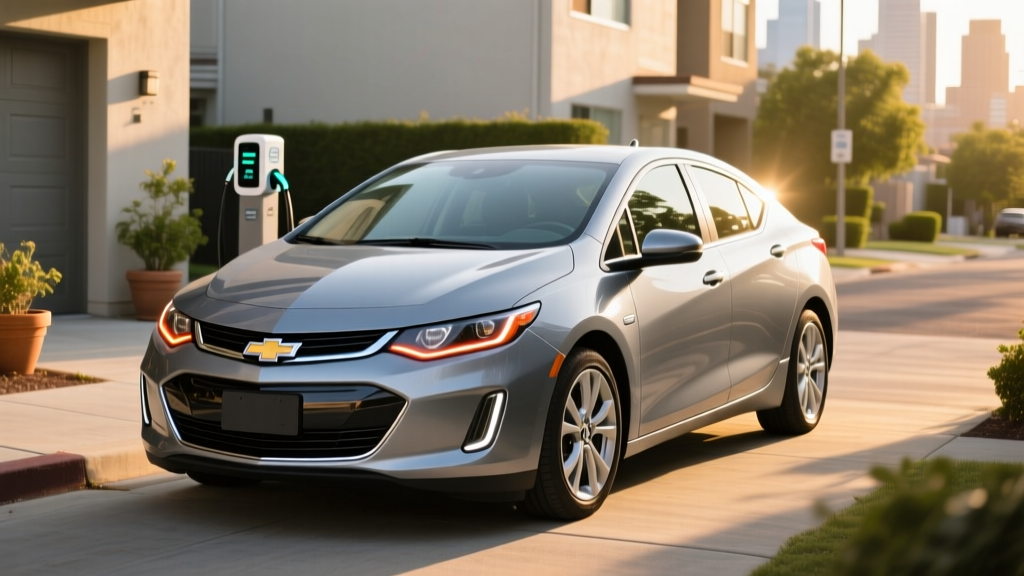
The Chevrolet Volt is a plug-in hybrid electric vehicle (PHEV) produced by General Motors across two generations: Gen 1 (2011–2015) and Gen 2 (2016–2019). GM discontinued the Volt after the 2019 model year to focus on fully electric vehicles under the Ultium platform. Despite its cancellation, the Volt retains a loyal following because it solves a problem many buyers still face in 2026: wanting electric daily driving without depending on public charging infrastructure.
The Volt's powertrain is unique. It operates primarily as an electric car using its battery pack, but when the battery depletes, a 1.5-liter gasoline engine (Gen 2) or 1.4-liter engine (Gen 1) kicks in as a generator to extend range. This "extended-range electric vehicle" (EREV) architecture means you can commute on electricity all week and take a cross-country road trip on weekends without planning around chargers.
| Spec | Gen 1 (2011–2015) | Gen 2 (2016–2019) |
|---|---|---|
| Battery (usable) | 10.3 kWh (2011–12) / 10.9 kWh (2013–15) | 18.4 kWh |
| EPA Electric Range | 35–38 miles | 53 miles |
| Total Range (gas + electric) | ~380 miles | ~420 miles |
| Gas Engine | 1.4L 4-cylinder | 1.5L 4-cylinder |
| Combined MPGe (electric) | 93–98 MPGe | 106 MPGe |
| Gas-only MPG | ~35 MPG | ~42 MPG |
| Level 2 Charge Time (full) | ~4 hours (3.6 kW) | ~4.5 hours (3.6 kW) |
| DC Fast Charging | Not available | Not available |
| 0–60 mph | ~9.0 seconds | ~7.8 seconds |
| Original MSRP (base) | $39,995 (2011) | $33,995 (2016) |
Used Volt Pricing and the Tax Credit Reality
In the 2026 used market, expect to pay between $8,000 and $12,000 for a Gen 1 Volt and $13,000 to $18,000 for a Gen 2 model, depending on mileage, condition, and battery health. The Volt is no longer eligible for the new-vehicle §30D federal tax credit (the vehicle must be new and meet current battery-sourcing and MSRP requirements, per IRS guidelines).
However, used EVs may qualify for the Used Clean Vehicle Credit under IRC §25E: up to $4,000 or 30% of the sale price (whichever is less), subject to income caps ($75,000 single / $150,000 joint), a $25,000 maximum vehicle sale price, and the vehicle must be at least two model years old. A used Volt typically clears all these hurdles. The credit can be transferred to the dealer at point of sale. Confirm your eligibility with a tax professional and the latest IRS §25E guidance.
Real-World Range, Battery Health, and Degradation
The EPA-rated 53-mile electric range on Gen 2 Volts is a useful benchmark, but real-world results vary. In moderate climates with city driving, many owners report 45–55 miles on a full charge. Highway driving at 70+ mph, cold weather below freezing, and aggressive acceleration can reduce electric range to 30–40 miles. The gasoline engine seamlessly extends range, so you're never stranded — but your fuel costs rise when the engine runs.
Battery degradation is the single most important factor when evaluating a used Volt. The Gen 2 Volt uses an LG Chem NMC (nickel-manganese-cobalt) lithium-ion pack. GM engineered a conservative buffer — the car uses only about 14.0 kWh of the pack's 18.4 kWh total capacity, protecting longevity. Real-world data from Volt owner communities shows average degradation of 10–18% over 8–10 years. A 2017 Volt that originally delivered 53 electric miles might now deliver 42–48 miles.
Before buying, check the battery's State of Health (SoH). An OBD-II scanner with EV-compatible software (such as MyChevy app data or Torque Pro with the right PID) can read remaining battery capacity. Look for SoH above 80%. Below 75%, negotiate a significant price reduction — battery replacement costs roughly $3,000–$5,000 from independent shops, though refurbished packs are sometimes available for less.
GM's original battery warranty was 8 years/100,000 miles (10 years/150,000 miles in CARB states) guaranteeing at least 60% capacity retention. For a 2016 Volt, that warranty expired in 2024. For a 2019 model, it runs through 2027 in standard states and 2029 in CARB states (California, New York, Massachusetts, and others). Verify warranty status by VIN with a Chevrolet dealer.
Charging the Volt: What You Need to Know
The Volt charges exclusively via AC — there is no DC fast charging capability on any model year. This is the Volt's most significant limitation compared to modern BEVs. For daily use, however, AC charging is perfectly adequate since the battery is small.
| Level | Power (kW) | Time to Full (Gen 2) | Miles of Range Added per Hour |
|---|---|---|---|
| Level 1 (120V standard outlet) | 1.4 kW | ~13 hours | ~4 miles |
| Level 2 (240V, 3.6 kW onboard charger) | 3.6 kW | ~4.5 hours | ~12 miles |
| DC Fast Charge | Not supported | N/A | N/A |
Most Volt owners charge at home using a standard 120V outlet (Level 1), which adds about 4 miles of range per hour. Overnight (10–12 hours), that's 40–48 miles — enough to replenish most daily driving on a Gen 2 Volt. A Level 2 home charger (240V) cuts a full charge to about 4.5 hours, useful if you drive the full electric range and need a midday top-up.
The Volt uses a J1772 connector for AC charging, which is the standard for all non-Tesla EVs in North America. If you have a home Level 2 charger installed for another EV, it will work with the Volt directly. Public Level 2 chargers at workplaces, grocery stores, and parking garages are also compatible.
Home charging cost: At the US average residential electricity rate of ~$0.16/kWh (EIA 2025 data), fully charging a Gen 2 Volt's usable 14 kWh costs about $2.24. That's roughly $0.04–$0.05 per mile on electricity — compared to $0.12–$0.15 per mile for a 30 MPG gas car at $3.50/gallon. Over 12,000 miles of mostly electric driving, you could save $900–$1,200 annually on fuel.
Volt vs. Gas Car vs. Modern PHEV: The Numbers
How does the used Volt stack up against keeping a gas car or buying a new PHEV like the 2026 Toyota Prius Prime? Here's a five-year ownership comparison assuming 12,000 miles/year, 70% electric driving on the Volt, and national average fuel/electricity costs.
| Factor | Used 2018 Volt ($15K) | Used Gas Sedan ($12K) | New 2026 Prius Prime ($34K) |
|---|---|---|---|
| Purchase Price | $15,000 | $12,000 | $34,000 |
| Federal Tax Credit | Up to -$4,000 (§25E) | $0 | Up to -$7,500 (§30D)* |
| Net Purchase | $11,000 | $12,000 | $26,500 |
| Annual Fuel/Energy Cost | ~$550 (30% gas + 70% electric) | ~$1,680 (gas only, 30 MPG) | ~$480 (50% electric + 50% gas) |
| 5-Year Fuel/Energy Total | $2,750 | $8,400 | $2,400 |
| 5-Year Maintenance (est.) | $1,800 | $3,000 | $1,500 |
| 5-Year Insurance (avg.) | $6,000 | $5,500 | $6,500 |
| 5-Year Total Cost | ~$21,550 | ~$28,900 | ~$36,900 |
*2026 Prius Prime §30D eligibility depends on battery sourcing, MSRP cap, and buyer income limits — verify current status at fueleconomy.gov.
The used Volt wins on total cost by a wide margin versus both alternatives, primarily because of its low purchase price and low per-mile energy cost. The new Prius Prime offers more electric range (44 miles EPA), modern safety tech, and a full warranty, but at more than double the net cost.
Common Volt Misconceptions — Fact vs. Fiction
| Myth | Fact |
|---|---|
| "The Volt is a full electric car." | It's a plug-in hybrid (PHEV/EREV). It has a gasoline engine that generates electricity when the battery depletes. You still need to buy gas occasionally. |
| "The battery will need replacing and cost $15,000." | Volt battery packs are among the most durable in the industry thanks to GM's conservative buffer. Most packs retain 80%+ capacity after 100K miles. Replacement, if needed, runs $3,000–$5,000 refurbished. |
| "You can't drive long distances in a Volt." | The gas engine provides 340+ additional miles of range. Total range exceeds 400 miles. Road trips are seamless — you just stop for gas like any other car. |
| "It charges at DC fast chargers." | No Volt supports DC fast charging. It uses AC only (J1772 connector, 3.6 kW max). This is fine for overnight home charging but means no quick public top-ups. |
| "GM won't support it since it's discontinued." | GM still provides parts and service support. The Volt shares components with other GM vehicles. Third-party EV repair shops also service Volts widely. |
| "The Volt gets bad gas mileage when the engine runs." | Gen 2 Volts achieve ~42 MPG combined on gasoline alone — competitive with many hybrids. Gen 1 gets ~35 MPG. |
Decision Framework: Is the Volt Right for You?
Choose the Chevy Volt If:
- You have home charging access (even a standard 120V outlet works) and a commute under 50 miles round-trip — you'll drive almost entirely on electricity.
- You want to try electric driving without range anxiety — the gas engine eliminates dependence on public charging infrastructure.
- Your budget is under $18,000 and you want the lowest total cost of ownership in an electrified vehicle.
- You take occasional road trips and don't want to plan around DC fast chargers or deal with charging-desert gaps.
- You live in a region with cold winters — the gas engine provides cabin heat without devastating battery range like a pure BEV.
Look Elsewhere If:
- You want zero gasoline use — the Volt still requires gas for longer trips. Consider a used BEV like the Chevy Bolt EV (238–259 miles EPA range, $12,000–$16,000 used).
- You need fast public charging — the Volt's lack of DC fast charging means long road trips rely entirely on gasoline.
- You want modern ADAS features — the Volt lacks adaptive cruise control, lane-centering, and automatic emergency braking standard on newer vehicles.
- You want a new-vehicle warranty — the newest Volt is a 2019 model, meaning most factory warranties have expired or are expiring soon.
- You need more than 4 seats — the Volt seats only four passengers due to the battery tunnel running through the cabin.
First-Time EV Buyer Checklist for the Volt
- Verify battery State of Health — Use an OBD-II reader or request a battery health report from the seller. Target SoH above 80%.
- Check remaining powertrain warranty — Call a Chevy dealer with the VIN. In CARB states, the battery warranty extends to 10 years/150,000 miles.
- Confirm your home electrical setup — A standard 120V outlet on a dedicated 15A circuit is sufficient for overnight Level 1 charging. A 240V outlet (like a dryer outlet) enables faster Level 2 charging.
- Calculate your commute math — If your round-trip commute is under the Volt's electric range (35–53 miles depending on generation), you'll rarely buy gas. Track your actual driving patterns for a week.
- Budget for maintenance — The Volt still has an internal combustion engine that needs oil changes (~$40–$60 every 7,500–10,000 miles when the engine runs), coolant service, and standard brake/tire maintenance. Regenerative braking extends brake pad life significantly.
- Research insurance costs — Get quotes before purchasing. Volt insurance averages $100–$130/month depending on your profile, slightly above comparable gas compacts.
- Understand the §25E used EV credit — Up to $4,000 if you meet income caps and buy from a licensed dealer. The credit can reduce your sale price at point of sale.
Frequently Asked Questions
Is the Chevy Volt a fully electric car?
No. The Volt is a plug-in hybrid (PHEV) or more precisely an extended-range electric vehicle (EREV). It drives on battery power for 35–53 miles, then a gasoline engine generates electricity to extend range indefinitely. You will still purchase gasoline for longer trips.
How long does the Chevy Volt battery last?
Volt batteries have proven highly durable. Real-world data shows 80–90% capacity retention after 100,000 miles and 8–10 years. GM's conservative battery buffer (using only ~76% of total capacity) is the primary reason for this longevity. Many Volts have exceeded 200,000 miles on the original battery pack.
Can I charge a Chevy Volt at a Tesla Supercharger?
No. The Volt uses a J1772 AC connector and does not support DC fast charging at all. Tesla Superchargers provide DC power and require either a native NACS connector (Tesla vehicles) or a CCS-to-NACS adapter (for CCS-equipped EVs). The Volt cannot use any of these. You can charge at any public Level 2 J1772 station.
What happens if the Volt battery completely dies?
If the traction battery fails entirely, the Volt can still operate on its gasoline engine alone — though performance and fuel economy will be reduced. However, complete battery failure is rare. More commonly, gradual degradation reduces electric range by 10–20% over the vehicle's life. If replacement is needed, refurbished packs are available from $2,500–$5,000 installed.
How much does it cost to charge a Volt at home?
A full charge of the Gen 2 Volt's usable ~14 kWh costs approximately $2.24 at the national average electricity rate of $0.16/kWh. That delivers about 45–53 real-world electric miles, translating to roughly $0.04–$0.05 per mile. Compare this to $0.12–$0.15 per mile in a 30 MPG gas car at $3.50/gallon.
Should I buy a Gen 1 or Gen 2 Volt?
The Gen 2 (2016–2019) is the stronger choice if your budget allows. It offers 53 miles of electric range versus 35–38 in Gen 1, better fuel economy on gas (42 vs. 35 MPG), more interior space, improved infotainment with Apple CarPlay/Android Auto, and a more refined driving experience. Gen 1 Volts are cheaper ($8,000–$12,000) and still viable for short commutes, but the Gen 2's improvements justify the premium.