The Quick Answer: Is a Used Chevy Volt Worth It in 2026?
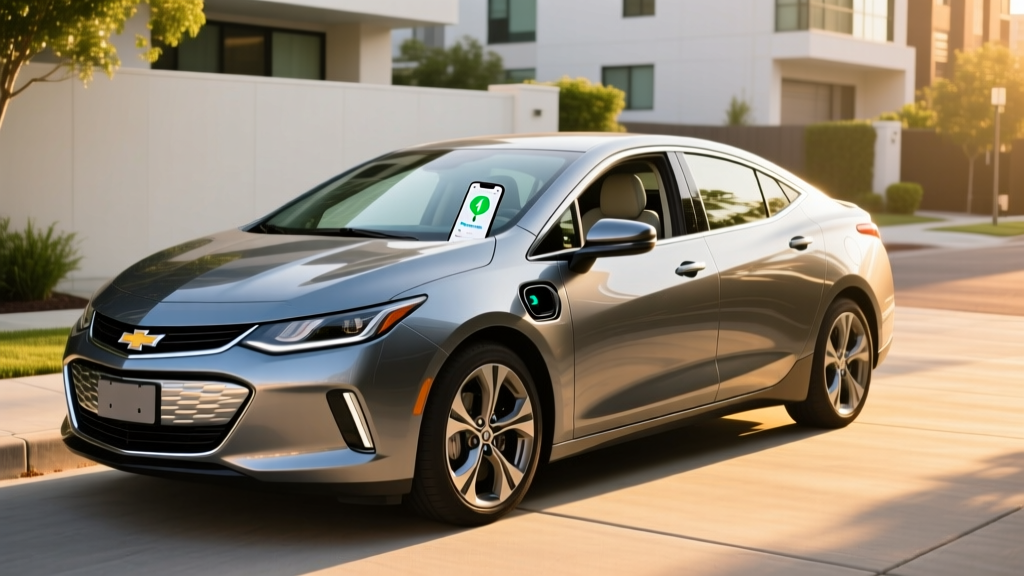
The Chevy Volt is not a pure electric vehicle (EV) — it's a plug-in hybrid electric vehicle (PHEV) that Chevrolet discontinued after the 2019 model year. If you're searching for a "Chevy Volt EV," you're likely looking at the used market, where 2017–2019 models offer 53 miles of EPA-rated electric-only range (2nd generation) backed by a gasoline range-extender for unlimited total driving distance. Used 2019 Volt LT models currently trade between $12,000–$16,500 depending on mileage and battery health, while Premier trims command $14,000–$18,500. For buyers who want electric commuting with gas-powered road-trip flexibility and cannot commit to a full BEV, the used Volt remains one of the most practical electrified vehicles available — but battery degradation, expired federal tax credits, and aging infotainment are real trade-offs you need to understand before buying.
Understanding the Chevy Volt: PHEV, Not a Pure EV
The most common misconception about the Chevy Volt is that it's an electric car with a gas backup. The reality is more nuanced. The Volt operates primarily as a series hybrid for its first 53 miles (2nd-gen): the 1.5L gasoline engine does not drive the wheels directly but instead acts as a generator to recharge the 18.4 kWh lithium-ion battery pack when it depletes. After that, the engine can also mechanically couple to the drivetrain in certain highway cruising scenarios through a planetary gearset, improving efficiency.
This architecture means the Volt drives like an EV for most daily commutes — smooth, quiet, instant torque from its 149 hp / 294 lb-ft electric motor — but eliminates range anxiety entirely. Total range with a full battery and full 8.9-gallon tank exceeds 420 miles.
First-Generation vs. Second-Generation Volt
| Specification | Gen 1 (2011–2015) | Gen 2 (2016–2019) |
|---|---|---|
| Battery Capacity (usable) | 10.3 kWh | 14.0 kWh (of 18.4 kWh total) |
| EPA Electric Range | 35–38 miles | 53 miles |
| Combined MPGe (electric) | 93–98 MPGe | 106 MPGe |
| Gas-Only MPG | 37 MPG | 42 MPG |
| Electric Motor Output | 149 hp / 273 lb-ft | 149 hp / 294 lb-ft |
| 0–60 mph | ~9.0 seconds | ~8.4 seconds |
| Level 2 Charge Time (0–Full) | ~4 hours (3.6 kW) | ~4.5 hours (3.6 kW) |
| DC Fast Charging | Not available | Not available |
Source: fueleconomy.gov
Real-World Range: What to Actually Expect
The EPA rates the 2nd-generation Volt at 53 electric miles, but real-world results vary significantly based on climate, terrain, and driving style. In mild weather (60–80°F) with mixed city/highway driving, owners consistently report 45–55 electric miles — right around the sticker. However, three factors compress that number:
- Cold weather (below 32°F): Expect 30–38 electric miles. The Volt's battery thermal management system consumes energy to keep cells warm, and cabin heating draws heavily from the pack before the engine kicks on.
- Highway driving (70+ mph): Aerodynamic drag reduces electric range to roughly 38–44 miles. The Volt is optimized for city and suburban speeds.
- Hilly terrain: Sustained climbs can drop electric range by 15–20%, though regenerative braking on descents partially recovers energy.
Once the battery depletes, the 1.5L engine delivers a genuine 42 MPG combined in gas-only operation — competitive with a Toyota Prius. This dual-mode operation is the Volt's core value proposition: you commute on cheap electricity and road-trip on gas without planning charger stops.
Charging the Volt: Home Setup and Costs
The Chevy Volt supports Level 1 (120V) and Level 2 (240V) AC charging only. There is no DC fast-charging capability on any model year — a significant limitation if you need quick top-ups away from home.
Charging Speed Comparison
| Charging Level | Power (kW) | Miles of Range per Hour | Full Charge Time (Gen 2) |
|---|---|---|---|
| Level 1 (120V, 12A) | 1.4 kW | ~4 miles/hr | ~13 hours |
| Level 1 (120V, 8A default) | 0.96 kW | ~3 miles/hr | ~18 hours |
| Level 2 (240V, 16A) | 3.6 kW | ~12 miles/hr | ~4.5 hours |
Most Volt owners install a Level 2 home charger, which fully replenishes the battery overnight. A basic 16-amp, 240V EVSE (Electric Vehicle Supply Equipment) unit costs $250–$400, while professional installation by a licensed electrician typically runs $400–$1,200 depending on whether your electrical panel needs an upgrade. If you have a 240V outlet (like a dryer outlet) near your parking spot, costs stay at the lower end.
Important distinction — kW vs. kWh: The Volt's onboard charger is rated at 3.6 kW (power — the rate of energy delivery), while its battery stores 18.4 kWh (energy — the total capacity). Think of kW as the speed of water flowing through a hose and kWh as the total volume of the bucket you're filling.
Cost to Charge vs. Gasoline
| Fueling Method | Cost per Full "Tank" | Cost per Mile | Annual Cost (12,000 mi/yr) |
|---|---|---|---|
| Level 2 Home Charging ($0.14/kWh avg) | $2.06 (14 kWh usable) | $0.039/mi | $468 (all-electric commuting) |
| Gasoline Only ($3.40/gal, 42 MPG) | $30.26 (8.9 gal) | $0.081/mi | $972 (all-gas driving) |
| Typical Mixed (70% electric / 30% gas) | — | $0.052/mi | $624 |
A Volt owner who charges nightly and drives under 50 miles daily will spend roughly $350–$500 less per year on energy compared to a 30 MPG gas-only compact car. Over five years, that's $1,750–$2,500 in fuel savings — meaningful but not transformative enough to offset a high purchase premium. On the used market, however, the Volt's price is already low, making the fuel savings a genuine bonus.
Battery Health and Degradation: What Used Buyers Must Check
The Volt's lithium-ion battery pack was engineered with a conservative buffer strategy — the car uses only about 14 kWh of the 18.4 kWh total capacity, leaving a substantial top and bottom buffer to slow degradation. This engineering choice has paid off: most 2016–2019 Volts with 80,000–120,000 miles show only 8–15% capacity loss, translating to 45–48 electric miles instead of the original 53.
How to Check Battery State of Health (SoH)
- OBD-II scan tool: Use a tool like LeafSpy (adapted for GM) or have a dealer pull the battery health report. Look for capacity retention above 85%.
- Dashboard range display: After a full charge, the displayed electric range should read 47–53 miles on a healthy Gen 2 pack. If it consistently shows below 42, the pack has meaningful degradation.
- Voltage deviation check: A dealer scan can reveal individual cell group imbalances. Deviations above 0.3V between cell groups suggest a weak cell that may accelerate future degradation.
Warranty status: GM provided an 8-year/100,000-mile battery warranty (10 years/150,000 miles in CARB states like California, New York, and Massachusetts). For a 2017 Volt, the federal warranty expired in 2025; for a 2019, it expires in 2027. If you're buying in a CARB state, a 2017 Volt may still have battery coverage through 2027. Verify the car's original sale state — the extended warranty follows the vehicle, not the owner.
If the battery does need replacement out of warranty, expect $4,000–$7,000 for a refurbished pack plus labor at an independent EV shop, or $8,000–$12,000 at a dealer. This is the single largest financial risk of buying a used Volt.
Total Cost of Ownership: 5-Year Breakdown
Let's compare a used 2019 Chevy Volt Premier (purchased at $16,000 with 55,000 miles) against a comparable used 2019 Honda Civic EX ($17,500, 32 MPG combined) over five years of ownership at 12,000 miles per year.
| Cost Category | 2019 Chevy Volt Premier | 2019 Honda Civic EX |
|---|---|---|
| Purchase Price | $16,000 | $17,500 |
| Fuel/Energy (5 years) | $3,120 (mixed electric/gas) | $6,375 (gas only) |
| Maintenance (5 years) | $2,200 (less brake wear, oil changes every ~10k mi) | $3,800 (regular oil, brakes, belts) |
| Insurance (avg, 5 years) | $7,800 | $7,200 |
| Depreciation (est. 5 years) | $6,500 | $7,000 |
| Total 5-Year Cost | $35,620 | $41,875 |
The Volt saves approximately $6,255 over five years in this scenario, driven primarily by lower fuel and maintenance costs. The Volt's regenerative braking significantly extends brake pad life — many owners report original brake pads at 100,000 miles. Oil changes are less frequent because the engine runs only when the battery depletes or during maintenance mode (the Volt periodically runs the engine to lubricate components).
Federal tax credit note: The original $7,500 federal §30D tax credit for new Volt purchases expired long ago. The used EV tax credit (up to $4,000 or 30% of sale price, whichever is lower) may apply to a used Volt purchase if you meet income requirements (under $75,000 single / $150,000 joint) and buy from a licensed dealer. A $16,000 Volt would qualify for the maximum $4,000 credit, dropping effective cost to $12,000. Always verify current eligibility on irs.gov before relying on this figure.
Common Misconceptions About the Chevy Volt
| Myth | Fact |
|---|---|
| "The Volt is a fully electric car." | It's a PHEV with a gasoline range-extender. It requires oil changes, has an exhaust system, and uses gasoline for trips beyond its electric range. |
| "You can fast-charge a Volt on road trips." | No DC fast charging exists on any Volt. Level 2 (3.6 kW) is the maximum, adding about 12 miles of range per hour. |
| "The battery will need expensive replacement soon." | GM's buffered battery design has proven durable. Most 2016–2019 packs retain 85–92% capacity at 100,000 miles. Pre-purchase battery health checks are essential but catastrophic failure is rare. |
| "The Volt qualifies for the $7,500 federal tax credit." | The new-vehicle §30D credit is no longer available for the Volt (discontinued 2019). The used EV credit (up to $4,000) may apply — see IRS rules. |
| "The gas engine always runs." | In normal operation, the engine stays off for the first 53 miles (Gen 2). Many owners go weeks between fill-ups if they charge nightly and commute under 40 miles. |
Decision Framework: Is the Chevy Volt Right for You?
Buy the Chevy Volt If:
- Your daily commute is under 45 miles round-trip — you'll run almost entirely on electricity and visit a gas station once a month.
- You have access to Level 2 home charging (or can install it) — without nightly charging, you lose the Volt's primary economic advantage.
- You regularly take road trips over 200 miles — the gas engine eliminates charging-stop planning on long drives.
- You live in a cold climate — when electric range drops in winter, the gas engine provides heat and unlimited range without stranding risk.
- Your budget is $12,000–$18,000 and you want electrified driving without the premium of a new EV.
Look at a Pure EV Instead If:
- You want zero engine maintenance — the Volt still requires oil changes, coolant service, and spark plug replacement on its 1.5L engine.
- You need DC fast charging — for apartment dwellers who rely on public charging, the Volt's 3.6 kW AC-only charging is impractically slow at public stations.
- You want over 50 miles of electric range — consider a used Chrysler Pacifica Hybrid (32 mi but larger), or a new Chevrolet Equinox EV (315 mi EPA) starting at ~$33,000.
- You want the latest tech — the Volt's infotainment (Chevrolet MyLink) lacks wireless CarPlay on older models and feels dated compared to 2024+ EVs.
Look at a Standard Hybrid Instead If:
- You cannot charge at home or work — without plugging in, the Volt operates as a heavy 42 MPG hybrid, and a lighter Toyota Prius (57 MPG combined) will save more fuel.
- You drive mostly highway miles over 60 miles daily — the Volt's electric advantage disappears, and a conventional hybrid's higher gas MPG is more efficient.
Frequently Asked Questions
Can I still buy a Chevy Volt new in 2026?
No. Chevrolet discontinued the Volt after the 2019 model year. GM's current electrified offerings in this segment include the Equinox EV (pure BEV, 315-mile range) and the upcoming next-generation Bolt EV. The Volt is available only on the used market.
Does the Chevy Volt charge while driving using the gas engine?
Partially. In "Hold" mode, the Volt uses the gasoline engine to maintain the current battery state of charge, primarily at highway speeds. However, it does not significantly increase the battery charge while driving. The most efficient way to charge is still plugging in at home or a Level 2 station.
What happens if the battery completely dies?
If the traction battery fails entirely, the Volt cannot operate — the car depends on the battery even in gas-engine mode because the electric motors drive the wheels. However, complete battery failure is extremely rare. More commonly, individual cell degradation reduces electric range gradually. The car will continue to operate in extended-range (gas) mode even with a degraded battery.
How much does it cost to replace a Chevy Volt battery?
Out-of-warranty battery replacement runs $4,000–$7,000 at independent EV shops using refurbished packs, or $8,000–$12,000 at a Chevrolet dealer. Given that most Volt batteries retain 85%+ capacity at 100,000 miles, many owners never need a replacement during their ownership period.
Is the used EV tax credit available for the Chevy Volt?
Yes, potentially. Under the current §25E used clean vehicle credit, you may receive up to $4,000 or 30% of the sale price (whichever is lower) when purchasing a used Volt from a licensed dealer. You must meet income caps ($75,000 single / $150,000 joint filer) and the vehicle must be at least two model years old. Confirm details at irs.gov and consult a tax professional, as rules may change.
How does the Volt compare to the Toyota Prius Prime?
The 2019 Prius Prime offers 25 miles of electric range versus the Volt's 53, but achieves 54 MPG in hybrid mode versus the Volt's 42. The Volt provides more electric-only commuting capability; the Prius Prime wins on gas-only efficiency. The Volt also offers stronger acceleration (8.4s vs. ~10.5s 0–60) and a more engaging driving experience, while the Prius Prime has lower long-term maintenance costs and better dealer support.
Sources: EPA fueleconomy.gov, IRS Used Clean Vehicle Credit, NHTSA